Insulation in Upton
Loft, rafter, cavity and floor insulation for the post-war houses, terraces and bungalows in Upton, surveyed before it is priced.
The site visit is free and so is the written itemised quote. Thomas Hannen prices every job himself.
Most houses in Upton have a proper loft over them, and a second layer laid over the joists is usually a single day. The thing worth knowing before you start is underfoot rather than overhead: Upton sits in a radon affected area, so if a ground floor is coming up as part of the work, that is the one chance to get a barrier in under the insulation instead of doing the floor twice. The free visit covers both ends of the house.
People here ring about three things. A loft that was done once, thinly, decades ago and never looked at since. A cold end wall, usually on a terrace or a semi, where the heating never quite catches up. Or a bedroom in the roof, or over a garage, that is always the coldest room in the house.
So we look before we price. We get into the roof space and put a rule into what is already up there rather than guessing, check whether the eaves are still open and the ventilation path works, find the tank and any pipe runs that will end up above the new layer, and borescope an outside wall so we can see what is actually in the cavity.
Where a floor is part of the conversation we look at how it is built and what is under it. Then you get a written itemised quote with the method on it as well as the number.
The work
The gap in a sixties wall is narrower than it looks
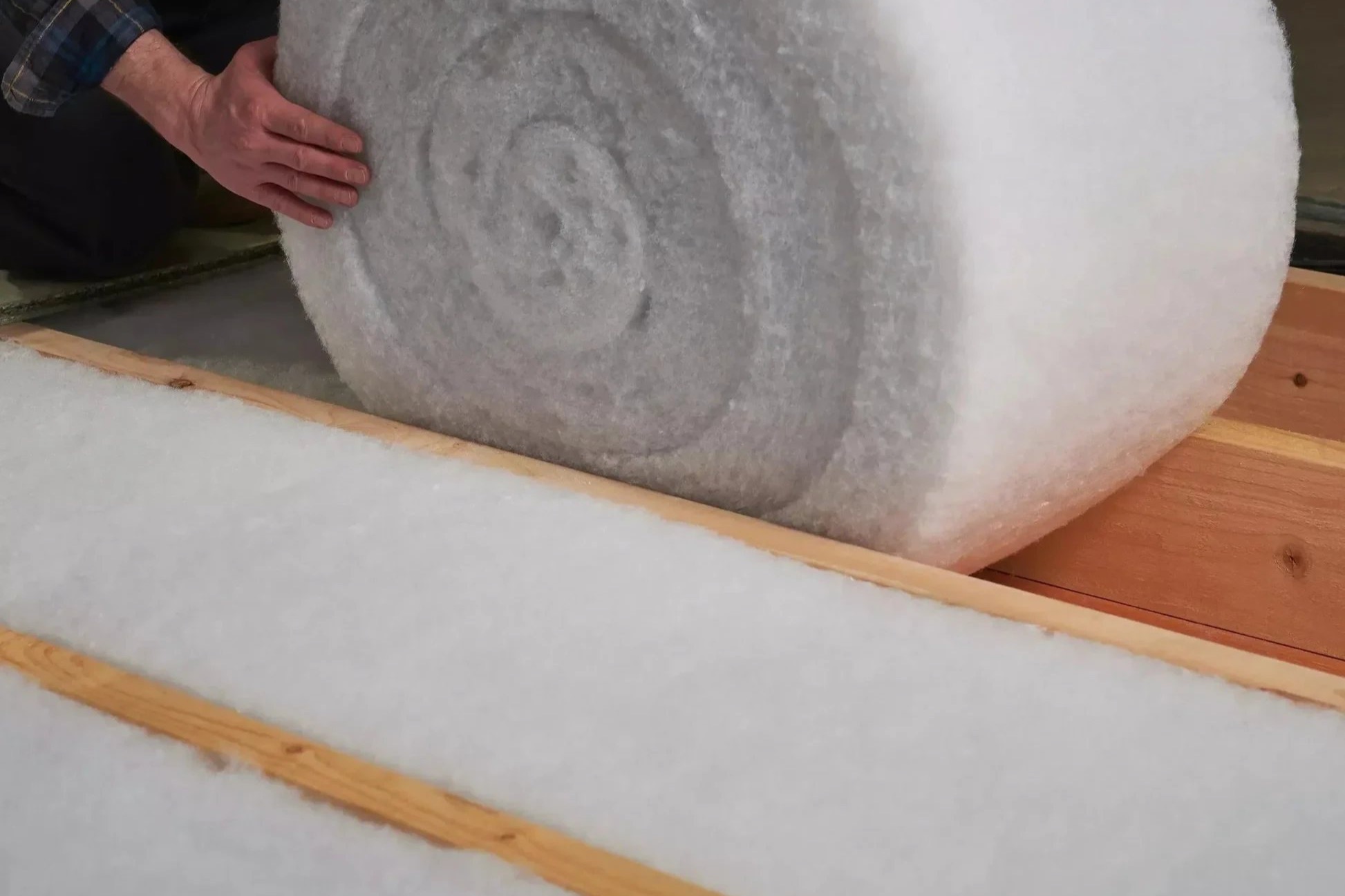
Loft top-ups, between and over. More than half the houses in Upton went up between the war and the early eighties, most of them in the late 1960s and early 1970s, and those lofts got one thin layer pushed between the joists and nothing since. It has settled, been compressed under everything stored on it and pulled back from the edges. We lay fresh mineral wool between the timbers and a second run at right angles across the top so the joists stop bridging the cold, 250mm to 270mm all in, which is what carries a ceiling to the 0.16 u-value Approved Document L expects of a renovated roof.
Around a quarter of the houses here are terraced and another one in six is a semi, and in stock of this age the party wall very often does not carry up to the underside of the roof. You can only insulate your own ceiling, so the layer is taken right up to the wall on both sides rather than trailed off short, which is exactly where the cold strip on a bedroom ceiling comes from. The eaves stay clear so the shared roof space can still breathe.
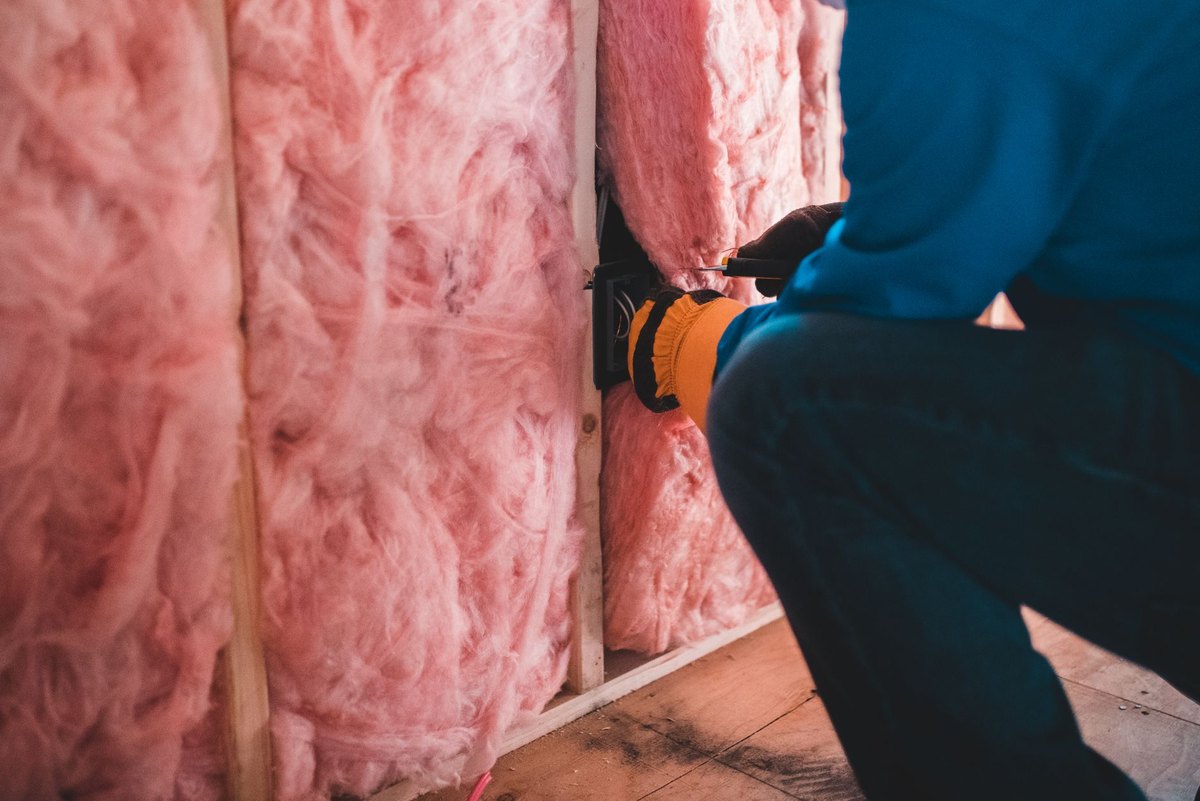
Houses from the sixties and seventies do have a cavity wall, but a narrow one, and what is in it varies from nothing at all to a fill that has slumped. We drill a small hole and borescope it before anyone quotes a fill, because a narrow, bridged or debris filled cavity is where a full fill causes damp on the inside face rather than a warmer room.
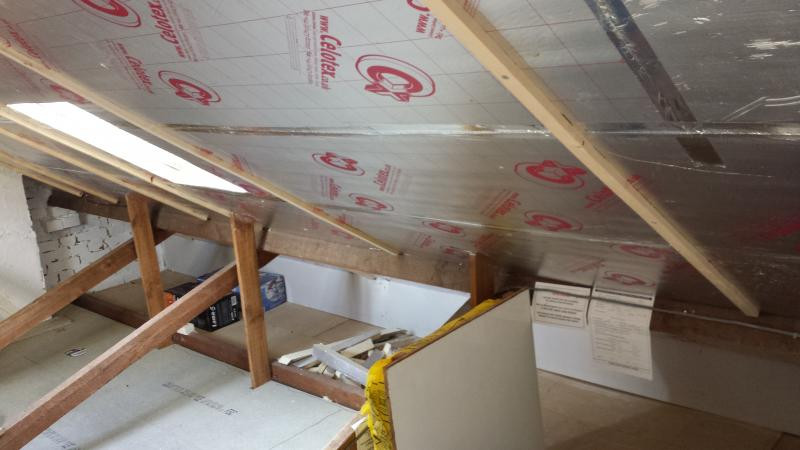
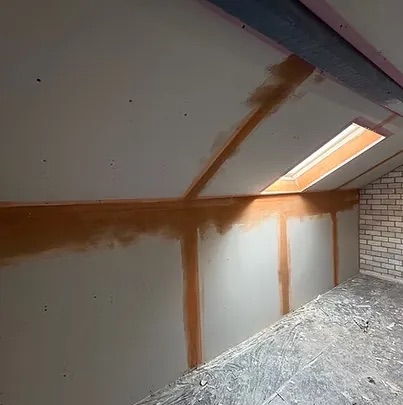
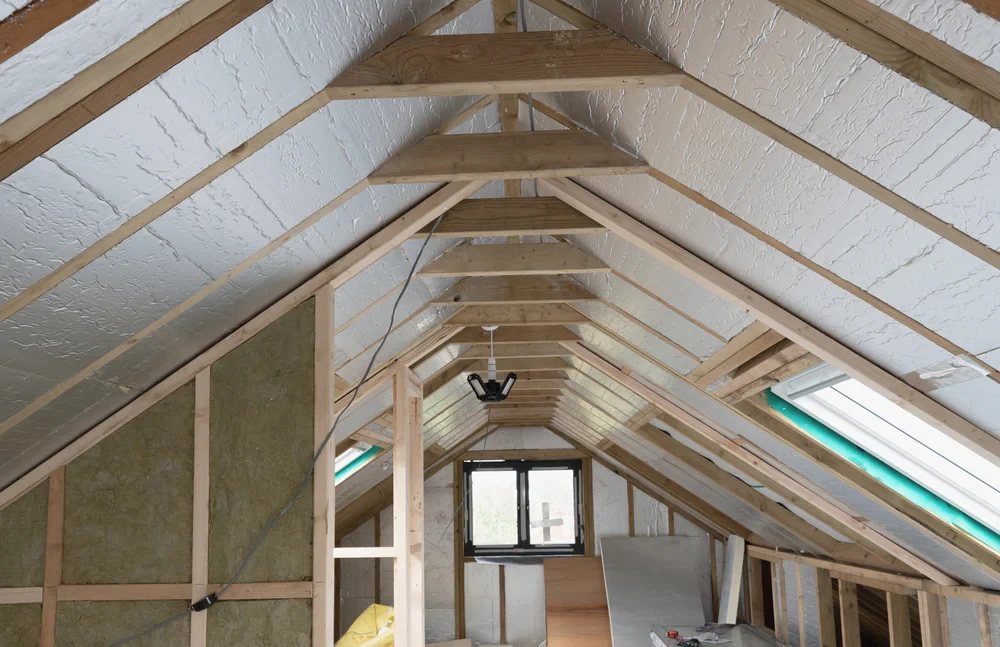
Bungalows, chalets and rooms in the roof. A quarter of the homes here are bungalows, and their roofs run out to a very shallow space at the eaves, so the depth is worked right out over the wall plate rather than stopped where it gets awkward. Where the bedroom is already in the roof there is no loft left and it becomes rigid board: PIR such as Celotex between the rafters with a clear air gap above, a foil faced board under the rafters to break the cold bridge, or a multi-layer quilt like TLX where the rafter depth is not there. Dormer cheeks and the voids behind knee walls go in at the same time. Then an insulated, draughtproofed hatch, fire rated covers over downlighters, vent trays at the eaves, lagging on the tank and any pipework now above the new layer, and a boarding deck raised on legs where you need storage.
How it runs
From your call to a written price
The quote is itemised: survey, clearing, the material and its depth, ventilation works and disposal on separate lines.
Insulating a loft, a floor or the inside face of a wall is an improvement rather than development, so no planning permission is involved and it sits inside permitted development, which is what the Planning Portal's insulation guidance says. Building control is the separate question, engaged once a thermal element is renovated, when a loft becomes a room, and when a ground floor is relaid, which here also brings radon protection into the specification. Upton has no conservation area of its own and four listed entries, so on most houses nothing restricts the outside face. Dorset Council for planning and building control both.
Cost
What decides the price of an insulation job
No rate per square metre. A bungalow with a hatch you can stand a ladder under, a terrace where the only way up is off a narrow landing, and a chalet where the whole job is at rafter level are three different days before any material is bought. Old material to bag and take away, and storage to move and put back, come before anything new goes down, and Approved Document L sets what the work has to reach. Comparing quotes, ask what depth is being laid, whether the old material is removed or covered, and whether the hatch and pipework are included.
If it is urgent
Damp, condensation or a room you cannot heat
Ring rather than use the form. Condensation dripping in the loft, mould that keeps coming back, or a room that will not hold heat gets looked at quickly. Insulating a roof space that cannot breathe makes it worse, so the first visit settles which it is. Upton is under seven miles from us, so getting somebody out to look is rarely the problem.
Worth knowing
Radon changes the order you do the floor in
Upton sits inside a radon affected area, in the band where somewhere between three and five per cent of homes are estimated to be above the action level. That is the level at which basic radon protection is expected in new building work: a barrier built into the ground floor construction. It does not apply to laying quilt in a loft and it is not a reason to leave a house cold. What it does is change the running order at the bottom of the building.
If a solid floor is being dug out, or a suspended timber floor is being opened up, that is the single opportunity to get a radon barrier and a damp proof membrane in underneath before the insulation and the new floor go on top. Doing it afterwards means taking the floor up again, which nobody does, so in practice it does not get done at all. Order a test kit before the work starts rather than after. They are inexpensive, they sit in the house for around three months, and the result tells you whether you are dealing with something or nothing.
The second half of it is ventilation, and this is where insulation and radon actually meet. Every draught you seal makes the house hold its air for longer, and the air it holds includes whatever comes up from the ground. That is not an argument against draughtproofing, it is an argument for doing the two together. So the rule on our jobs is simple: insulate and ventilate in the same breath.
Trickle vents that open, an extract in the kitchen and the bathroom that genuinely runs to outside rather than into the loft, and on a suspended timber floor the underfloor airbricks stay open, which keeps the void dry and disperses ground gas at the same time. Approved Document F covers the ventilation side and regulation 23 covers what is expected when a thermal element is renovated, and between them they describe the job properly: a warmer house that still breathes.
Who you are dealing with
A local firm you can check
We cover Upton and Lytchett Minster on BH16, out through Lytchett Matravers, Holton Heath and Sandford and across to Poole and Broadstone, and Dorset Council is the planning and building control authority for this address. Bournemouth Roofing & Building Ltd, registered in England and Wales, company number 15471719, which you can look up in a minute. Thomas Hannen's business, and he is the one who comes out to price the job, not a salesman. A verified customer's 10 out of 10 on Checkatrade. The visit and the written quote are both free.
Questions
Upton questions we get asked
Would a loft conversion here trigger the Poole Harbour nutrient rules?
It would, because a conversion creates a bedroom and the nutrient neutrality position for Poole Harbour only bites on schemes that add overnight accommodation. Rolling quilt into the loft you already have adds nothing, so it sits outside all of that. If you are converting rather than insulating, raise it with Dorset at the enquiry stage, because it gets settled before the build and not during it.
Most of Upton went up between 1945 and 1982. Why does that matter?
Because 52.1% of the stock here comes from that window, and the heaviest single run was the late 1960s and early 1970s. Lofts from those years got a thin quilt laid one way between the joists and very often nothing since. You find it flattened, gappy where somebody has crawled over it, and stopping a good way short of the wall plate. That is a top up and an edge job.
Upton is a radon affected area. Does that rule anything out?
Not for insulating what is already there. Upton sits in a band where basic radon protection is asked for in new work, and that is a ground floor measure designed in when you form a new slab for an extension or a conversion. Laying material over an existing ceiling does not touch the ground under the house at all. Where it does apply, Thomas flags it when he prices the job.
Nearly a quarter of Upton is terraced. Any difference in the loft?
There is. At 24.2% terraced, plenty of these lofts end at a party wall rather than a gable, and that junction is where the heat leaves. The insulation has to run out over the wall plate and meet that wall properly instead of stopping a foot short. The other thing a terrace decides is the hatch, which is usually on a tight landing and sets how bags come up and go out.
What happens to the old material when you clear a loft?
It gets bagged at the hatch, not shaken out over the landing. Old quilt is dusty and it holds whatever has been living up there, so we seal it into bags in the loft, run sheets along the route to the front door, and it leaves on the van the same day. Nothing goes in your bin. If the existing layer is sound and only shallow, we leave it down and cross lay over the top.
Nearby, and next door
Insulation near Upton
Insulation nearby
Our other trades in Upton
Everything we do in Broadstone Insulation, all areas Every area we cover
Free quote
Get a look before you get a price
A free site visit in Upton, a rule put into whatever is up there now, and a written itemised quote with the method on it as well as the number.