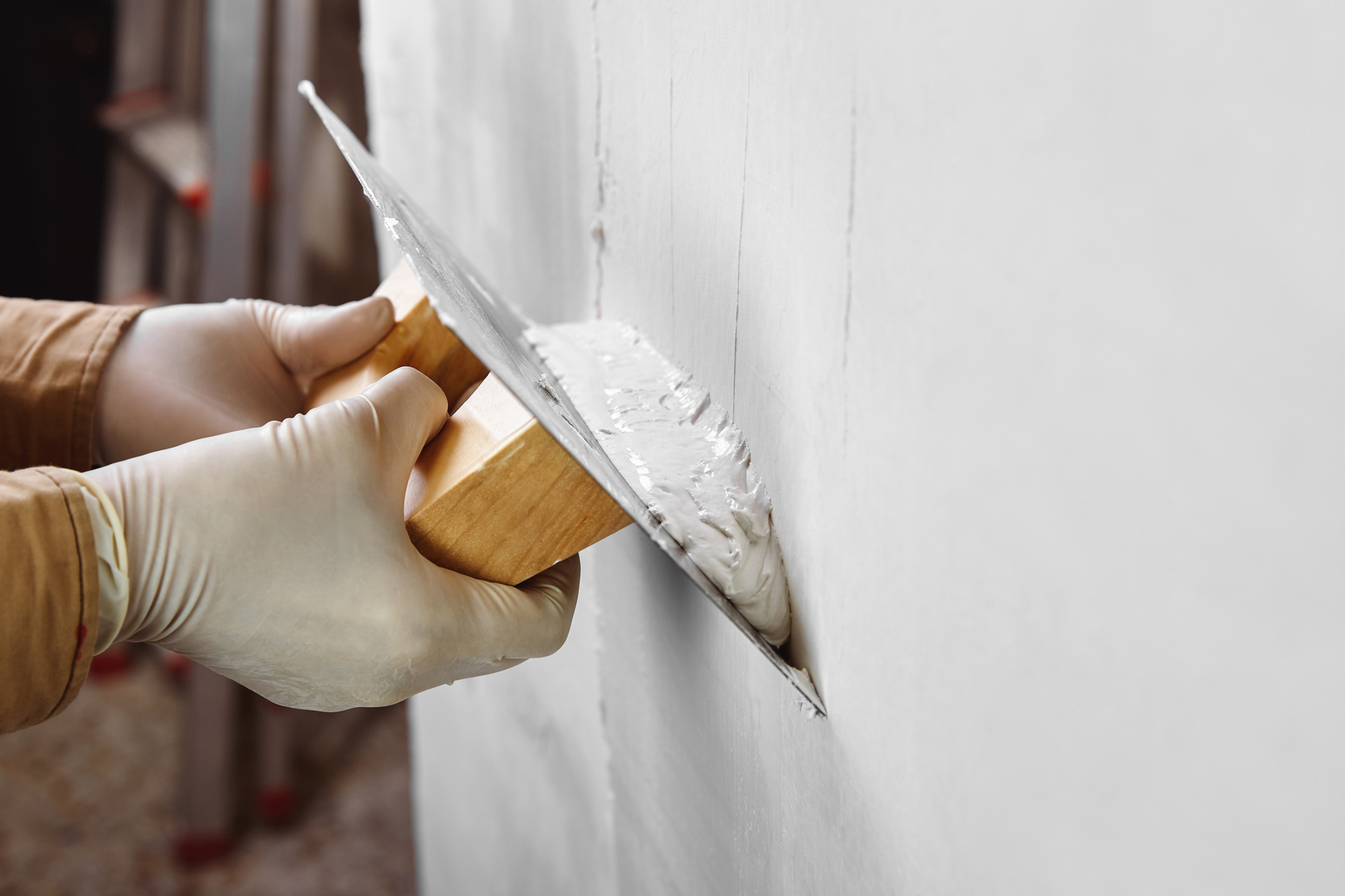
Plastering in Upton
Skimming, ceilings, making good and render across Upton, with the sound walls and the failed ones priced separately.
The site visit is free and so is the written itemised quote. Thomas Hannen prices every job himself.
A good share of the plastering in Upton happens on a wall two households share, because four homes in ten here are joined to somebody else. That changes how the work is done and who needs telling, and it is the first thing we settle on the visit.
Most people ring for one of three reasons. A ceiling has cracked along its board joints or started to sag. A wall has blown behind the paper, gone hollow to the knuckle and lost its bond. Or something has just been taken out or put in, a chimney breast, a stud wall, a new opening or a set of chases, and there is a rough edge waiting to be made good before the room can be decorated.
We do the same thing every time. We knock every wall and ceiling in the room, separate what is still bonded from what has let go, then write the two up separately: a skim on the sound walls, a strip and rebuild where it has failed, making good listed line by line. The survey and the itemised written quote are free, and we are less than seven miles away.
The work
Under the woodchip, the plaster is usually fine
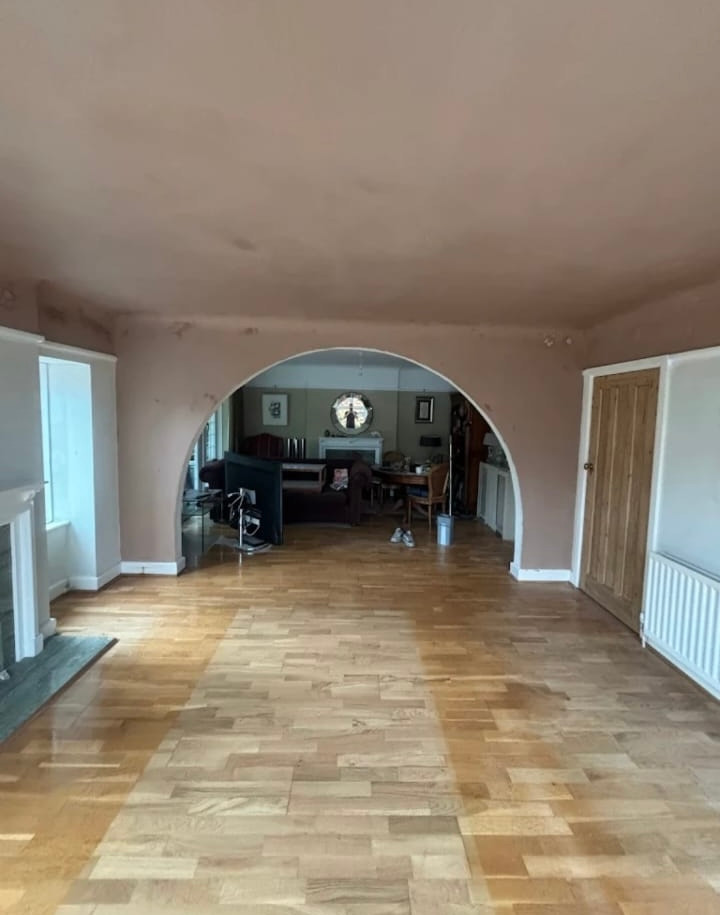
Re-skimming the sixties and seventies stock. Half the houses in Upton went up between the war and the early eighties, with the biggest single run of them around the turn of the seventies, and they were built the same way: a block inner leaf, a float coat ruled onto it, a gypsum finish on top. That plaster is normally still bonded. What has failed is the surface, buried under woodchip, textured paper and paint rolled on until the wall lost its line. Dust sheets go down, the surface is prepared and PVA goes on where it is dusty, then two passes of finish coat trowelled flat, a room at a time, so you can stay in the house.
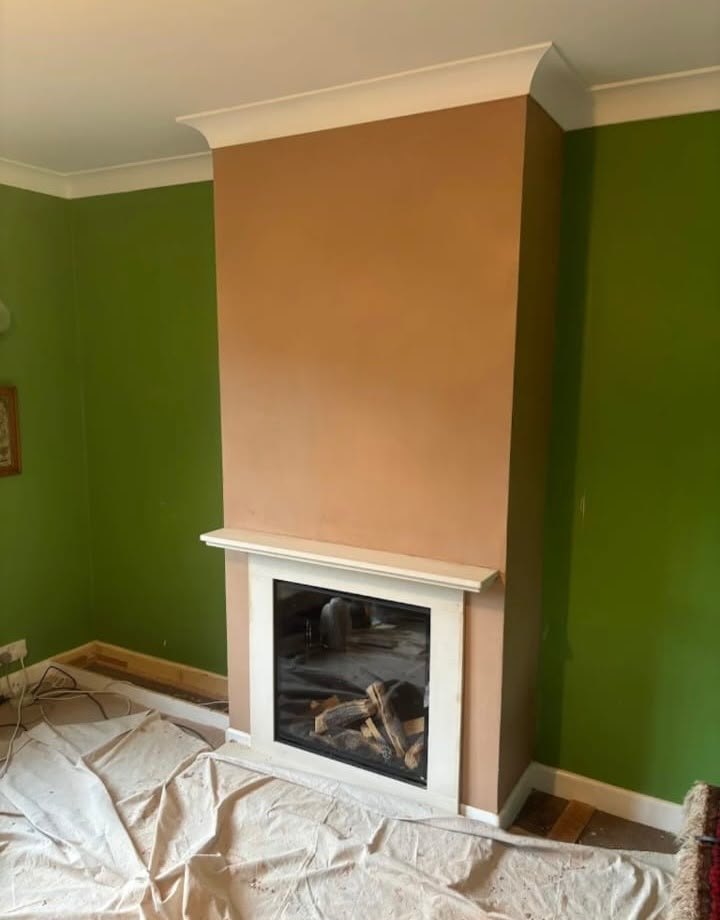
Shared walls and cold-loft ceilings. Terraces and semis together are better than four in ten homes in the village, so a good share of our work is on a wall that belongs to two houses. Hacking off a shared wall is felt on the other side, so we come off it in sections, and where a chimney breast has been taken out the making good has to tie new plaster into what is left without leaving a straight line down the middle of the room. External corners take an angle bead and reveals a stop bead, cut out and renewed where damp has rusted one. Another quarter of the village is bungalows, where the ceiling has a cold loft over it rather than a heated room, and that is where sagging board and cracks along the board edges show first. Overboarding and skimming usually beats pulling a ceiling down, and anything textured from before the mid-1980s is tested rather than scraped or sanded.
Getting on for three in ten homes here are mid-eighties or later, and those walls are plasterboard on dabs of adhesive or screwed to a stud, joints taped, then a skim or a tape and joint finish. Repairs go back the same way: cut out to a sound edge or a stud, fit a new piece the same thickness, tape the joint and skim it wide enough that daylight across the wall never finds the edge. A hollow sound across a wall like that is the construction, not a defect.
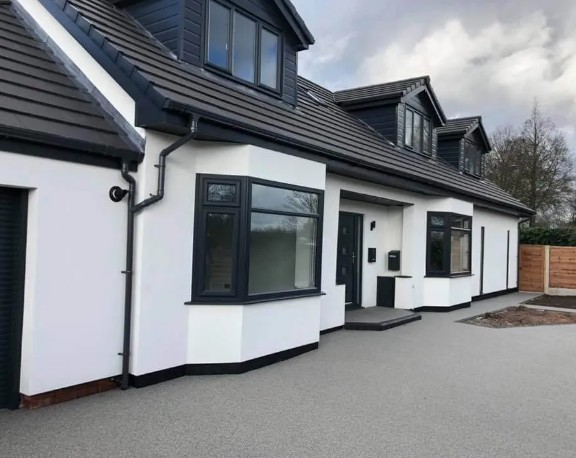
Where wet plaster goes back on, the backing coat follows the background: bonding on a dense or painted face with no suction, browning or hardwall where the brick or block will pull water out of the mix. On the handful of older solid wall houses it is lime, so the wall keeps breathing. Outside, the garage flanks, gable ends and fully rendered houses carry sand and cement of the same age as the estates, which crazes and drums, and pebbledash of that age is often loose in patches. Pebbledash is slow to remove, so it gets its own line. What goes back is a like-for-like patch or a silicone thin coat or monocouche off a bell cast bead.
How it runs
From your call to a written price
The quote is itemised rather than one figure on the back of a card, so you can hold it against anybody else's. There is no conservation area over Upton and only four entries in the parish are listed, so on an ordinary house here the outside finish is your decision. Re-rendering an elevation in a similar material is maintenance rather than development, and Planning Portal guidance on external walls sets out where that stops. At one of those four addresses a change of plaster or render needs listed building consent even where it looks ordinary from the road. Strip render off most of an elevation and it becomes a building control matter, which is where Approved Document L asks whether the wall should be insulated. Dorset Council handles both.
Cost
What decides the price
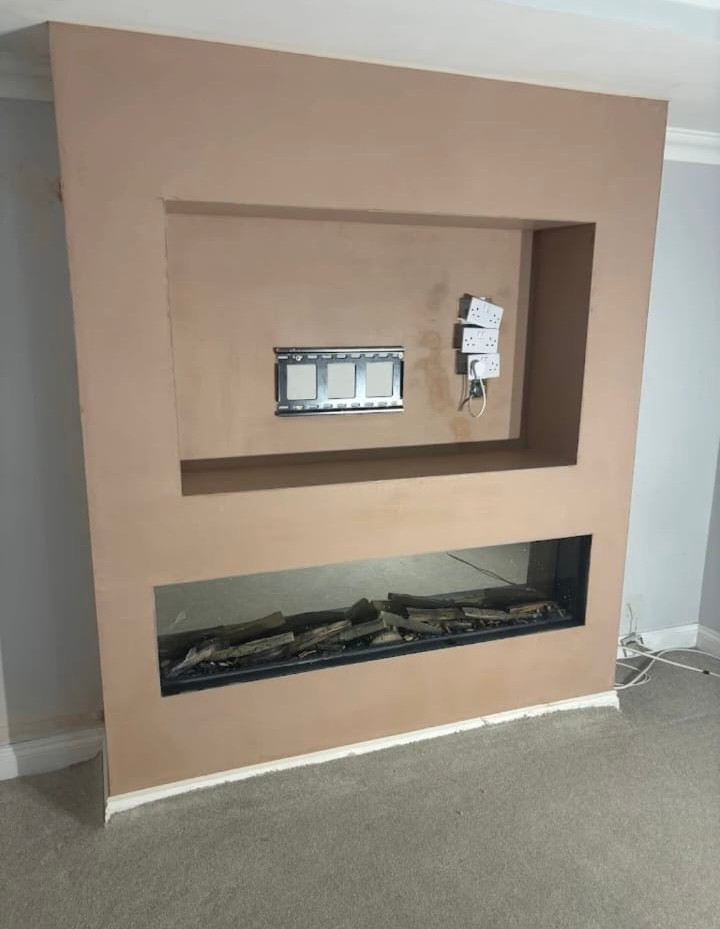
No rate per square metre: what is behind the surface decides it, a sound wall that only wants a skim against one where the backing coat has blown and comes off back to the block. Access here is usually a semi on an estate road where the van gets to the door, a bungalow off one of the closes with everything on one level, or a terrace with no side gate where the only way in is the front door. Outside, a tower does for low work and a gable wants a scaffold. Comparing quotes, ask whether it is a skim or a full replaster, whether beads and making good are in, and who takes the waste.
If it has come down
Plaster blown, or a ceiling on its way down
Ring rather than use the form. A ceiling that has cracked and dropped, plaster coming off in sheets, or a wet patch spreading across a wall goes to the front of the queue. We are under seven miles away on the Poole side, so a same-day look is usually possible, and on a shared wall we will say straight away whether the neighbour needs to know.
Worth knowing
Working on a wall you share with next door
Plenty of people here delay a job because they think a shared wall means paperwork. For plastering it usually does not. Replastering your own side of a party wall is one of the things the party wall rules specifically leave alone, so no notice is needed and no surveyor has to be appointed.
What does need a notice is cutting into the wall to take the weight of something, taking a chimney breast out, forming an opening through it, or removing plaster in order to do any of that structurally. The government guidance on party walls sets out which is which, and it is worth reading the two-minute version before you assume you are stuck. If a notice is needed, it is served before the work rather than during it, so it changes your timetable and nothing else.
The neighbourly part matters more in practice. Hacking plaster off a shared wall carries straight through: their pictures move, and on an older attached house a hard hack on your side can crack a tired finish on theirs.
So we take a shared wall off in sections rather than swinging at it, keep the noisy work to sensible hours and tell you when those will be so you can give the neighbour a day's warning. Where a wall is coming back to bare block we will photograph both faces first. Most arguments about a shared wall are about surprise rather than damage.
Who you are dealing with
A local firm you can check
Under seven miles from us, covering Upton, Lytchett Minster, Lytchett Matravers and the BH16 addresses along the Poole road, with Dorset Council for planning and building control. Bournemouth Roofing & Building Ltd, registered in England and Wales, company number 15471719, which you can look up in a minute. Thomas Hannen's business, and he is the one who comes out to price the job, not a salesman. A verified customer's 10 out of 10 on Checkatrade. The visit and the written quote are both free.
Questions
Upton questions we get asked
Why does the plasterboard in newer Upton houses drum?
Because a good share of Upton stock is newer, 28.6% of it went up between 1983 and 2008, and those walls are plasterboard stuck to the brick on dabs of adhesive rather than a backing coat worked onto the wall. The drum is the air gap behind the board. It only matters where the board has come off its dabs, and you feel that as movement under a flat palm rather than just hearing it.
Does a loft conversion here need extra approval before we plaster?
The plastering itself does not, but the conversion behind it can. Upton sits in the Poole Harbour catchment, so a scheme that adds overnight accommodation has to deal with nutrient neutrality before consent is granted, while a straight re-skim or a repair to rooms you already have does not engage it at all. Get the conversion signed off first, then book the boarding and setting around that date.
What normally goes wrong in the older Upton houses?
The bulk of Upton was built between 1945 and 1982, 52.1% of it, with the peak in the late 1960s and early 1970s. Those houses have a backing coat on block with a finish over the top, and what lets go is the bond at the base of a wall and around window openings where movement and damp have worked at it. We hack back to sound backing and rebuild the coat instead of skimming over.
Our house is not listed. Does the council care what we do inside?
Not for plastering. Upton has four listed entries and no conservation area of its own, so an ordinary house here sits outside listed building consent and outside the extra appearance control a designation brings. Taking a ceiling down, boarding and setting is repair, not development. The exceptions are structural, so a removed chimney breast or a widened opening still goes through Dorset Council building control whatever the heritage status.
Where does all the old ceiling end up?
Bagged and taken out on the day it comes off. A ceiling stripped back to the joists is mostly weight and dust, old bonding, lath and nail, so it goes straight into rubble sacks and onto the van rather than sitting in a heap in the garden. Floors get sheeted and doorways taped before the first board moves. The room is swept and the waste is gone at the end of each day.
Nearby, and next door
Plastering and rendering near Upton
Plastering and rendering nearby
Our other trades in Upton
Everything we do in Broadstone Plastering and rendering, all areas Every area we cover
Free quote
Get your Upton walls knocked before they are priced
A free site visit, every wall and ceiling sounded, and an itemised written quote that keeps a skim and a full replaster on separate lines.