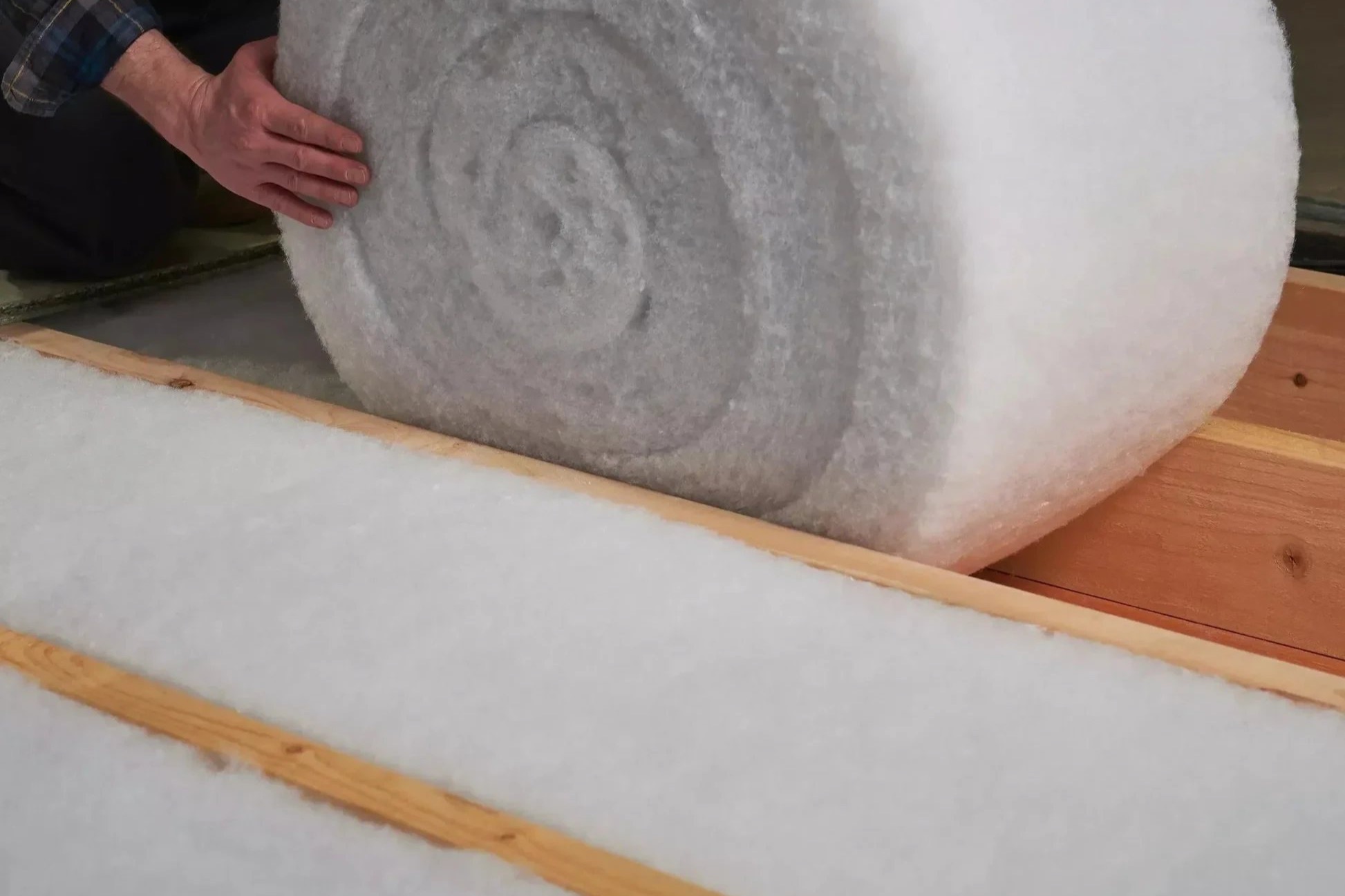
Insulation in Lytchett Matravers
Loft top-ups, room in roof board work and wall insulation across the village, surveyed before it is priced.
The site visit is free and so is the written itemised quote. Thomas Hannen prices every job himself.
Almost every loft in Lytchett Matravers already has something in it. The question is whether it is deep enough, whether it has been flattened under boards, and whether the roof space can still breathe once you make it colder. We check all three on a free site visit, and the written quote says what depth is going in and what is happening at the eaves.
Three calls come from this village more than any others. A chalet bungalow where the upstairs rooms are cold by January and stifling by July. A loft that was boarded out for storage years ago, with a squashed layer of quilt under the chipboard. And somebody who has had a price for cavity wall fill and wants a second opinion before anyone drills a wall.
None of those is answered by ordering more material. So the survey is a proper look at what is actually up there: how deep the existing layer measures with a probe rather than how deep it looks, whether it sits between the joists only, whether the eaves are open or stuffed solid, where the tank and the pipe runs are, and what the ceiling below is made of.
The itemised written quote comes off the back of that, with the method on it as well as the figure, and nothing is ordered until you have said yes to it.
The work
A chalet bungalow leaves you no loft to walk in
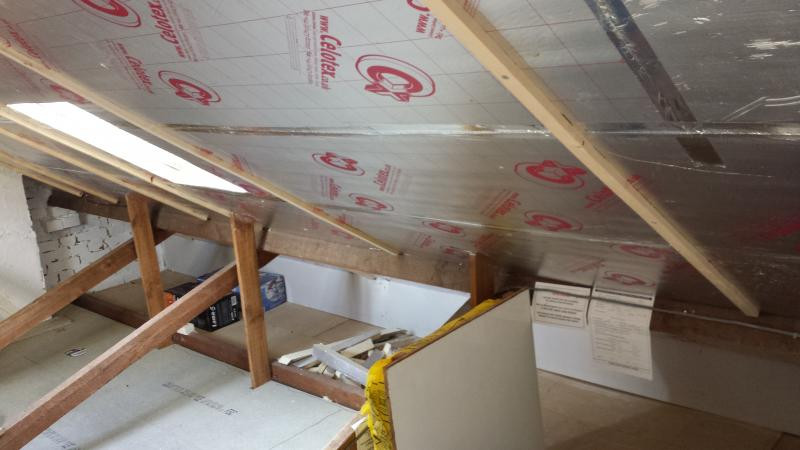
Chalet bungalows first. A quarter of the homes here are bungalows and a good share of those are the chalet type, with two rooms carved into the roof and a dormer on the back. There is no loft left to walk about in, so it becomes board work: PIR rigid board such as Celotex cut between the rafters with a clear air gap above, a foil faced board across the underside to break the cold bridge at every rafter, or a multi-layer quilt like TLX where the ceiling height will not give any depth away. The knee wall voids behind the eaves cupboards and the dormer cheeks are the parts that get missed, and they go in at the same time or we do not quote the job.
Most of the village is 1970s and early 1980s trussed roofs, with a quilt laid to the standard of the day and thinning at the edges. We lay between and over: mineral wool between the joists, then an eco roll straight across the top at right angles so no joist is left bridging the cold. A renovated thermal element is expected to reach a U-value of 0.16, and in mineral wool that is nearer 270mm than the 250 people remember.
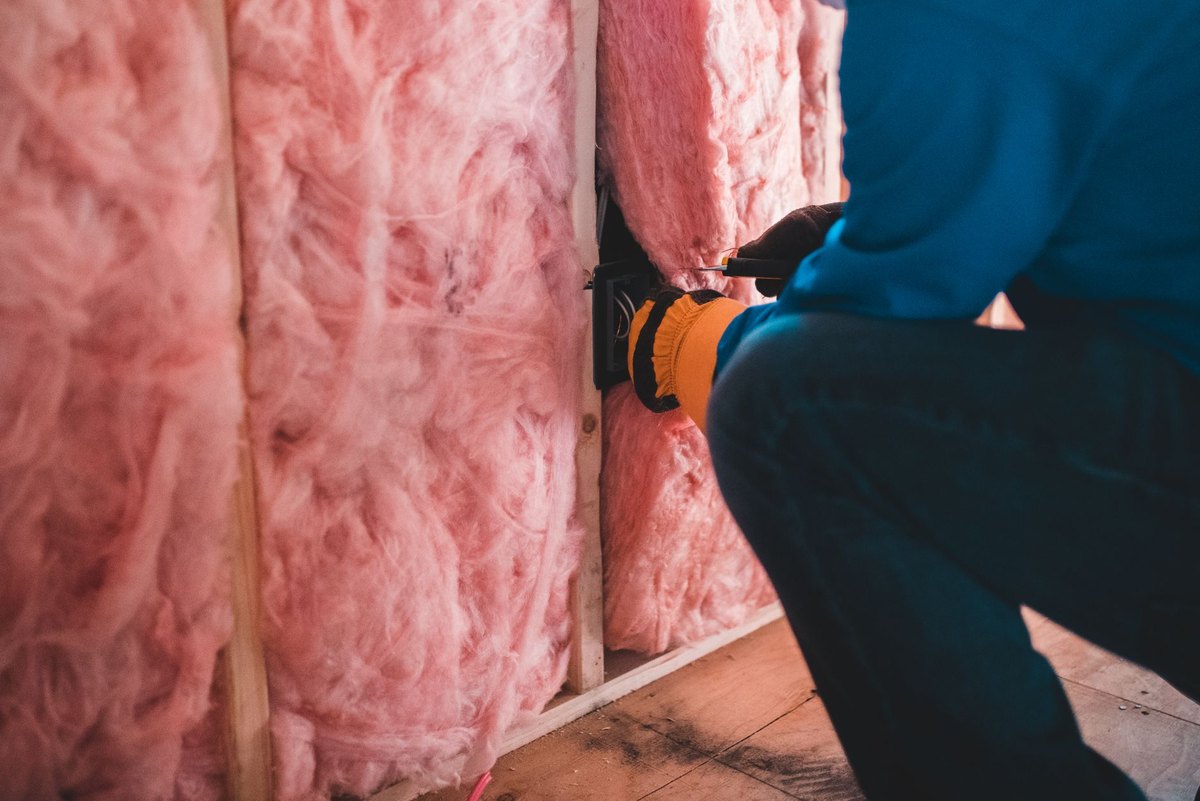
Houses built from the sixties on have a cavity wall, and some were filled long ago with blown fibre that has since slumped and left a cold band across the top of the elevation; a borescope tells you what is in there in minutes. Around the church the walls are solid, so there it is internal wall insulation built breathable, or external wall insulation where the elevation can carry it. The fifteen listed entries sit around the old village rather than in the estates, so if yours is one the consent question comes first.
How it runs
From your call to a written price
The quote is itemised: survey, clearing, the material and its depth, ventilation and disposal on separate lines. Laying quilt in a loft or lining a wall on the inside is an improvement rather than development, so it sits inside permitted development, and the Planning Portal sets out where that stops. Building control is engaged once a thermal element is renovated or the loft becomes a room. There is no conservation area over Lytchett Matravers, but fifteen entries here are listed, and listed building consent can reach inside as well as out, so we check the address first. Dorset Council is the authority. Insulation fitted in an existing home is zero rated for VAT under HMRC Notice 708/6.
Cost
What decides the price of an insulation job
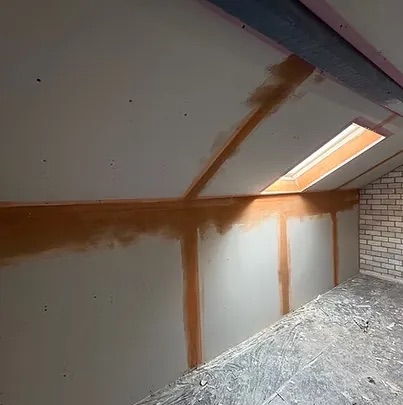
No rate per square metre: the area is the easy part and everything round it is the awkward part. A chalet bungalow with a small hatch on a landing is one day; an old cottage reached through a bedroom cupboard is another. Old material to bag and take away, and boarding to lift and put back, come before anything new goes down. Approved Document L sets what the work has to reach. Ask what depth is being laid, whether the old material comes out, and whether the eaves and hatch are included.
If it is urgent
Damp, condensation or a room you cannot heat
Ring rather than use the form. A loft dripping with condensation, mould that keeps coming back, or a room that will not hold heat gets seen quickly. The first visit settles whether that is insulation, ventilation or both, because insulating a space that cannot breathe makes it worse. Lytchett Matravers is a short run out on the Poole side. Outside Monday to Friday, 8am to 6pm is by arrangement.
Worth knowing
Insulating the loft, or converting it, are two different questions here
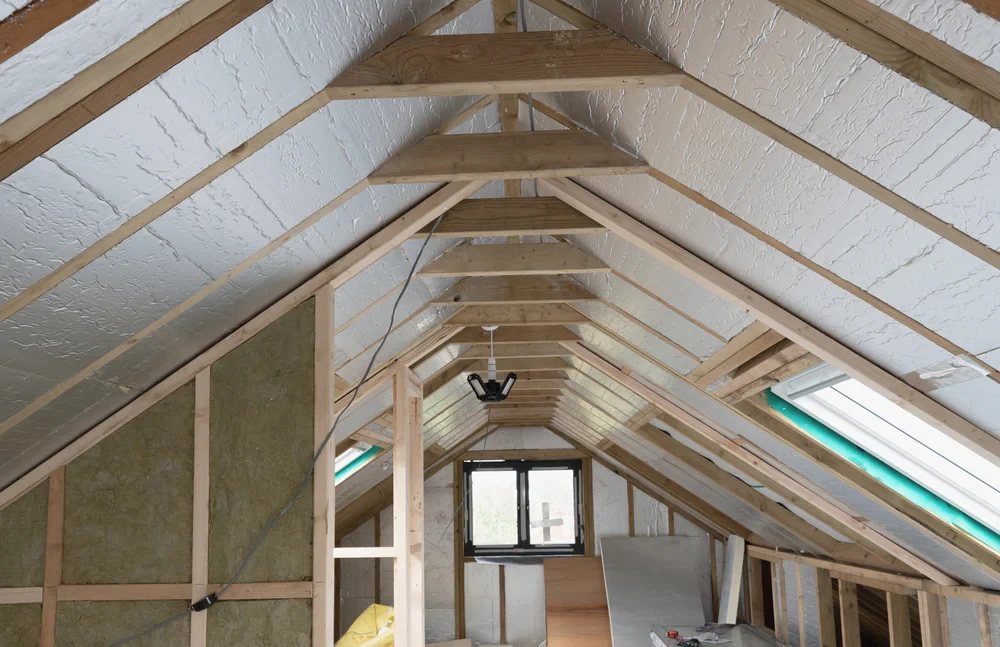
There is a real difference between insulating a loft and turning it into a bedroom, and in this village the second one runs into something the first one never touches. Lytchett Matravers drains into the Poole Harbour catchment, and the harbour is protected water.
A planning application that adds overnight accommodation in that catchment has to show it will not add nutrients to it, which in practice means the scheme has to be made nutrient neutral before permission is granted. Laying insulation over an existing ceiling does none of that. Putting a bedroom in the roof can.
So the order of the work matters, and it is worth being honest at the start about which of the two you want. If all you are after is a warm ceiling and a smaller heating bill, none of this reaches you: the quilt goes down, the eaves stay clear, there is no application to make and no delay to plan around.
If a conversion is in your head at all, settle the planning position before anyone specifies the insulation, because a room in roof is insulated at rafter level and a loft is insulated at ceiling level, and they are different jobs with different materials and different ventilation. Doing it once, in the right order, costs less than doing the cheap version now and stripping it out in two years. We will tell you at the visit which of the two you are actually asking for.
Who you are dealing with
A local firm you can check
We cover Lytchett Matravers, Lytchett Minster, Upton and Post Green on BH16, out through Poole, Wareham and Wimborne, and Dorset Council is the planning and building control authority for this address. Bournemouth Roofing & Building Ltd, registered in England and Wales, company number 15471719, which you can look up in a minute. Thomas Hannen's business, and he is the one who comes out to price the job, not a salesman. A verified customer's 10 out of 10 on Checkatrade. The visit and the written quote are both free.
Questions
Lytchett Matravers questions we get asked
Does the Poole Harbour nutrient rule stop a loft conversion?
Not by itself, though it adds a step. Lytchett Matravers sits inside the Poole Harbour nutrient neutrality catchment, and that only engages where a scheme creates overnight accommodation. Laying insulation in a loft you already have creates no bedroom, so nothing is triggered. Turn that same loft into a bedroom and Dorset Council will want the nutrient position settled before consent. Straight insulation stays maintenance and needs no application at all.
What fails first on a seventies house in this village?
The eaves, usually, and the loft hatch. 42.5% of the stock here went up between 1945 and 1982, with the peak in the 1970s and early 1980s, and those lofts were built with thin wool between the joists and nothing at the perimeter. Heat escapes over the wall plate where the material stops short of the wall. Thomas checks the perimeter and the hatch seal before he prices anything across the middle.
Nearly a third of the village went up after 1983. Any good?
Fine is not quite the word, but they start from a better place. 30.4% of Lytchett Matravers was built between 1983 and 2008, and those lofts had insulation from new, typically 100mm to 150mm between the joists. Current practice is deeper than that, so it is still a top-up, just a smaller one. What we find wrong on those houses is the hatch, the trap door seal, and wool shoved aside by whoever ran a cable.
The ground stays wet under our floor. Does that change things?
It changes how the underfloor void gets treated. This village sits on slightly impeded drainage, so a suspended timber floor sits over damp ground for much of the winter and relies on the airbricks to keep air moving. Blocking those bricks while packing material between the joists is the way to rot the joist ends. We insulate the floor, leave the cross ventilation clear, and open up the airbricks that are already blocked.
There are listed buildings in the village. Do we need consent?
Only if your own house is one of the 15 listed entries, and most are not. The list here covers the Parish Church of St Mary The Virgin and a run of older properties, not the postwar estates. No conservation area covers Lytchett Matravers either, so on an ordinary house this is maintenance and Dorset Council need no application for it. If the house is listed, we raise it with the conservation officer before anything goes in.
Nearby, and next door
Insulation near Lytchett Matravers
Insulation nearby
Our other trades in Lytchett Matravers
Everything we do in Corfe Mullen Insulation, all areas Every area we cover
Free quote
Find out what is really in your loft
A free site visit, a probe in the existing layer, and an itemised written quote that says the depth and the method as well as the price.