Plastering and rendering in Ferndown
Ceilings, re-skims, dry lining and render across Ferndown, West Parley and BH22. Ten minutes from us, and priced in writing.
The site visit is free and so is the written itemised quote. Thomas Hannen prices every job himself.
Ferndown is a twentieth century town, so nearly everything we are called to is gypsum plaster on blockwork or plasterboard rather than lime on lath. That is good news: the repairs are quicker, the materials are ordinary, and most rooms are a two day job rather than a fortnight.
People ring for one of three things. A ceiling or a wall has been marked or soaked, usually by a leak from above, and it needs taking back and putting right. A room is being modernised, the artex and the coving are coming off and it needs to be flat and ready to paint.
Or a wall has been opened up, a chimney breast has gone or a garage has become a room, and the new work needs to finish so you cannot tell where the old stops. We are ten minutes up the road, so we come out, tap it over and tell you which of those you are dealing with before we price it.
The work
Everything the late sixties left on the ceiling
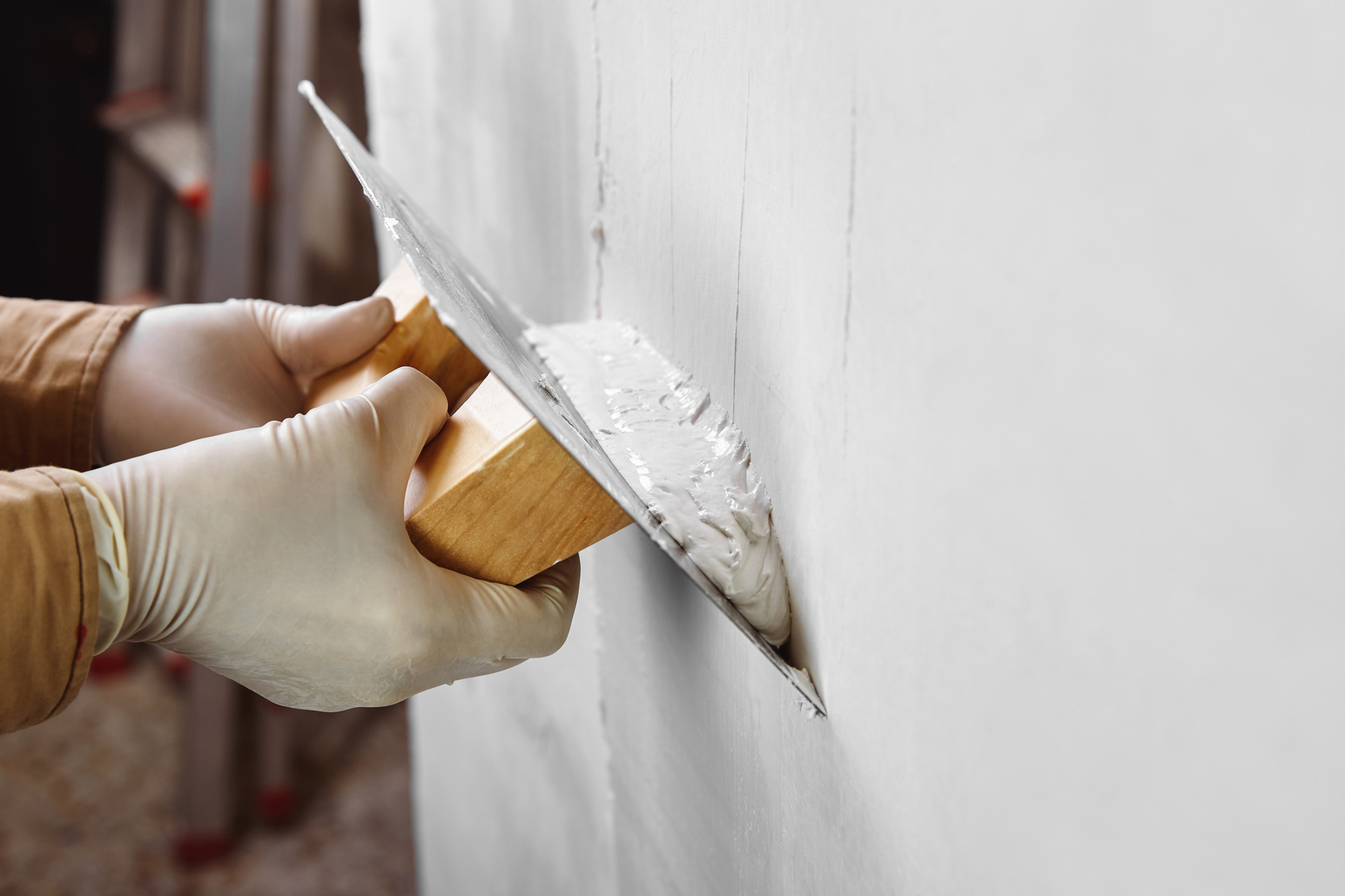
Re-skimming walls and ceilings. Most walls in the town are blockwork with a browning or hardwall backing coat behind the finish, and once the paper is off they come up patchy rather than flat. We prepare the surface, PVA the porous patches and lay two coats of finish plaster on with a trowel. A ceiling is a day, a room is usually two, and new plaster wants a few days before a mist coat and decorating.
Artex, coving and textured walls. Houses built here in the late sixties and seventies, which is a fifth of the town on its own, almost all got a textured ceiling and a run of coving, and that is the single most common thing we are asked to get rid of. Flat and well stuck, it is skimmed over. Deep swirls get overboarded and the new board skimmed. It is never sanded, since a coating of that age can contain asbestos. Coving comes off first and the line it leaves is made good in the same pass.
Close to a third of the town lives in low rise blocks, and the plastering that goes with them is its own job: a top floor ceiling put back after a roof leak, a bathroom ceiling in the flat below somebody else's shower tray, communal hallways and stair soffits patched and re-skimmed, and everything carried up and down a shared stair. We work to the hours the block allows, sheet the landing as well as the flat, and take the waste out the same day rather than stacking bags by somebody's front door.
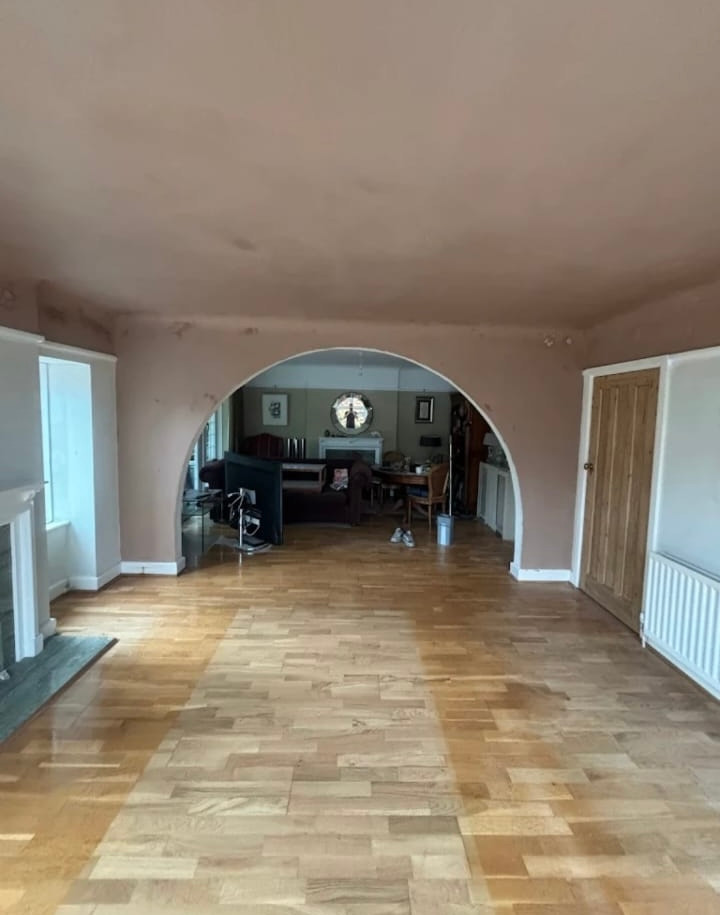
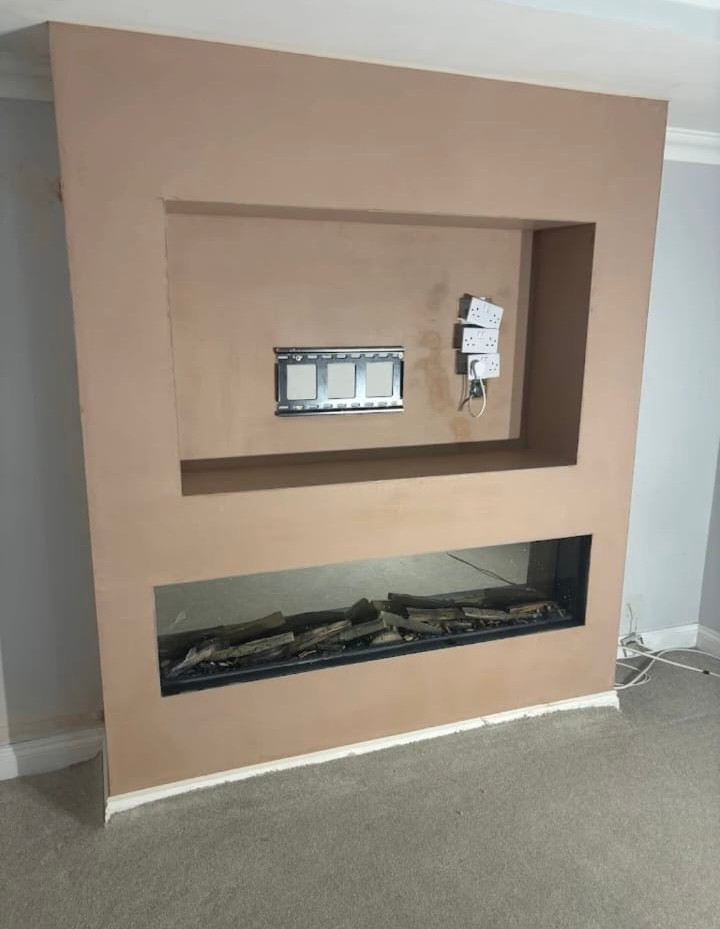
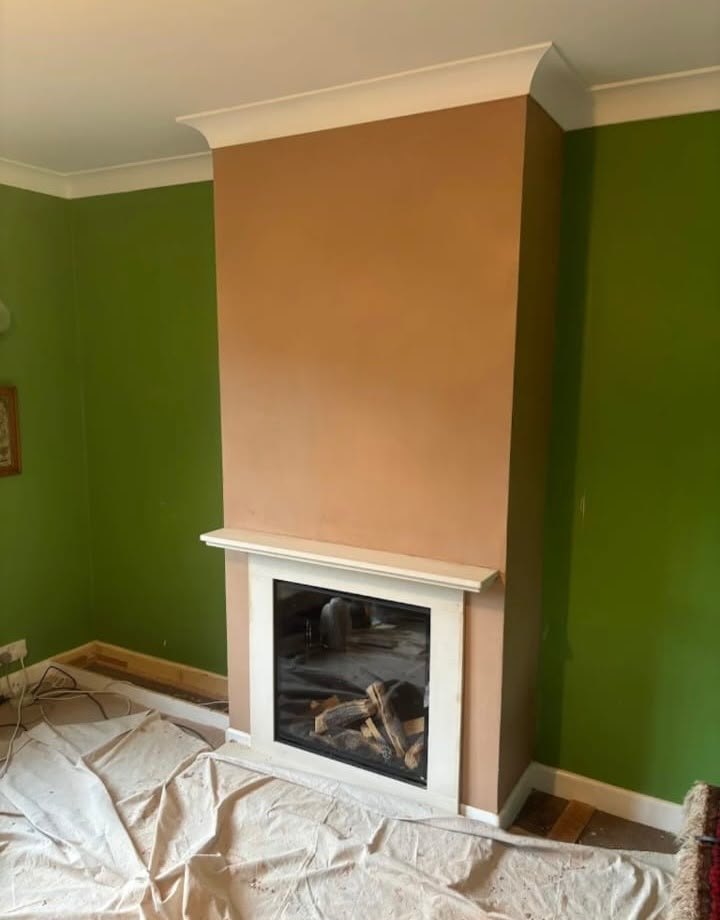
Anything built from the eighties on is likely to be plasterboard on dabs with taped joints, so a hollow sounding wall there is normal rather than a fault. We repair it the way it was built and put in stud partitions when a big room is split or a bungalow gains an en suite. Chimney breast removals, garage conversions and rear extensions are where the finish shows: new boards against old plaster move differently, so the joint is scrimmed and beaded rather than filled and hoped over, with an angle bead on every external corner and a stop bead where new plaster stops against a frame.
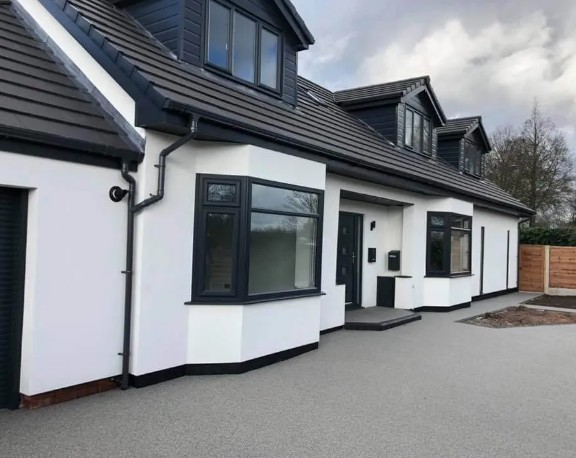
Rendered gables and porches, mostly sand and cement with the odd pebbledash panel, crack and go hollow with age. A cracked panel over a sound background is cut out and matched in with new render coats; a whole elevation that has parted from the blockwork comes off and goes back on a mesh-reinforced basecoat with a silicone thin coat, or a monocouche where the colour runs through the material, with a bell cast bead at the base.
How it runs
From your call to a written price
On permission, Ferndown is about as simple as it gets on our patch. There is no conservation area over the town and nothing listed in it, so rendering or re-rendering is ordinary permitted development as long as the finish is similar in appearance to what is around it, and Planning Portal guidance on external walls sets out the handful of exceptions. Dorset Council is the planning authority if you do need to ask. Inside, plastering needs nothing. What does need signing off is the work behind it: taking out a chimney breast is building control work, because something has to carry what is left above it.
Cost
What decides the price of a plastering job
No rate per square metre. A top floor flat where every bag comes up a communal stair, a bungalow with the rooms already cleared, and a 1990s house that is dot and dab from front to back are three different jobs before anything is mixed. A wall that only wants a skim is a fraction of one hacked off and brought back in a backing coat and a finish coat, and we find out which by tapping it over rather than guessing. Outside, render needs a tower or a scaffold priced on its own line, because the work at height rules decide the platform.
If it has come down
A ceiling that has blown or come down
Ring rather than use the form. If a ceiling is sagging or dropping bits of plaster, keep everybody out of that room and move what you can from under it. The first visit makes it safe, with the loose material coming down onto sheets rather than your carpet. Ferndown is one of the shortest runs we make, so a make-safe visit here is normally same day.
Worth knowing
In a flat, check who is allowed to instruct the work
A lot of Ferndown is flats and maisonettes, and on a flat the structure and the outside walls usually belong to the freeholder and are looked after out of the service charge.
So if you are a leaseholder with a stain spreading across a top floor ceiling, or render coming away on the block, the quickest route is often finding out who manages the building rather than booking a plasterer. Ring us anyway. We will look, say what has actually happened, and put it in writing so you have something to send the managing agent instead of an argument.
Inside your own flat it is usually your call, but read the lease before you take a wall out or change a ceiling, because internal alterations often need the freeholder's consent in writing.
And if you sit on the residents' company, one rule is worth knowing early: where work would cost any single leaseholder more than £250, the leaseholders have to be formally consulted first under section 20 of the Landlord and Tenant Act 1985. That moves the timetable rather than the job, and external work is far easier arranged in spring than in November.
Who you are dealing with
A local firm you can check
We cover Ferndown, West Parley, Longham, Stapehill, West Moors and the rest of BH22. Bournemouth Roofing & Building Ltd, registered in England and Wales, company number 15471719, which you can look up in a minute. Thomas Hannen's business, and he is the one who comes out to price the job, not a salesman. A verified customer's 10 out of 10 on Checkatrade. The visit and the written quote are both free.
Questions
Ferndown questions we get asked
Nothing in Ferndown is listed. Does that make things simpler?
For the outside, it does. Ferndown has no conservation area and no listed entries at all, so the render finish and its colour are down to you and Dorset Council does not need to approve the look of it. That is genuinely unusual around this patch. The Green Belt on the edge of the town matters for an extension or an outbuilding and not at all for recovering a wall you already have.
Ferndown is bungalows and flats. Which are you set up for?
Both, and they are different jobs. Bungalows are 42.7% of the housing here and flats another 30.9%, which between them is close to three quarters of the town. In a bungalow everything is reachable off a low platform and the spoil goes straight out of the door. In a flat the internal walls are yours, the ceilings may be shared structure, and the outside is not yours at all.
Can we replaster inside our flat without asking the freeholder?
Usually the inside is yours to do, but read the lease before booking anything, because some of them treat ceilings and anything fixed to a party wall as the landlord's. With 30.9% of Ferndown homes being flats, that question comes up here most weeks. The moment work touches the outside walls, the roof or a communal area it stops being your decision and the agent has to instruct it.
Ferndown is close to your base. Can you come this week?
Often, yes. It is under six miles from us, so looking at a job in Ferndown is a short run and Thomas Hannen fits those around work in progress rather than making you wait for a gap. He measures, checks what is behind the existing finish and leaves you with a written itemised quote. Being this close also means coming back for a snag is straightforward rather than an expedition.
Can a bungalow be done in stages while we live there?
That is how most of them go. In a single storey house every room is on one level, so we can shut off half the bungalow behind a taped sheet and leave you a kitchen and a bedroom, then swap the two over. Ceilings are the disruptive part, because everything has to come out of the room first. We agree the order at the visit and work to it.
Nearby, and next door
Plastering and rendering near Ferndown
Plastering and rendering nearby
Our other trades in Ferndown
Everything we do in Ferndown Plastering and rendering, all areas Every area we cover
Free quote
Get a price for your Ferndown plastering
Tell us the address and what you have noticed. We will come out, tap it over and put an itemised price in writing. No charge, and no obligation.