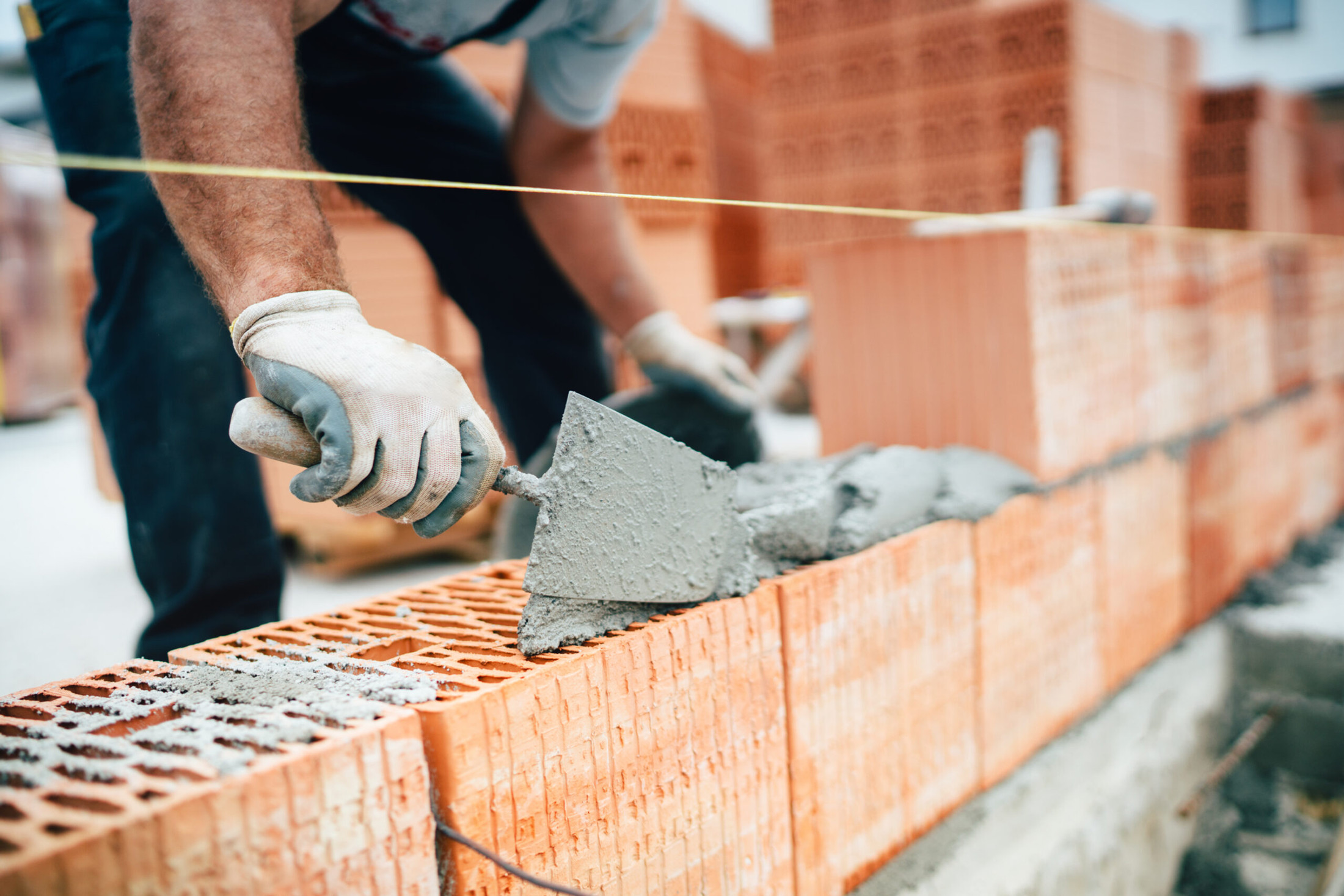
Ferndown repointing, bungalows to flats
Raking out and repointing on Ferndown gables, stacks, boundary walls and communal elevations, with the mix and the joint profile in writing.
The site visit is free and so is the written itemised quote. Thomas Hannen prices every job himself.
Repointing in Ferndown
Nobody has to approve your mortar here
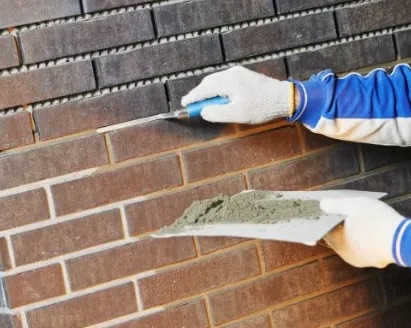
Nothing in Ferndown is listed and none of the town sits in a conservation area, so no council officer has a view on your mortar. That makes repointing here a purely technical decision: match the strength, the sand and the colour to the wall you have, and point the elevation that has actually gone.
The calls follow the stock. Bungalow gables and the long low walls that catch the south westerly, joints eroded back and gone friable. Chimney stacks on the older bungalows, mortar washed out of the top courses and water finding its way past the flashings. And blocks of flats, where an exposed corner or the brick panels under the windows have opened up.
There is very little pre-1919 brick in the town, so the lime argument that dominates the old towns barely reaches Ferndown. What does apply everywhere is matching. A mortar stronger than the brick it sits against will take the face off it at the first hard frost, whatever it happens to be made of.
We survey each elevation, say what wants doing this year and what does not, and put an itemised price in writing. The visit and the quote are free.
The work
Bungalow walls, flat blocks, and what fails on each
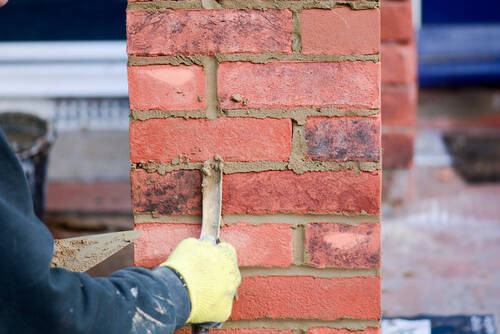
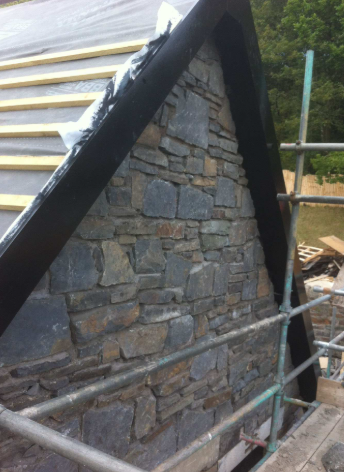
Bungalows, which are most of the town. Getting on for half the homes here are bungalows. Same floor area, a great deal more wall at low level and much less of it out of reach, so a large share of a bungalow can be raked and pointed off a low tower rather than a full scaffold. The gable ends are the exception, and they are also where the weather lands.
Raking out, done properly. By hand, to about twice the width of the joint, so the new mortar has something to key into. A disc cutter is faster, widens the joint, takes the arris off either side and leaves a wall that looks worse in three years than the one it replaced. Joints are brushed out and damped down before the mix goes in, because a dry brick pulls the water straight out of fresh mortar and it never gains its strength.
The mix, matched rather than assumed. Late 1960s and 1970s brickwork was built in a cement gauge and gets a cement, lime and sand gauge back, matched on strength before colour. A period property on one of the older roads, solid wall, Victorian or Edwardian, gets a breathable NHL lime or a lime putty mix instead, because that wall dries through its joints. Either way we mix a sample, put a trial panel on a quiet elevation and look at it dry.
The joint profile. Weather struck sheds water off an exposed gable better than anything else. Bucket handle is what most of the estates were built with and is dense and hard wearing. Recessed looks sharp on a modern brick and is wrong on a soft one, because it leaves a ledge at every course. Flush is the safe middle. It is a decision, and it goes in the quote.
Flats and communal walls. Around three in ten homes in Ferndown are flats, and the outside walls belong to the block rather than to any one flat. We survey and price whole elevations and give the freeholder or the managing agent something they can work from, because a leaseholder cannot instruct pointing on a wall they do not own.
Spalled faces and boundary walls. Where frost has lifted the fired face off a brick it is cut out and replaced with a match, not filled. Low front walls, bin store walls and the returns beside a drive take water from the top down and are usually the hollow ones. Access on any of it is a separate line.
How it runs
From your call to a written price
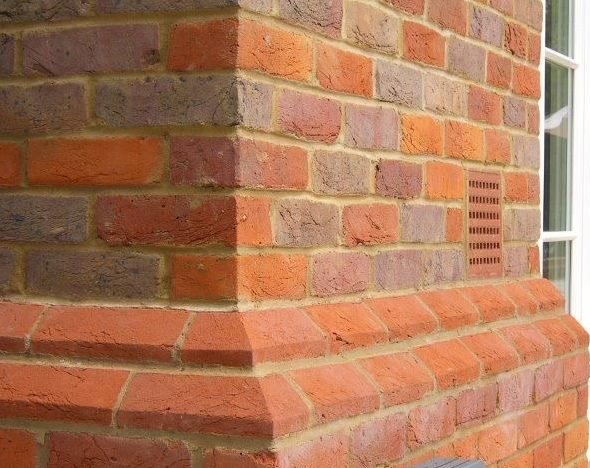
Same team from first visit to last, one person to ring, and no sub-contracting. The quote is itemised: access, raking out, the mortar mix, the area of each elevation, brick replacement and disposal on separate lines.
Nothing is left open overnight, the site is swept daily, and what comes out leaves with us. If something turns up that nobody could have seen, you get a photograph and a price before we carry on.
Repointing like for like is maintenance: no planning permission, no building control and nothing to apply for. Ferndown has no conservation area and no listed entries at all, so the constraint here is technical rather than administrative. Where we work on an older property just outside the town we check Dorset Council's listed building records first, because the answer changes what goes in the mixer.
Cost
What decides the price of a repointing job
No rate per square metre. The area tells you almost nothing until somebody has looked at the joints.
Getting to it. A detached bungalow with a gable at each end, a semi with a stack on the party wall and a three storey block of flats are three different set ups before a joint is touched. The work at height rules are why access is its own priced line.
The joints decide it, not the wall. Raking out by hand is slow, and on soft brick the only safe way: a disc widens the joint and takes the arris off. Depth, and whether faces have already spalled, sets the hours far more than area does.
Matching is the part that shows. Too strong a mix is the classic mistake: cement holds water against a soft brick and the face blows off in the first hard frost. Lime cures slower, and suits most pre-1919 walls here.
Comparing quotes? Ask how deep the joints are raked and by what, what the mix is, how many spalled bricks come out, and whether the scaffold is in the price. Two quotes for the same job are usually two different jobs.
If water is getting in
Open joints, and water coming through the wall
Ring rather than use the form. Washed out joints let driven rain straight through to the inside face, and on a chimney it finds the flashings too. We come and look, sheet or temporarily point the worst, then price the elevation once it has dried enough to show what is sound. In Ferndown that is most often a bungalow gable or a stack, where an open joint on the south west face puts water straight through onto the inner skin. The phone is answered 24 hours for emergencies; scheduled work runs Monday to Friday, 8am to 6pm.
The one local thing
No conservation area, no listed buildings, and no excuses
Ferndown is unusual on this patch. There is no conservation area anywhere in the town and there are no listed entries in it. Almost everywhere else we work has one or the other, and on those addresses the mortar colour and the joint finish can become somebody else's decision.
That is useful to know. Nobody will ask you for listed building consent, no planning officer has a view on your joint profile, and no building control application is involved in a repair. But it cuts both ways. When the council has no opinion on your mortar, nothing outside the contract stops a firm pointing your wall in whatever is in the mixer that morning, and your only protection is what is written down.
So ask for the mix by name, the profile by name, and a trial panel before the rest of the elevation follows. On a Ferndown wall the specification is a question about the brick and the exposure rather than about heritage, and it should still be answered on paper.
One caveat. The area we cover does not stop at the town sign, and West Parley, Longham and the older lanes towards Wimborne do contain listed buildings and conservation area frontages. If your address is out that way, ask rather than assume the Ferndown answer covers it. We check as part of the survey either way.
Who you are dealing with
A local firm you can check
We cover Ferndown, West Parley, Longham, Stapehill, West Moors and Verwood, broadly BH22 and the postcodes around it, under Dorset Council. You are dealing with Bournemouth Roofing & Building, the trading name of Bournemouth Roofing & Building Ltd, registered in England and Wales, company number 15471719. Thomas Hannen prices every job himself. A verified customer's 10 out of 10 on Checkatrade. The visit and the written itemised quote are free.
Questions
Ferndown questions we get asked
Is anything in Ferndown listed or in a conservation area?
No, on both counts, which is rare round here. A repair needs no consent and no application, and the specification is entirely between you and whoever does the work. It also means the quote is the only place the mix and the joint profile get pinned down, so read that line.
Does a bungalow need a scaffold for repointing?
Often not. Much of a bungalow elevation is within reach off a low tower, quicker to move and cheaper to stand than a full scaffold. Gable ends and chimney stacks are the exceptions and want a proper platform. Either way the access sits on its own line.
What mortar should a nineteen seventies wall get?
A cement, lime and sand gauge matched to what came out of the joint, not a pure lime. Those walls were built with a comparatively hard mortar and a hard fired brick, and a soft lime in them washes out inside a few winters. Lime is the right answer on a solid wall built before 1919, and there is very little of that here.
Our block is flats. Can I get the wall under my window pointed?
Not on your own instruction. The external walls belong to the block and are managed by the freeholder out of the service charge, so the person who can see the open joint is rarely the one who can order the repair. We will survey and price the whole elevation in enough detail for the managing agent.
How long before the new pointing blends in?
A season or two. Fresh mortar is always paler and cleaner than the wall around it, and it darkens as it weathers. Choosing the sand for colour and texture does most of the matching, and looking at a trial panel dry rather than wet is what stops a wall ending up two shades out.
Nearby, and next door
Repointing near Ferndown
Repointing nearby
Our other trades in Ferndown
Everything we do in Ferndown Repointing, all areas Every area we cover
Free quote
Get the mix written into the quote
A free site visit, a trial panel before the elevation follows, and an itemised written price with the mortar and the profile named.