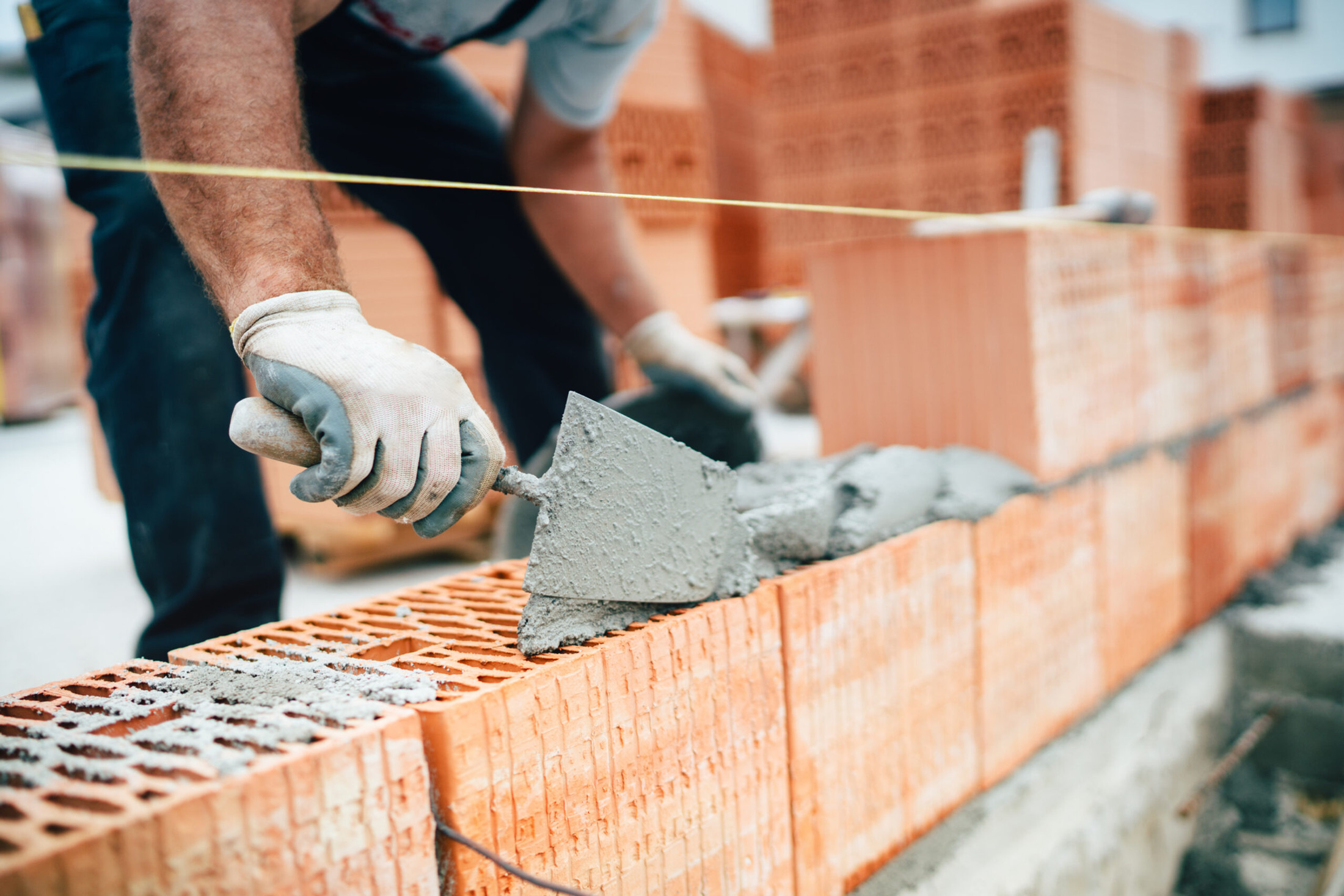
Repointing in Kinson
Brick repointing on houses, bungalows, chimneys and walls across Kinson, with a mortar matched to your wall and a written quote.
The site visit is free and so is the written itemised quote. Thomas Hannen prices every job himself.
Last updated
Repointing in Kinson is mostly on post-war brick houses, bungalows and their chimneys and garden walls, where the joints have weathered out on the exposed sides. We rake the joints out by hand to a proper depth, repoint in a mortar matched to the wall, and quote it in writing first.
On a Kinson house it is usually one wall that gives it away. The gable end that takes the weather, where the mortar has washed out and you can run a finger along the joints and sand falls out. A chimney with gaps you can see from the street. A patch of penetrating damp on an inside wall that appears after a wet week and never quite dries.
We come and look at every elevation, tell you which ones actually need doing and which can wait, and put that in writing. Often it is one or two walls, not the whole house.
The work
Joints on brick semis, bungalows and chimneys
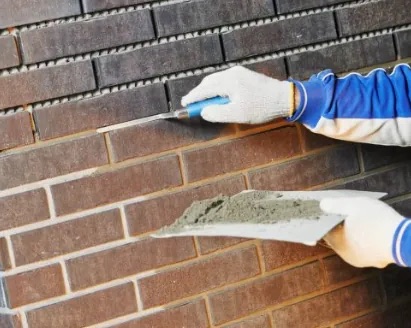
Raking out comes first. Old joints come out to about twice their height, or until we reach sound mortar. We do it by hand with a plugging chisel wherever the brick is soft, and only use a disc cutter on hard cement joints where it will not damage the arris of the brick. A disc run carelessly widens the joint and leaves a wall looking worse than before.
The mix. Most of the houses in Kinson were built with a cement and lime mortar, and the repair mortar should be the same strength or weaker than the brick, never stronger. A hard cement mix on a softer brick drives the frost into the brick faces and they spall. We mix sand, cement and lime in a gauge that suits the wall, and we mix it the same every time, so the colour stays even.
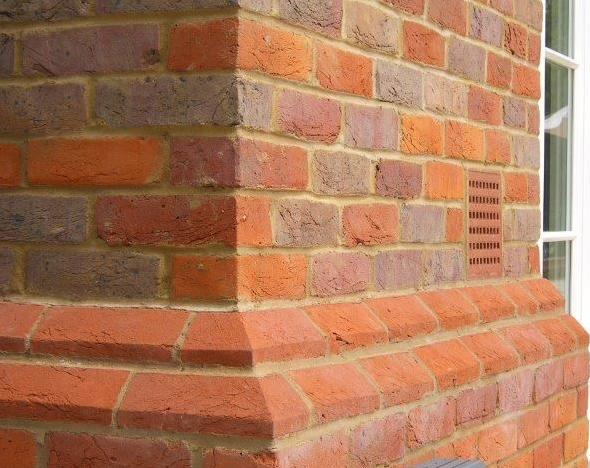
Matching. Before we do an elevation we point a small trial panel in a hidden spot, let it dry, and check it in daylight against the old joints. The joint profile matters as much as the colour: most post-war brickwork here is a flush or bucket handle joint, and a weather struck joint in the middle of a bucket handle wall stands out.
Chimneys and gables. Chimneys lose their mortar first because they are exposed on every side. Open joints near the top let water run down into the loft, and repointing the stack, re-bedding the flaunching and checking the lead flashing is often all the chimney needs. Gables facing the prevailing weather wear next. Both usually need a scaffold, or a tower on a bungalow.
Spalled bricks. Where a brick face has broken away, we cut it out and replace it with a matched brick before pointing. For rebuilding a wall or a stack, see bricklaying in Kinson.
Pairs of semis and council homes. Most Kinson semis share a chimney stack on the party line, and the brick front of a pair was pointed in one go when it was built. Repointing one half leaves a visible line down the middle, so if next door is thinking about it too, one scaffold and one mix does both, priced separately. If you rent from BCP Council, report open joints to them. Owners of ex-council houses instruct the work themselves.
When to leave it. Joints that are weathered but still hard when you scratch them do not need raking out yet, and we will say so.
How it runs
From your call to a written price
One person to ring from the first visit to the last. The quote is itemised, not a figure on the back of a card: access, raking out, the mortar mix, the area of each elevation, any brick replacement and disposal on separate lines, so you can compare it properly against anyone else's.
Nothing is left open or unusable overnight. The site is swept at the end of each day rather than the end of the job, and what comes out leaves with us. If something turns up once we start that nobody could have seen, you get a photograph and a price before we carry on.
Repointing a house is repair and needs no planning permission, and Kinson has no conservation area. Listed buildings are different, because a change of mortar or joint can need consent: the council's listed building records will show whether yours is one.
Cost
What decides the price of a repointing job
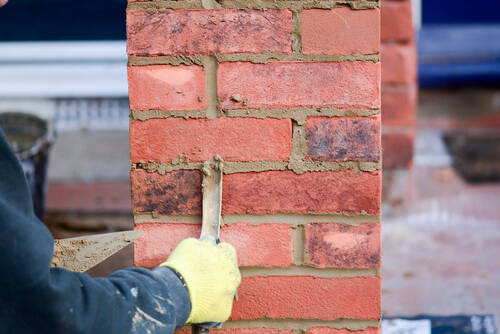
No rate per square metre, because the square metres tell you almost nothing until somebody has looked at what the joints are actually like.
Getting to it. A bungalow gable off a tower, the chimney on a pair of two storey semis, and a garden wall at ground level are three very different set ups. A chimney or a gable wants a scaffold, a boundary wall wants nothing at all. How long the platform stands matters as much as how big it is, and the work at height rules are why it is a priced line rather than something absorbed into a rate.
The joints decide it, not the wall. Raking out by hand is slow, and on soft brick it is the only safe way, because a disc widens the joint and takes the arris off either side. How deep the joints have to come back, and whether the faces have already spalled, sets the hours far more than the area does.
Matching is the part that shows. Too strong a mix is the classic mistake: cement holds water against a soft brick and the face blows off in the first hard frost. Lime is slower to work and slower to cure, and it is the right answer on most pre-1919 walls in Kinson.
Comparing quotes? Ask how deep the joints are being raked and whether by hand or by disc, what the mortar mix is and whether it has been matched to what is there, how many spalled bricks are being cut out and replaced, and whether the scaffold is in the price. Those details, more than the total, show what you are buying.
If water is getting in
Open joints, and water coming through the wall
Ring rather than use the form. A wall with the joints washed out lets driven rain straight through to the inside face, and on a chimney it will find the flashings as well.
We come and look, sheet or temporarily point the worst of it if the weather is against us, and price the full elevation once it has dried out enough to see what is sound. If the damp is inside, move furniture away from that wall so it can dry, and tell us which side of the house it is on. Scheduled work runs Monday to Friday, 8am to 6pm. For anything urgent, ring rather than use the form, and if we cannot pick up we ring you back as soon as we can.
Worth knowing
The older Kinson wants lime, the rest does not
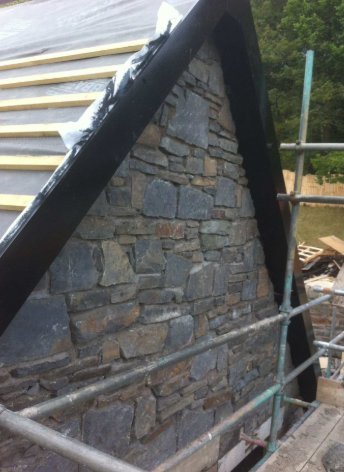
Kinson was a village long before it became part of Bournemouth, and a small part of that older place is still there. The listed buildings are around St Andrew's Church and Pelhams, off Millhams Road, and the old wall along the road by Pelhams is itself listed.
Buildings of that age were laid in soft lime mortar with a soft brick, and they need to be repointed in lime, a natural hydraulic lime such as NHL 3.5, never in cement. On a listed building a change in mortar can need consent too, so check before anyone picks up a chisel.
The other side of that is just as useful. Most houses in Kinson are post-war, built of machine made brick with a cement based mortar, and they do not need lime. If someone quotes you for a lime repoint on a 1950s semi as if it were a period cottage, it is worth asking why. What those houses need is a matched cement, lime and sand mix at the right strength, careful raking out, and the right joint profile. We will tell you which you have before we price it.
Who you are dealing with
A local firm you can check
We cover Kinson and the rest of BH10 and BH11, including Bear Cross, West Howe, Ensbury Park and Northbourne. BCP Council deals with planning and listed building consent, and our Boscombe base is under four miles away.
You are dealing with Bournemouth Roofing & Building, the trading name of Bournemouth Roofing & Building Ltd, registered in England and Wales, company number 15471719, which you can look up in a minute. Thomas Hannen's business, and he is the one who comes out to price the job, not a salesman. A verified customer's 10 out of 10 on Checkatrade. The visit and the written quote are both free. Before you book a visit in Kinson, you can read our customers' Google reviews, word for word, on our reviews page.
Planning at a glance
Do you need planning permission in Kinson?
Most repairs in Kinson need no application at all. What decides whether a change to the outside of your house does is who the council is, whether a conservation area or a listing applies, and whether the place sits in a protected landscape.
| Question | In Kinson |
|---|---|
| Who decides | BCP Council is the planning authority for Kinson. BCP Council's heritage pages set out what it controls. |
| Conservation area | None covers Kinson, so a like-for-like repair is ordinary maintenance. |
| Listed buildings | Yes, there are listed buildings in and around Kinson. If yours is one, work can need listed building consent. |
| Protected landscape | No National Park or National Landscape covers Kinson. |
Questions
Questions about repointing in Kinson
Does my house need lime mortar?
Only if it is old. The listed and older buildings around St Andrew's Church and Pelhams need lime. Most post-war houses in Kinson were built with a cement based mortar, and a matched cement, lime and sand mix is right for them.
Do I need to repoint the whole house?
Usually not: the exposed gables and the chimney wear first. We look at every elevation and tell you which ones need doing now.
How long does repointing take?
A single gable is usually a few days, including the raking out. A whole house takes longer, and we give you the timetable at the quote.
Will the new pointing match?
We do a trial panel first and check it against the old joints in daylight, for colour and for the joint profile.
Nearby, and next door
Repointing near Kinson
Nearby places we also cover for repointing, with straight-line distances from Kinson, and the other trades we offer in Kinson itself.
Repointing nearby
Our other trades in Kinson
Repointing guides
Lime or cement mortar: which do you need? Reading a repointing quote: rake out Listed building consent for repointing and re-renderingEverything we do in Kinson Repointing, all areas Every area we cover
Free quote
Get your Kinson pointing checked
Thomas comes out, looks at every wall and the chimney, and gives you a written itemised quote. The visit and the quote are both free.