
Driveways and patios in Holt
Entrances, drives, patios and paths around Holt and BH21, built around where the water has to go rather than around what is in the brochure.
The site visit is free and so is the written itemised quote. Thomas Hannen prices every job himself.
On a Holt drive the first question is never which surface. It is where the water is going to go, because almost nothing here is on a mains surface water drain and every drive has to deal with its own rain.
Most of what we are asked to look at falls into three groups. A long entrance off the lane that has gone to ruts and potholes and holds water halfway along. Gravel that has thinned in the wheel tracks and spread into the verge. Or a terrace at the back that has dropped at a corner, rocks underfoot and stays green through the winter.
We come out, walk the whole length with you and open a trial hole at the worst point. That usually shows the fault is in one section rather than the lot, and the quote reflects it. You get told plainly when the sensible answer is a repair, and you get told just as plainly when patching a failed base is throwing money at it.
The work
Long entrances, soft verges and patios that hold water
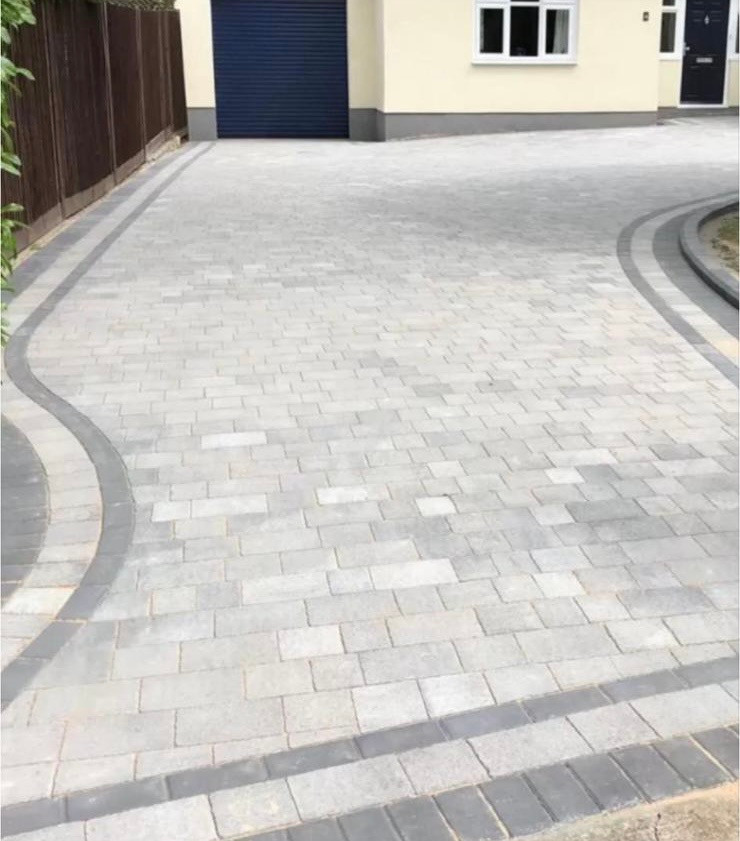
Entrances and the first thirty metres. The stretch nearest the lane takes every turning wheel, every delivery and all the water that comes off the road, and it is nearly always the part that has failed. The repair is not more stone on top. It is excavating down to a firm formation, a geotextile membrane so the stone and the soft ground cannot mix, a sub-base compacted in layers, and a bound top in tarmac or resin where the fall would otherwise wash loose material onto the highway. A channel drain across the mouth stops your water becoming the lane's problem.
Gravel tipped straight onto soil disappears into it, and once it thins the tyres find the soft spot and the water follows the rut. Done properly there is a separation membrane at the bottom, a compacted sub-base, an edge restraint down both sides and a bound strip on the steeper sections. The ground around Holt is slow to drain, so a soakaway wants a percolation test rather than an assumption.
Shared entrances. Several houses off one track is common around here. We will price a whole track and split it by frontage so the neighbours each have something to look at, and phase it so one section is done at a time. Say so at the outset, because it changes how we write the quote rather than how we build it.
Concrete flags on five blobs of mortar rock, pond and stain, and they are what we lift most often. Relaid on a full mortar bed over a compacted sub-base they stop moving, with the finished level kept clear of the damp proof course and a gravel margin along the wall where the garden will not give up the height. Sunken bays are a base fault and weed growth is only lost jointing sand, and we price them separately.
How it runs
From your call to a written price
The quote is itemised: excavation, muck away, sub base, edgings, the surface and the drainage on separate lines, so you can compare it against anyone else's. Access here is often the real constraint, so we agree at the site visit where the muck away goes and whether a grab lorry can reach it or everything shuttles out by tipper. There are listed farmhouses and cottages in the parish, and where a forecourt, boundary wall or gate pier belongs to one of them you need listed building consent before it changes. Widening the opening onto the lane is a dropped kerb application to Dorset Council as highway authority.
Cost
What decides the price of a driveway
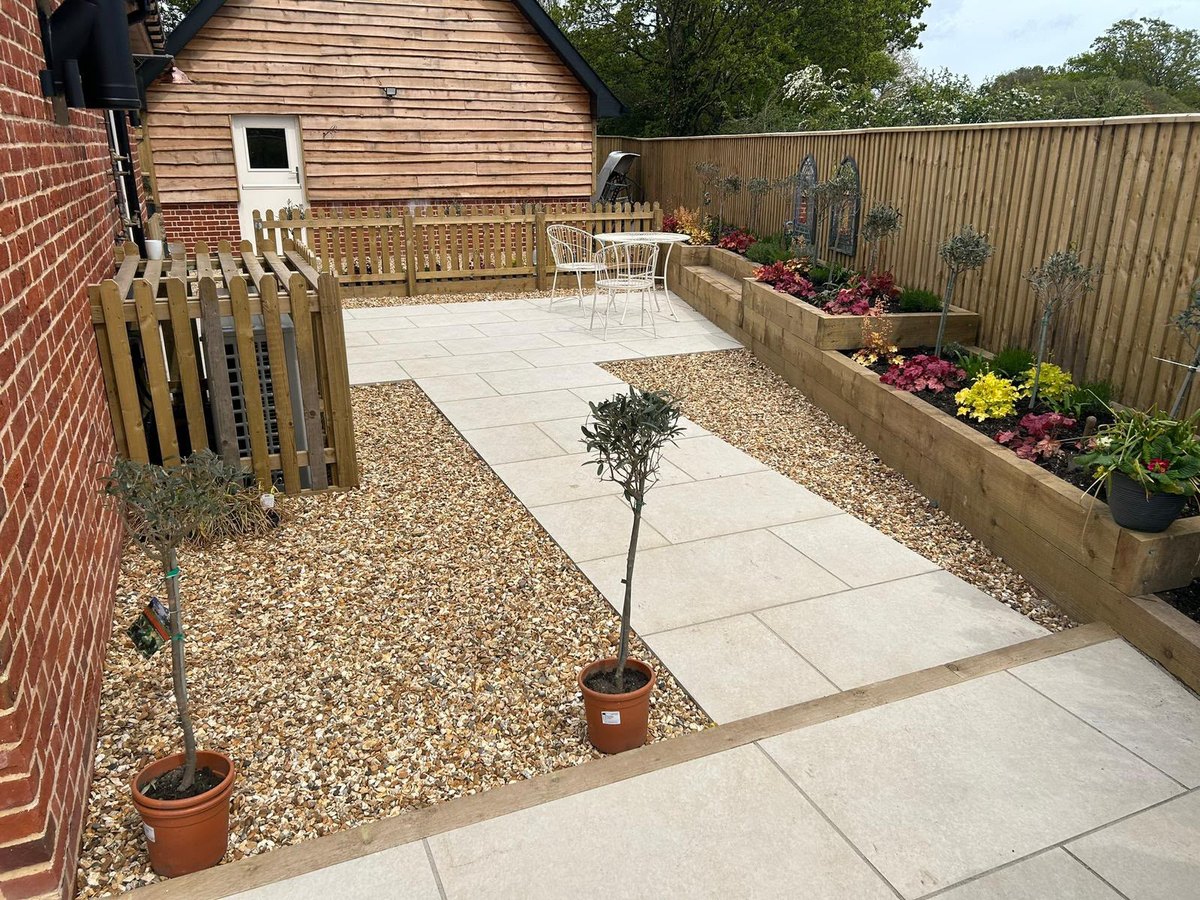
No rate per square metre. What is under it decides more of the cost than what goes on top. A cottage with the door straight onto the lane, a bungalow with a turning area behind a gate, and a detached house at the end of a hundred metres of track are three different jobs. On ground this slow to drain the depth of the dig and the outfall move the number most. Ask any quote how deep the dig is, what sub base goes in, where the water goes, and who takes the spoil.
If it is urgent
A trip hazard, or a drive that floods
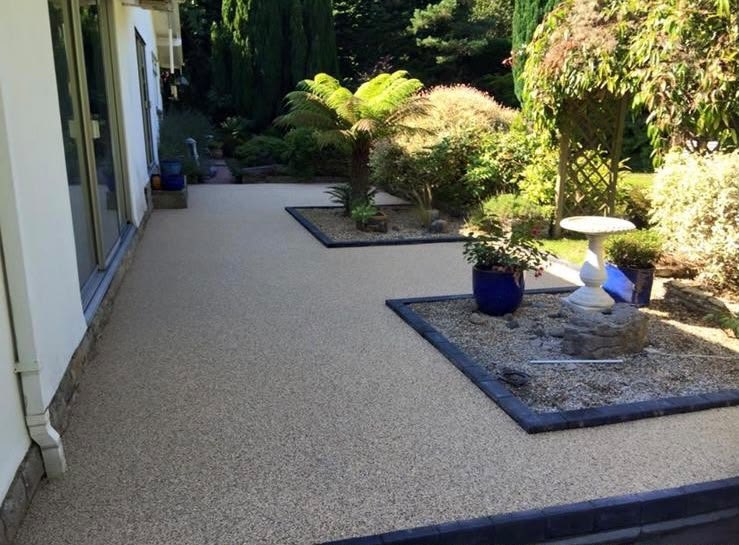
Ring rather than use the form. A slab that has lifted, a bay sunk by a door or a gully that has stopped taking water will not wait. The first visit is about making it safe and getting the water going somewhere. A rut deep enough to ground a car, or an entrance sending its water into the lane, will not keep. The phone is answered 24 hours for emergencies; scheduled work runs Monday to Friday, 8am to 6pm.
The one local thing
Test the ground before anyone draws a soakaway
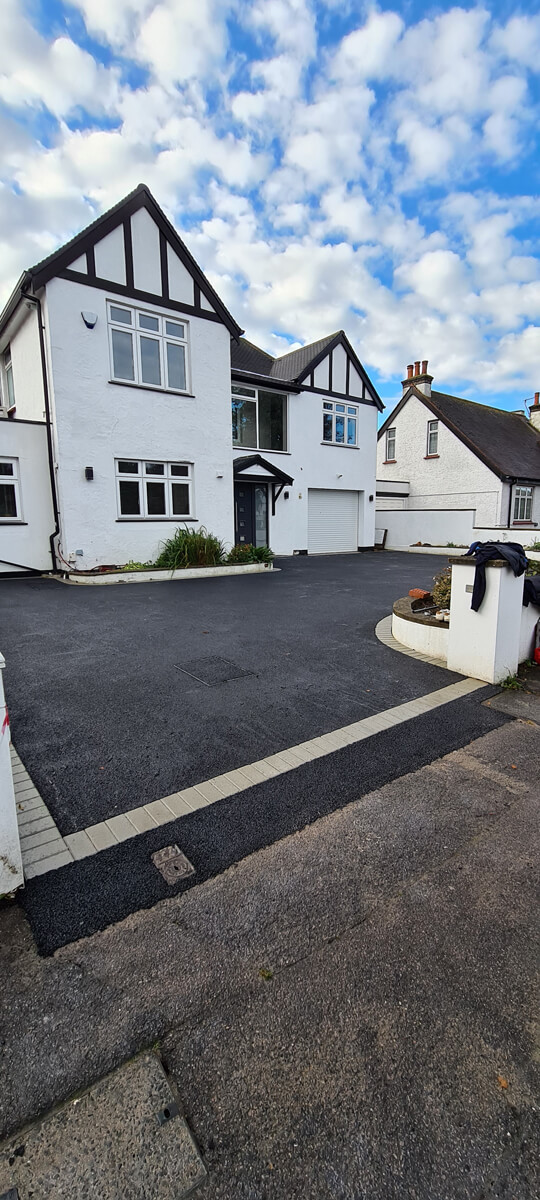
The ground around Holt drains slowly. That matters because the standard answer to surface water on a domestic drive is a soakaway, and a soakaway sized off a table rather than off a test will work perfectly in September and do nothing at all in February. The test is not exotic. It is a hole of a set size, filled with water three times, with the fall in level timed on each go.
It costs a morning. What it buys you is the difference between a drainage design and a drainage hope, and Approved Document H sets out how surface water is meant to be handled.
Where the test fails, there are two honest answers and we will tell you which one your plot allows. Either a positive outfall, piping the water to a ditch or a watercourse with the landowner's agreement, or a permeable surface with a deeper open graded storage layer under it that holds the rain and lets it go slowly.
Both cost more than a soakaway drawn on an assumption, and both are cheaper than doing it twice. The rule worth knowing before you plan anything: over five square metres of new impermeable hard surface at the front, draining to the road, needs planning permission. Keep the water on your own land and it stays permitted development, which is exactly what SuDS is asking for.
Who you are dealing with
A local firm you can check
We cover Holt, Holt Heath and the rest of BH21, out through Furzehill and Colehill to Wimborne Minster, Three Legged Cross and Verwood. Bournemouth Roofing & Building Ltd, registered in England and Wales, company number 15471719, which you can look up in a minute. Thomas Hannen's business, and he is the one who comes out to price the job, not a salesman. A verified customer's 10 out of 10 on Checkatrade. The visit and the written quote are both free.
Questions
Holt questions we get asked
Is gravel or tarmac better on a long rural entrance?
Gravel, on most of the entrances around Holt, provided the edges are dealt with. A long run of tarmac needs a continuous kerb or it breaks up at the sides where wheels drop off, and any tree root under it shows as a hump within a couple of seasons. Gravel over a geotextile and a stone base can be raked and topped instead of cut out. Where it steepens near the road we would bind that section.
The ditch at the end fills up. Can that be used?
Sometimes, and it is often the best answer here, because the ground at Holt has impeded drainage and a soakaway on its own will not empty in winter. A piped outfall into a ditch needs the ditch to be yours or the owner to agree, and it needs a headwall and a grille so it does not collapse or block. Where there is no ditch we look at a swale along the hedge line.
Can we still get the car out while you are here?
For most of it, yes. The excavation and the base go in as sections, so there is always a run of hardcore you can drive on, and we put boards over anything fresh. The exception is the day the binding layer or the mortar goes down, when the surface has to be left alone until the next morning. On a long entrance we start at the house end so the road end stays usable longest.
Is there a wrong time of year to start?
Late winter is the awkward one on this ground. Once the subsoil around Holt is saturated it turns to slurry under a machine and the trench sides will not hold, so the base takes more stone to build and the finish suffers for it. We can still work, but on a heavy plot we would rather book a drier spell and do the drainage first, since that is the part making the rest possible.
What do you look at on the visit before quoting?
Where the water goes, first of all. On a rural entrance that means walking the length of it in the wet if we can, finding the low point, checking whether the culvert at the road is clear, and digging a spit or two to see what lies under the existing surface. After that it is width for passing, turning space at the house, and whether a lorry gets in without reversing onto the lane.
Nearby, and next door
Driveways and patios near Holt
Driveways and patios nearby
Our other trades in Holt
Everything we do in Ferndown Driveways and patios, all areas Every area we cover
Free quote
Not sure whether it needs a repair or a rebuild?
Tell us the address and what you have noticed. We walk the drive, open a trial hole and leave you with an itemised written quote. Both are free.