Exterior cleaning in Langton Matravers
Roof cleaning, stone and render soft washing, patios, steps and gutters across Langton Matravers and the Purbeck ridge.
The site visit is free and so is the written itemised quote. Thomas Hannen prices every job himself.
Cleaning a Langton Matravers house is mostly a question of what the surface is. Purbeck limestone, a stone slate roof and lime joints want low pressure and a treatment. Modern render, block paving and uPVC will take a good deal more.
Three things bring people to the phone in this village. The seaward elevation has gone green again a year after somebody cleaned it. The stone terrace or the steps have grown a film that is genuinely slippery in the wet. Or the gutters have stopped coping and water is running down the face of the wall in every downpour.
We come out, walk the whole property, and go through it surface by surface: this one takes a lance, this one gets a soft wash, this one we would leave alone. The site visit costs nothing and the written price lists the surfaces separately so you can drop any of them.
What the work involves
Stone, render and paving: what each one takes
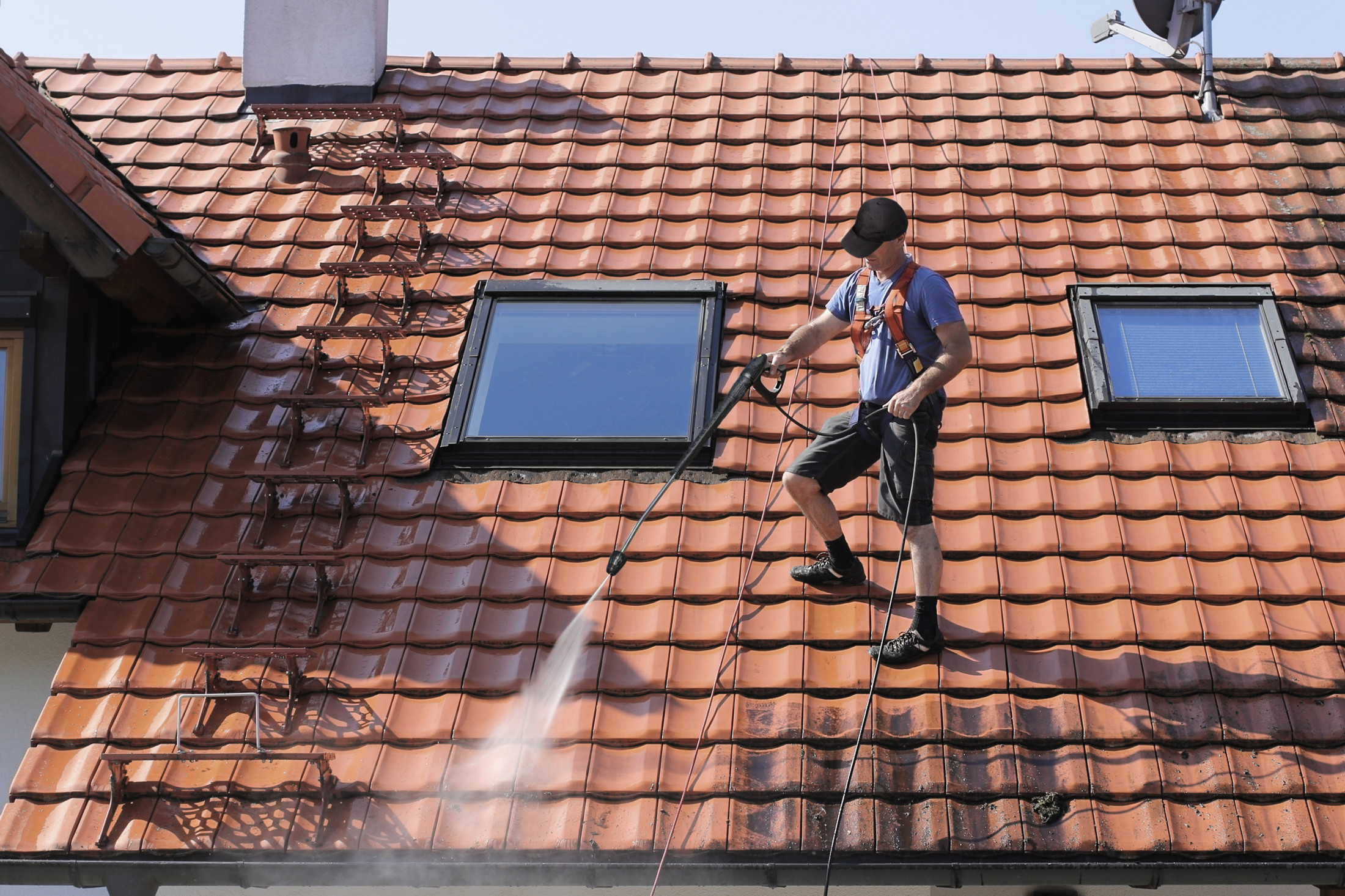
Roof cleaning. Where a roof here is laid in Purbeck stone slate the rules are different from a tiled one. The slates are heavy, laid in diminishing courses and often bedded in lime, so nobody walks them and nothing goes near them at pressure. Moss packs into the joints and the laps and it comes out by hand, worked off dry, then treated. Clay tile and concrete interlocking roofs on the newer houses get the same order of work: scrape the bulk off, clear the ridge, the valley and the gutter, then a biocide. A roof clean done at pressure drives water under the laps and strips the face off the tile, which is how a cleaning job turns into a roofing one.
Purbeck limestone has an open face and lichen roots into it rather than sitting on it, so it comes up with a soft wash and patience rather than force. The same goes for anything with lime mortar in the joints. Rendered and painted masonry, pebbledash and the brickwork on later houses take a low pressure wash and a treatment. Two and a half kilometres from the coast, salt keeps a wall damp between showers and the growth comes back faster, so the treatment matters more here than the wash does.
Stone flags, steps, block paving and concrete all come up differently. Steps and thresholds are the ones worth doing first, because a green film on stone is more slippery than anything else on the property. Block paving is jet washed and then re-sanded, and we would rather re-sand it properly than seal over a joint that is half empty. Old stone paving gets a wider nozzle and less pressure, because the mortar between flags is usually softer than the stone. Wind puts as much in a gutter here as trees do, and a blocked outlet is the usual reason a wall has a dark stripe down it.
Before the water runs. Planting is watered and sheeted, the gully and any open drain gets covered, and vents and light fittings are protected. A biocide is a regulated product and we treat it as one: the dilution on the label, only on surfaces it is approved for, and nothing into the drains. That is the short version of the biocides regime the HSE administers and pollution prevention guidance. We would talk you out of sealing stone paving that still has damp under it, and out of any abrasive cleaning on limestone.
How it runs
From your call to a written price
Langton Matravers has its own conservation area and around fifty listed entries in and about the village. Washing a wall is maintenance and does not need permission, but taking off a limewash or a historic finish, sealing stonework or repainting in a different colour can, and on a listed building that means listed building consent. We will say which of those your job is before anything is booked.
The quote is itemised: the method for each surface, protection, access and where the water and residue go, each on its own line. If something turns up once we start that nobody could have seen, you get a photograph and a price before we carry on.
Cost
What decides the price of a clean
No rate per square metre: the same square metre can be twenty minutes or two, depending what is growing on it. A cottage tight to the road with no side gate, a detached house with a stone terrace wrapping round it, and a converted barn with a tall gable end are three different jobs. Ground level off a lance is one thing, a roof slope another, and work at height rules decide which.
Comparing quotes. Ask what method each surface gets, whether treatment is included or only a rinse, whether a second visit is part of it, and where the run off goes.
If there is a date
A viewing, a visit or a deadline
Ring rather than use the form. It is not emergency work, but it usually has a date on it: a sale, an inspection, scaffolding coming down. Tell us the date and we will say honestly if it can be done properly. Say if it is a holiday let changeover, because the seaward elevation needs the longest run at it. The phone is answered 24 hours for emergencies; scheduled work runs Monday to Friday, 8am to 6pm.
The one local thing
Salt keeps a surface damp, and damp is what grows
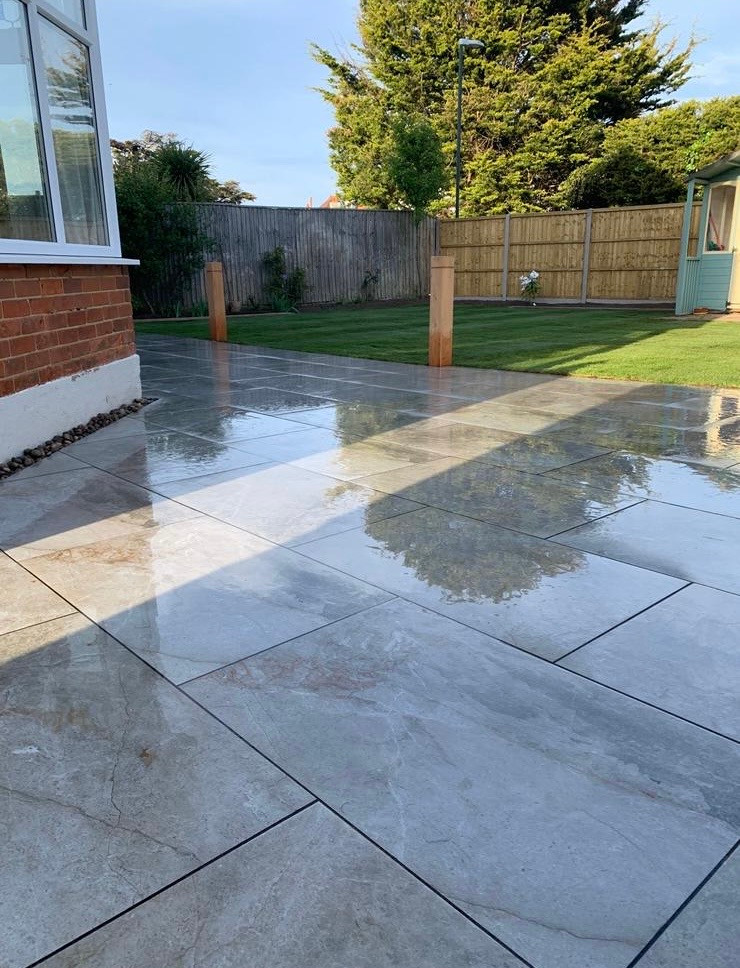
The sea is under two miles away and the prevailing wind comes off it. Salt lands on everything and it does one thing that matters here: it holds moisture. A rendered wall or a stone flag with salt on it stays damp for hours after an inland surface has dried, and damp is the whole reason algae, moss and lichen get established in the first place.
That is why the same house can look clean on the sheltered side and green on the seaward side within a year of the same wash, and why people in the village end up thinking the last clean did not work.
What it changes is where the money should go. On a coastal elevation the treatment matters more than the wash. Water takes the growth off the surface and salt puts the conditions back within a week, so a rinse on its own is short lived here in a way it is not five miles inland.
A biocide gets into the surface and slows the regrowth down, and rinsing salt off the paintwork and glass with clean water at the end is worth more than another pass at pressure. Nobody should be answering a fast return of green by turning the pressure up. The answer is treating it, and accepting that the seaward face wants doing more often than the rest.
Who you are dealing with
A local firm you can check
We cover Langton Matravers and the villages along the Purbeck ridge, over to Swanage and Corfe Castle and across the BH19 postcodes. Bournemouth Roofing & Building Ltd, registered in England and Wales, company number 15471719, which you can look up in a minute. Thomas Hannen's business, and he is the one who comes out to price the job, not a salesman. A verified customer's 10 out of 10 on Checkatrade. The visit and the written quote are both free.
Questions
Langton Matravers questions we get asked
We are 2.6km from the sea. Does salt still reach us?
It does. Salt carries a good way inland on the wind off the Purbeck coast, and at 2.6km it is on the render and down in the joints of the paving even though you cannot taste it. Salt holds moisture, so a surface stays damp between showers and growth comes back quicker than it would inland. Rinsing properly matters as much as the wash, because salt left behind is the thing keeping it wet.
The whole village is a conservation area. Do we need consent?
Not to clean. Langton Matravers Conservation Area 1 controls how the place looks, so replacing a covering with something different needs consent while returning a surface to what it already is does not. With 50 listed entries in the village the likelier constraint is your own building being listed, and that alters the method rather than the permission. We establish which of the two applies before quoting, not after.
Why is the seaward gable always the worst one?
It takes the weather. The exposed elevation here faces south west, straight into the wind coming up over the ridge, and driven rain works at the corners, the window heads and the verge rather than the middle of a wall. Everything that keeps a surface wet is concentrated on that side. We often do that gable and the paving beneath it and leave the sheltered walls, which keeps the visit down to a day.
What state is the garden left in afterwards?
Wet, and with a line of scraped moss where the sheeting was. Ground in Langton Matravers is freely draining, so the water goes away rather than standing, but the solids do not, and they are bagged and taken off site instead of raked into a border. Beds and any glass get covered before we start. We sweep the paving at the end so you are not treading green back indoors.
The lane is single track. Can you get kit up here?
Yes, with a bit of planning. We run off a van tank and a long hose so the vehicle can sit somewhere sensible rather than at your gate, which matters on the lanes in South East Purbeck where there is nowhere to pass. Where a tower is needed it comes in sections and goes up in the garden. Thomas Hannen looks at the access on the visit and puts on the quote where the van stands.
Nearby, and next door
Exterior cleaning near Langton Matravers
Exterior cleaning nearby
Our other trades in Langton Matravers
Everything we do in Swanage Exterior cleaning, all areas Every area we cover
Free quote
Get a price for cleaning in Langton Matravers
Tell us which surfaces have gone green and we will come and look at them properly.