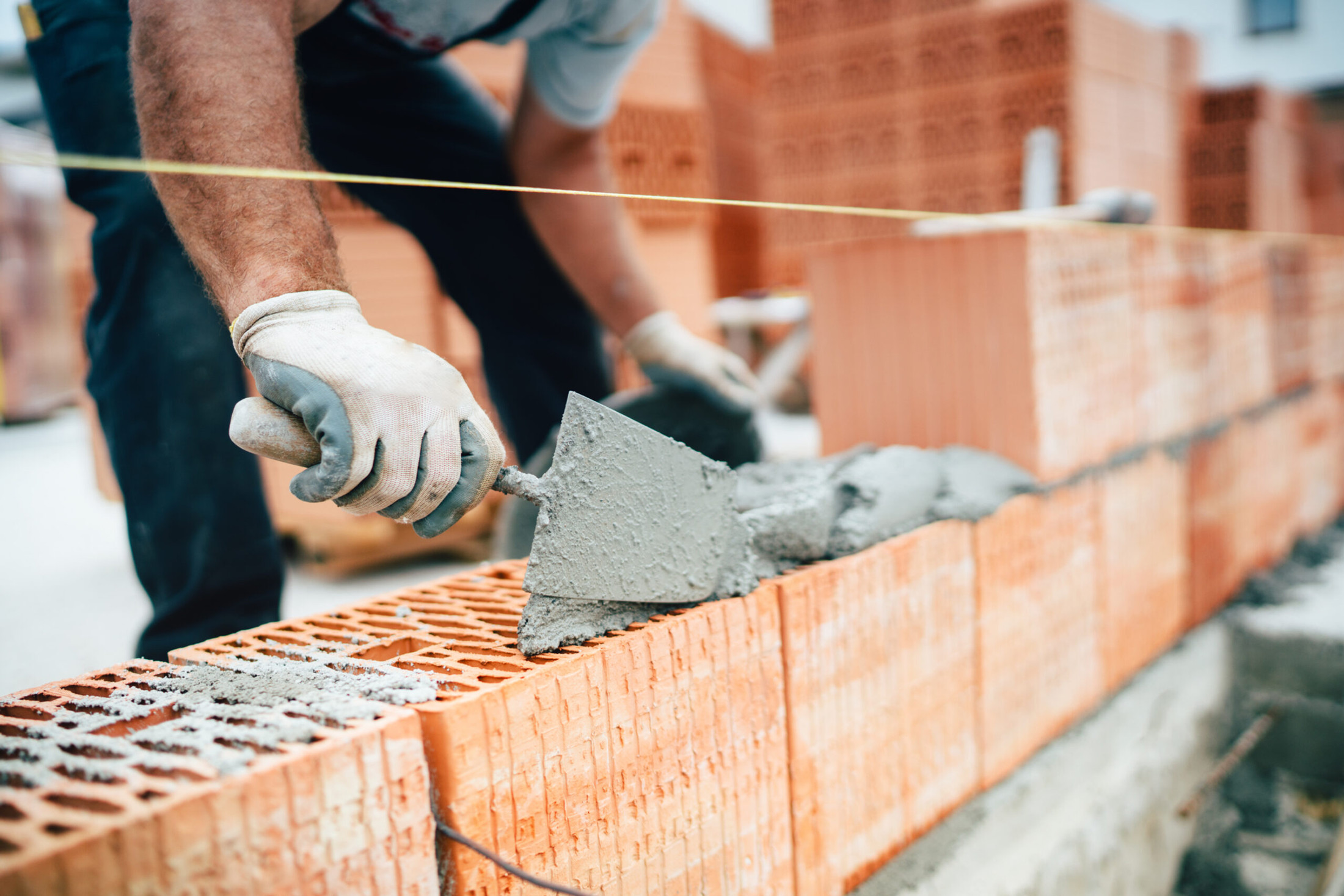
Bricklaying and repointing in Langton Matravers
Stone and brick walls a mile and a half up from the sea, pointed in a mix that suits the wall and the weather it takes. Free site visit, written price, no pressure.
The site visit is free and so is the written itemised quote. Thomas Hannen prices every job himself.
Nearly every wall we are called to in Langton Matravers has the same story: it was pointed in cement at some stage, and the cement is now holding damp and salt inside the stone instead of letting it out. Raking that back and repointing in lime is the repair.
Three things bring people to the phone here. The seaward side of the house has gone soft, with joints washing out and green growth sitting on it all winter. A stone boundary wall along one of the lanes has started to belly out or drop its coping. Or a chimney stack has begun shedding mortar and nobody wants to think about what is holding the pots in.
None of those need a builder to sell you a rebuild. They need somebody to get close enough to see which joints have failed and how deep the damage runs, which is what the first visit is for. We look at the whole elevation, photograph it, and give you an itemised written price with the mortar mix written on it.
The work
The jobs we do on Langton Matravers walls
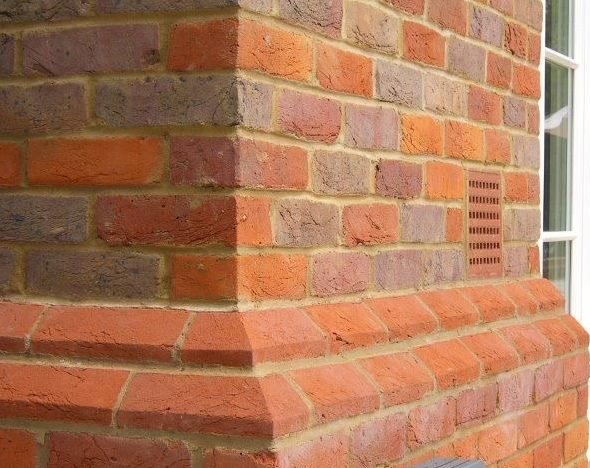
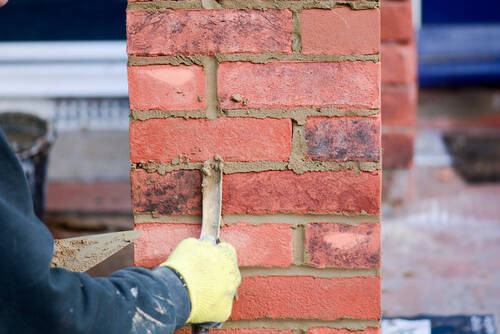
Repointing stone and brick in lime. The older walls in the village are Purbeck limestone rubble, laid up with wide irregular joints, often with brick dressings round the openings and a brick stack on top. We rake those joints out by hand. A disc cutter is quicker and it is wrong here: it widens a joint that was never straight and scars the stone either side, and you cannot put either back. Pointing goes back in an NHL lime with a sharp sand matched for colour, finished just back from the face and brushed, never as a proud weather struck band that would shed water straight onto the stone below it.
The seaward elevation. At 2.6km from open water the specification changes. Salt travels in on the wind, sits in the outer few millimetres of a wall and keeps the surface damp between showers, so the south and west faces, which are the exposed ones here, stay wet far longer than the sheltered sides. That is what powders a lime joint early and lifts the face off a soft brick. We point the exposed elevations in a slightly more open mix so they can dry, and we tell you honestly that side will come round again sooner than the rest of the house. Anything metal built into the wall suffers the same way, so old cramps and wall ties get checked while the scaffold is up.
The lanes here are lined with stone walls and they nearly all fail from the top down. Once the coping is loose, water gets into the core, frost does the rest and the wall bows. We take a bowed length down to sound work, reuse the original stone, rebuild off the existing footing and rebed the coping so it throws water clear. Gate piers that have twisted usually need taking down and setting back up plumb. A new wall is a different question, and Planning Portal guidance on garden walls sets out the height you can build to before planning permission is involved.
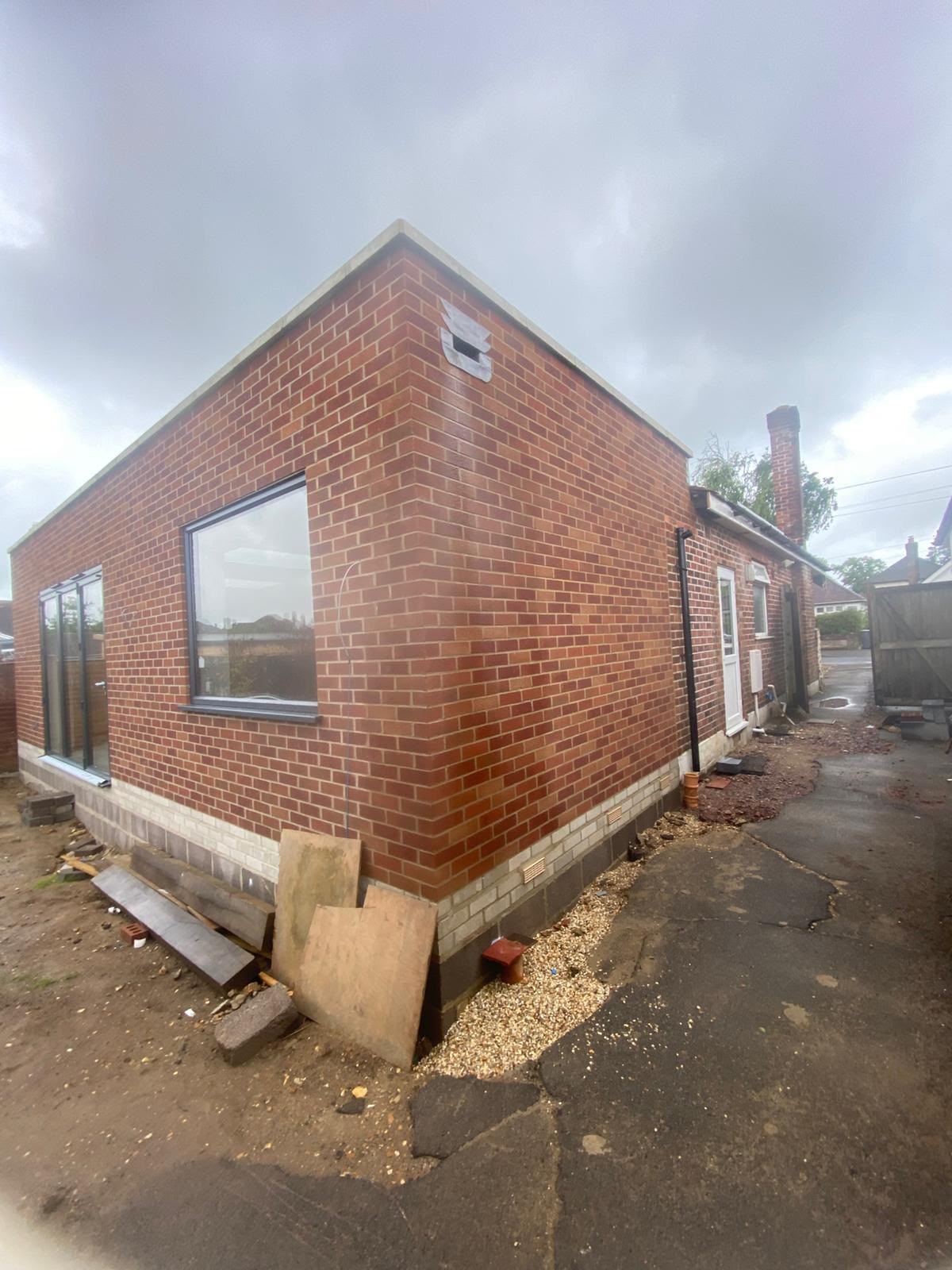
Brick stacks on stone houses take everything: re-flaunching, repointing, cutting out bricks whose faces have gone and replacing them with reclaimed stock of the right size. Where a stack has movement we rebuild from the last sound course. Extensions, garages and rebuilt returns go up in cavity construction: blockwork inner leaf, outer leaf in stretcher bond, wall ties at proper centres, a damp proof course above ground level and a lintel sized for the opening. Where new work meets an old wall on the line with next door, the Party Wall etc. Act 1996 applies and it is easier dealt with early than argued about later.
How it runs
From your call to a written price
Same team from the first visit to the last, one person to ring, and the quote itemised: access, raking out, the mortar mix, the area of each elevation, any brick replacement and disposal on separate lines. Langton Matravers has its own conservation area and 50 listed entries in the parish, so the first thing we establish is where your address sits. Pointing an unlisted wall back the way it was is repair and needs nothing. Work to a listed building needs listed building consent from Dorset Council before it starts, and other permissions you may require is worth a read if you are altering rather than repairing.
Cost
What decides the price of a brickwork job
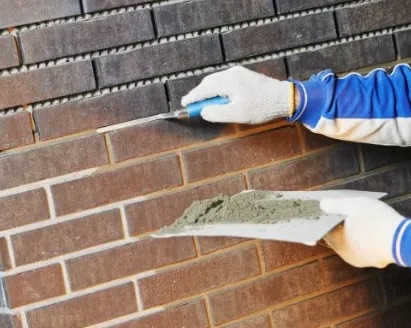
No rate per square metre: the metre of wall tells you nothing until you see the joints. A stone garden wall off the ground, a cottage gable on the lane and a stack on a detached house are three different prices. How long the platform stands matters as much as its size, and the work at height rules are why it is a priced line. Raking by hand is slow, so joint depth and spalled faces decide the hours, and matching a mortar or sourcing stone takes trial panels. Ask how deep joints are raked, by hand or disc, and whether the scaffold is in.
If something has moved
Loose brickwork, or a wall that has shifted
Ring rather than use the form. Anything overhead or leaning goes to the front of the queue. A lot of the walls here stand right on the lane or hold a bank back, so tell us if one is leaning over a footpath or a parking space. The first visit is about making it safe. The phone is answered 24 hours for emergencies; scheduled work runs Monday to Friday, 8am to 6pm.
Worth knowing
What the salt air does to a wall here, and what to do about it
Sitting a mile and a half up from the coast changes a wall in two ways, and neither is obvious from the pavement. The first is that salt carried in on the wind is hygroscopic: it pulls moisture out of the air and holds it, so a wall that would dry out between showers inland stays damp for days. The second is that when it does finally dry, salt crystallises just under the surface and pushes the face of the material off from behind.
That is why spalling here so often shows on the south and west elevations and hardly at all on the sheltered side of the same house, and it is why a wall that has been sealed or pointed in hard cement gets worse rather than better. Sealing traps the salt in. The wall needs to be able to breathe it out.
What that means in practice, if you are getting quotes. Ask what mix is going on the exposed elevation and expect it to be different from the sheltered one, because a single specification for the whole house is a sign nobody has walked round it. Ask about the metalwork: ties, cramps, old fixings and lintel bearings corrode faster this close to the sea, and the rust expands and cracks the brick around them.
And keep an eye on ground levels, because a raised patio or a bed piled up over the damp proof course will pull salt and water into the wall from below, which no amount of pointing will fix. We will point out anything of that sort at the site visit whether it is our work or not.
Who you are dealing with
A local firm you can check
We cover Langton Matravers, Worth Matravers, Kingston, Acton, Swanage and Corfe Castle, and across BH19 and the rest of Purbeck. Bournemouth Roofing & Building Ltd, registered in England and Wales, company number 15471719, which you can look up in a minute. Thomas Hannen's business, and he is the one who comes out to price the job, not a salesman. A verified customer's 10 out of 10 on Checkatrade. The visit and the written quote are both free.
Questions
Langton Matravers questions we get asked
Our wall is stone, not brick. Do you point those?
We do, and to a different rule from brick. On stone the mortar is kept back from the face rather than run over it, so the stones read as stone and water sheds off them instead of sitting on a ledge of mortar and soaking in. Inside Langton Matravers Conservation Area 1 that joint finish is part of what is controlled, so we copy the profile already on the wall instead of choosing one that suits us.
We are 2.6km from the coast. Is salt an issue inland?
It carries this far. At 2.6km the wind still puts salt onto the south west face, which is the exposed elevation at Langton Matravers, and it keeps the joint damp so the mortar never fully dries between one shower and the next. Anything metal in that wall corrodes from the outside in at the same time. In practice the seaward face wants attention while the sheltered ones are sound, so we price it on its own.
There are 50 listed entries here. What does that mean for us?
It means the odds of your house or its boundary wall being listed are higher than in most villages. Langton Matravers has 50 listed entries as well as its own conservation area, so before mortar is cut out we establish which of the two applies to you, if either. Listed building consent covers the mortar itself, whereas conservation area control is about appearance, so a matching repair remains maintenance. Ask Dorset Council and they will put the status in writing.
The lane is narrow. Where would the scaffold and van go?
That is agreed at the survey rather than discovered on the first morning. Langton Matravers has tight frontages and lanes with no verge, so we work out whether a platform can stand on your ground, whether anything oversails the footway and needs a licence, and where the mixer and the sand can sit without blocking a neighbour in. Materials arrive in one load. Where nothing fits outside, the job runs off a tower instead.
Does the coast designation restrict a rebuilt front wall?
It brings design scrutiny, not a refusal. Langton Matravers falls within the Dorset and East Devon Coast landscape designation, so anything visible from the road or the coast path is judged on how it sits in that setting. Rebuilding a front wall in the materials already used along the street is ordinary repair. Raising its height, switching to a different stone or capping it in something modern is the point at which you should ask before starting.
Nearby, and next door
Bricklaying and repointing near Langton Matravers
Bricklaying and repointing nearby
Our other trades in Langton Matravers
Everything we do in Swanage Bricklaying and repointing, all areas Every area we cover
Free quote
Have someone look at the wall properly
A free site visit in Langton Matravers, photographs of every fault we find, and an itemised written quote with the mix and the method on it.