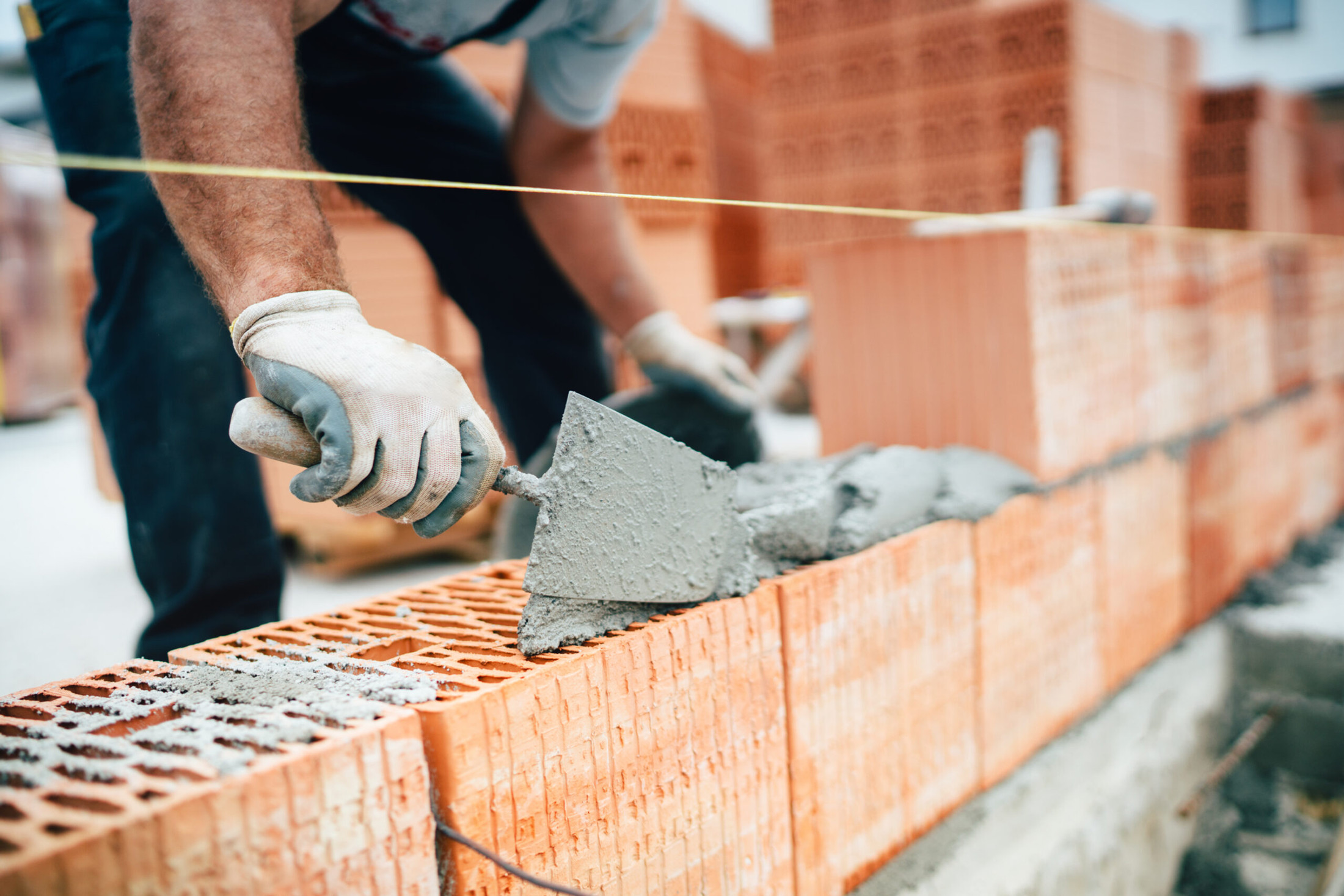
Bricklaying and repointing in Swanage
Lime repointing on stone and brick, chimney stacks, retaining and garden walls across Swanage and the Purbeck villages.
The site visit is free and so is the written itemised quote. Thomas Hannen prices every job himself.
Bricklaying and repointing
Repointing in Swanage: what we do about a wall in the salt
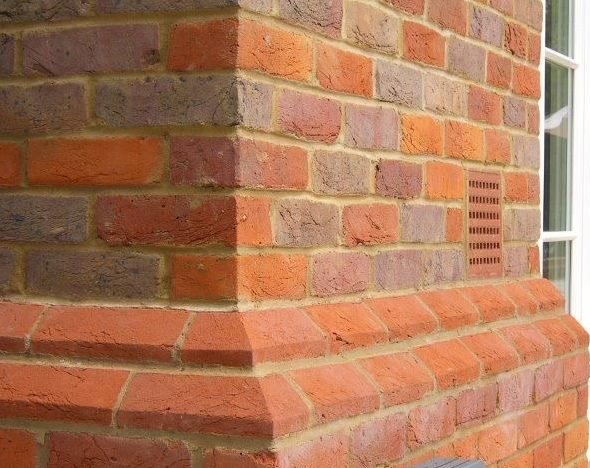
Swanage is largely built of its own stone, and stone walls here fail at the joint long before the stone gives up. Rake the failed mortar back by hand, repoint in a lime mix weaker than the stone around it, and leave the sound work alone. On a seaward elevation that joint has a harder life than anywhere else on the building, and it is priced and specified separately for exactly that reason.
Three things bring people to the phone in the town. Joints on the seaward side of a house washed back until you can get a finger in, while the sheltered elevation still looks fine. Brick or stone faces flaking and shedding a fine grit onto the path below. And the usual list of things that will not wait: a chimney with movement in it, a garden wall that has lost its coping, a retaining wall on a slope bellying out.
We come and look at the wall rather than quote from a photograph, because damp brickwork, salt damaged brickwork and brickwork that is simply dirty look much the same in a picture and want three different jobs doing. You get a survey in plain words, a note of what will keep for a few years, and an itemised written price for the part that will not. The site visit and the quote are both free.
The work
The brickwork and stone jobs we do in Swanage
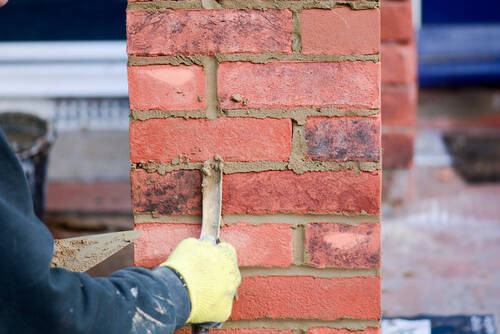
Repointing Purbeck stone. A great deal of the older town is local limestone laid as rubble or roughly coursed, in a lime mortar, and it is solid wall construction that has to stay breathable. Over a quarter of the stock here predates 1919, with the biggest single slice pre-1900. The joints are wide and no two are the same shape, so it is slow, careful work rather than a run along a straight bed. We rake out by hand, never with a disc cutter, and point back in an NHL lime mix with the sand matched for colour and grain, finished so the mortar sits at the stone face rather than smeared out over it. A sample panel goes up and dries in daylight before the rest of the elevation is touched.
The Victorian terraces pair stone walls with soft red brick around the windows, at the corners and up the stacks, and that brick is often the first thing to go. Two materials on one elevation need two mixes and two profiles, and treating the whole wall as one job is how faces end up spalling. Stacks here stand in the wind on every side, with the worst of it off the south west: cracked flaunching, soft top courses, a lean. We rebuild course for course, reuse what is sound and match what is not. That is work at height off a tower or a scaffold under work at height rules, priced as its own line.
Garden walls, steps and retaining walls. The town runs up a hill and a lot of the boundary walls are holding a garden back rather than just marking it. Those fail because of water behind them and a coping that has stopped shedding, not because of the pointing, so repointing a bowed retaining wall is money wasted. We rebuild bowed lengths with the drainage and weep holes they never had, reinstate copings to take the weathering, rebuild gate piers, and set a damp proof course in at the base where a wall will take one.
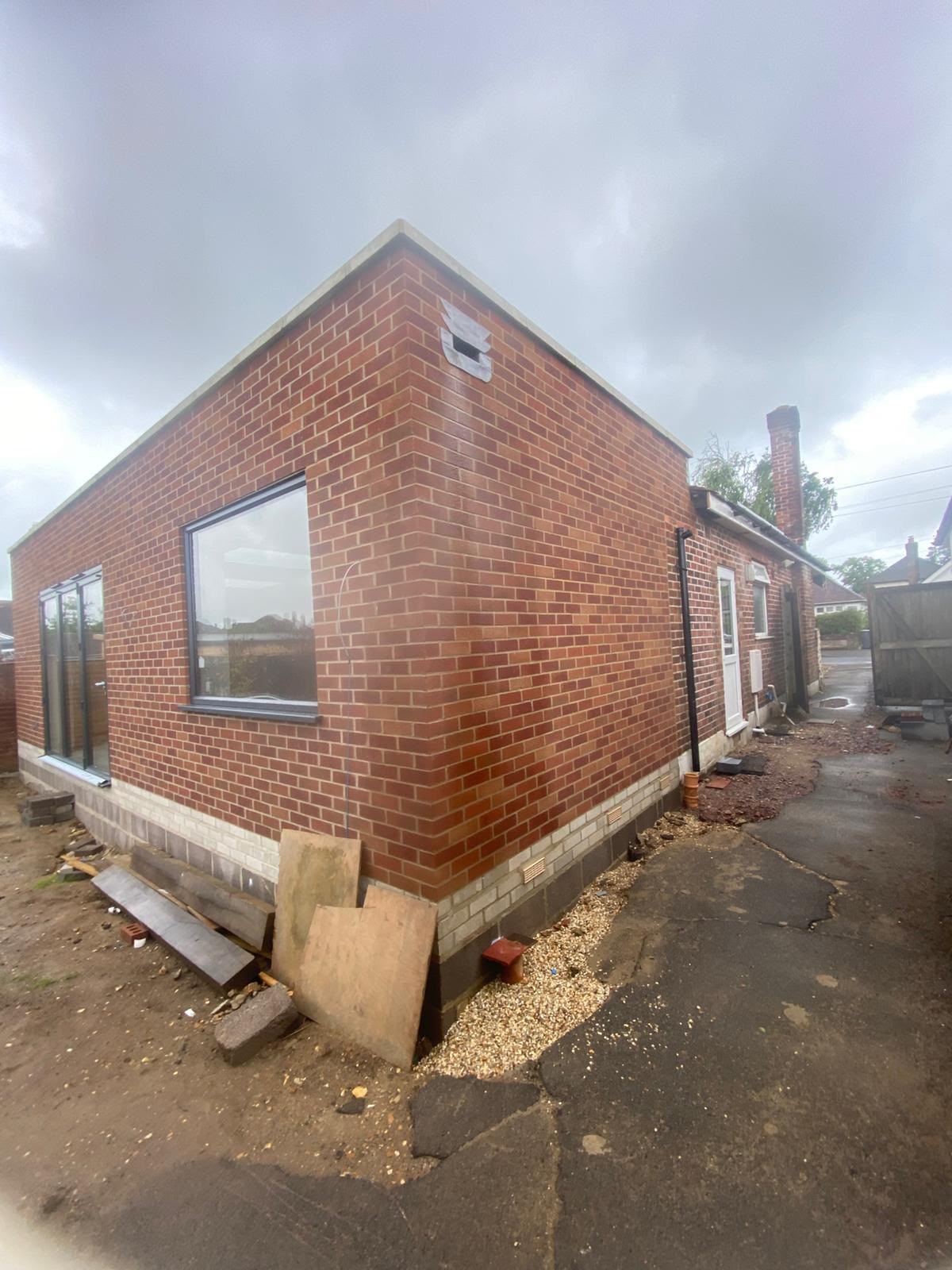
Away from the old town centre a lot of Swanage is cavity built, and at a mile and a half from the sea the ties in that cavity corrode faster than they do inland. The sign is a crack running dead level along one bed joint right across an elevation, sometimes with a slight bulge. It is not a rebuild. We confirm it with a borescope through one small hole, fit replacement stainless ties on a set pattern, make the holes good and repoint the cracked courses. Once a brick or a soft stone has shed its face, pointing round it only tidies the damage, so we cut out and replace with reclaimed or handmade stock matched on size, colour and texture, taking from a hidden elevation to keep a front elevation right. On new extension and garage skins we specify stainless rather than galvanised for anything buried in a wall, which costs a little more once and saves an elevation later.
How it runs
From your call to a written price
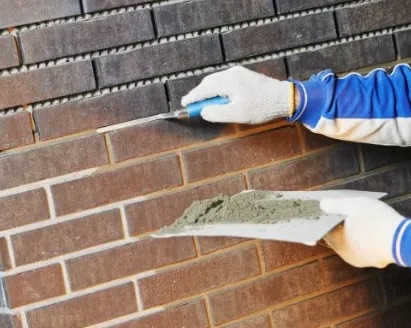
The quote is itemised by elevation: access, raking out, the mix, brick replacement and disposal on separate lines. Swanage is Dorset Council. Repairing a wall like for like is maintenance and needs no planning permission. The town has a hundred and twenty nine listed entries though, and conservation area boundaries run through parts of it, so it is worth checking your own address: on a listed building or its garden wall, repointing counts as alteration and needs listed building consent. A new or raised boundary wall has height limits set out in Planning Portal guidance on garden walls, structural work goes through building control, and anything on a shared boundary brings in the Party Wall etc. Act 1996.
Cost
What decides the price of a brickwork job
No rate per square metre: the metre of wall tells you nothing until you know what the joints are like. Flats are the biggest single part of the town, so a terrace on a hill with steps to the door, a flat where the outside wall belongs to everybody, and a bungalow with room for a tower all price differently. How long a platform stands matters as much as its size, and the work at height rules are why it is a priced line rather than an optional extra. Ask the rake depth, hand or disc, and whether the scaffold is in.
If something has moved
Loose brickwork, or a wall that has shifted
Ring rather than use the form. Anything overhead or leaning goes to the front of the queue: the first visit makes it safe, and we price the permanent repair once we can see how far the movement goes. In the town it is most often a chimney on an exposed terrace, or a sea facing wall that has lost its coping. The phone is answered 24 hours for emergencies; scheduled work runs Monday to Friday, 8am to 6pm.
The one local thing
The seaward elevation is a different wall from the other three
A mile from the sea, salt arrives on the wind and lands on everything. It does two things to masonry and both of them matter. It holds moisture, so a salted wall stays damp between showers instead of drying out, and it crystallises inside the pores of brick and soft stone, pushing the face off from within.
That is why so many houses here have one elevation in poor condition and three that look nearly new. The same salt corrodes anything metal buried in the wall, which is why cavity wall ties and old fixings go from the seaward side inwards, and why a crack along a bed joint on that elevation deserves a proper look rather than a smear of mortar.
What to do about it is mostly about not making it worse. Do not let anybody seal or paint a salted wall: a water repellent traps the salt and the damp behind the surface and the face comes off in sheets a few winters later, which is the single most expensive mistake made on walls in this town. Keep the mortar softer than the masonry so the joint takes the damage instead of the stone.
On the exposed side, ask for a weather struck or bucket handle joint rather than a recessed one, because a recess holds water on a wall that never gets a chance to dry. Specify stainless for ties and fixings on any new work. And expect to repoint the seaward elevation on its own more often than the rest of the house, which is a small job done at the right time and a scaffold and a rebuild if it is left.
Who you are dealing with
A local firm you can check
We cover Swanage, Langton Matravers, Corfe Castle, Studland and the rest of BH19, and we are eight miles out over the ferry, so a look at a wall is a morning rather than a day out. Bournemouth Roofing & Building Ltd, registered in England and Wales, company number 15471719, which you can look up in a minute. Thomas Hannen's business, and he is the one who comes out to price the job, not a salesman. A verified customer's 10 out of 10 on Checkatrade. The visit and the written quote are both free.
Questions
Swanage questions we get asked
Does the sea attack mortar as well as the fixings?
It does, through salt. Swanage sits about 1.6km from the coast, so salt in the air lands on the wall, dissolves in rain and crystallises inside the pores of brick and mortar as it dries out. That crystal growth pushes the face off the brick and turns a joint to sand from the outside in. Salt also holds moisture, so a seaward elevation stays damp between showers and never gets the drying spell an inland one does.
Over a quarter of Swanage predates 1919. Why does that matter?
Because 28.2% of the housing here is older than the cavity wall and the biggest slice of it, 21.3%, is pre-1900. Those walls were built to get wet and dry out again through the joint. A cement repoint stops that happening and the water leaves through the brick face instead, which is why so many old frontages in the town show blown arrises above a hard band of grey mortar. Lime goes back on those.
Surface water is a problem in the town. Does it hit brickwork?
It loads the bottom of a wall. The mapped surface water risk here is high, the town falls in flood zones 2 and 3, and the Swan runs within about fifty metres of parts of it, so a low wall can stand in water for hours after a downpour. Brick and lime both take that up. Where we rebuild a base course we use a denser mix low down and keep the softer work above where it stays dry.
Does the coast designation limit what we do to a frontage?
It brings design scrutiny to anything reading from the street or the seafront. Swanage lies within the Dorset and East Devon Coast and the Dorset landscape designation, so a change of material on a visible elevation attracts more attention than the same change out of sight. Repair in matching mortar is not a design change. There is no conservation area of its own here, but 129 listed entries, so check whether yours is one.
Would a water repellent coating slow the salt damage?
It normally speeds it up. A repellent stops water getting in at the face but does nothing about the salt already in the wall or the moisture arriving from behind, so drying happens just under the coating instead of at the surface. The crystals form there and lift the face off in sheets. Breathable lime, sound rainwater goods and ground kept clear of the wall do the job coatings are sold for.
Nearby, and next door
Bricklaying and repointing near Swanage
Bricklaying and repointing nearby
Our other trades in Swanage
Everything we do in Swanage Bricklaying and repointing, all areas Every area we cover
Free quote
Get a written price for your brickwork in Swanage
Tell us which elevation is giving trouble and we will come and look at it properly. Free visit, itemised written quote, and a straight answer about what can wait.