Insulation in Swanage
Loft work over old cut roofs, whole roof spaces done at once above converted flats, and breathable linings on stone walls.
The site visit is free and so is the written itemised quote. Thomas Hannen prices every job himself.
Before anything is priced in Swanage there are two things to settle: what is really above the ceiling, and who owns it. In a house that is a morning with a torch and a rule. In a flat it is also a question about the lease. We sort out both on a free visit and quote from what we find.
The calls come from three sorts of home. A stone terrace in the old town that costs a fortune to warm and has a cold room at the back. A top floor flat where the heat goes straight up and the bill makes no sense. And a bungalow up the hill with a loft that was done once and has been storage ever since.
None of those is fixed by ordering more material. What each needs is somebody up there first: the real depth of what is in place once the top is lifted, whether the eaves are open or were closed up when the roof was last done, what the ceiling below will actually take, what the walls are built of, and where the tank and the pipe runs sit. The written itemised quote comes off the back of that, with the ventilation work on its own line rather than folded into a single figure.
The work
The lath and plaster will not take a knee
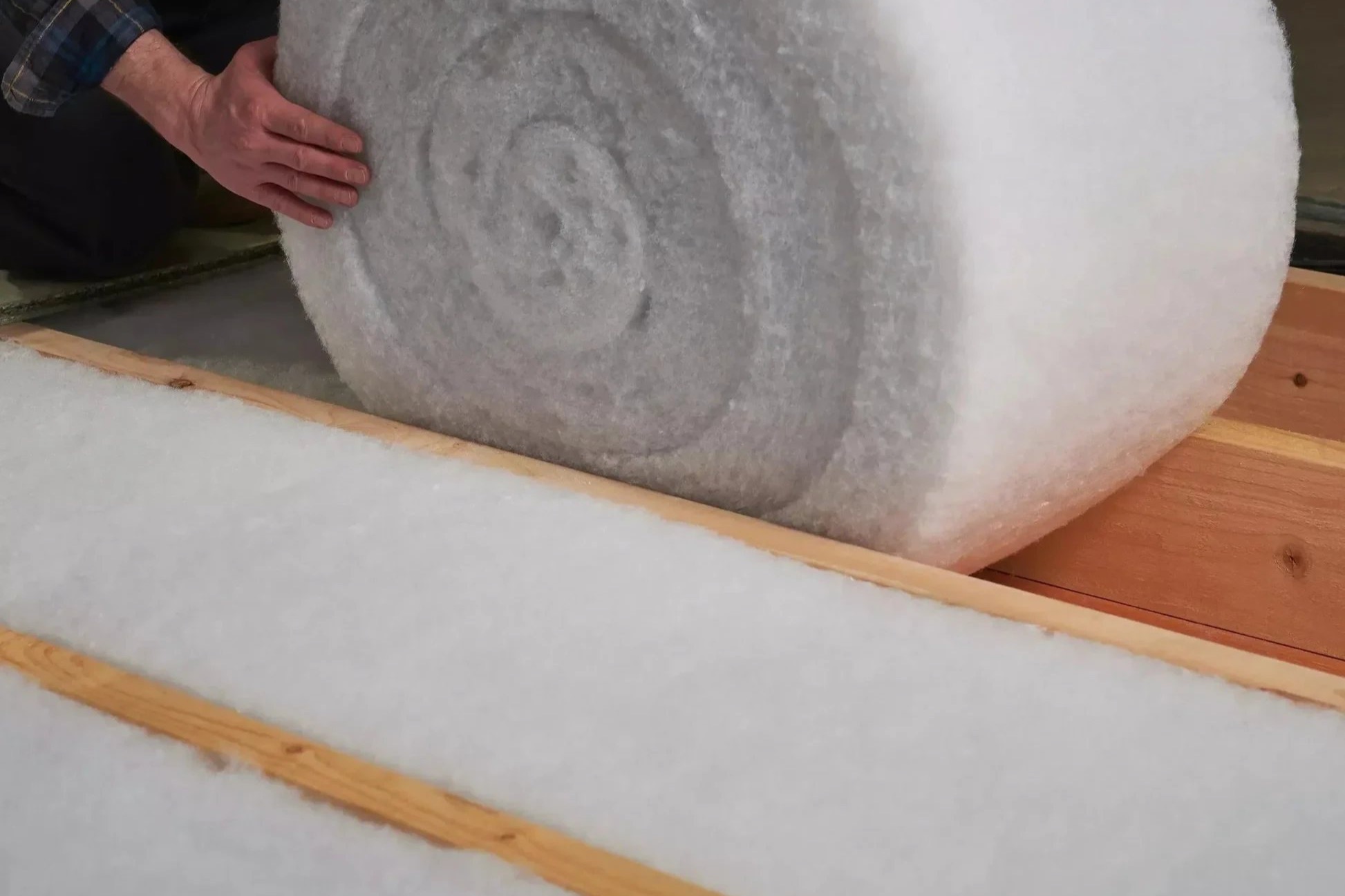
The lath and plaster will not take a knee. More than a quarter of the housing here predates 1919, and those roofs are cut rather than trussed: purlins, struts down onto the ceiling joists, and often nothing under the slates but the slates. The roof space already breathes through a hundred small gaps, which is why the ceilings below have got away with a thin layer for so long, and the lath and plaster underneath will not take a knee anywhere except on the timber. So it is careful work: mineral wool laid between and over, the second layer at right angles so no joist bridges the cold, boards run for footing, and nothing rested on a ceiling that was never built to hold it.
One roof space, several flats. Flats are the commonest home in this town at 38.7%, and a house converted into flats usually still has one continuous loft over the lot of it. Insulating only the part above your own rooms leaves a cold path over the ceilings either side, and heat finds it. Where we are allowed to do the whole plane at once it is a better job and a cheaper one per flat, because the access, the clearing out and the disposal are paid for once instead of three times. Where we can only do part, we say so and we close the edge properly rather than leaving a ragged stop.
Solid stone and rendered walls have nothing to fill and stay sound by drying out through their faces. An internal lining on one has to be vapour open, a wood fibre or mineral board finished in lime rather than a sealed plastic sandwich. The sea is a mile and a half away and the weather comes off it from the south west, so where a hard cement render has been put on a seaward elevation and is holding water in the wall, insulating the inside of it without dealing with that first is how damp appears in a room that was dry.
The post-war housing does have cavities and a good many are still empty. Each one gets a borescope and a look at the outer leaf first, because this is exposed ground for driven rain and a full fill is not automatically right on an elevation taking weather off the sea. Where it does not stand up, we would rather tell you than sell it.
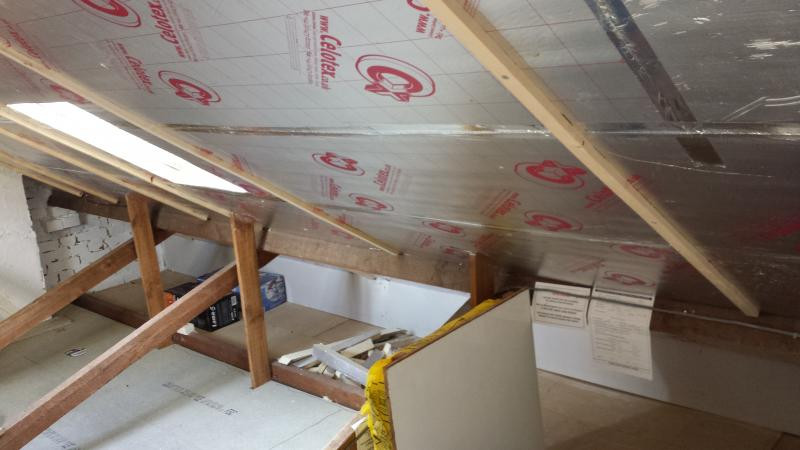
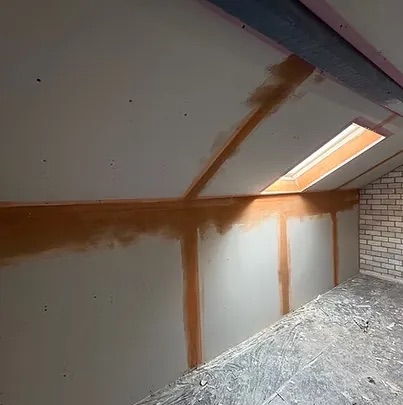
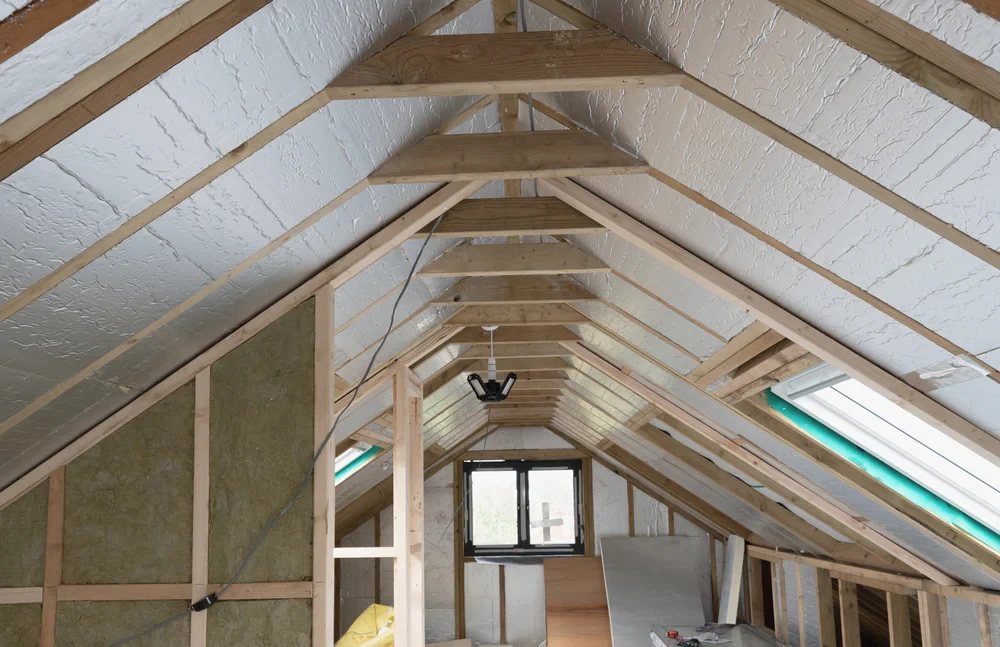
The town is full of third storeys in the roof, and where the attic is a room there is no loft to work in. That is rigid board: PIR such as Celotex between the rafters with a clear air gap kept above it, a foil faced board fixed under the rafters to break the cold bridge, or a multi-layer quilt like TLX where a sloping ceiling has no depth to give away. Dormer cheeks and the voids behind the knee walls are done with it. If the covering is coming off anyway, a warm roof built above the rafters is the better answer and the access is already paid for. An insulated hatch, fire rated covers over downlighters, lagging kept on the tank, and vent trays holding the eaves airway open finish it.
How it runs
From your call to a written price
Insulating a loft or lining a wall on the inside is an improvement rather than development, so it needs no planning permission and sits inside permitted development. The Planning Portal sets out where that stops, which is normally the point at which insulation goes on the outside face of a wall. Building control is engaged once a thermal element is renovated or the loft becomes a room, and the Building Regulations then set the standard the finished work has to reach. Dorset Council is the authority here, and with a hundred and twenty-nine listed entries in the town listed building consent reaches inside as well as out, which catches an internal lining as much as anything on the outside face.
Cost
What decides the price of an insulation job
No rate per square metre. A stone terrace with a hatch on a half landing and a lath and plaster ceiling under it, a hillside bungalow with one wide open loft, and a top floor flat reached off a communal landing are three different days before a roll is opened. Old material that has to be bagged and carried down is a cost before anything new goes down. Approved Document L sets what the finished work has to reach. Ask any quote what depth is going down, whether the old layer is removed or covered, and whether the eaves stay clear.
If it is urgent
Damp, condensation or a room you cannot heat
Ring rather than use the form. A loft dripping with condensation, mould that keeps coming back, or a room that will not hold heat gets looked at quickly. Swanage is a straight run round through Corfe from us, so it is one of the places we can usually reach quickly, and if a loft is running with water we will tell you what to open up before we get there.
Worth knowing
In a flat, the first question is who owns the roof space
Close to four in ten homes in the town are flats, in converted houses and in purpose built blocks, and that changes the first conversation rather than the work itself. If you are on the top floor, the ceiling is normally yours and the roof space above it normally is not: it is usually retained by the freeholder as part of the structure, and your lease is what says so.
We are glad to quote for a leaseholder, a freeholder, a managing agent or a residents' company, but we need to know which of those we are dealing with before anything is booked, because whoever owns the roof space is the one who has to agree to work in it. Ten minutes with the lease saves a wasted visit.
Where a freeholder or an agent is doing it as major works and the cost is recharged to leaseholders, section 20 of the Landlord and Tenant Act 1985 sets out the consultation that has to happen first, with notices and a chance for leaseholders to nominate a contractor. That is not our procedure, it is the law, and it sets the timetable rather than we do.
What we can do is write the quote so it drops straight into that process: every line separate, the depth and the method visible, the ventilation work priced on its own, so the people being asked to pay can see exactly what they are paying for. Where the roof space is genuinely demised to a single flat, it is an ordinary day's work and none of the above applies.
Who you are dealing with
A local firm you can check
We cover Swanage and Herston, Langton Matravers, Corfe Castle, Studland and the rest of Purbeck on BH19, and Dorset Council is the planning and building control authority for this address. Bournemouth Roofing & Building Ltd, registered in England and Wales, company number 15471719, which you can look up in a minute. Thomas Hannen's business, and he is the one who comes out to price the job, not a salesman. A verified customer's 10 out of 10 on Checkatrade. The visit and the written quote are both free.
Questions
Swanage questions we get asked
Does sea air get at anything inside the roof?
It gets at the metal. Swanage sits about 1.6km from the coast and salt keeps surfaces damp between showers, so nails, clips and any steel up there corrode from the edge inwards. Insulation itself does not mind salt, but packing a void tight with no clear air path traps that damp against the fixings. Ventilation at the eaves matters more on this side of Purbeck than it does inland.
Can our pre-1900 stone cottage be lined without trapping damp?
It can, using materials that let the wall dry inwards. Around 21.3% of Swanage homes predate 1900 and 28.2% predate 1919, so solid walled stone cottages are the norm here rather than the exception. Those walls get wet and shed the water again through both faces. A foam board sealed to the plaster stops that, and moisture then collects at the bond line where you cannot see it.
The ground floor is damp every winter. Is insulation sensible?
Deal with the water first. Swanage carries a high surface water flood band and heavy ground that holds moisture, so a floor sitting in a wet slab stays wet whatever goes over the top of it. Once the drainage and the external ground level are sorted out, a floor build up makes sense. Laying it over damp simply moves the condensation to a new surface and hides it from view.
Which elevation do you deal with first?
The south west one. That face carries the weather off the bay, so wind and rain work at the edges, the reveals and the eaves rather than at the middle of a wall. Heat leaves quickest where air is being driven through, not where the masonry happens to be thinnest. Doing that elevation properly and leaving the sheltered sides until later usually beats doing all four of them thinly.
There are a lot of listed buildings. Are we likely listed?
There are 129 listed entries in Swanage, Newton Manor among them, so it is worth checking rather than assuming either way. Listing covers the individual building, and where it applies it reaches internal work as well as the outside, so lining a wall or altering a ceiling needs consent from Dorset Council. There is no conservation area of its own here, so unlisted houses face nothing on that front.
Nearby, and next door
Insulation near Swanage
Insulation nearby
Our other trades in Swanage
Everything we do in Swanage Insulation, all areas Every area we cover
Free quote
Start with a look above the ceiling
A free site visit in Swanage, a rule put in whatever is already up there, and a written itemised quote clear enough to hand to a freeholder or an agent.