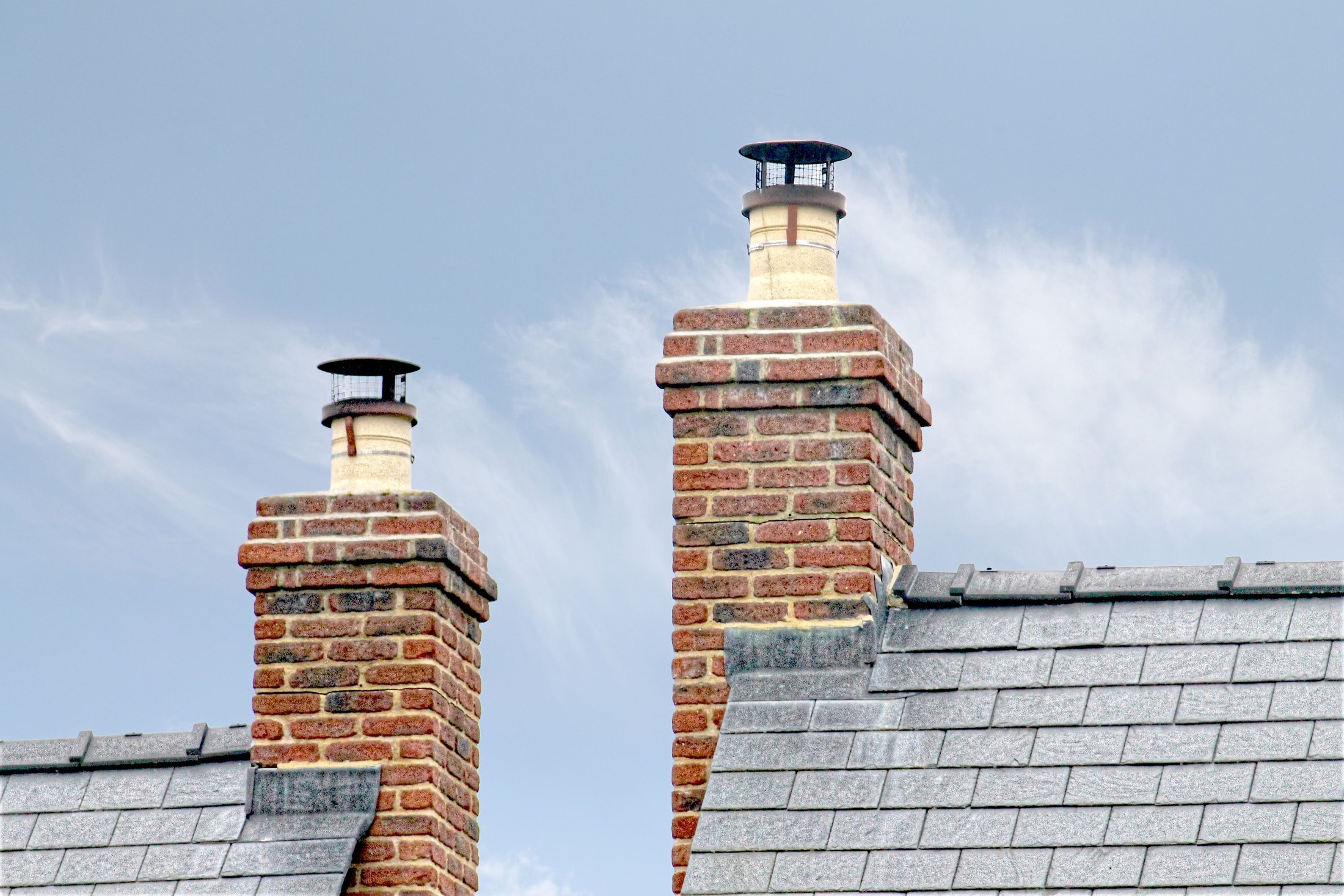
Roofing in Swanage
Purbeck stone slate, clay tile, slate, flat roofs, leadwork and guttering across Swanage, Herston, Durlston and Ulwell.
The site visit is free and so is the written itemised quote. Thomas Hannen prices every job himself.
If somebody has offered to point the Purbeck stone slate roof on your Swanage house, say no. Stone sheds water by overlap and pitch, not by being sealed, so mortar in the joints does not keep water out. It keeps water in.
People ring here for the usual reasons: something has slipped after a blow, a ceiling has stained, or the roof looks tired and you want a straight answer. What is different is what is on it. Swanage is a stone town in a region of brick and tile, so the covering, the fixings and the repair are all different from a job five miles up the road. We get on the roof, into the roof space where there is access, and photograph what we find.
The work
Sound Purbeck stone goes back on the street front
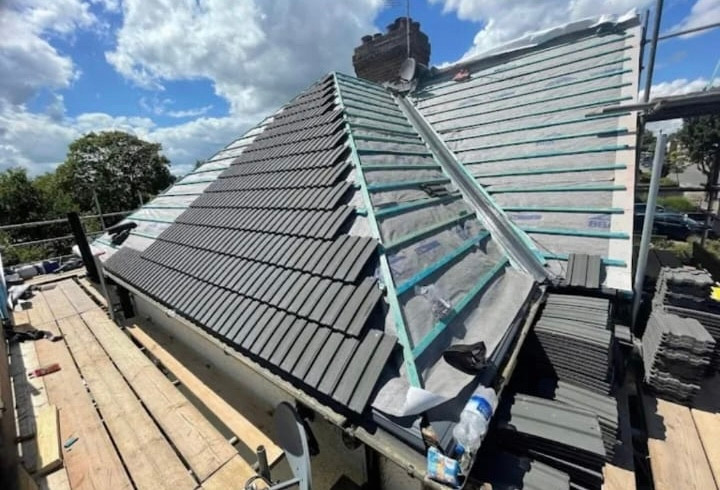
Stone slate repair and relaying. Slipped and broken slates replaced with matched stone, whole slopes stripped and relaid where the fixings have gone. Three rules decide whether it lasts: never alter the pitch, keep the head lap to no more than a third of the slate length and the side lap at 75mm or more, and keep the diminishing courses. We sort as we strip, so sound stone goes back on the elevation facing the street. Torching made good. Nothing pointed. Better than a quarter of the town predates 1919, and on fabric of that age materials have to be matched and the mortar has to be softer than what it beds, so lime rather than cement.
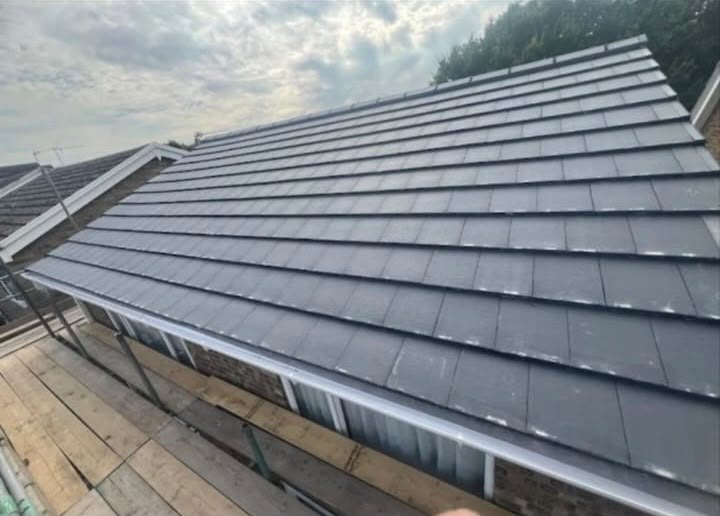
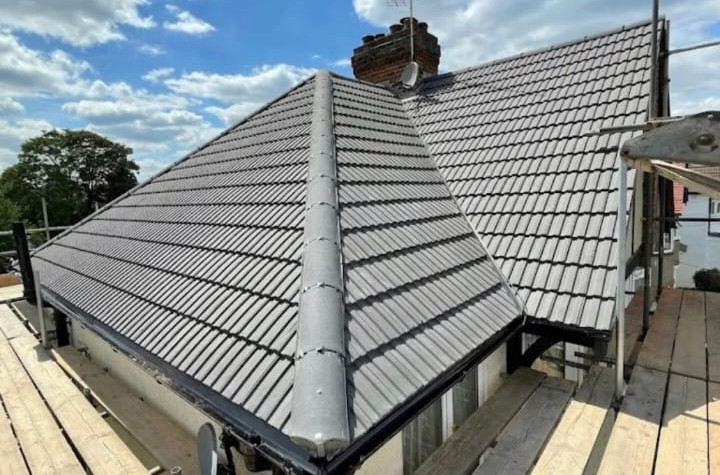
Fixings on the seaward elevations. Not everything is stone. The later streets carry plain clay tile and natural slate, and the post-war stock concrete interlocking tile where the covering is sound and the ridge bedding, verge and underlay are not. Those get screwed down under BS 5534 rather than re-bedded in mortar. The bay faces east, so the elevation taking the salt off a coast little more than a mile away is the one looking at the water, not the one facing the prevailing south westerly. Salt corrodes nails, clips and steel from the edge inwards and keeps a surface damp between showers, so a covering can look sound while what holds it down has gone. Stainless or silicon bronze on those slopes, and since wind works at the edges and the openings rather than the middle of a surface, that is where we specify hardest.
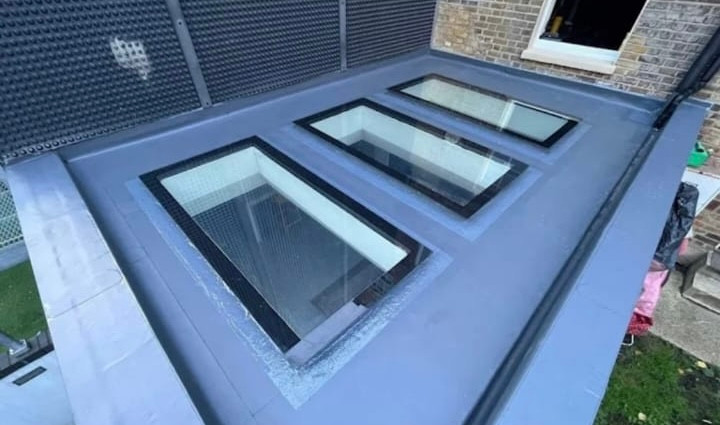
Under any covering sit the battens, the underlay and the rafter feet. Perished felt, soft batten ends and a wet rafter foot at the eaves are what we look for from inside first. Rear additions, dormer tops and bay roofs go in felt, GRP fibreglass or EPDM rubber, with the deck checked before the falls, upstands and outlet. Chimney flashings, soakers, valleys and abutments are renewed in code rated lead. Cast iron rainwater goods are common here and often worth repairing rather than replacing, and with land in the town in flood zone 3 and a high surface water band, a downpipe discharging onto the ground rather than into a drain is worth putting right at the same time.
Moss holds water against a covering and what comes off blocks gutters and valleys, so clearing it is ordinary maintenance. But mossing is a traditional bedding method on stone slate, so moss on a Purbeck roof is not automatically a fault, and we never pressure wash stone. Nearly two in five dwellings in the town are flats or maisonettes, where the roof belongs to the freeholder and comes out of the service charge, so before anything is priced we need to know who can instruct the work. With the covering off, insulation, eaves ventilation and any condensation problem are far cheaper to sort.
How it runs
From your call to a written price
Tell us the street and what the roof is doing. Say if it is stone, if the building is listed, and if the road is unadopted, because all three change the answer. Same team throughout, no sub-contracting, and an itemised quote: access, the strip, the stone or tile, each junction and disposal on separate lines. On permission, a re-cover and rooflights on an unlisted house are permitted development as long as nothing sits more than 150mm above the roof plane, and no building control application is needed for like for like. What is withdrawn is adding a dormer or raising the roof. There are 129 listed entries in the town, and on any of those listed building consent applies regardless.
Cost
What decides the price of a Swanage roof
No rate per square metre: on a stone roof the covering is rarely what decides it. Purbeck slate that can be lifted, sorted and put back changes the material cost, while delaminated stone has to be replaced, and matched stone is quarried locally, not ordered from a catalogue. Frontages are tight and many roads in the south of town are unadopted, so where a scaffold and skip stand is settled first. work at height rules are why the platform is a priced line. The chain ferry takes no vehicle above twenty tonnes, so heavy loads come through Wareham and Corfe, and we sequence a job so that happens once.
If it is leaking now
Water coming in today
Ring us. Anything active goes to the front of the queue and the first visit is about making the roof safe rather than pricing it. On stone, do not let anyone seal or point their way out of a leak as an emergency measure: that is the repair we spend most of our time undoing. The phone is answered 24 hours for emergencies; scheduled work runs Monday to Friday, 8am to 6pm.
Worth knowing
Nearly two in five homes here are flats
The stone gets the attention, but a large share of dwellings are flats and maisonettes, much of it Victorian and Edwardian guest houses cut into flats rather than purpose built blocks. The roof over a conversion belongs to the freeholder and is managed on their behalf, so the person who rings often cannot authorise the work, and the useful first move is finding out who manages the building.
A converted house also carries a sequence of alterations above it: a flat roof over a rear addition, a dormer added later, lead patched by three different people. Reading that sequence is most of the survey.
Who you are dealing with
A local firm you can check
About eight miles from us, covering Herston, Durlston, New Swanage, Ulwell and out towards Studland and Langton Matravers. Dorset Council for planning and building control. Bournemouth Roofing & Building Ltd, registered in England and Wales, company number 15471719. Thomas Hannen's business, and he comes out to price the job. A verified customer's 10 out of 10 on Checkatrade. Visit and written quote both free.
Questions
Swanage questions we get asked
Which fixings go first this close to the sea?
The steel ones. Swanage sits about a mile from the coast and salt holds damp on the surfaces between showers, so plain and galvanised nails, clips and screws corrode from the exposed edge inwards. A corroding nail swells before it snaps and lifts the tile it was holding down. Rust marks on the covering or grit in the gutters are the sign, and it changes what we specify seaward.
Our converted house has three flats. Who commissions the roof?
Whoever holds the freehold, which in a converted house is often the leaseholders together through a company they all own. Almost 39 per cent of Swanage homes are flats or maisonettes, so a good share of enquiries in the town start exactly here. The roof is a communal repair funded through the service charge, and the landlord has to consult before major works. Point us at whoever places the order.
The walls are solid and the mortar is soft. What changes?
What goes back has to stay breathable. More than a quarter of the housing in Swanage predates 1919 and solid walls of that age lose moisture through the fabric because there is no cavity to do it for them. Hard cement mortars trap that moisture and drive the damp into the stone instead. On those roofs we bed and point in lime and match the covering rather than substituting something denser.
The street floods in heavy rain. Anything to do with the roof?
Sometimes, because a good deal of that water starts on roofs. Surface water risk across Swanage is rated high and the Swan runs within about fifty metres of the built up part, so gutters that overflow and downpipes discharging at the surface pile onto a problem the ground is already losing. Getting roof water into a proper outlet takes load off your wall as well as off the street.
My house is old. Do I need consent to re-cover it?
Only where the building itself is listed. No conservation area covers the town, but Swanage carries 129 listed entries, Newton Manor among them, so listing is the control that catches people out rather than a boundary line on a map. Dorset Council confirms it from the address. If the house is not on that list, putting a matching covering back needs no application from anybody.
Nearby, and next door
Roofing near Swanage
Roofing nearby
Our other trades in Swanage
Roofing guides
Concrete vs clay roof tiles: which is right? Planning, building regs or listed building consent Storm damage to a roof: the first 24 hoursEverything we do in Swanage Roofing, all areas Every area we cover
Free quote
Get a price for your Swanage roof
Tell us the street and what the roof is doing. Say if it is stone, listed, or on an unadopted road, and we will price the right job rather than the quick one.