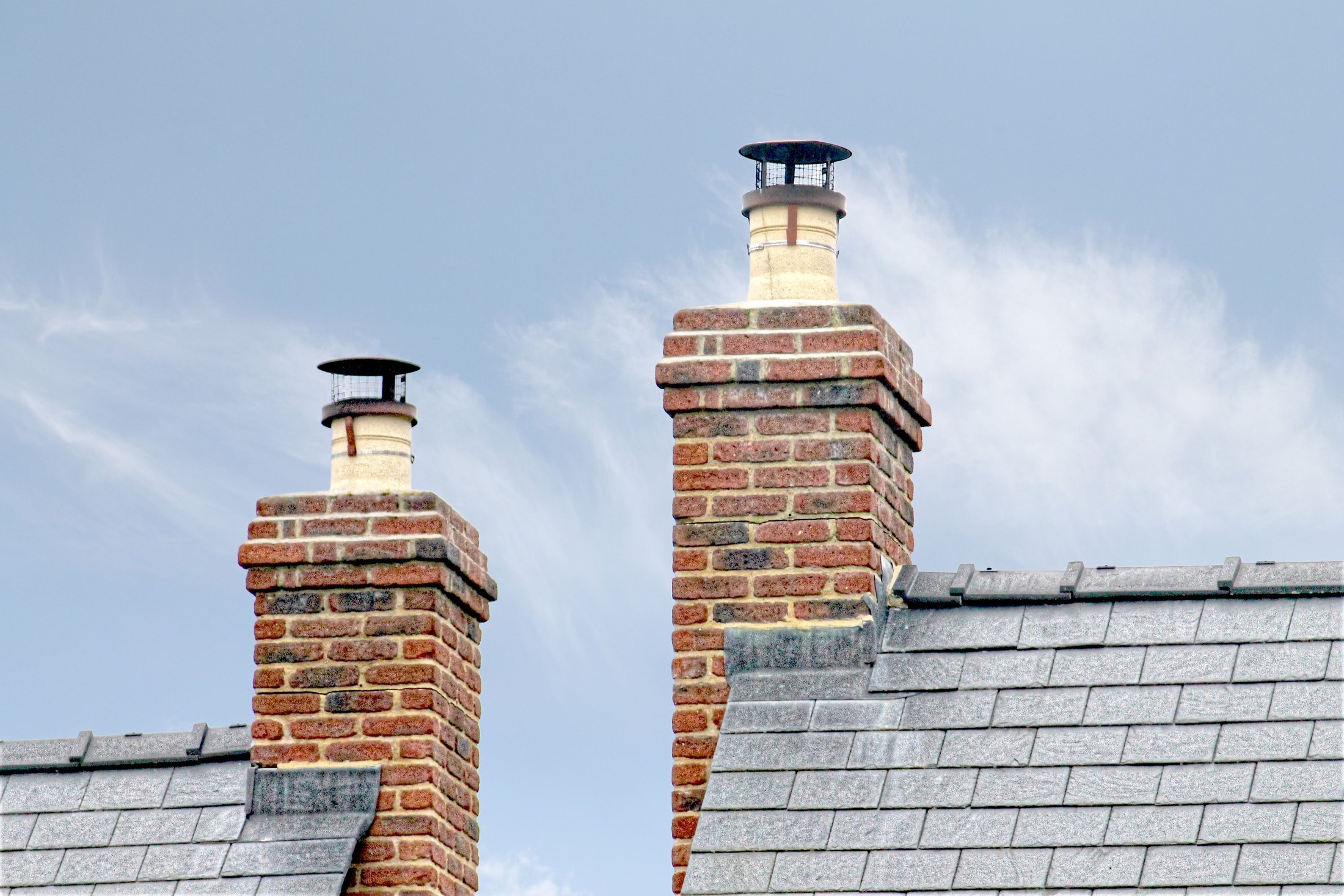
Roofing in Langton Matravers
Purbeck stone slate, tile and slate work across Langton Matravers and BH19. Repairs, re-covers, leadwork and gutters, itemised in writing before anything starts.
The site visit is free and so is the written itemised quote. Thomas Hannen prices every job himself.
A Purbeck stone slate roof almost never fails because the stone has failed. It fails because the peg, the nail or the batten holding the stone has given up, which is why so many Langton Matravers roofs can be stripped, sorted and re-laid with most of the original covering going straight back on.
Three calls come out of Langton Matravers more than any other. Something has come off in a south westerly and there is a slate or a stone on the path. A stain has appeared under a chimney or a valley after driven rain. Or somebody has told you the roof needs replacing and you want a second opinion from a firm that is not trying to sell you a new covering.
We come out, survey it from a platform and from inside the loft, and photograph what is there. Nine miles from us, so we are through the village regularly. Site visit and written itemised quote both free.
The work
Purbeck stone is heavy, and worth keeping
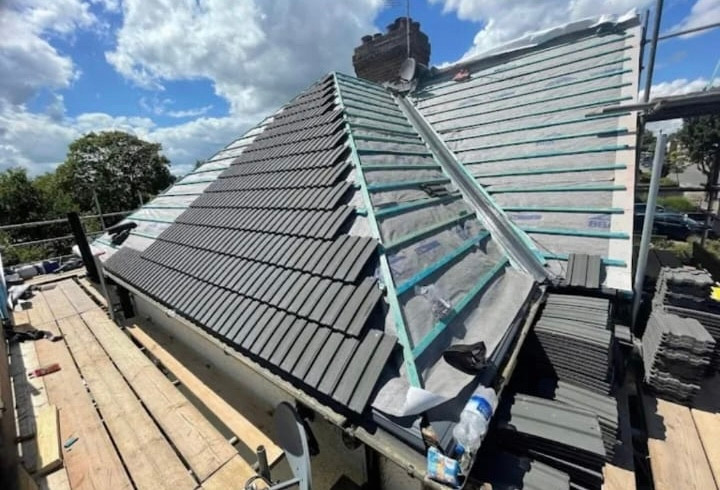
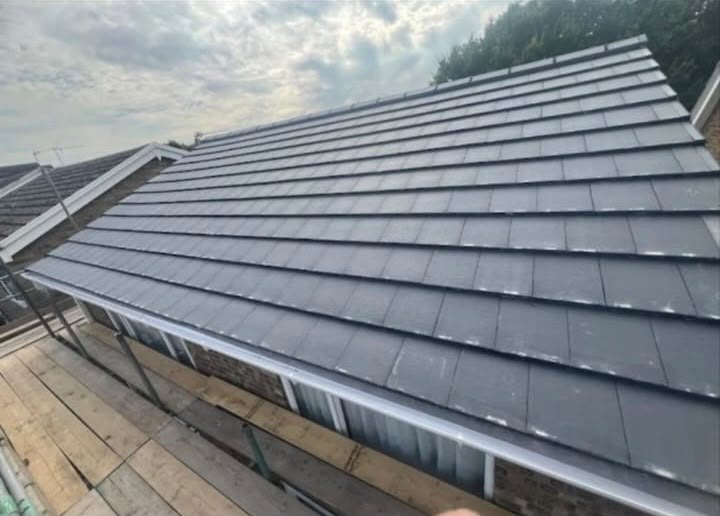
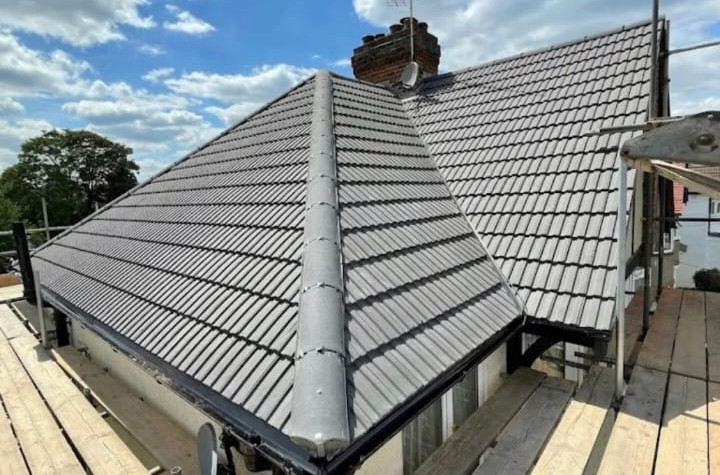
Purbeck stone is heavy, and worth keeping. The old roofs in the village are Purbeck limestone laid in diminishing courses, biggest stone at the eaves and smallest at the ridge, hung on oak pegs or nails over riven battens with no sarking board and often no underlay at all. Two things follow. The covering is heavy, so before we price anything we look at what is carrying it: rafter feet, purlins and the wall plate. And the stone is worth keeping, so a strip here means every slate coming down, being sorted by size and stacked, then going back on new battens and new fixings with only the broken ones made up. Not everything is stone. There is plain tile and clay tile on the cottages, natural slate on the Victorian work, and concrete interlocking tile on the newer houses at the edges of the village, where the tile outlives the nail or clip and a repair is a fixing job rather than a covering job.
On a roof with no membrane behind the covering water can run a long way down a rafter before it appears, so we work from the loft outwards rather than guessing at the stain. Mortar bedding is the first thing the wind finds: once it cracks the ridge tiles rock and a verge loses its bedding. On the modern tiled roofs we convert to dry ridge and dry verge screwed onto a ventilated roll, the mechanical fixing BS 5534 expects. On a stone roof in the conservation area the ridge is re-bedded in a lime rich mortar that matches what was there. A re-roof less than three kilometres from the sea wants stainless steel nails and clips rather than galvanised, because salt takes the fixing long before it touches the covering.
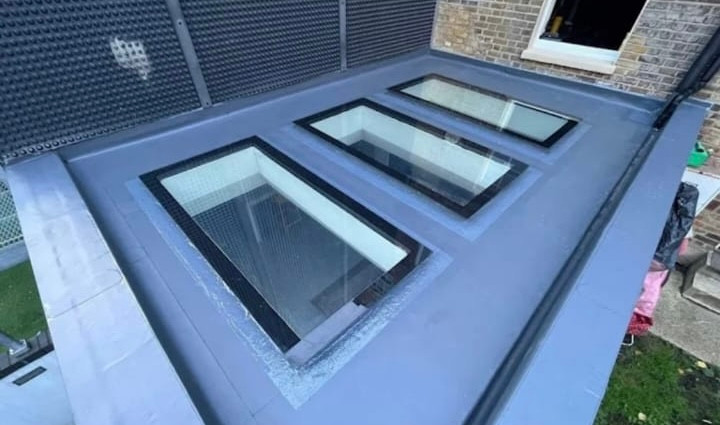
Chimney flashings, soakers, valleys and abutments in code rated lead, cut so it can move. Stone and lead sit together well, and most of the leaks we chase in the village start at one of those junctions. Rear extensions, garages and porches in felt, GRP fibreglass or EPDM rubber, deck first, then the falls, upstands and outlet. Rainwater goods take a beating here and the brackets go before the gutter does. Thatch we decline: we do the tiled or stone roof beside it and the leadwork at the junction, and leave the thatch to a master thatcher. Insulation, eaves ventilation and condensation cost a fraction to put right while the covering is off, and Approved Document L sets the standard a renovated roof should reach.
How it runs
From your call to a written price
One team, one person to ring, and an itemised quote you can compare properly. Langton Matravers has a conservation area of its own and around fifty listed entries in the parish, so the address is the first thing we check. Where a house is unlisted and outside the conservation area, a like for like re-cover, a repair and new rainwater goods run under ordinary householder permitted development within the limits Planning Portal guidance sets out. Inside it, putting back the same covering is still maintenance, but changing stone or clay for something else is a change of appearance and needs permission, and on a listed building listed building consent is needed whatever the work. Dorset Council for both.
Cost
What decides the price of a roof
The village is strung along one road with stone walls tight to it, so there is often nowhere obvious to stand a lorry or a skip. A stone slate roof also weighs several times what a tiled roof does, so getting it down and away is a real line rather than an afterthought. How long a platform stands matters as much as its size, and the work at height rules are why it is priced rather than optional. Ask whether the scaffold is in the quote, whether battens and membrane are renewed or covered over, and who takes the stone away.
If it is leaking now
Water coming in today
Ring rather than use the form. Anything letting water in goes to the front of the queue, and the first visit makes it safe and watertight. If a stone or a slate has come down, leave it where it lands and photograph it. They are worth keeping, they break underfoot, and the course it came from tells us where to look. The phone is answered 24 hours for emergencies; scheduled work runs Monday to Friday, 8am to 6pm.
Worth knowing
Salt air eats the fixings, not the covering
The village sits under two miles from the sea, and on the seaward side that changes what should go back on your roof. Salt does not attack stone, clay or lead. It attacks metal, working inwards from any exposed edge, and it keeps surfaces damp between showers so the metal is wet for longer than it would be inland.
So the parts that fail early here are the small ones. Galvanised nails and clips, gutter brackets, screws in a dry fix rail, the fixings on a rooflight. The covering can be sound while everything holding it is quietly going. It is the same failure as an old peg roof, arriving by a different route.
What to do about it is simple and it costs very little at the right moment. On any exposed elevation we specify stainless steel nails, clips and screws rather than galvanised, and we say so on the quote. If you are getting a roof priced by anyone, ask what grade of fixing is going in. On this coast it is the question that decides how long the work lasts.
Who you are dealing with
A local firm you can check
About nine miles from us, covering Langton Matravers and the BH19 addresses between Swanage and Kingston, with Dorset Council for planning and building control. Bournemouth Roofing & Building Ltd, registered in England and Wales, company number 15471719, which you can look up in a minute. Thomas Hannen's business, and he is the one who comes out to price the job, not a salesman. A verified customer's 10 out of 10 on Checkatrade. The visit and the written quote are both free.
Questions
Langton Matravers questions we get asked
My nails have rusted straight through. What goes back in?
Something chosen to survive salt, because at 2.6km from the coast that is what has eaten them. Ordinary steel corrodes from the head down and the tile then sits on friction alone until a gust finds it. We put back fixings specified for a marine exposure and we increase the number of them at the verge, the eaves and the perimeter courses where wind gets underneath. It is a small part of the job that decides how long the rest lasts.
Is all of Langton Matravers inside the conservation area?
Part of it is, and the boundary is drawn rather than obvious, so check your address against Dorset Council's map instead of assuming either way. Inside the Langton Matravers Conservation Area the appearance of a roof is controlled: putting the same covering back is maintenance, changing to a different one is not. The parish also carries 50 listed entries, where consent has to be in place before any work begins. We look at both before quoting.
Which slope will need doing first on my house?
The south west facing one, nine times out of ten. That is the most exposed elevation here, and wind driven rain goes to work on edges and openings rather than on the middle of a sound surface, so the verge, the flashings and the ridge on that side go well ahead of the sheltered side. We are content to price one slope and leave the other, and we say plainly how much life the other one still has.
Where should the downpipe discharge on this ground?
Away from the wall, into something that takes it rather than onto a border beside the footing. The subsoil in this part of Purbeck is cohesive with a significant shrink and swell rating, so it swells wet and shrinks dry, and repeated soaking of one spot next to a foundation is a movement problem before it is a damp one. When we survey we follow the water from gutter to outfall and flag anything discharging in the wrong place.
Would solar panels be a problem on a Purbeck roof?
They get looked at harder here than they would inland. The village sits within the Dorset and East Devon Coast landscape designation, where anything visible attracts design scrutiny, and the conservation area lays a second layer on top of that. None of it means no, it means agreed in advance. If panels are part of your plan, say so at the survey so the battens, fixings and flashings go in ready for them rather than being cut about later.
Nearby, and next door
Roofing near Langton Matravers
Roofing nearby
Our other trades in Langton Matravers
Roofing guides
Concrete vs clay roof tiles: which is right? Planning, building regs or listed building consent Storm damage to a roof: the first 24 hoursEverything we do in Swanage Roofing, all areas Every area we cover
Free quote
Get your Langton Matravers roof looked at
A free site visit and a written itemised quote you can compare line by line. Send the postcode and what you have noticed.