
Bricklaying and repointing at Post Green
Repointing, boundary walls, dwarf walls, garage openings and chimney stacks, on the single storey housing that makes up most of this village.
The site visit is free and so is the written itemised quote. Thomas Hannen prices every job himself.
Bricklaying and repointing
Brickwork at Post Green: single storey houses, long walls, big plots
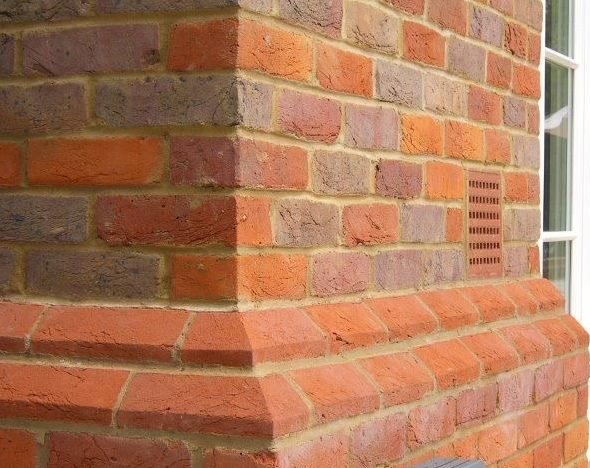
Around Post Green most of the brickwork we are asked to look at is at head height or below. Bungalows, garages, conservatory dwarf walls and long plot boundary walls make up the bulk of it, which is good news: a lot of it is reached off a tower rather than a full scaffold, and that takes a genuine chunk out of what a small repair costs.
People here ring us about a fairly short list. Joints on the weather side of a bungalow gable that have gone back far enough to notice. A long side boundary wall leaning into next door. A stack shedding mortar down the tiles. Or a step crack over the opening where a garage or a sun lounge was added on.
We come out, walk the whole plot rather than the one wall you have spotted, and tell you what it actually is, because a leaning garden wall and a cracked house wall are completely different problems with completely different prices. If it can wait, we say so. The site visit and the written itemised quote are free.
The work
The brickwork jobs we do around Post Green and Lytchett Minster
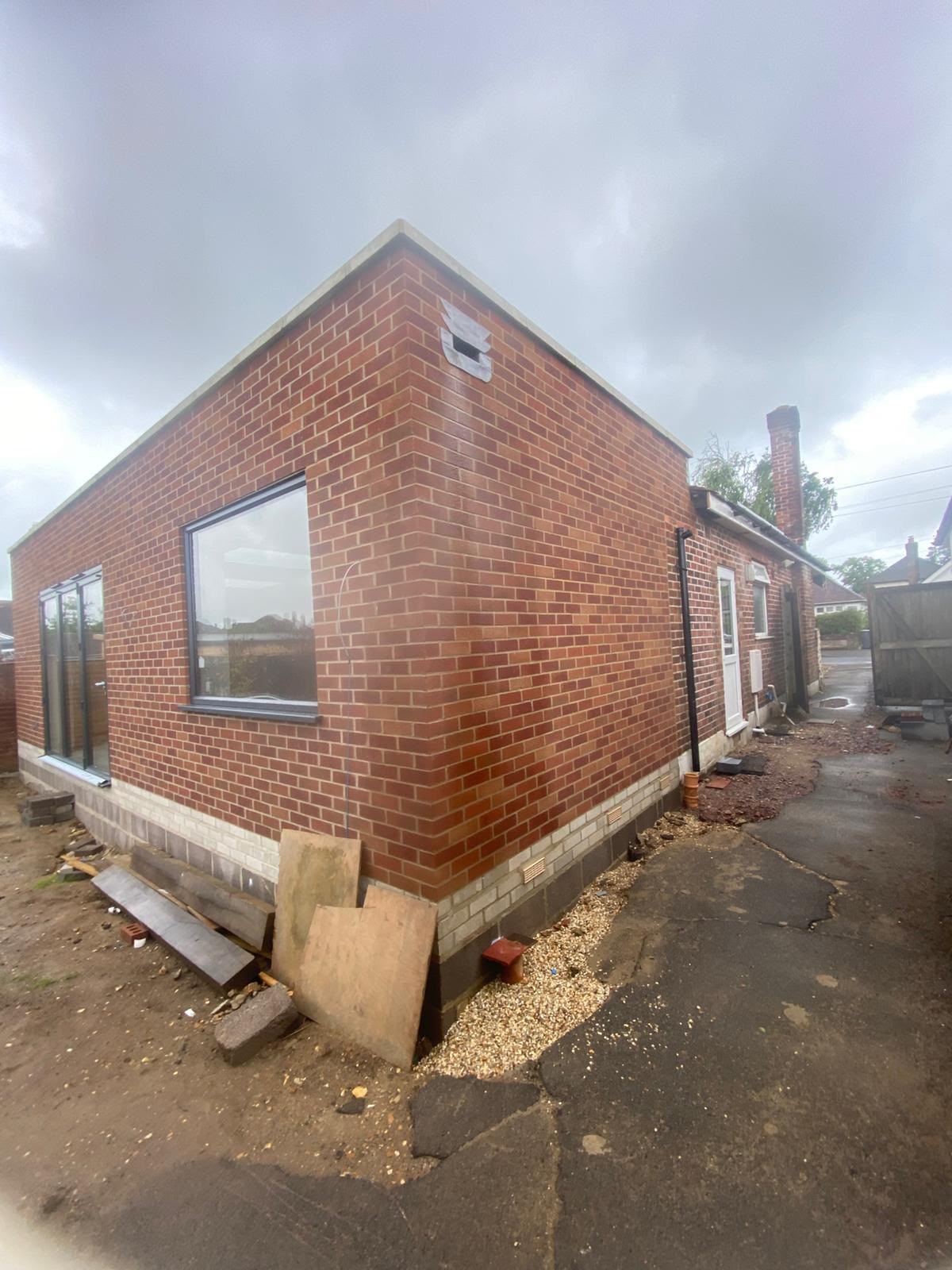
Repointing postwar cavity walls. More than half the homes out here went up between 1945 and 1982, built as a brick outer skin in stretcher bond with blockwork behind and a cavity between the two. That brickwork was pointed in cement with a thin joint and it does not wear out evenly: it goes on the exposed gable and along the top course under the verge while the sheltered walls are still perfectly sound. We rake back to sound mortar, match the mix, the sand and the colour, and strike the joint as bucket handle or weather struck rather than flush so rain is thrown clear. On the older brick in the village core the same job is done in a soft NHL lime instead, because a solid wall of that period has to stay breathable. Nearly a third of the housing here is single storey, and on a bungalow the chimney is a long way above a low roof, so it takes far more weather than the walls under it. Repointing above roof level, cutting out perished brick and renewing the flaunching round the pots is one of the most common small jobs we do here, and on a bungalow it is often a tower job rather than a scaffold job.
Dwarf walls, boundaries and openings. A lot of the houses here gained a conservatory or a sun lounge in the 1980s and 1990s, and the dwarf wall underneath is where they fail: a shallow footing, no damp proof course and tied badly, if at all, into the house. The result is a crack running down the joint between old and new, or a wall that has dropped at the outer corner. We rebuild those on a proper foundation, tie them in correctly and put a DPC in so the wall is not drawing water up into the frame. Plots out this way are generous and the walls that divide them are long, low and mostly built without a damp proof course, so the bottom courses turn soft and spalling starts there. We rebuild bowed lengths on a dug footing, reset the coping, and rebuild driveway gate piers so they are bonded into a wall rather than standing on their own next to it. Garages of this period were built off steel lintels, and a corroding lintel expands and cracks the courses sitting on it, so we prop, cut out, replace the lintel and rebuild over it.
How it runs
From your call to a written price
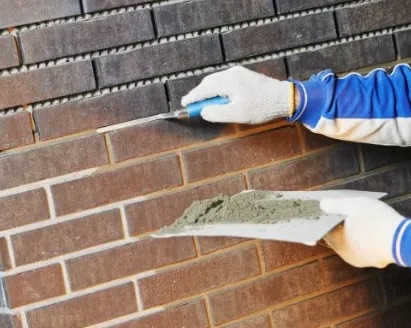
You get one person to ring and a price broken down by elevation, so it can be compared properly. Post Green is Dorset Council, and the older part of the village falls inside the Lytchett Minster conservation area, where appearance is controlled: like for like repointing is maintenance, but a different mortar colour or joint profile on a prominent elevation is not. There are eighteen listed entries in the parish, including Post Green House, and on a listed building repointing needs listed building consent first. New or raised garden walls have height limits, set out in Planning Portal guidance on fences, gates and garden walls. Structural work goes through building control and the Party Wall etc. Act 1996 covers anything on a shared wall.
Cost
What decides the price of a brickwork job
A rate per square metre would tell you nothing here. A bungalow gable you can reach off a tower, a two storey house with a stack on the ridge and a long boundary wall running the length of a plot are three different set ups. A gable or a stack needs a scaffold and a boundary wall needs none, and work at height rules are why that platform is priced by time as well as size. Matching mortar for colour and strength takes trial panels, and sourcing a brick takes longer still. Ask how many bricks are being replaced.
If something has moved
Loose brickwork, or a wall that has shifted
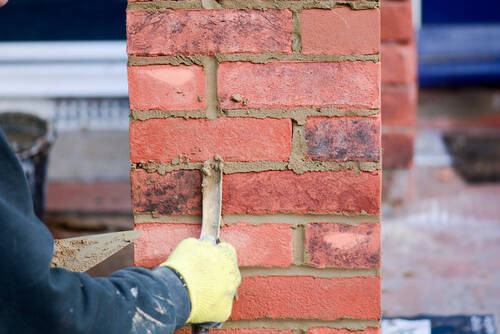
Ring, do not use the form. Anything overhead or leaning goes to the front of the queue. The first visit makes it safe and stable, and the permanent repair is priced once we can see how far the movement goes. Out here it is a plot boundary wall gone over between two gardens, or brickwork dropping off a garage head. The phone is answered 24 hours for emergencies; scheduled work runs Monday to Friday, 8am to 6pm.
The one local thing
Green Belt: repairs are fine, new brick is a planning question
Post Green sits inside the South East Dorset Green Belt, and it is worth understanding what that does and does not touch. It does nothing at all to repair. Repointing, replacing spalled brick, rebuilding a wall on its existing line and rebuilding a stack are all maintenance and Green Belt policy has no view on any of it. Where it bites is anything new.
Green Belt policy is restrictive about new buildings and about extensions that make a house materially bigger, so a brick outbuilding, a detached garage, an annexe or a large rear extension is a planning conversation here in a way it simply is not a few miles down the road. The conservation area over the older part of the village narrows it further, because that controls appearance as well as size.
What to do with that. Settle the planning question before you settle the brickwork, not after. If you are adding, ask early whether what you want falls within permitted development for your particular property, and if it does, get a lawful development certificate so the position is on record when you come to sell.
Garden walls are the one people trip over: Planning Portal guidance on fences, gates and garden walls sets the general height limits, and a wall alongside a highway is held to a lower one than a wall between two gardens, so a perfectly reasonable front wall can need permission when the identical wall at the back does not. We will build to whatever height is permitted and tell you honestly when your drawing is over it, rather than build it and let you find out.
Who you are dealing with
A local firm you can check
We are about eight miles from Post Green and through BH16 constantly, covering Lytchett Minster and Lytchett Matravers, Upton, Holton Heath and the villages towards Wareham. Bournemouth Roofing & Building Ltd, registered in England and Wales, company number 15471719, which you can look up in a minute. Thomas Hannen's business, and he is the one who comes out to price the job, not a salesman. A verified customer's 10 out of 10 on Checkatrade. The visit and the written quote are both free.
Questions
Post Green questions we get asked
What counts as like for like in Lytchett Minster conservation area?
The same brick, the same mortar colour and the same joint finish as what is coming out. Post Green sits in the Lytchett Minster Conservation Area, so a repair in the existing materials is maintenance, while a change of material or a proud weather struck joint where a flush one was is a change of appearance. We take a sample of the old mortar and match to that.
Why does the join between house and conservatory keep opening?
It is usually the conservatory moving rather than the house. A lightweight base beside a house on the cohesive ground under Post Green will lift and settle while the deeper footing does not, and the junction opens a little further each summer. The answer is to allow the movement rather than fight it, so we cut the junction back, form a proper flexible joint and repoint the house wall either side.
Bungalows are common here. Does that change the job?
It changes the access more than the work. Nearly a third of Post Green is bungalows, 30.6% of it, so most of the wall is reachable from a tower and a full scaffold is rarely needed, which keeps standing time down inside the conservation area. The trade off is a long low elevation with more wall at splash height, so the bottom courses take more of the attention.
Can we put a brick outbuilding up in the garden?
Building it is straightforward once the paperwork is right. Post Green lies in the Lytchett Minster Conservation Area and in Green Belt, so a new outbuilding is judged on how it looks and whether it belongs there, and permitted development is tighter than usual. Dorset Council is the one to ask. None of that touches repointing, rebuilding a boundary wall or repairing what already stands.
How do we find out if our house is listed?
The list is published, so checking an address takes a minute. There are 18 listed entries around Post Green, Post Green House among them, and we run the check before pricing because it changes what we are allowed to use. A listed building needs consent before a joint is opened. An unlisted house inside the conservation area only has the appearance rules to meet.
Nearby, and next door
Bricklaying and repointing near Post Green
Bricklaying and repointing nearby
Our other trades in Post Green
Everything we do in Corfe Mullen Bricklaying and repointing, all areas Every area we cover
Free quote
Find out what that wall actually needs
A free site visit, an honest answer about whether it needs doing yet, and a written itemised quote you can compare.