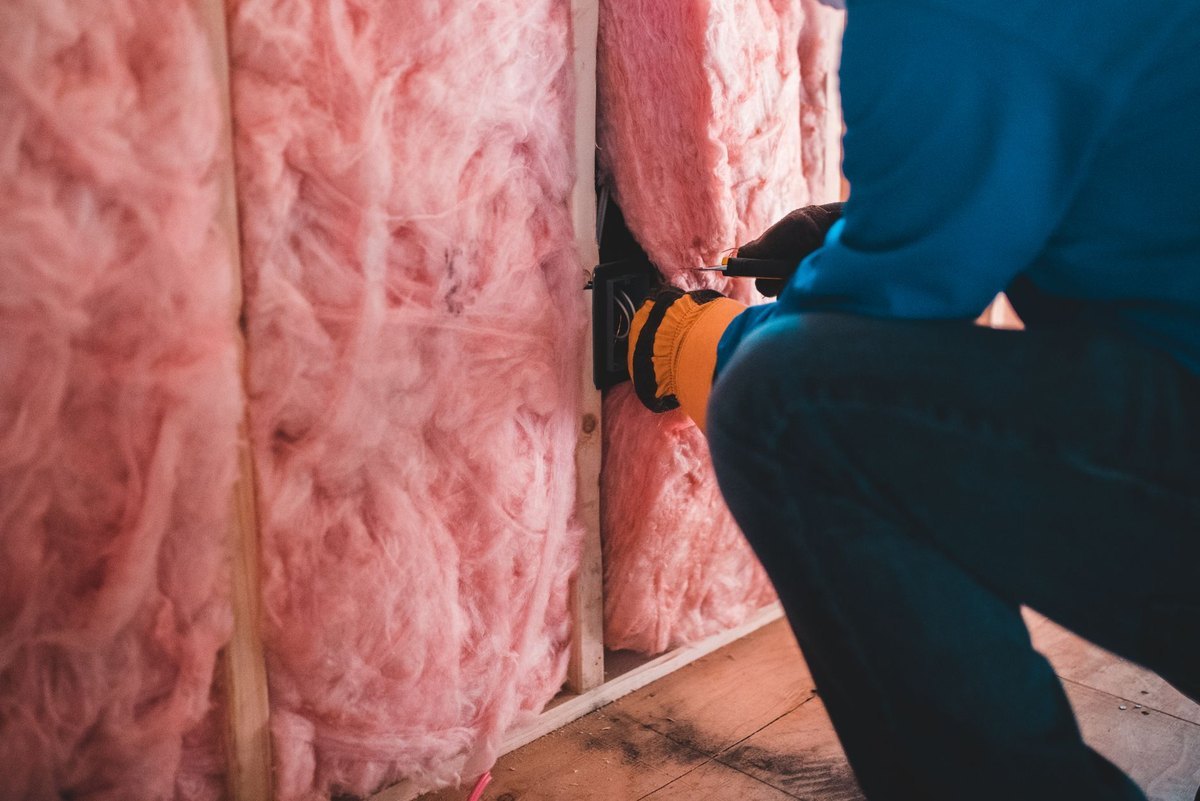
Wall insulation in Post Green, where the outside is controlled
External insulation is a render job as much as an insulation job, and inside a designated area what the frontage looks like is not entirely your decision.
The site visit is free and so is the written itemised quote. Thomas Hannen prices every job himself.
Post Green sits inside the Lytchett Minster Conservation Area, and that matters for walls because the one system that goes on the outside changes how the building looks. External wall insulation is a render job as well as an insulation job. Inside a designated area the appearance of what faces the road is controlled, so on many houses here the answer moves indoors or into the cavity.
The calls are ordinary enough. A cold front room in an older house with mould in the corner. A post-war house where somebody filled the cavity years ago and one gable is showing damp. And people who have seen an insulated render on a house elsewhere and want to know whether they can have it here.
We read the wall first. One small drilled hole and a borescope shows whether there is a cavity, how wide it is and what is already in it. On a solid wall we measure the thickness and check the plaster, the reveals and the joist ends. The site visit and the written itemised quote are both free.
The work
Filling from outside, lining from inside, choosing between them
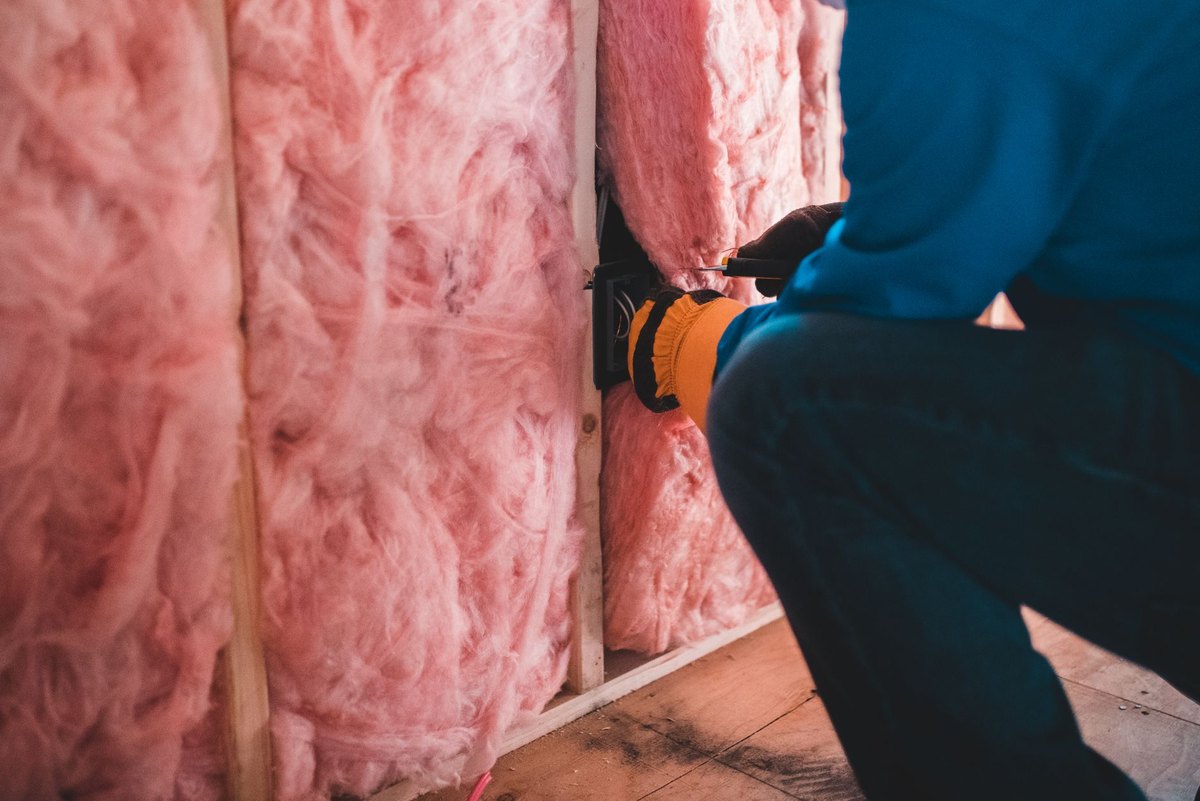
The borescope check. One 12mm hole tells you the cavity width, whether mortar snots are bridging the ties, whether existing fill has slumped and whether anything in there is wet. It takes minutes and it decides everything that follows, so we will not write a specification without it.
Cavity fill. Where the cavity is clear, dry and wide enough, the wall is drilled on a pattern, filled and made good in a day. Bonded polystyrene bead flows around ties and stays put. Blown mineral wool is the older method and it works in a clean, sheltered cavity. Nothing about that changes the outside of the building except the made good holes, which is why it is the easy option in a designated area.
Internal wall insulation, IWI. On a solid wall, or a cavity that is too narrow, the lining goes on inside. Insulated plasterboard bonded to the masonry, or a batten and stud frame filled with mineral wool. PIR laminate such as Celotex or Kingspan reaches the target in the least depth; on older brick and block we would rather use a breathable board so the wall can still dry inwards, with any vapour control layer taped per BS 8000-8.
External wall insulation, EWI. Boards fixed to the masonry, a render carrier and a silicone or through coloured render over. It keeps the room size, warms the wall right through and deals with the joist ends. It also thickens every reveal, moves the sills, changes the eaves overhang and gives the house a different face, which is precisely what a conservation area is there to control.
Fill that has failed. Wool blown in decades ago settles and leaves a cold band below the eaves, read inside as black mould on the top of a bedroom wall. A wet cavity where water is crossing a bridge shows as damp patches that come and go with the weather. Both start with extraction rather than with adding more material.
The junctions. Reveals, the threshold, the floor junction, the eaves and the joist ends are where the labour goes and where trouble shows first. A cold bridge, or thermal bridge, left at a reveal collects condensation whatever the u value of the wall next to it. Reveals take a thin high performance board or aerogel, and a party wall gets a cavity barrier.
Ventilation and draughts. Both routes raise the airtightness of the house, so the moisture in it needs a way out. Trickle vents, a working extract fan and clear air bricks are part of the job, and Approved Document F sets what is expected. Sealing draughts at the same time is what turns a better u value into a room that actually feels warmer.
How it runs
From your call to a written price
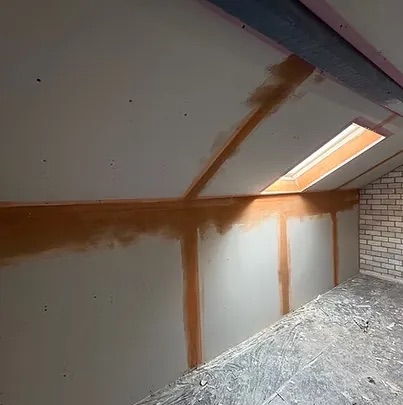
Same team from first visit to last, one person to ring, and no sub-contracting your work out to somebody you have never met. The quote is itemised, not a figure on the back of a card: the survey and any borescope check, the system and its thickness, making good around windows and doors, ventilation works, and disposal on separate lines, so you can compare it properly against anyone else's.
Nothing is left open or unusable overnight. The site is swept at the end of each day rather than the end of the job, and what comes out leaves with us. If something turns up once we start that nobody could have seen, you get a photograph and a price before we carry on.
Post Green is under Dorset Council and sits within the Lytchett Minster Conservation Area, with eighteen listed entries nearby including Post Green House itself. Cavity fill and internal lining are building control matters. External wall insulation is a planning question here because appearance is controlled, and on anything listed it needs listed building consent. Where an existing wall is upgraded, regulation 23 sets what it has to reach under Part L.
Cost
What decides the price of a wall insulation job
No rate per square metre, because the wall area is the easy part; what happens at every window, door and floor junction is not.
Getting to it. An older brick house on the main road, a post-war semi off the lane and a bungalow set back on a wide plot are three different jobs before a hole is drilled. Cavity fill is drilled from outside and a bungalow comes off a tower where a three storey gable wants a scaffold. Internal lining is worked room by room from inside, so it is your rooms rather than a platform that gets disrupted. The work at height rules still set the platform.
Which wall you actually have. A cavity that is clear and dry can be filled in a day. A solid wall cannot be filled at all, and has to be lined inside or insulated outside, which is a different job at a different price. A borescope through one drilled hole settles it, and no honest quote is written before that.
The junctions, not the field of the wall. Reveals at windows and doors, the floor junction, the eaves and any party wall are where heat escapes and where condensation shows up if the detailing is wrong. That work is slow, it is most of the labour, and it is the first thing a cheap quote leaves out.
Comparing quotes? Ask whether the wall has actually been checked with a borescope or just assumed, what system and what thickness is specified, how the reveals and floor junction are being detailed, whether ventilation is being addressed, and who makes good the plaster and decoration afterwards. Two quotes for the same job are usually two different jobs.
If damp has appeared
Damp or mould after a wall was insulated
Ring rather than use the form. Damp patches or black mould appearing on an outside wall after cavity fill or internal lining usually means water is tracking across the cavity, or warm air is reaching a cold surface at a junction. We look before we take anything out, because the fix depends on which of those it is. We are eight miles away and past here regularly on the Wareham road, so an address at Post Green is normally looked at within a day or two. The phone is answered 24 hours for emergencies; scheduled work runs Monday to Friday, 8am to 6pm.
Worth knowing
What a designated area does to an insulated render
External wall insulation is the most effective thing you can do to a solid wall, and it is the hardest thing to get agreed inside a conservation area. It is not the insulation anybody objects to. It is the 90 or 100mm of extra thickness, which pushes the render past the original brick line, buries the sills, narrows every reveal and leaves the eaves overhang looking mean unless it is extended. On a frontage that contributes to the character of the area, that is a real change and it is treated as one.
What that usually means in practice is a split decision rather than a flat no. The elevations that face the road stay as they are, or get lined from inside, while a rear or side elevation nobody sees can take an external system. Get the council's view before you get attached to a plan, because the alternative is a house that has been insulated on three sides and a front room that is still the coldest in the building. Where the cavity will take fill, that question does not arise at all, which is the quiet advantage of the newer half of the stock here.
Who you are dealing with
A local firm you can check
We cover Post Green, Lytchett Minster, Upton and the Sandy Lane side, broadly BH16, under Dorset Council. You are dealing with Bournemouth Roofing & Building, the trading name of Bournemouth Roofing & Building Ltd, registered in England and Wales, company number 15471719, which you can look up in a minute. Thomas Hannen's business, and he is the one who comes out to price the job, not a salesman. A verified customer's 10 out of 10 on Checkatrade. The visit and the written quote are both free.
Questions
Post Green questions we get asked
Can I have insulated render on a house in the conservation area?
Sometimes, and rarely on the elevation that faces the road. It thickens the wall and changes the frontage, so the council's view is worth having before you plan around it.
Does filling the cavity need permission here?
No. It changes nothing you can see except the made good drill holes, so it is a building control matter rather than a planning one, which is why it is the straightforward route in a designated area.
Which takes longer, a fill or an internal lining?
How long each takes is not close. A cavity fill on a normal house is a day. Internal lining runs room by room, because each room is cleared, plastered and redecorated afterwards.
Can you line just the cold front room?
Yes, and it is often the sensible order. What matters is that the return walls, the reveals and the floor junction in that room are done as well, or the cold surface simply moves.
Does insulating a wall cure condensation?
If the mould is condensation on a cold surface, warming that surface and improving the ventilation together will deal with it. If water is getting in through the wall, lining over it makes it worse.
Nearby, and next door
Wall insulation near Post Green
Wall insulation nearby
Our other trades in Post Green
Everything we do in Corfe Mullen Wall insulation, all areas Every area we cover
Free quote
Get the wall read and the constraint checked together
Thomas comes out, borescopes the cavity, says honestly what the outside can take and prices the work in writing. The visit and the quote are free.