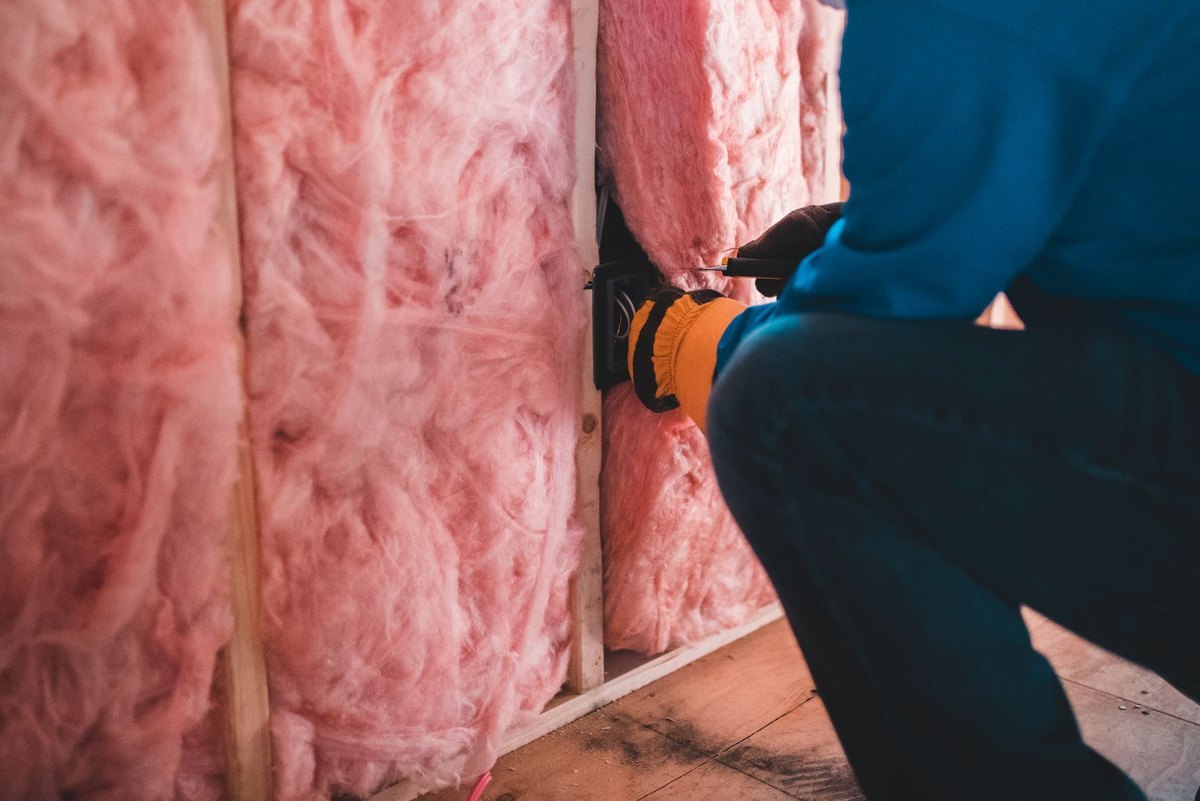
Wall insulation in Sandford
Old cavity fill that has settled or gone wet, taken out and put right, with the wall checked by camera before anyone quotes, across Sandford and BH20.
The site visit is free and so is the written itemised quote. Thomas Hannen prices every job himself.
Last updated
Almost every Sandford house has a cavity wall, and a borescope shows whether the old fill is dry and in place or has slumped and needs to come out. Most of the village went up in one long run between the late 1940s and the early 1980s, so many neighbouring walls here share the same build, and fills of a similar age tend to fail in similar ways. If a neighbour has found slumped fill, it is worth having yours looked at.
The symptoms in Sandford follow from that. A cold band along the top of the upstairs walls. Mould in the same two corners every winter. Or a wall that has damp coming through on the weather side and a cavity full of wet fibre nobody has looked at since it went in.
We put a borescope through one drilled hole and show you what is in there. Then the options go into a free written itemised quote: leave it, extract it, refill it, or line the wall from inside. The site visit and the quote are both free, and insulation in Sandford covers the loft too.
The work
Fill that has settled, and what replaces it
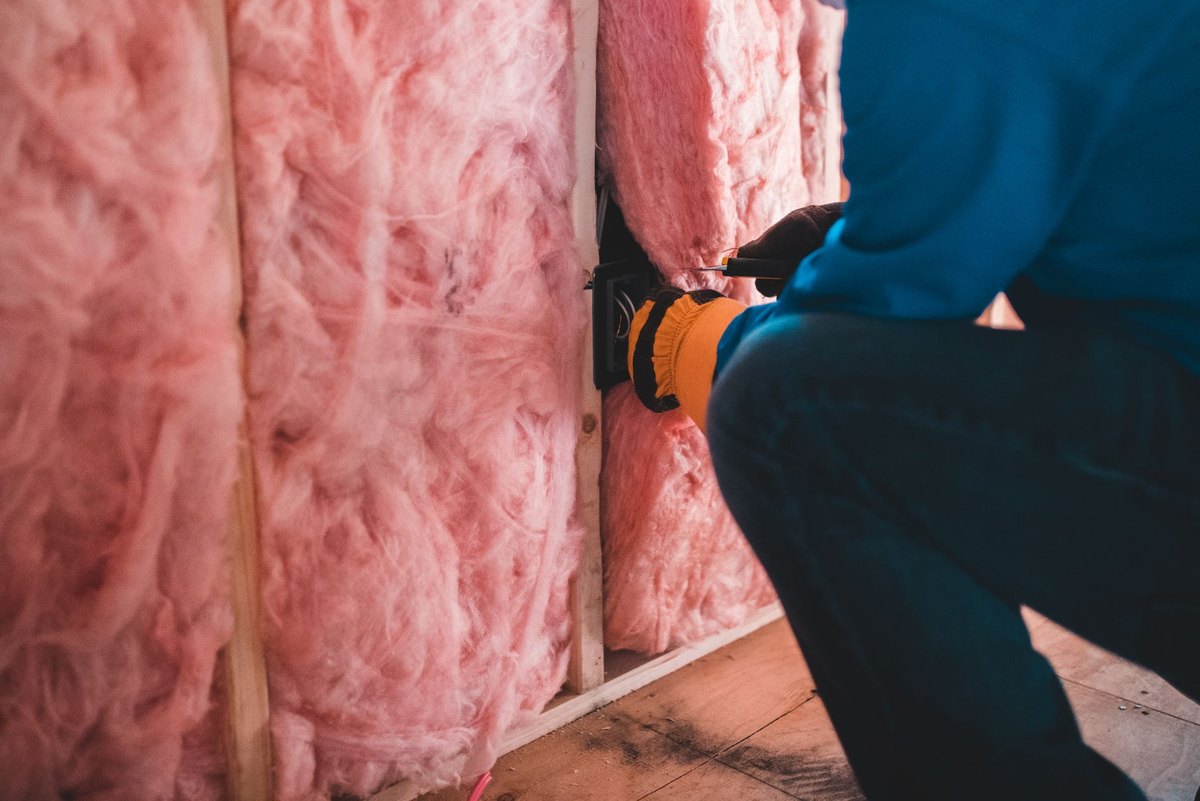
The camera goes in before anything else. One hole in a mortar joint, a borescope on a stalk, and we can see the cavity width, what material is in it, how far down the top of it has dropped and whether the inner face of the outer leaf is wet. On a brick and block wall of this era the cavity is usually a nominal 50mm.
Extraction. Old fibre that has slumped or gone wet in a Sandford wall comes out through a drilled pattern with a vacuum and a whip, working from the bottom up. It is dusty, contained work. What comes out is bagged and taken off site. Nobody can tell you how long it will take without seeing what is in there first.
Refill, or not. Once a Sandford cavity is clear and dry, bonded polystyrene bead is the usual refill. It flows into the awkward corners a fibre will bridge, it does not settle under its own weight the way loose fibre eventually does, and it sheds water rather than holding it. Where the outer leaf is cracked, blown or letting penetrating damp through, the wall gets put right first and the cavity stays empty until it is dry.
Closing the wall off properly. Before a bead goes in, the eaves are closed, every window and door reveal is checked, the threshold at the front door is dealt with and any hole cut for a flue or pipe is sleeved. That stops material ending up in the loft. A fill is normally covered by an independent scheme run separately from the installer.
Solid walls, and the few here. The older properties towards the Wareham end are nine inch solid brick with nothing to fill. Those take internal wall insulation, IWI in the trade: insulated plasterboard fixed back, or a stud and batten frame with mineral wool or PIR board such as Celotex or Kingspan between it, with an aerogel backed board where a reveal has no room to give. External wall insulation, EWI, means boards and a render carrier on the outside and a thin coat finish, which is the better U value and the bigger job.
Junctions and vapour. A lining is only as good as its edges. Reveals returned, the floor junction carried down, joist ends thought about, and a breathable vapour control layer taped continuously so the dew point cannot end up inside the build up as interstitial condensation. Miss it and you get a thermal bridge at every edge.
Ventilation. Extract in the kitchen and bathroom, trickle vents in the windows, air bricks kept clear at the base of the wall. Approved Document F sets the standard, and it matters more once airtightness improves.
How it runs
Filling, or re-filling, a cavity wall
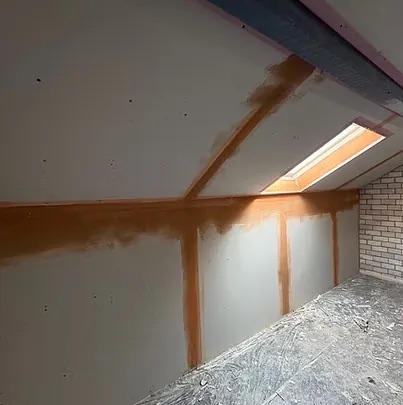
Thomas starts by finding out which wall you have. Most houses in Sandford were built after the war with a cavity, and many may have been filled at some point since. He drills one small hole and looks through with a borescope to see whether the cavity is empty, filled, slumped or wet.
What you get in writing is the inspection, the fill or board and its thickness, pulling out old fill if it has failed, finishing round the window and door openings, any air bricks or vents, and removal of waste. Extraction and refill are for a registered installer, and the new fill should carry a CIGA certificate.
For a cavity fill, holes are drilled in a pattern from outside, filled, then made good with matched mortar. A bungalow comes off a tower, and a two storey gable needs a scaffold. Internal lining is done room by room, with floors covered and furniture moved. Nothing is left open overnight, and waste leaves with us. Wet fill or mortar bridging the cavity is photographed and priced before we go any further.
A cavity fill or an internal lining needs no planning permission, which the Planning Portal page on insulation sets out. External wall insulation changes the look of the house, and the Planning Portal guidance on external walls covers it. Dorset Council is the authority and there is no conservation area over Sandford; the few listed buildings, the Church of St Martin among them, need listed building consent even for work inside. Regulation 23 means a renovated thermal element has to meet Approved Document L.
Cost
The cavity you find decides the cost
We do not price wall insulation by the square metre. The wall area is easy. The cavity and the edges are not.
What is in the cavity. A clear, dry cavity is the quickest wall to fill. Fill that has slumped, leaving a cold band at the top of the wall, or fill that has got wet on a weather-facing gable, has to be extracted before anything new goes in. That extraction is often the biggest line.
Exposure. Walls facing the weather across open ground take more driven rain. If the outer brick or pointing is poor, it needs repairing first, or new fill will get wet too.
Access. Bungalows come off a tower. A two storey semi needs a scaffold, and work at height rules make that a priced line.
The edges of each wall. Round the windows and doors, where the ground floor meets the wall, up at the eaves and along a party wall are the places cold bridges form. Detailing them takes far longer than the open wall.
Internal lining. Where a wall cannot be filled, insulated plasterboard on the inside means moving sockets, radiators and skirting.
Before you accept another quote, ask whether anyone has actually looked inside your cavity, what product and depth they intend, how the window openings will be finished, and who puts the decoration right afterwards.
If damp has appeared
Damp patches after the walls were insulated
Damp or black mould on an outside wall after it was filled or lined usually has two explanations. Water may be tracking across the cavity through wet fill, often on the wall facing the weather, or warm air may be reaching a cold spot at a window reveal or ceiling junction.
Wipe the mould with a mould cleaner, keep the room aired, and note where the damp sits and when it appears. The first visit uses a borescope and a damp meter to find which it is before anything is taken out. Booked work is Monday to Friday, 8am to 6pm. If it is spreading, ring instead of emailing, and a missed call gets a ring back as soon as we can manage.
Worth knowing
Houses built together tend to age together
Sandford is unusual in how tightly its housing sits in time. The bulk of it was built between the war and the early 1980s, with the biggest single burst in the late 1960s and early 1970s. That means whole rows of houses share the same wall build, and where their cavities were filled, fill of a similar age in a similar wall tends to age the same way.
Material fails on a timetable. Loose fibre in a 50mm cavity settles under its own weight and under thirty years of the wall moving, and once the top of the fill drops below the upstairs ceiling you have a cold band of heat loss around the whole first floor. It shows up in the same corners house after house, which is what you would expect from similar fills in walls of the same build, and it drags an EPC down with it.
The practical upshot is that a neighbour's borescope is useful information. If the house next door has slumped fill, the odds are yours has too, and it is worth checking rather than waiting for the black mould to decide it. A short street can be looked at in one visit, and we will tell you which houses need extraction and which are fine, and roughly how long each would take.
Who you are dealing with
The name behind your wall insulation quote
Sandford is 11.7 miles from our base at Boscombe. We insulate walls across the village, Holton Heath, Stoborough, Wareham and the BH20 addresses around them. Dorset Council is who you would deal with for planning or building control.
Behind the name is a limited company, Bournemouth Roofing & Building Ltd, registered in England and Wales, company number 15471719. The business is Thomas Hannen's, and he comes to drill the test hole and put the price together personally. A verified customer's score for us on Checkatrade is 10 out of 10. There is no charge for the survey visit or for the written, itemised quote. Before you book a visit in Sandford, you can read our customers' Google reviews, word for word, on our reviews page.
Planning at a glance
Do you need planning permission in Sandford?
Most repairs in Sandford need no application at all. What decides whether a change to the outside of your house does is who the council is, whether a conservation area or a listing applies, and whether the place sits in a protected landscape.
| Question | In Sandford |
|---|---|
| Who decides | Dorset Council is the planning authority for Sandford. Dorset Council's heritage pages set out what it controls. |
| Conservation area | None covers Sandford, so a like-for-like repair is ordinary maintenance. |
| Listed buildings | Yes, Sandford has listed buildings. If yours is one, or stands in the grounds of one, work can need listed building consent. |
| Protected landscape | No National Park or National Landscape covers Sandford. |
Questions
Questions about wall insulation in Sandford
How can I tell if our cavity fill has slumped?
The usual sign is that upstairs feels colder than downstairs and mould appears near the ceiling rather than at the skirting. A borescope through one hole confirms it in minutes.
Can old cavity insulation be taken out?
Yes. It is extracted through a drilled pattern with a vacuum, working from the bottom up, and the material is bagged and taken away. How long it takes depends on what the borescope finds in there.
Should we refill the cavity afterwards?
Usually, in bead rather than fibre, but only once the wall is dry and the outer leaf is sound. If the outside is letting water in, we leave the cavity empty until that is fixed.
Is the same problem likely next door?
It can be. Neighbouring houses of the same age share the same wall build, and fills of a similar age tend to fail in similar ways. Checking two or three houses in one visit is the sensible way round it.
Will taking the old fill out make the house colder?
For the gap between extraction and refill, yes. If we are leaving the cavity empty on purpose we will say why, and put the money into an internal lining on the coldest wall instead, where the payback is better.
Nearby, and next door
Wall insulation near Sandford
Nearby places we also cover for wall insulation, with straight-line distances from Sandford, and the other trades we offer in Sandford itself.
Wall insulation nearby
Our other trades in Sandford
Wall insulation guides
Damp at the bottom of a wall: what it is PIR board vs mineral wool: which insulation? Hollow-sounding wall: blown plaster or dot and dabEverything we do in Wareham Wall insulation, all areas Every area we cover
Free quote
Find out whether your cavity fill has dropped
Thomas comes out, puts a camera in the wall and tells you whether what is in there is still doing its job. The visit and the written quote are both free.