
Driveways in Lymington
Front gardens turned into parking, block paving relaid, patios and shared courts rebuilt across Lymington and SO41. Measured first, priced in writing.
The site visit is free and so is the written itemised quote. Thomas Hannen prices every job himself.
Last updated
Before anything else, we measure whether a car will genuinely fit and get out again. In Lymington a front garden conversion is often decided by the depth from the wall to the pavement, and it is better to hear that at the visit than after the wall has come down.
Front gardens around Lymington tend to raise questions about parking, tired block paving or a shared court. The car lives on the street and the front garden looks like it might take it. The block paving that went down with a house in the eighties has sunk in the wheel tracks, gone green and grown weed through the joints.
Or a shared parking court behind a block has broken up and nobody is sure who is supposed to sort it. We come out, take the levels and the depths, dig a trial hole where the wheels will actually stand, and then put it in writing. The quote is itemised, so the dig, the sub-base, the edgings, the drainage and the surface can each be questioned on their own.
The work
Front gardens, eighties closes and shared parking courts
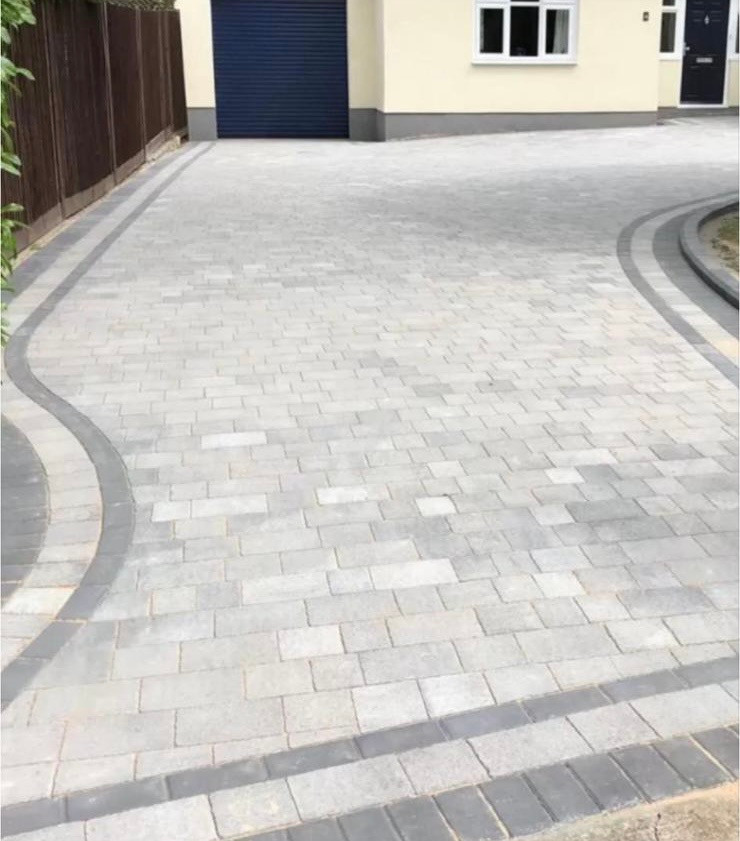
Turning a front garden into a parking space. Nearly half the homes in Lymington are semis or terraces, and on those streets the front garden is the only place a car can go. The number that matters is the depth from the back of the pavement to the bay window.
If the car overhangs the footway you have not solved anything, and we will say so. Where it does work, the job is an opening in the wall finished with a pier, a dropped kerb applied for separately from the highway side, and a build-up that will take a wheel turning tightly in a small space, which is harder wear than a straight run.
Block paving from the eighties, at the end of its second act. A quarter of the stock in Lymington went up between 1983 and 2008, with the peak in the eighties, and a lot of the drives on those closes went in with the houses and have never been touched since. Kiln dried sand has washed out of the jointing, the blocks have stopped bracing each other and the edge restraint has given way where it was only ever bedded in soil. You get creeping edges, sunken bays and rutting where the wheels sit. Where the sub-base is still sound, that is a lift, a re-lay to proper falls, a haunched kerb and a re-sand rather than a new drive, and we would rather sell you that.
Shared courts behind flats are bigger areas with heavier turning loads, usually tarmac or concrete with a gully or two that stopped taking water years ago. The paving is the straightforward part. The awkward part is who instructs it, because where the cost falls on leaseholders above a certain figure the freeholder has to consult formally under section 20 of the Landlord and Tenant Act 1985. We are happy to survey it and put a written itemised price in front of a management company or a residents group so there is something real to consult on.
In the small town gardens space is tight, so levels do the work. Porcelain and natural stone both go on a full mortar bed rather than dabs, with pointing chosen to suit the joint width, and the finished level stays well below the damp proof course with a margin or a channel drain along the wall. Where a garden falls away, a step and a low retaining wall beat trying to build the whole terrace up to meet the house. For garden paving, see patios in Lymington.
What we will talk you out of: resin over a base that is already cracking, because it is a continuous surface and it will crack where the base does; new paving laid over the old to save a dig, when the reason the old one failed is underneath it; and laying anything at all before the surface water has somewhere lawful to go, because a drive that ponds at the door is a job nobody enjoys coming back to.
How it runs
Digging out and laying a new drive, step by step
Thomas comes out, measures up and looks at levels and drainage before anything else. Most drives in Lymington belong to post-war semis, eighties houses on closes and bungalows, and many are tired concrete or tarmac over a thin base. On clay ground, the sub-base matters more than the finish. The itemised quote shows excavation and muck away, the sub base, edgings, the surface and the drainage, each priced on its own.
Before the dig we agree where the skip or grab lorry stands, how you get in and out while the drive is up, and where your car goes. On a close with a shared turning head, neighbours keep their access. The site is swept each evening and the spoil leaves with us. Should the excavator find an old soakaway, a buried slab or a soft patch, the dig pauses while you look at a photograph and a price for dealing with it.
Relaying what is already there is maintenance. New hard surfacing of more than five square metres at the front that drains onto the road needs planning permission from New Forest District Council, and the Planning Portal sets out the test. A permeable surface, or a fall onto a border or soakaway on your own land, keeps it permitted development, though on clay a soakaway needs testing first. That right is for houses only. Flats and maisonettes have no permitted development rights for hard surfacing, so new paving on a shared court behind a block needs planning permission. A new crossover is a separate application to the highway authority. Where the house is in the town centre conservation area, or in the curtilage of a listed building, we check before a design is agreed.
Cost
The dig, the base and the water: pricing a drive
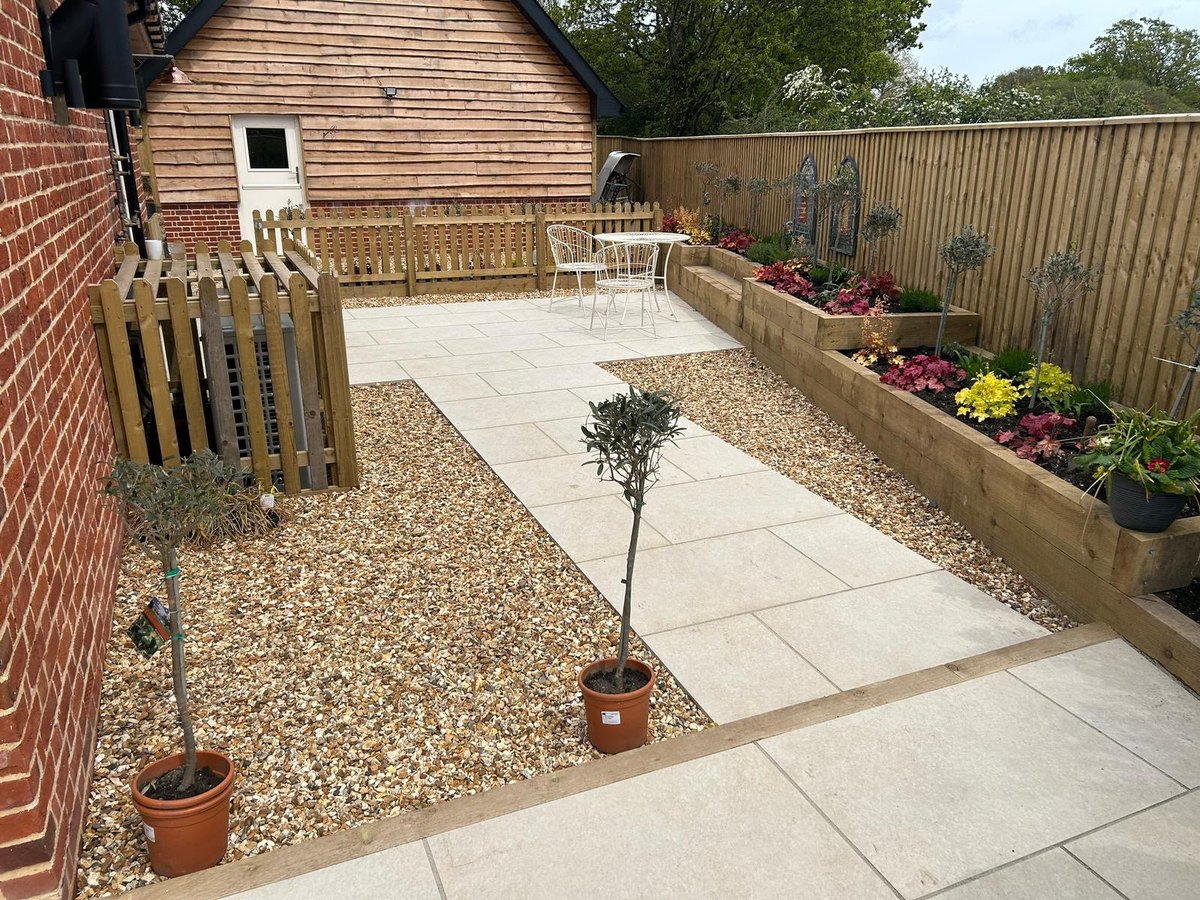
A drive in Lymington is not priced per square metre. What goes under it decides more of the price than what goes on top.
How deep, and what comes out. Taking up old concrete or tarmac and digging to a proper depth for a car makes a lot of spoil, and muck away is priced by the load. Clay that goes soft when wet may need a geotextile under the sub-base.
Where the water goes. Permeable block paving or gravel may avoid a planning application, but it needs the right open-graded base. A standard surface needs a channel drain and somewhere lawful for the water to go. On a close where the drive runs down to the road, that is often the biggest line.
The shape of the plot. A Lymington terraced house with a front garden barely a car deep, a bungalow with a long side drive and a flat with a shared parking court are very different jobs. In a parking court, the gullies and the falls are usually more work than the surface.
The surface and edging. Block paving, tarmac, resin and gravel differ in cost and time, and so do the edgings that hold them in place.
Ask any competing quote how deep the dig is, what sub-base and how much of it, where the water goes, and who takes the spoil.
If it is urgent
A sunken bay, a lifted block or a gully that floods
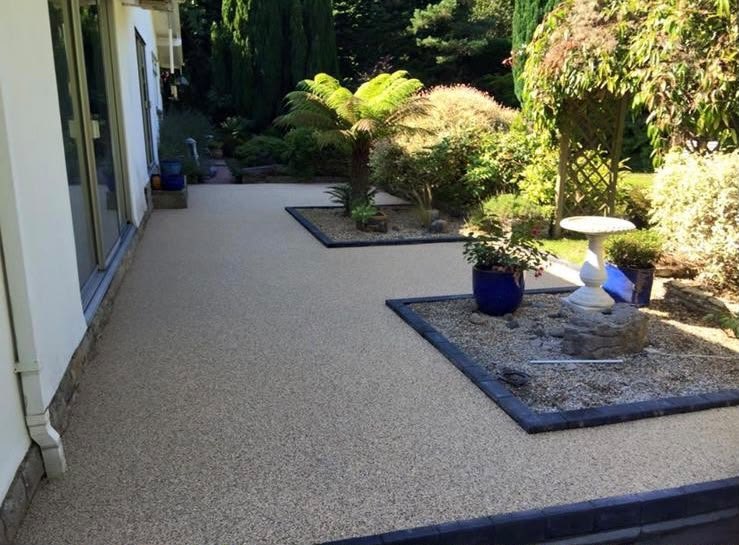
Most driveway faults can wait for a booked visit. A few should not. Blocks that have risen by the front door, a dip where the car wheels sit and hold water, or a gully that has stopped draining can trip a visitor or send water into a garage.
Stand a wheelie bin over the worst spot and pull the leaves off the gully grating. Ring us, as the form is slower. On the first visit we make it safe and get water draining again, then price the permanent fix. Regular work is Monday to Friday, 8am to 6pm, and a missed call is returned as soon as we can manage.
Worth knowing
Listed buildings, and why the front path can be the listed part
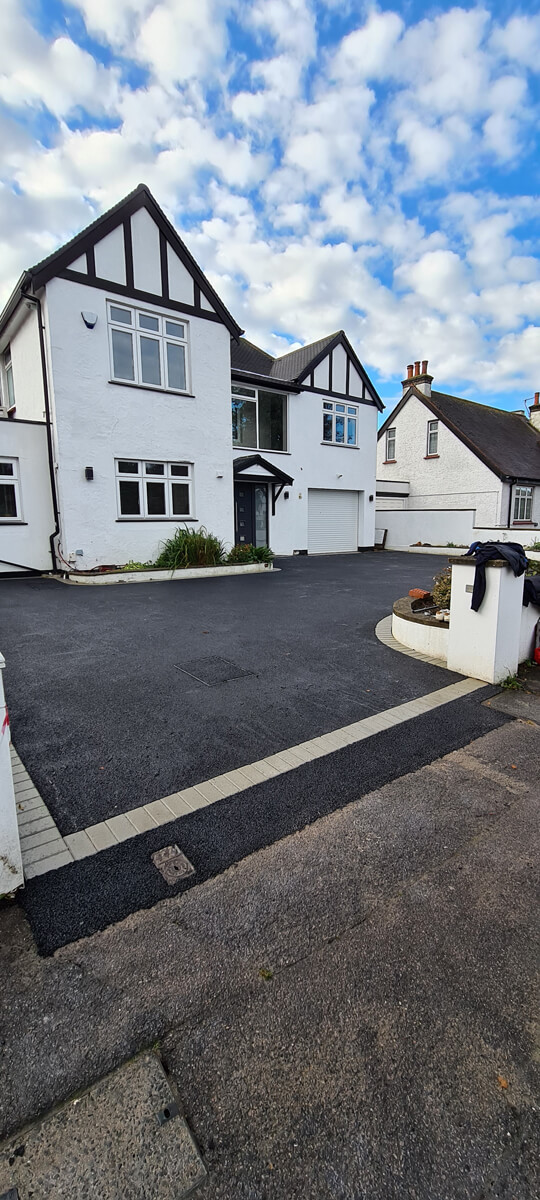
Lymington has around 160 listed entries in and around the town, which is a lot for its size, and they are not all grand buildings. A listing can take in the railings, the gate piers, the steps and the boundary wall in front of a house as well as the house itself, and on the older streets those front boundaries are exactly what a driveway job wants to remove.
Consent for that is a consent in its own right, separate from planning permission and asked for separately, and doing the work first and asking afterwards is not a position anybody wants to be in.
The practical version is short. Before you commit to an opening in a front wall, check whether the house is listed and whether the listing description mentions the boundary, and ring the council if it is not obvious.
If it is listed, the design usually shifts: the drive goes through the gateway that already exists, the paving is chosen to sit quietly against old brick and stone rather than to stand out, and any wall that does come down is taken apart carefully so the original material goes back on the returns. We price the wall work as its own line so you can see what that part of it costs before you decide.
Who you are dealing with
Who lays drives and paths across SO41
The drive from our base in Boscombe to Lymington is 12.5 miles. We work across the town and SO41, from Pennington to Boldre and out towards Milford on Sea and Everton, with New Forest District Council as the planning authority.
The business is Bournemouth Roofing & Building Ltd, registered in England and Wales, company number 15471719. The man who walks the site, checks the levels and prices your drive is Thomas Hannen, whose business it is. There is a 10 out of 10 on Checkatrade from a customer they verified. We visit for free and give you an itemised quote in writing at no charge. Before you book a visit in Lymington, you can read our customers' Google reviews, word for word, on our reviews page.
Planning at a glance
Do you need planning permission in Lymington?
Most repairs in Lymington need no application at all. What decides whether a change to the outside of your house does is who the council is, whether a conservation area or a listing applies, and whether the place sits in a protected landscape.
| Question | In Lymington |
|---|---|
| Who decides | New Forest District Council is the planning authority for Lymington. The National Park boundary runs close by, and the Park's property map shows which side an address falls. |
| Conservation area | Yes: Lymington Conservation Area. Check whether your street is inside the boundary before changing anything visible. |
| Listed buildings | Yes, there are listed buildings in and around Lymington. If yours is one, work can need listed building consent. |
| Protected landscape | No National Park or National Landscape covers Lymington. |
Questions
Questions about driveways in Lymington
Our front garden is shallow. Is it deep enough to park?
Whether a shallow front garden is deep enough to park is the first thing to measure. In the streets around Pennington, where 22.7% of the housing is terraced, front gardens are often shorter than a car once you allow for the gate and the bay window. If the bonnet or the boot overhangs the footway the council will not sign off a crossing. Thomas Hannen measures the depth on the visit and tells you straight if it does not work.
There are a lot of listed buildings here. Does that reach the paving?
It can. Lymington has 160 listed entries, including the parish church of St Thomas the Apostle and whole terraces of houses, and a listing covers railings, boundary walls and old paving in the curtilage as well as the building. Lifting a worn stone path, or taking out railings to widen an entrance, is the sort of thing needing consent from New Forest first. A patio at the back usually does not.
Who orders the work on a shared parking court?
Whoever owns the surface, which on a shared court is usually the freeholder or a residents company instead of the households using it. We need one person able to instruct and one clear plan of who owns what, otherwise the job stalls halfway through. The quote is set out area by area so the group can see which section is which before anyone commits, and Thomas Hannen will come to a residents meeting.
The ground moves in summer. Does that affect paving slabs?
It affects what you lay it on. This ground shrinks and swells with the seasons, so a slab bedded on thin sand over subsoil will lift and dish as the clay dries out and then takes up water again. We build a compacted stone base of proper thickness, keep the paving clear of the house so the two can move independently, and pipe roof water away rather than letting it soak in beside a footing.
Which way should paving fall in a walled town garden?
Away from the house and towards something that can actually take the water, which in the walled gardens behind the Lymington terraces is rarely obvious. There is often no side access and no soft ground left, so the fall goes to a linear drain along the far wall and then into the existing surface water run if there is one. Agreeing that connection before we start is what stops the job halting.
Nearby, and next door
Driveways near Lymington
Nearby places we also cover for driveways, with straight-line distances from Lymington, and the other trades we offer in Lymington itself.
Driveways nearby
Our other trades in Lymington
Driveways and patios guides
Driveway planning permission and where water goes Sunken or ponding driveway: base or drainage Indian sandstone vs porcelain paving: an honest comparisonBuilders in Lymington: all our building work Everything we do in Lymington Driveways, all areas Every area we cover
Free quote
Get a price for a drive or patio in Lymington
Tell us the address and what you want doing. We will come and measure it, look at the ground, and put an itemised price in writing. Both are free.