
Bricklaying and repointing in Lymington
Brick and stone repairs from the Quay to Pennington. We look at why the wall failed before we price putting it back, and the written quote is itemised.
The site visit is free and so is the written itemised quote. Thomas Hannen prices every job himself.
Before anyone repoints a cracked wall in Lymington, it is worth finding out where the rainwater is going. A surprising number of the cracks we are called to here move with the seasons because of water in the ground, and pointing a live crack simply cracks again.
Three sorts of call come in from around the town. Diagonal cracking stepping up through the brickwork near a corner or a window, often on a house with a big tree in the garden. Pointing that has weathered back to nothing on an exposed elevation, with brick faces starting to go with it.
And walls in the garden, the retaining runs on the sloping streets down towards the river, that have leaned far enough to worry somebody. We come out for free, look at the whole wall rather than the crack, photograph it, and give you a written price that says what we are doing and why.
The work
The brick and stone jobs we do in Lymington
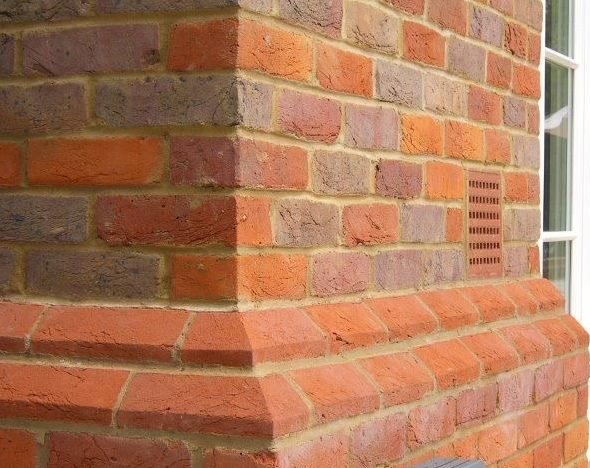
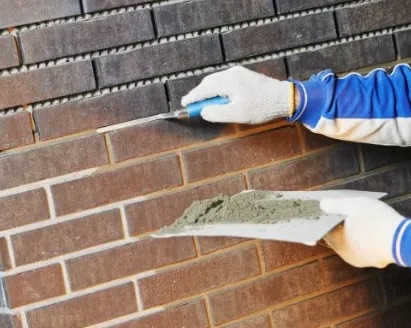
Repointing the later brickwork. Most of the estates around Pennington and the edges of town are cavity built in facing brick with a bucket handle joint, and on those the mortar goes back as a gauged sand and cement mix rather than lime. Half the housing here went up between 1945 and 1982 and another quarter after that, so this is the bulk of the work. It is all in the preparation: rake the joint to depth, get the dust out, wet the background and point back. Where an elevation faces the prevailing weather the joints erode faster than the sheltered sides, so it is normal to do one face of a house and leave the others for years yet, and we will say so rather than quote all four.
The older brick in the town centre. Closer in, the houses and the terraces are older, softer and often solid rather than cavity, and there are 160 listed entries in the parish. That brick wants lime, a joint finished flush and a sample panel agreed before we start on an elevation. Cement on a soft brick front here is the most expensive mistake we get asked to undo, because it takes the face off the brick and then the brick has to be cut out and replaced.
Stepped cracks over an opening usually mean the lintel has failed or a steel is rusting inside the wall, and that is cut out and replaced with the brickwork rebuilt over it. Cracks that run down towards the ground are a different conversation and we treat them as such. Where a crack is live we stitch and repair after the cause is dealt with, not before, and if what you actually need is a structural engineer rather than a bricklayer we will tell you that at the visit.
The ground falls away in a lot of this town and it shrinks and swells, so plenty of garden walls are quietly holding a bank back without ever having been designed to, and where the rainwater ends up beside a footing is a structural question and not just a damp one. Those bow, then the coping tips, then a section goes. We rebuild off a proper footing with weep holes so water is not trapped behind, rebed the coping and reset gate piers that have moved. On a new wall Planning Portal guidance on garden walls sets out the height allowed before planning permission, and where a wall stands on the line with next door, which is common in the terraces, the Party Wall etc. Act 1996 applies.
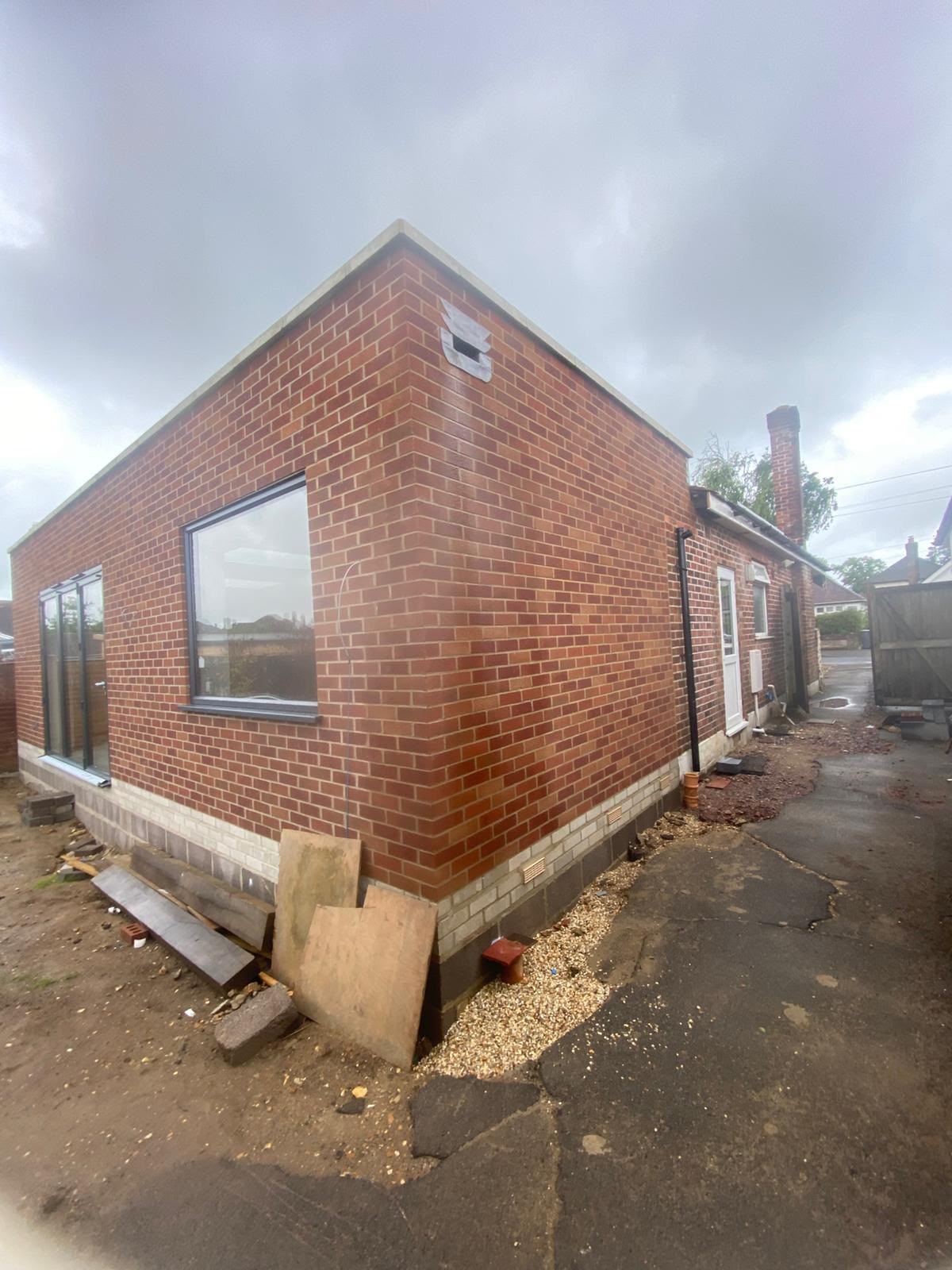
New work is extensions, garden rooms, porches and rebuilt returns, in cavity construction with a blockwork inner leaf, an outer leaf in stretcher bond, wall ties at proper centres, cavity trays and a visible damp proof course. Widening an opening or removing a load bearing wall brings building control in, and Planning Portal guidance on external walls sets out where that starts.
How it runs
From your call to a written price
Same team from the first visit to the last, one person to ring, and the quote itemised: access, raking out, the mortar mix, the area of each elevation, any brick replacement and disposal on separate lines. There are 160 listed entries in and around the town, so the first thing we check is whether your address is one of them or sits inside a designated area, because that changes the job rather than just the paperwork. Repointing an unlisted wall like for like is repair and needs no application. Anything that alters the appearance of a listed building needs consent from New Forest District Council first, and other permissions you may require is the plain summary.
Cost
What decides the price of a brickwork job
No rate per square metre: the metre of wall tells you nothing until you see the joints. A terraced front onto the pavement, a semi with a side passage and a detached house with a retaining wall down one boundary all differ. How long the platform stands matters as much as its size, and the work at height rules are why it is a priced line. Raking by hand is slow, so joint depth and spalled faces decide the hours, and matching a mortar or sourcing a brick takes trial panels. Ask how deep joints are raked, by hand or disc, and whether the scaffold is in.
If something has moved
Loose brickwork, or a wall that has shifted
Ring rather than use the form. Anything overhead or leaning goes to the front of the queue. Retaining and boundary walls that hold a bank or sit above a parking space are the ones we drop everything for here, so mention it when you ring. The first visit is about making it safe. The phone is answered 24 hours for emergencies; scheduled work runs Monday to Friday, 8am to 6pm.
Worth knowing
Sort the water before you repair the crack
The ground under a lot of this area is cohesive, which is a dull way of saying it swells when it is wet and shrinks when it dries. Foundations sit on it and move a little with it. That is why so many cracks here are seasonal: they open through a dry late summer, close again over winter, and the owner repoints them every couple of years wondering why it never holds.
Two things make it worse. One is a large tree or a hedge close to the wall, drawing water out of the ground on one side of the house only, which is what turns even movement into a diagonal crack stepping up from a corner. The other, and it is the one you can actually do something about, is water being put into the ground right beside the foundation.
So before you pay anyone to fix brickwork, walk round the house in heavy rain. A gutter overflowing at a joint, a downpipe discharging onto a flowerbed, a gully choked with leaves, a soakaway too close to the wall or a patio falling back towards the house all deliver water straight to the one place it does harm. Approved Document H sets out where surface water is supposed to go, and it is not against your footing.
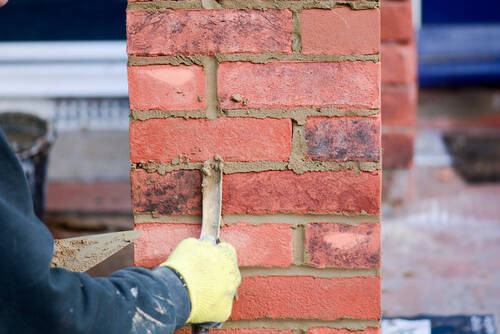
Get that right first, watch a crack through one full cycle of seasons and mark the ends with a pencil and a date, and then repair. The repair itself is straightforward: rake back to sound mortar, stitch across the crack where it needs it, and point in a matched mix. Doing it in that order is the difference between one visit and four.
Who you are dealing with
A local firm you can check
We cover Lymington, Pennington, Everton, Boldre, Walhampton, Milford on Sea and Sway, and SO41 across to the Forest edge. Bournemouth Roofing & Building Ltd, registered in England and Wales, company number 15471719, which you can look up in a minute. Thomas Hannen's business, and he is the one who comes out to price the job, not a salesman. A verified customer's 10 out of 10 on Checkatrade. The visit and the written quote are both free.
Questions
Lymington questions we get asked
Lymington has 160 listed entries. How do we check ours?
The national list is searchable by address, and New Forest District will tell you if you would rather ask. The entries here run from the Parish Church of St Thomas the Apostle through to terraces of otherwise ordinary houses, and 160 is a great many for a town this size, so on the older streets the answer is often yes. Where a building is listed the mortar forms part of it and consent comes before the joints are opened.
Ours is a 1980s terrace in Pennington. What fails?
The perpends on the weather side and the mortar under the sills. 26.1% of Lymington stock dates from 1983 to 2008 with the peak in the 1980s, and terraces and semis together account for nearly half the dwellings, so these are thin skinned cavity walls with narrow joints. The vertical joints shrink back first and let water through to the cavity. It is normally a rake out and repoint of one elevation rather than anything structural.
Our terrace shares a wall with next door. Whose repointing is it?
The front and back of your own house are yours to deal with. Where a party wall between two Lymington terraces is involved both owners have an interest, and work that cuts into it or underpins it means telling the neighbour in advance. In practice most jobs here are one owner's front elevation and we quote for whoever calls us. If the neighbour wants theirs done at the same time we can run both off one platform.
Our street is narrow with permit parking. Does that hold you up?
It shapes the start rather than stopping the job. On the tighter Lymington streets we sort a suspended bay or a permit for the van beforehand, take the sand and the bricks in one drop rather than several, and keep the mixer off the footway. Anything standing over the pavement needs a licence from the highway authority and lead time to get it. All of that is settled at the survey so nothing waits on the morning.
Should we worry about a stepped crack near the bay window?
A bay carries the least load and often sits on the shallowest footing, so it is the first part of a house to move. On the freely draining ground at Lymington the more common trigger is water: a leaking gulley or a downpipe emptying at that corner softening what the bay stands on. We check the drainage, look at whether the crack is wider at the top or the bottom, and only then choose between stitching it and taking the bay down.
Nearby, and next door
Bricklaying and repointing near Lymington
Bricklaying and repointing nearby
Our other trades in Lymington
Everything we do in Lymington Bricklaying and repointing, all areas Every area we cover
Free quote
Find out what the wall is actually doing
A free site visit in Lymington, photographs of the fault and its cause, and an itemised written quote you can hold anyone else's against.