
Bricklaying and repointing in Milford on Sea
Repointing, wall ties, stacks and boundary walls, on a coast that works one side of the house harder than the other.
The site visit is free and so is the written itemised quote. Thomas Hannen prices every job himself.
Bricklaying and repointing
Brickwork in Milford on Sea, and why the sea front of the house goes first
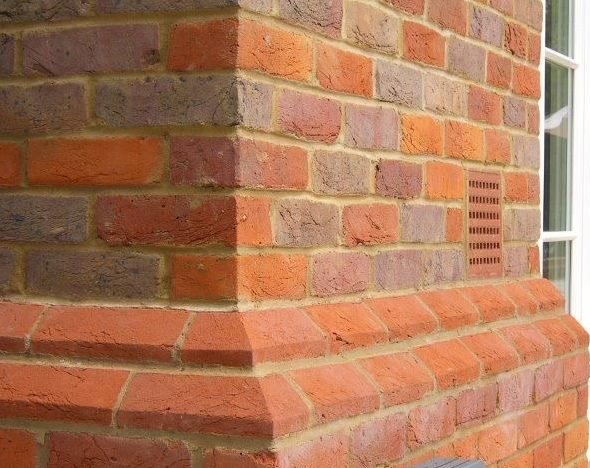
In Milford on Sea the brickwork wears out unevenly. The elevation facing the water loses its pointing, its wall ties and its brick faces long before the sheltered side of the same house shows anything at all, so the honest answer is usually one elevation repointed properly rather than a whole house done for the sake of it.
People ring us here for three or four reasons. Joints on the seaward gable that have gone back far enough to put a finger in. Brick faces that have blown off and left a soft pink crumb behind. A fine horizontal crack running along the mortar at regular intervals up a wall. Or a flint and brick boundary wall that has started to lean into the pavement.
We come out, walk round the whole property rather than the one wall you have spotted, and tell you which of those it is, because the repairs and the prices are nothing like each other. If a wall has years left in it we will say so and leave it alone. The site visit and the itemised written quote are free either way.
The work
The brickwork jobs we do in Milford on Sea
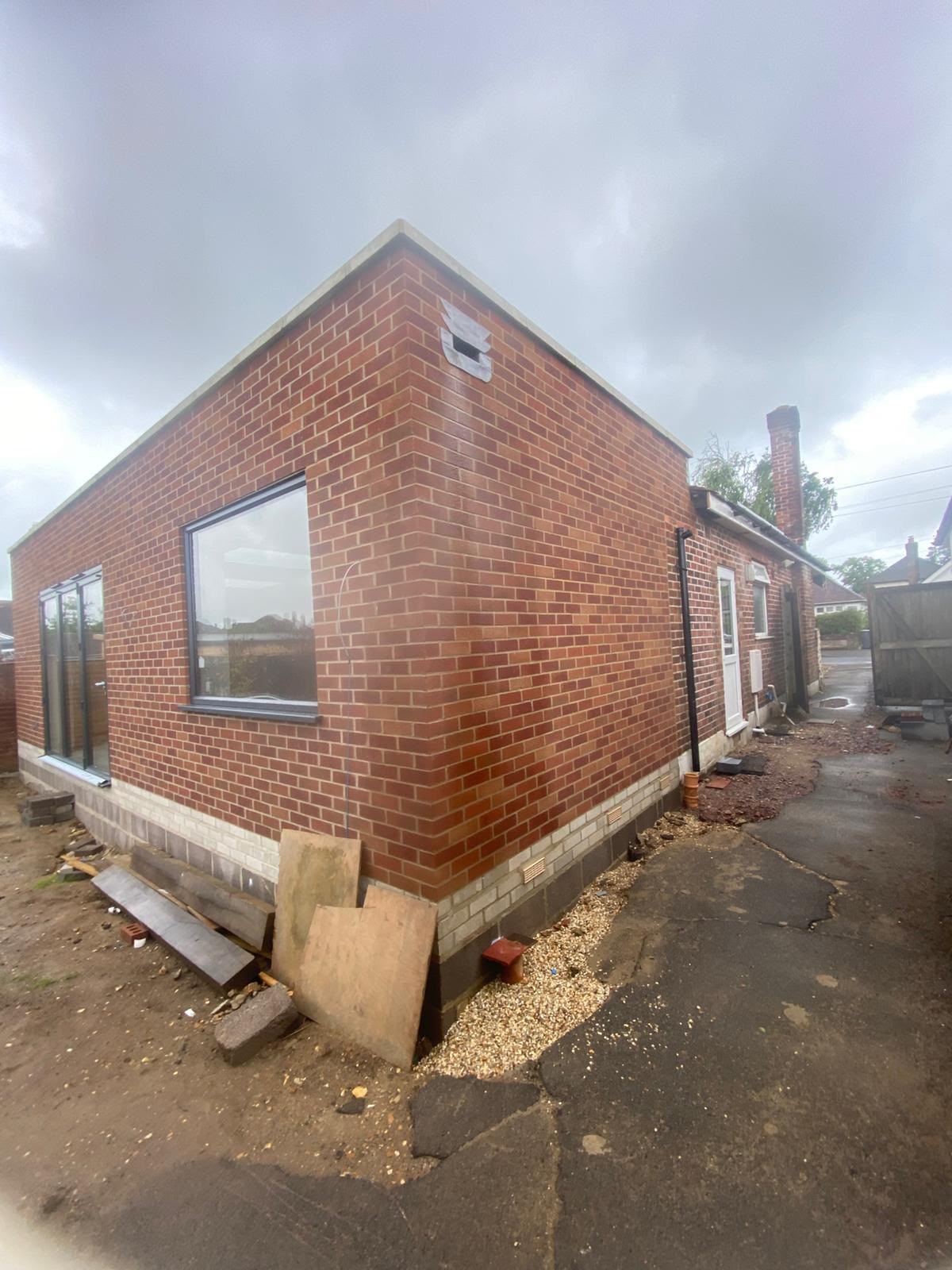
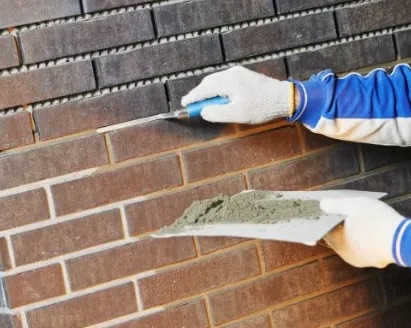
Repointing the seaward elevations. Most of the village went up between the 1950s and the early 1980s, built as a brick outer skin in stretcher bond with blockwork behind and a cavity between the two. On any street running down towards the cliff, the south and west walls lose their pointing decades before the sheltered elevations do. We rake the joints back to sound mortar by hand, match the mix, the sand and the colour, and finish bucket handle or weather struck rather than flush, so rain is thrown off the joint instead of sitting on a little ledge. On the older brick and flint round the green we use a soft NHL lime instead, because a solid wall has to stay breathable and cement pointing simply pushes the damage into the brick face.
Two skins are only a wall while the ties across the cavity are still doing their job. On houses of this period they are galvanised steel, and less than a kilometre from the water they corrode from the outer end inwards. As they corrode they swell, lifting the outer skin a fraction at every tie, which is the regular horizontal cracking people describe as a stripe up the gable. Remedial ties go in from outside without taking the wall down, and the holes are made good in matched mortar.
Flats and communal brickwork. A quarter of the homes here are flats, and a good number of those look straight out over Christchurch Bay. The work is parapets, balcony fronts, the brick panels between windows and the pointing on the exposed corners, and we price it for management companies and residents' associations as readily as for a single owner. If you are a leaseholder, major works are usually subject to consultation under section 20 of the Landlord and Tenant Act 1985, so ask your freeholder where that process has got to before anyone books a scaffold.
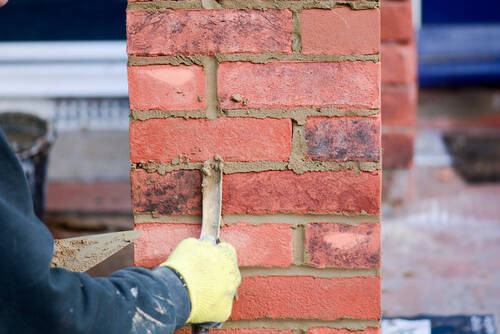
The walls round the green and along the lanes towards Keyhaven are mostly flint with brick quoins and lacing courses, and almost none of them have a damp proof course. They draw water up, the bottom courses go soft and spalling starts there. We rebuild bowed and leaning lengths on a proper footing, put a DPC in where the wall allows it, reset or replace the coping, and rebuild gate piers so they are bonded into something rather than standing on their own. A stack here takes the weather from three sides, so repointing above roof level, cutting out perished brick, renewing the flaunching around the pots and rebuilding from the flashing up are all regular work, and that is where most of the cost of a small job actually sits. Where frost and salt have taken the face off a brick we cut the unit out and replace it, and the match is the awkward part: much of what was laid here in the 1960s and 1970s is long out of production, so it means reclaimed stock or a handmade equivalent and a trial panel left up for a fortnight. New brickwork means extension skins, porches, dwarf walls, low retaining walls between split level plots and new piers, built off a dug foundation with ties at proper centres.
How it runs
From your call to a written price
You get one person to ring and a price broken down by elevation, so it can be compared properly. Milford on Sea is New Forest District Council. There is no conservation area covering the village itself, so for most people here repointing and brick repair is straightforward maintenance with no application at all. There are, though, twenty eight listed entries in the parish, and if yours is one of them then even like for like repointing needs listed building consent first: the Planning Portal note on other permissions you may require sets out what that covers. New and raised garden walls have height limits, which Planning Portal guidance on fences, gates and garden walls explains. Anything structural goes through building control, and where a wall is shared the Party Wall etc. Act 1996 applies.
Cost
What decides the price of a brickwork job
There is no rate per square metre, because a wall tells you little until somebody has looked at its joints. A seafront block with a communal gable, a 1970s detached house set back behind a front garden and a flint boundary wall at the roadside are three different set ups. Access is a priced line rather than an extra, since work at height rules cover how long a platform stands as well as how big it is. Hand raking is the only safe way on soft old brick. Ask about rake depth, the mix, and how many bricks are being replaced.
If something has moved
Loose brickwork, or a wall that has shifted
Ring, do not use the form. Anything overhead or leaning goes to the front of the queue. The first visit makes it safe and stable, and the permanent repair is priced once we can see how far the movement goes. Round here it is a boundary wall gone over at the roadside, or brickwork dropping off a stack after a gale. The phone is answered 24 hours for emergencies; scheduled work runs Monday to Friday, 8am to 6pm.
The one local thing
Salt gets into the wall, and it never leaves
Milford on Sea sits about half a mile from the water, which is close enough that salt spray and salt-laden air reach every elevation facing the bay. Salt does two things to brickwork.
It keeps the surface damp between showers, because it draws moisture out of the air long after the rain has stopped, so a seaward wall spends far more of the year wet than the same wall inland. And it drives the corrosion of anything metal in the wall, which means the galvanised wall ties in a cavity and the steel over an opening go first on that side of the house.
What to do with that. Treat the exposed elevation as its own job on its own timetable rather than waiting until the whole house needs doing, because it will always be a decade or more ahead of the rest. When it is repointed, the mix matters more here than almost anywhere on our patch: too hard and the salt crystallises inside the brick instead of in the joint, and you get spalling faces rather than a worn joint, which is the expensive failure rather than the cheap one.
A joint is meant to be the sacrificial part of a wall. Ask anyone quoting you what mix they are using on the seaward side and why it is different from the back of the house. If the answer is that it is the same mix all the way round, they have not looked at which way the wall faces.
Who you are dealing with
A local firm you can check
We are about twelve miles from Milford on Sea and along this stretch of coast constantly, covering SO41 from Everton and Keyhaven across to Hordle, Lymington and New Milton. Bournemouth Roofing & Building Ltd, registered in England and Wales, company number 15471719, which you can look up in a minute. Thomas Hannen's business, and he is the one who comes out to price the job, not a salesman. A verified customer's 10 out of 10 on Checkatrade. The visit and the written quote are both free.
Questions
Milford on Sea questions we get asked
Does being this close to the sea affect the mortar?
It affects the joint and everything metal buried in it. Milford on Sea is 0.7km from the coast, so salt in the air keeps the face damp between showers and works into the mortar, and the seaward elevation loses joints while wall ties, cramps and lintel ends corrode from the outside in. Rust staining running out of a bed joint is the tell. That elevation gets a different specification.
We own a flat. Who instructs work on the block?
The freeholder or the managing agent, not the individual leaseholders. A quarter of the housing here is flats, 25.6% of it, so the question comes up a lot in Milford on Sea. External walls are almost always the freeholder's responsibility, recovered through the service charge, which means the go ahead has to come from them. We are happy to price it for a residents' association to put forward.
What do you look at on the seaward gable?
Exposed metal, the verge and the cill ends first, then the joints. On a Milford on Sea gable we open one joint low down and one high up, because salt driven damp does not fail a wall evenly and the top course can be worse than the bottom. We also check the airbricks, since a blocked one on a wall that never fully dries turns a pointing job into a damp job.
Should the exposed wall be done all at once?
It is worth doing whole. The weather face at Milford on Sea has aged as one, so patching leaves hard new joints sitting beside soft old ones and water finds the line between them. The sheltered walls can often wait a good while yet. We price the exposed face as one item and list the others underneath, so you can decide what to release and what to hold.
Our neighbour's Victorian house is fine. Why is ours failing?
Different walls fail in different ways. 52.9% of Milford on Sea was built between 1945 and 1982 and only 11.6% predates 1919, so a street here often mixes a solid lime built wall with a cavity wall pointed in cement. The old one lets moisture out through the joint and looks scruffy while working properly. The newer one looks tidy until a perp cracks, then it passes water straight through.
Nearby, and next door
Bricklaying and repointing near Milford on Sea
Bricklaying and repointing nearby
Our other trades in Milford on Sea
Everything we do in Lymington Bricklaying and repointing, all areas Every area we cover
Free quote
Find out whether that wall actually needs doing
A free site visit, an honest answer about which elevation needs work first, and a written itemised quote you can compare.