Insulation in Milford on Sea
Loft top-ups, communal roof spaces over flats, sloping ceilings and cavity walls checked properly on an exposed coast.
The site visit is free and so is the written itemised quote. Thomas Hannen prices every job himself.
Two questions decide most insulation jobs in Milford on Sea: who owns the roof space above your ceiling, and which way your worst wall faces. A quarter of the homes here are flats, so the loft is often not yours to work in. And this close to open water, an elevation taking the weather changes the answer on wall insulation entirely. We settle both on a free site visit before anything is priced.
The calls come in three kinds. A top floor flat with a ceiling that is cold in every room and a management company between the owner and the loft. A bungalow where the heating runs hard and the loft has never been more than half done. And a house on the seaward side with damp showing on an inside wall that somebody has suggested filling the cavity to fix.
All three want looking at rather than pricing down the phone. We measure the existing depth instead of guessing it, check whether the eaves are open, find the tank, the pipe runs and the downlighters, look at which elevations take the weather, and on a flat establish who controls the roof space. The itemised written quote follows from that, method as well as figure, and nothing is ordered until you have said yes.
The work
The loft above your flat may not be yours
Top floor flats, and the loft nobody owns. A quarter of the homes here are flats, and a flat under the roof has the coldest ceiling in the block. It is usually the one nobody can do anything about, because the roof space is common parts rather than part of the demise. The work itself is ordinary: mineral wool between and over the ceiling joists, the eaves kept clear, the communal hatch insulated and draughtproofed. Getting permission to do it is the real job. We survey and quote in a form a leaseholder can put to the freeholder or the managing agent, and where the block wants the whole roof done properly, section 20 of the Landlord and Tenant Act 1985 sets out the consultation the landlord has to run before recovering the cost. Say at the first call whether you own a flat or a house, because it changes who we are talking to.
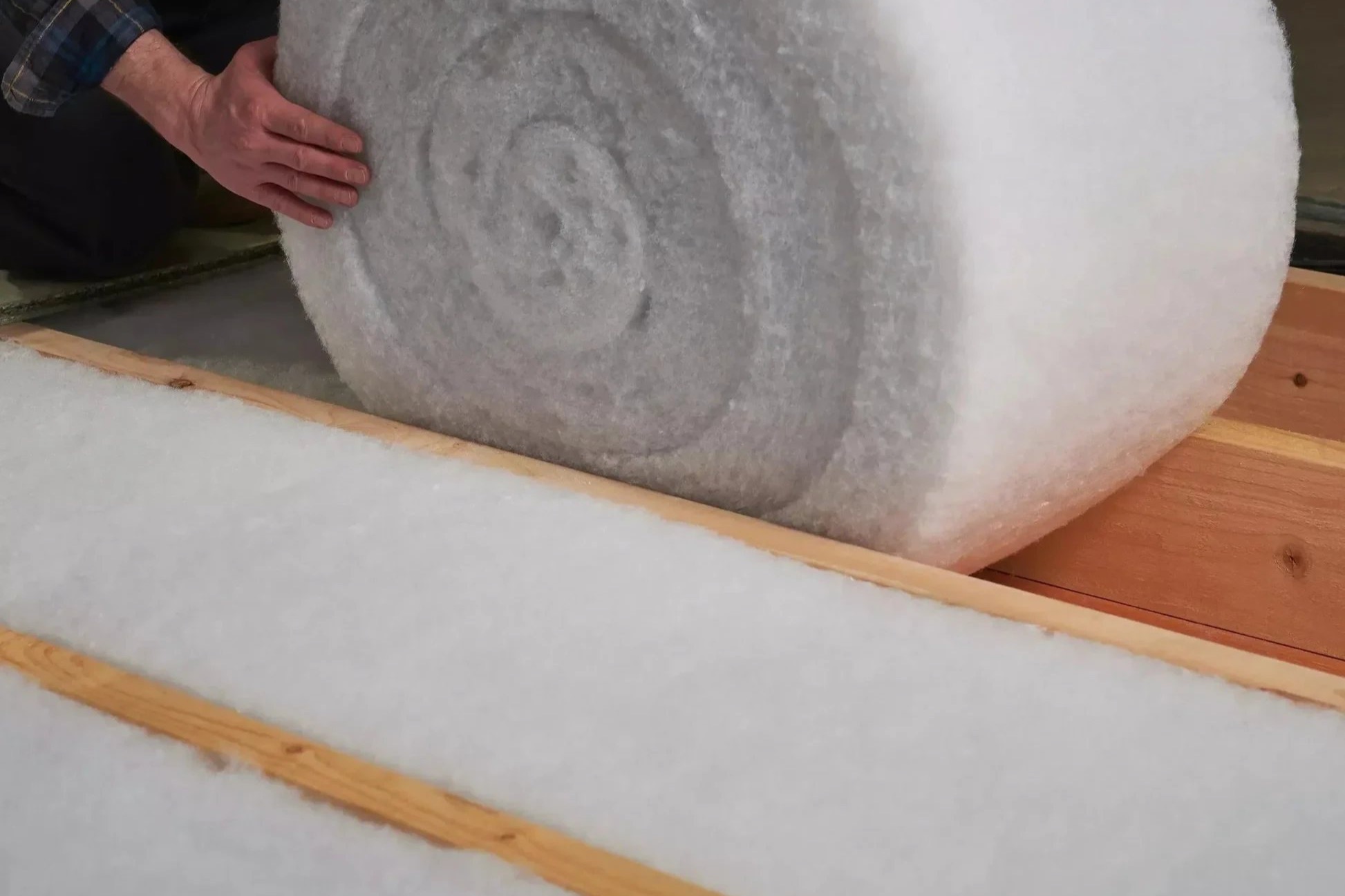
Bungalow lofts, where the ceiling is the whole house. On a single storey home the ceiling is nearly all of the heat loss rather than a share of it, so a top-up pays back faster than it does on a house. Most of these roofs are hipped, so the space closes right down at all four corners, and that is exactly where the original quilt stops. We lay between and over, mineral wool between the joists and an eco roll at right angles across the top, and we carry it into the corners and out over the wall plate. The target is a U-value of 0.16 at the ceiling, which in mineral wool is a total depth nearer 270mm than the 250 that used to be the figure.
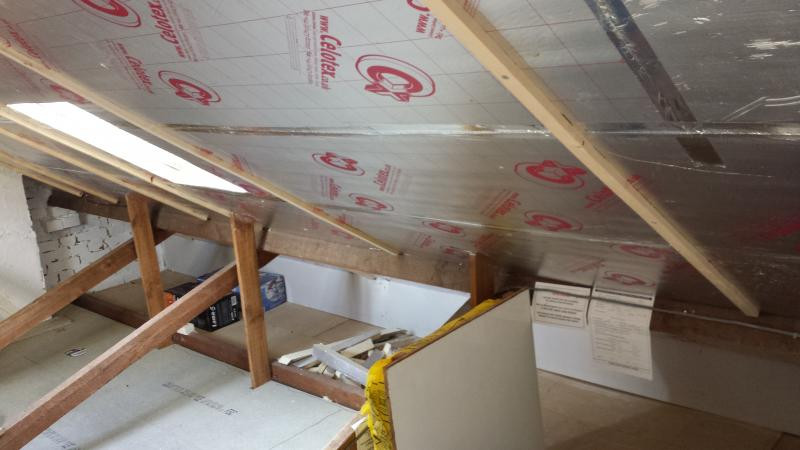
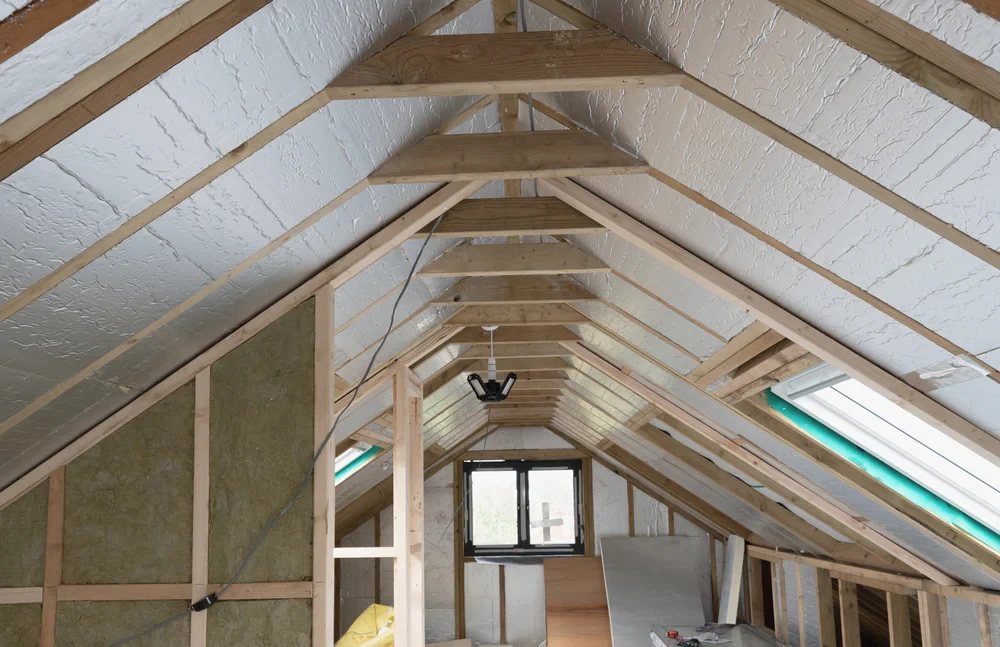
The pre-war villas and cottages off the green and around the church have solid walls with nothing to fill and often an attic room already carved into the roof. There it is a sloping ceiling job: PIR rigid board such as Celotex between the rafters with a clear air gap kept above, a foil faced board or a quilt like TLX under the rafters where headroom is short, and the dormer cheeks and knee wall voids done at the same time rather than left as the gap that undoes the rest. Internal wall insulation on the worst room is built breathable so the wall can still dry out. The post-war houses and bungalows have a cavity wall, and a fill here is a decision rather than a default: a borescope tells us whether it is clear, already filled, or part filled and slumped.
The water is seven hundred metres away, and air this close to it keeps a roof space damp between showers and works on anything metal in it, the nail plates on trusses, old steel straps, the fixings holding a deck down. That is one more reason the eaves ventilation has to be right once the space is made colder. Vent trays at the eaves, an insulated draughtproofed hatch, fire rated covers over downlighters, lagging on the tank and every pipe run left above the new layer, and a raised deck on legs where storage matters.
How it runs
From your call to a written price

The quote is itemised, with material, depth, ventilation and disposal on separate lines. Loft and internal wall insulation is permitted development, and Planning Portal guidance on insulation sets out where that stops; the guidance on external walls covers the point at which wrapping the outside of a house becomes a planning matter. Building control comes in once a thermal element is renovated. Milford on Sea sits outside the National Park, so New Forest District Council is the authority. There is no conservation area over the village, but twenty-eight buildings are listed, All Saints among them, and those need consent inside as well as out. Insulation in an existing home is zero rated for VAT under HMRC Notice 708/6.
Cost
What decides the price of an insulation job
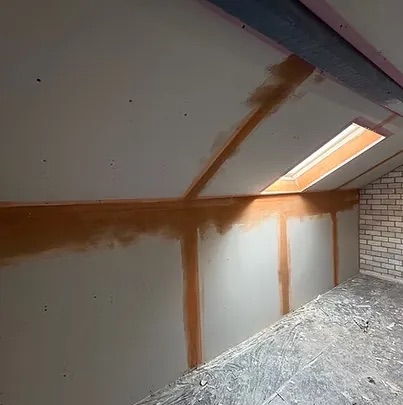
No rate per square metre: the area is the easy part and everything round it is the awkward part. A top floor flat where the hatch is on a communal landing is one day; a bungalow with a hipped roof closing right down at all four corners is another. Old material to bag and take away, and boarding to lift and put back, come before anything new goes down. Approved Document L sets what the work has to reach. Ask what depth is being laid, whether the old material comes out, and whether the eaves and hatch are included.
If it is urgent
Damp, condensation or a room you cannot heat
Ring rather than use the form. A loft dripping with condensation, mould that keeps coming back, or a room that will not hold heat gets seen quickly. The first visit settles whether that is insulation, ventilation or both, because insulating a space that cannot breathe makes it worse. If it is a flat we deal with the managing agent too. Outside Monday to Friday, 8am to 6pm is by arrangement.
Worth knowing
Severe exposure, and why we check before filling a cavity here
Milford on Sea sits under a kilometre from open water with its weather arriving off the Channel, and for wind driven rain that puts these walls in the most exposed category there is. That matters for one decision more than any other: whether a cavity wall should be filled. Inland, in a sheltered spot, a full fill in a sound wall is one of the better things you can do to a house.
On an elevation that takes rain at speed, a full fill can give water a path across the cavity to the inner leaf wherever the outside face is less than perfect, and what you get is a damp patch on the inside of the seaward wall that was not there before the work. Salt in the air makes it worse in a quiet way, because it holds moisture on a surface and a wall here dries more slowly than the same wall ten miles inland.
So the survey looks at the wall before it looks at the product. We borescope to see what is already in there, check which way each elevation faces, and go over the outside face for cracked render, open joints, bridged cavities and rainwater goods that are wetting one strip of wall every time it rains. Where a fill stands up, we say so.
Where it does not, there are better answers than doing it anyway: put the outside face right first and revisit it, fill the sheltered elevations and leave the exposed one, or take the worst room and insulate that wall on the inside instead. None of that is us being cautious for the sake of it. Getting a fill wrong on this coast is expensive to put back, because taking it out again is a far bigger job than putting it in.
Who you are dealing with
A local firm you can check
We cover Milford on Sea, Keyhaven, Everton, Hordle and Barton on Sea on SO41, out through Lymington, New Milton and Christchurch, and New Forest District Council is the planning and building control authority for this address. Bournemouth Roofing & Building Ltd, registered in England and Wales, company number 15471719, which you can look up in a minute. Thomas Hannen's business, and he is the one who comes out to price the job, not a salesman. A verified customer's 10 out of 10 on Checkatrade. The visit and the written quote are both free.
Questions
Milford on Sea questions we get asked
We are a few hundred metres from the sea. Does that change anything?
It changes the metalwork in the job more than the wool. Milford on Sea is under a kilometre from the coast, and salt keeps surfaces damp between showers and eats fixings from the edge inwards. Insulation itself does not corrode, but the clips, nails and vent grilles around it do, and a corroded eaves vent that has closed up will make a roof space sweat. We check the ventilation openings on the seaward side before adding any depth.
A quarter of the homes here are flats. Who owns the loft?
The freeholder, in almost every block. Flats are 25.6% of the dwellings in Milford on Sea, and a lease normally gives you the ceiling of the top floor and stops there, so the void above belongs to the building rather than to you. In practice that means one instruction covers the whole communal roof rather than one flat at a time. We survey the entire void and quote the block, not the individual home.
The seaward bedroom is colder than the rest. Why only that one?
Because that wall is wet more often than the others are. The exposed elevation here faces south west into the weather off the Solent, and a wall that is repeatedly soaked conducts heat away faster than a dry one, so the room behind it runs cold whatever the loft above is like. Sorting the loft alone will not settle it. We look at the pointing, the sill and the rainwater goods on that face before recommending anything internal.
What does the survey look at in an older seafront house?
The roof void, the eaves, and every opening on the weather side. Around 11.6% of Milford on Sea predates 1919, and those houses often carry a slate or plain tile roof with no felt, where laying deep material without opening the eaves turns a ventilated space into a cold damp one. Thomas measures existing depth, checks for felt, looks at the hatch and the tank, and writes each of those up as a separate line.
Does the New Forest council have to approve loft work?
Not for insulation inside the building. Milford on Sea sits in the New Forest district rather than the National Park, and no conservation area covers it, so ordinary loft, floor and roof insulation is maintenance. The 28 listed entries here, the Church Of All Saints among them, are the exception, and consent turns on the individual building. External wall insulation is the other exception, because it alters the outside face.
Nearby, and next door
Insulation near Milford on Sea
Insulation nearby
Our other trades in Milford on Sea
Everything we do in Lymington Insulation, all areas Every area we cover
Free quote
Find out whether your wall should be filled at all
A free site visit, a borescope in the cavity and a probe in the loft, then an itemised written quote with the method on it as well as the price.