Insulation in Ashley
Loft top-ups, lagging done properly around the tank, cavity checks and sloping ceiling work across Ashley and the New Milton side of BH25, priced in writing after a free survey.
The site visit is free and so is the written itemised quote. Thomas Hannen prices every job himself.
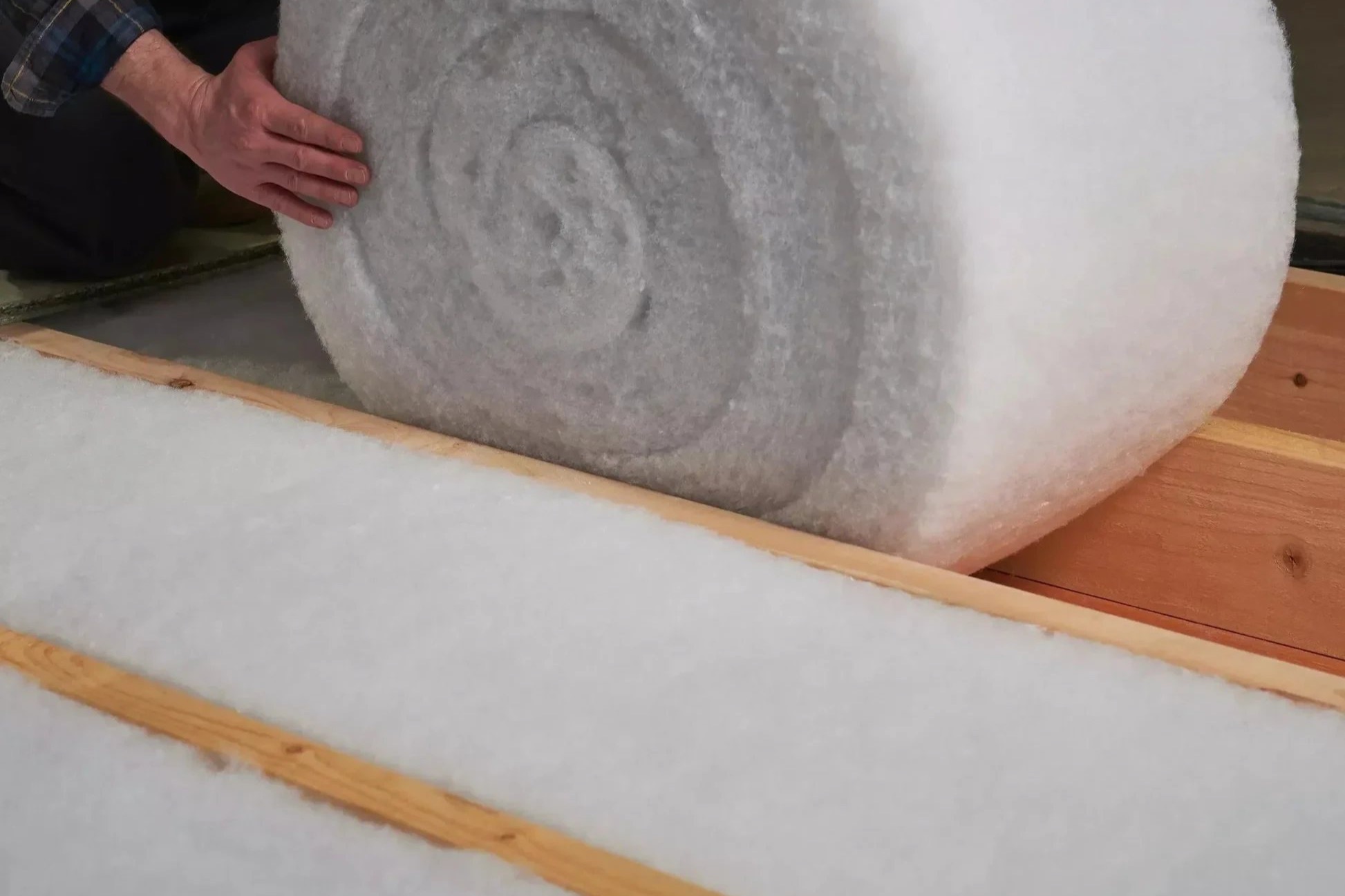
In a single storey house the loft sits over every room you use, so it is the one piece of fabric worth doing first. Most Ashley lofts we open have insulation in them from decades ago that has flattened to a fraction of what it should be, and getting the depth back is a day at most.
The calls come in three shapes. A back bedroom that never warms up whatever the heating does. A winter electricity bill that has gone somewhere silly and no obvious reason why. Or a loft somebody has just been into for the first time in years, where the wool is grey, thin and trodden into paths between the tank and the hatch.
None of those needs a sales pitch. We come out, get up there properly, part the insulation and measure the real depth rather than the depth it looks from the hatch, check the eaves are still open and see what is going on around the tank. You get photographs of what is up there and an itemised written quote. The site visit costs nothing, and where the loft is genuinely fine we will tell you that and point at the walls or the draughts instead.
The work
Insulate under the tank and January will find it
A whole bungalow footprint, not just the upstairs. Much of Ashley went up in the late 1950s and early 1960s and a lot of it single storey, so the ceiling you are insulating is the lid on the entire house. Those roofs were mostly cut on site, with purlins and a walkable space underneath, which is why so many of them ended up used for storage. We tease apart what is there, lay new mineral wool, ordinary eco roll, between and over the joists to bring the total to around 270mm, the depth that takes a ceiling to the 0.16 u-value, and cross lay the top layer so no joist is left telegraphing heat straight through the ceiling.
Insulate under the tank and January will find it. Houses of this age nearly always have a cold water tank sitting in the loft. Once the insulation under it comes up to full depth that tank is in a much colder space than it used to be, so it and every pipe serving it get lagged and the lid gets insulated, but the area directly beneath it is deliberately left open so a little warmth still reaches it. Get that wrong and a loft that was fine for forty years freezes in its first cold January. The cylinder in the airing cupboard gets the same treatment, and with close to a quarter of homes here running on electric rather than gas, what the fabric holds in is worth more than it is in town.
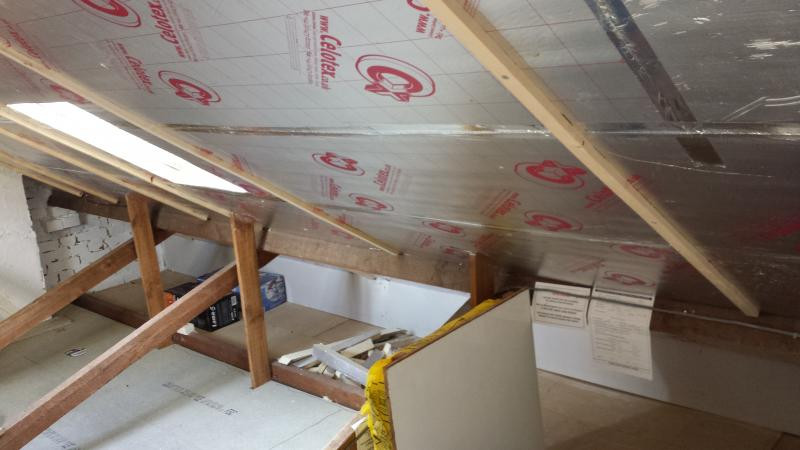
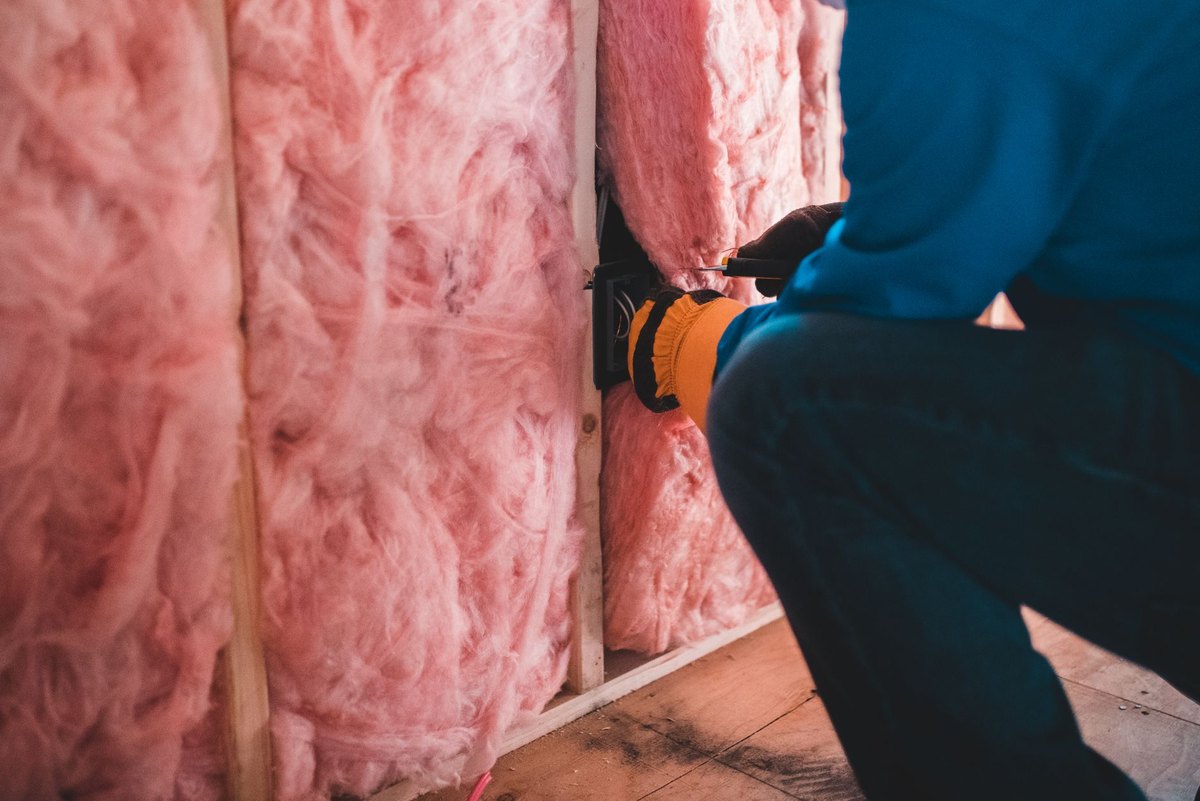
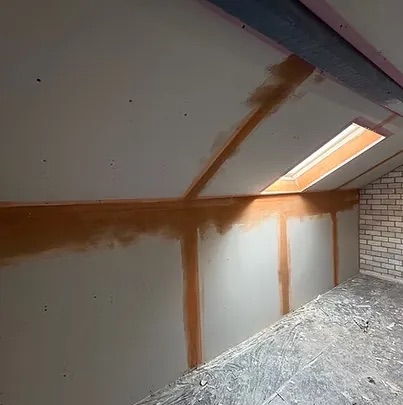
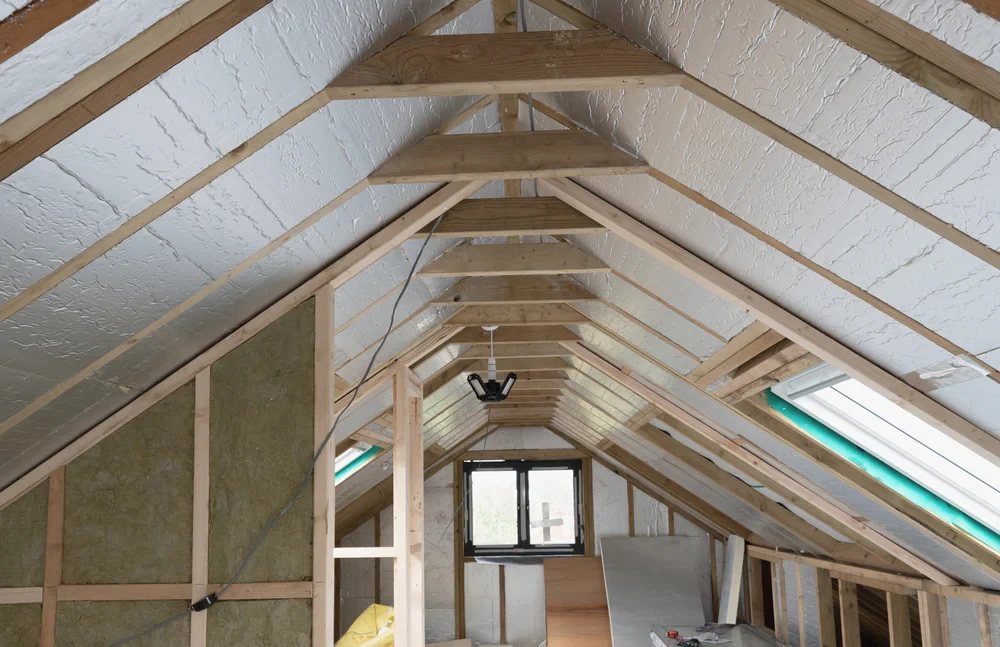
The inter-war and 1950s stock was built with a cavity wall, but a narrow one, and some was filled long ago with material that has since settled or got wet. We borescope before we quote: an empty cavity takes blown bead or mineral fibre, a failed fill has to come out first, and a full fill is not always the right call this close to the sea. Bungalows are more than four in ten homes here and plenty have gained a room in the roof or a dormer built as a warm roof, which is usually the coldest room in the house. Foil faced PIR rigid board goes between and under the rafters with the joints taped, or a multi-layer foil quilt such as TLX where the depth is not there, a vapour control layer on the warm side, and an air gap kept clear above the board. A bungalow has more eaves per square metre of floor than a house does, so the perimeter is where the heat loss hides: vent trays hold the air path open so a full 250mm can be carried right to the wall plate, the hatch is insulated and draught sealed rather than left as a hole in the ceiling, and every downlighter gets a fire rated cover.
How it runs
From your call to a written price
The quote is itemised: survey, clearing, material and depth, ventilation and disposal on separate lines. Insulating a loft is not a planning matter and does not need a building control notice, which is what the Planning Portal spells out for insulation. What does need thinking about is anything that changes the outside face of the building, external wall insulation or EWI above all, where internal wall insulation changes nothing anybody can see. New Forest District Council is the planning authority for this side of New Milton, and Ashley sits outside the National Park boundary, so the stricter rules people expect around here do not apply to most addresses. There is no conservation area over the housing either.
Cost
What decides the price of an insulation job
No rate per square metre: the area is the easy part. A 1960s bungalow with a small hatch over the hall, an inter-war semi with a loft ladder already fitted, and a converted roof space where the only way in is a cupboard door in a bedroom are three very different starts to the same job. Old material that has to come out and be bagged is a cost of its own. Approved Document L sets what the work must reach. Ask what depth is going down, whether the eaves are being kept clear, and whether the tank and its pipework are on the list.
If it is urgent
Damp, condensation or a room you cannot heat
Ring rather than use the form. A dripping loft, black mould that comes back faster than you can wash it off, or a room that will not hold heat gets looked at quickly, and the first visit works out whether it is insulation, ventilation or both. Ashley is a short run on the New Milton side, so it is seen quickly. The phone is answered 24 hours for emergencies; scheduled work runs Monday to Friday, 8am to 6pm.
Worth knowing
Nearly a quarter of Ashley homes run on electricity
About 23% of households here heat with electricity rather than gas. That changes the maths on insulation more than anything about the building does. Every unit of heat you make with a storage heater or a panel heater is bought at the electricity price, so the heat leaking through a flattened loft costs noticeably more here than it would in a gas heated house two miles away.
The fabric is what decides how much heat you have to buy. The fuel decides what that heat costs you, and on electricity it is the expensive kind.
Two practical things follow. First, if you are on storage heaters you are paying for heat overnight and hoping it is still in the house at teatime, so draughts, an unsealed hatch and a thin loft hurt you in a way they do not hurt somebody with a boiler they can just fire up again. Second, if you are thinking about a heat pump, get the fabric done first.
A heat pump works at a low flow temperature and is only comfortable in a house that holds its heat, so the loft, the walls and the draughtproofing are the groundwork, not the afterthought. Insulation is also currently zero rated for VAT when it is installed in a home, so it does not appear as a line on your quote.
Who you are dealing with
A local firm you can check
We cover Ashley, Bashley, New Milton, Barton on Sea and the BH25 villages on this side of the forest. Bournemouth Roofing & Building Ltd, registered in England and Wales, company number 15471719, which you can look up in a minute. Thomas Hannen's business, and he is the one who comes out to price the job, not a salesman. A verified customer's 10 out of 10 on Checkatrade. The visit and the written quote are both free.
Questions
Ashley questions we get asked
Our bungalow is all electric. Is the loft still worth it?
On electricity it is worth more, not less. Around 23.1% of households in Ashley heat with electricity rather than a gas main, so every unit of warmth that goes through the ceiling has to be bought back through the meter. A bungalow makes it worse again, because the whole floor plan sits directly under the roof instead of half of it sitting under a heated bedroom. The loft is the first thing we would put right here.
Why does a bungalow lose more through the ceiling?
Because in a bungalow the ceiling is the whole house. 41.8% of the dwellings in Ashley are bungalows, so for most people here every room sits under the loft: the same floor area as a two storey house but roughly twice the roof. There is also far more edge. More hip, more verge and a longer run of eaves per household, and the edges are where wind gets under whatever is laid and where material stops short.
The south west side of the house is always draughtier. Why?
That elevation is the one doing the work. The most exposed wall in Ashley faces south west, and weather finds edges and openings long before it finds the middle of a surface. In a loft that means air pushing in over the wall plate on that side, lifting loose fibre off the joists and leaving a bare strip you cannot see from the hatch. We fit rigid stops and eaves trays along that run first, then lay the depth back across it.
Our rear extension has a flat roof. Can that be insulated?
It can, but it is the one place where doing it badly causes rot. A cold flat roof needs air moving above the insulation, and filling the void tight to the deck stops that and wets the joists. So either we keep a clear ventilated gap, or the insulation goes over the deck when the covering is next replaced. With 49.6% of Ashley built between 1945 and 1982, flat roofed rear additions are common, and usually the coldest room in the house.
Do we need to be out of the house for this?
There is no need. The work is in the roof space and the only time we are in your rooms is walking the ladder and the bags through. Sheets go down on the route, the hatch stays closed between loads so fibre stays where it belongs, and if the hatch is in a bedroom that room is cleared and finished first. You can be at work. We need the access and somewhere to stand the van.
Nearby, and next door
Insulation near Ashley
Insulation nearby
Our other trades in Ashley
Everything we do in New Milton Insulation, all areas Every area we cover
Free quote
Get a price for insulating your Ashley home
Tell us the address and what the house feels like in January. We will get in the loft, measure the real depth and put an itemised price in writing. No charge and no obligation.