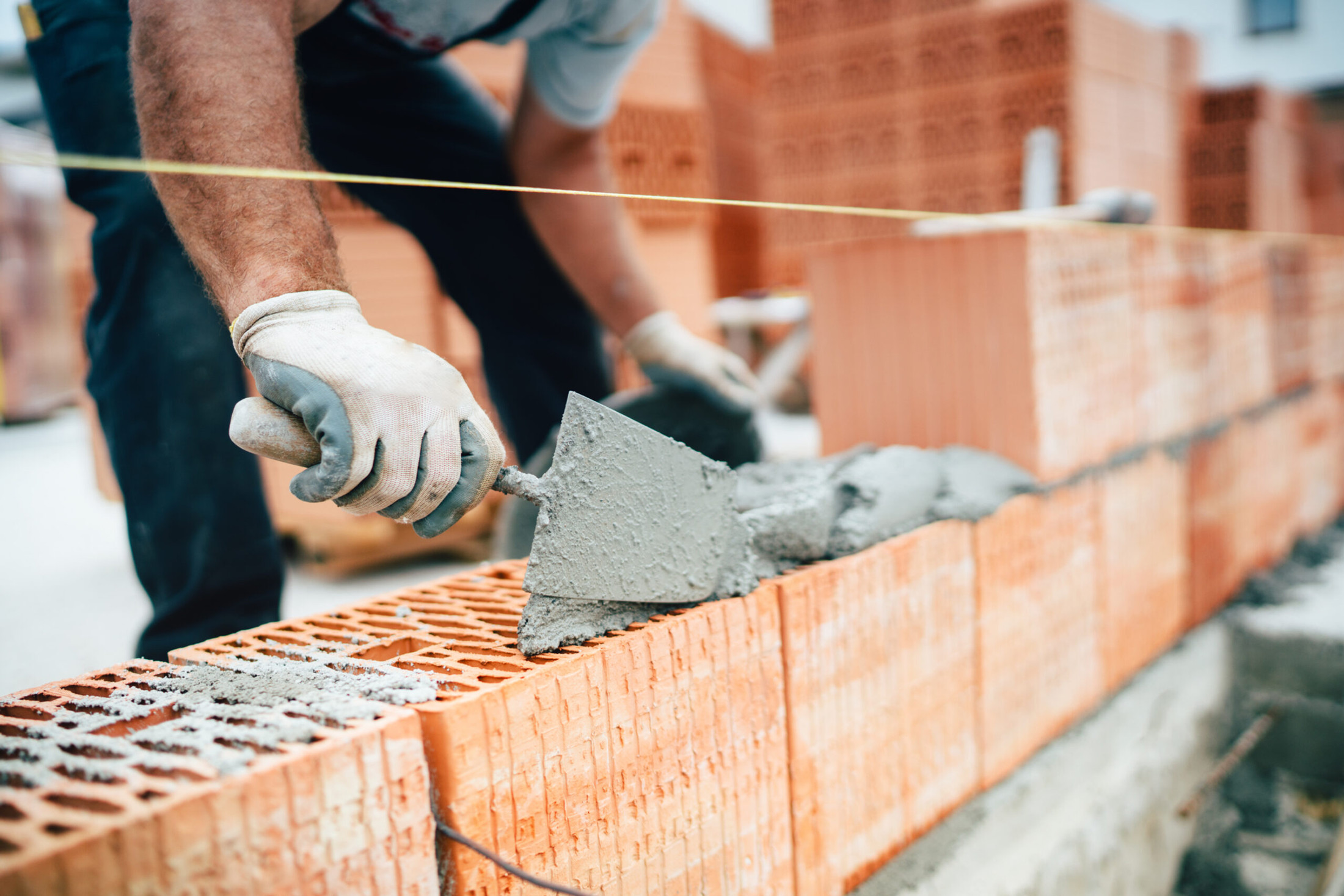
Bricklaying and repointing in Ashley
Repointing, cracked and bulging brickwork, garden walls, chimneys and new work across Ashley and BH25. Free site visit, free written itemised quote.
The site visit is free and so is the written itemised quote. Thomas Hannen prices every job himself.
A crack in brickwork is worth worrying about when it steps diagonally through the joints, is wider at one end than the other, and is still opening. A fine crack that runs straight down a mortar line and has not changed in years is usually shrinkage, and on an Ashley wall it wants that length cut out and repointed rather than anything structural.
Three things bring people in Ashley to the phone. A crack that has appeared over a window or at the corner of a bungalow and seems to come and go with the seasons. Brickwork on the weather side that has gone open at the joints, with a soft green line where water sits. Or a garden wall, a garage or a porch that has been clipped, pushed by roots, or simply built badly in the first place.
The first job is working out which of those you have, so the survey comes before the price. We measure a crack rather than glance at it, look inside as well as outside, check what the ground and the rainwater are doing next to the wall, and sound the brick faces along the bottom courses. The site visit costs nothing and neither does the written quote. Where a wall needs watching for a season before anyone touches it, we will say that instead of selling you a repair that gets undone next summer.
The work
What we take on in Ashley
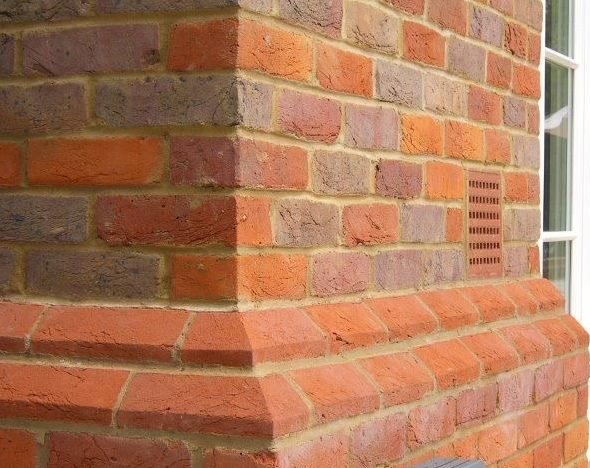
Cracks, and telling live movement from old. Half the houses in Ashley went up between the war and the early eighties, with the busiest years around the turn of the sixties, and shallow foundations of that age move a little with the ground. So the first question on any crack is whether it has finished. We record where it runs, how wide it is at each end, and whether it goes through the brick or round it, and where it matters we leave a tell tale and come back. A dead crack is cut out and repointed to match. One that is still working needs the cause dealt with first, and that is usually water or roots rather than the wall.
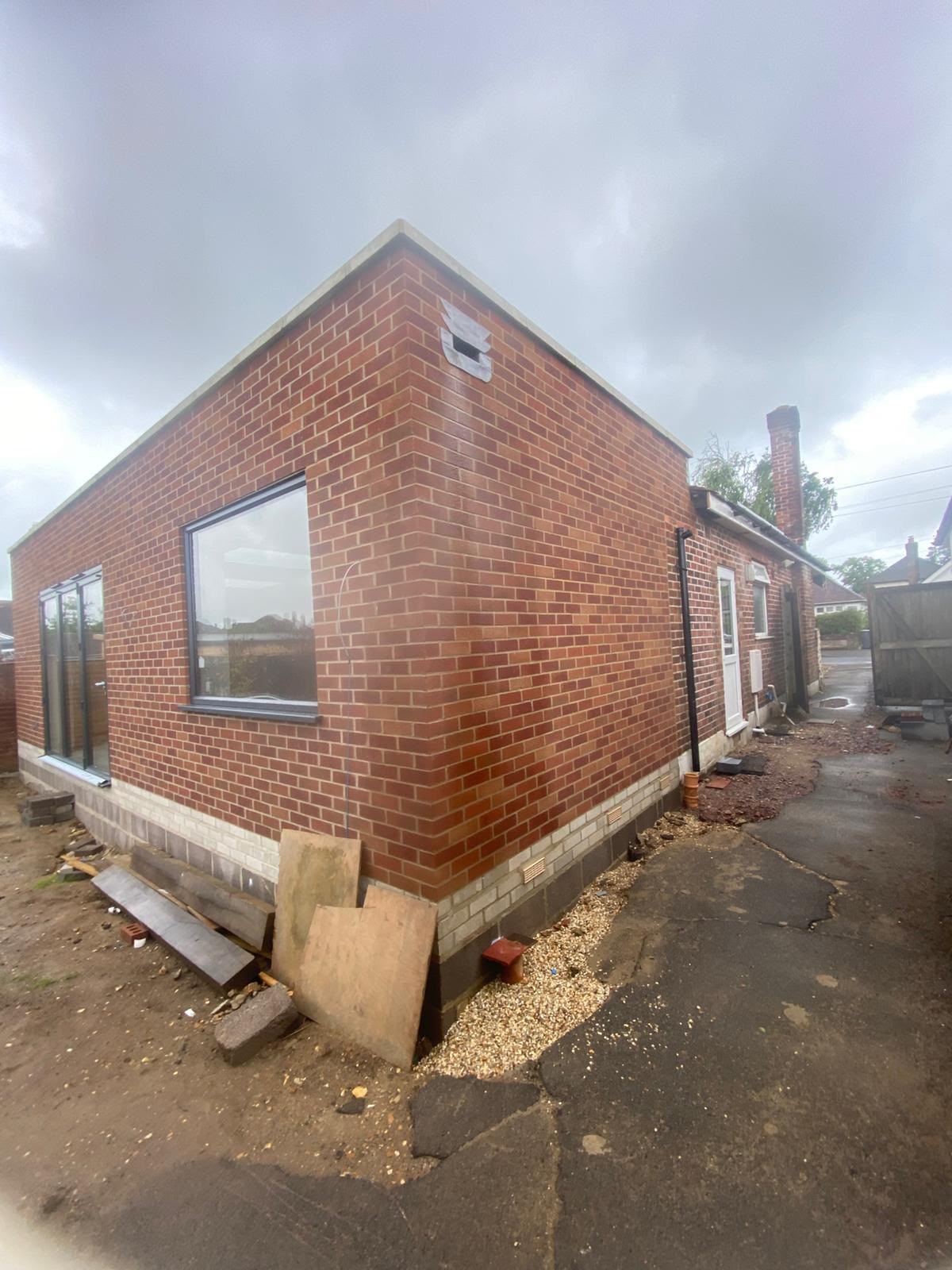
Wall ties, and brickwork at ground level. Cavity walls of that era were built with a narrow cavity and the ties of the day, and when those corrode they swell and jack the outer leaf apart. The sign is a horizontal crack repeating every few courses at the same height, and a bulge you can see by sighting along the elevation from one end. That is not a pointing job: the ties are replaced through the face in stainless steel and the brickwork cut out and rebuilt where it has been pushed out of line. Two houses in five here are bungalows, which means long runs of wall within a few courses of the ground, most of it facing a border or a path. The damp proof course sits two courses up, and once a raised bed, a gravel margin or a patio has been laid over it the wall bridges and goes damp inside. We take the ground back down, cut in a margin, and replace any brick whose face has spalled where it has been kept wet.
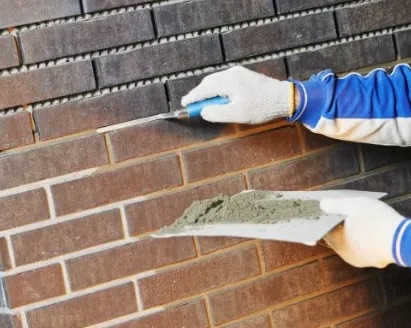
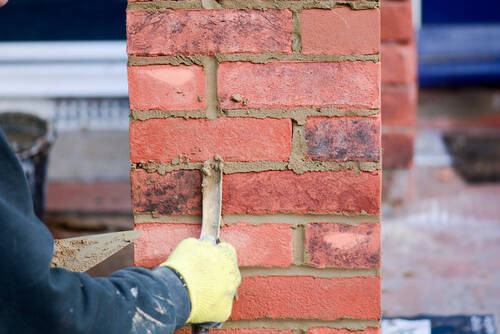
Repointing a whole house is rare here. It is usually the south west face, where driven rain has scoured the mortar back and left the joints open, raked out by hand to sound mortar and struck so the joint sheds water rather than holding it on a ledge. On the older solid wall properties in the village that mix is a lime one, because a cement joint traps water in the brick until frost takes the face off. The wide windows and patio doors of this period sit on long lintels, and a crack running straight up from one corner of an opening means the lintel has dropped or a steel one is corroding. We replace them, rebuild the brickwork over, and renew cracked cills. Beyond the house it is gate piers put back plumb and coping re-bedded.
How it runs
From your call to a written price
The quote is itemised: access, raking out, the mix, the area of each elevation, brick replacement and disposal on separate lines. Ashley has no conservation area of its own, and five listed entries where even repointing needs consent because it changes the character of the building. Ordinary repair needs no planning permission at all, and Planning Portal sets out where that line falls on external walls. Building control comes into it once the structure changes: a new or replacement lintel, a widened opening, underpinning, or a rebuilt pier carrying load. If the wall is shared with a neighbour, or you are excavating close to their foundation, the Party Wall etc. Act 1996 applies and it is worth two minutes reading before the work is booked.
Cost
What decides the price of a brickwork job
There is no rate per square metre, because the joints decide it and not the area. Most of what we price here is a bungalow, a post-war semi, or a detached house with a garage and a low front wall, and a good deal of it works off a tower rather than a full scaffold. A chimney or a gable wants a scaffold, and how long it stands is why work at height rules make access a priced line. Raking by hand is slow, and joint depth and spalled faces decide the hours. Ask how deep, by hand or disc, what mix, and whether scaffold is in.
If something has moved
Loose brickwork, or a wall that has shifted
Ring rather than use the form. Anything overhead or leaning goes to the front of the queue, and the first visit makes it safe before we price the permanent repair. Around Ashley that is most often a gable where the ties have gone and the brickwork has bellied out, or a garden wall a vehicle has caught turning into a drive. The phone is answered 24 hours for emergencies; scheduled work runs Monday to Friday, 8am to 6pm.
One local thing
Why cracks here come and go with the seasons
The ground under Ashley is cohesive and it shrinks and swells with the weather. In a dry summer it pulls away and drops slightly, in a wet winter it takes water back up and lifts. On foundations as shallow as most of this housing has, that movement is enough to open a crack at a corner and close it again months later.
It is why so many cracks here are seasonal, and why the honest answer in August is often different from the honest answer in February. Trees make it sharper still, because a mature thirsty tree within its own height of the house takes far more water out of that ground than the weather does.
What that changes for you is the order of the work. Rebuilding or repointing a crack that is still moving is money thrown away, so we would rather find where the water is going first. The usual culprits are simple: a downpipe discharging beside the wall instead of into a drain, a gully that has stopped taking water, or a soakaway put in too close to the foundation, and Approved Document H is clear that surface water needs to end up somewhere proper.
Get those right, take the pressure off with sensible pruning where a tree is the cause, give it a season, and then repair a wall that has stopped moving. If a bricklayer offers to fill a live crack today without asking a single question about your drains, that tells you something.
Who you are dealing with
A local firm you can check
We cover Ashley and BH25 across New Milton, out through Bashley, Barton on Sea and Hordle, and up to Bransgore and Sway. Bournemouth Roofing & Building Ltd, registered in England and Wales, company number 15471719, which you can look up in a minute. Thomas Hannen's business, and he is the one who comes out to price the job, not a salesman. A verified customer's 10 out of 10 on Checkatrade. The visit and the written quote are both free.
Questions
Ashley questions we get asked
Why do bungalow walls here fail low down rather than high up?
A bungalow gives you long low walls, and with 41.8% of the dwellings in Ashley being bungalows, most of what we repoint sits within reach of splashback. Rain coming off a hard path or a low roof bounces back onto the bottom courses and keeps them wet through the winter. Those joints erode first and salts show as a white bloom. A ground level that has crept up against the wall over time makes it worse.
Which elevation goes first on a house near New Milton?
The south west one. Driven rain arrives on that face and works at the edges rather than the middle, so corners, verges, window reveals and the joints around openings lose mortar while the centre of the same wall looks sound. On the sheltered side the pointing is often still original. We price the exposed elevation on its own where the rest genuinely does not need doing, and we write down why.
Does salt reach this far back from the coast?
Ashley sits about 3.7km back from the sea, so it gets the wind without the constant salt load a clifftop wall carries. What that distance means in practice is driven rain rather than corrosion. Wall ties in the 1945 to 1982 stock, which is 49.6% of what stands here, are the thing worth checking, because damp getting into the cavity through open joints rusts them from the middle of the wall outwards.
Is Ashley inside the New Forest National Park boundary?
No. Ashley falls to New Forest District as the planning authority rather than the Park, so the extra design scrutiny that applies a mile or two north does not apply to your brickwork. There are five listed entries across the area and no conservation area, so unless yours is one of them a like for like repoint or a rebuilt boundary wall counts as maintenance. We confirm which applies at the visit.
Where does the old mortar and rubble end up?
In our van, not on your drive. Raking out a wall produces a surprising volume of dust and spent mortar, so we sheet the beds and the path below, keep grinder dust down with extraction, and clear the spoil at the end of each day instead of leaving a heap by the gate. On the bungalow plots around Ashley there is usually room to park close to the work, which keeps the barrowing short.
Nearby, and next door
Bricklaying and repointing near Ashley
Bricklaying and repointing nearby
Our other trades in Ashley
Everything we do in New Milton Bricklaying and repointing, all areas Every area we cover
Free quote
Get the brickwork in Ashley looked at properly
Tell us what the wall is doing and roughly when it started. We come out, measure it, and put an itemised written price in front of you.