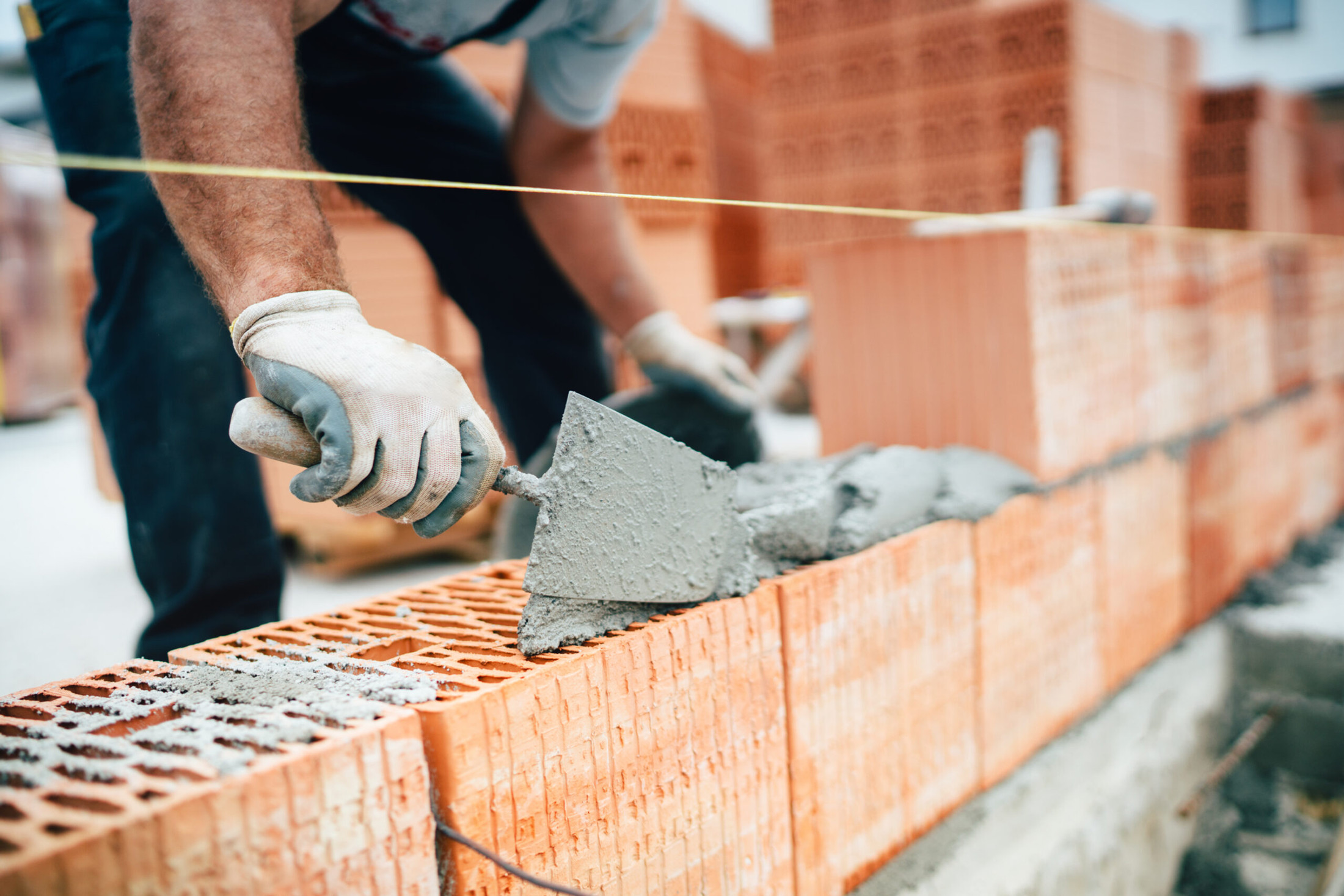
Bricklaying and repointing in Highcliffe
Repointing, brick repairs, garden walls and new brickwork across Highcliffe and Walkford. We look at every elevation separately and price them that way.
The site visit is free and so is the written itemised quote. Thomas Hannen prices every job himself.
In Highcliffe the sea side of a building almost always needs the brickwork attention first, and the sheltered sides can usually wait years. So the honest answer is normally one elevation, priced on its own, not the whole property.
Most calls here start one of three ways. Somebody notices the pointing on a seaward wall has gone soft and sandy while the back of the house looks fine. Brick faces have started flaking and leaving a pink dust on the path. Or a managing agent has been told the brickwork on a block needs looking at and nobody knows how big a job it is.
All three want somebody on the wall with a scraper rather than an opinion from the pavement. We come out, work along the elevation, find out how deep the joints have gone and whether the bricks behind them are still sound, and then put an itemised written price together so it can be compared properly or taken to a freeholder.
The work
The brickwork we are called to in Highcliffe
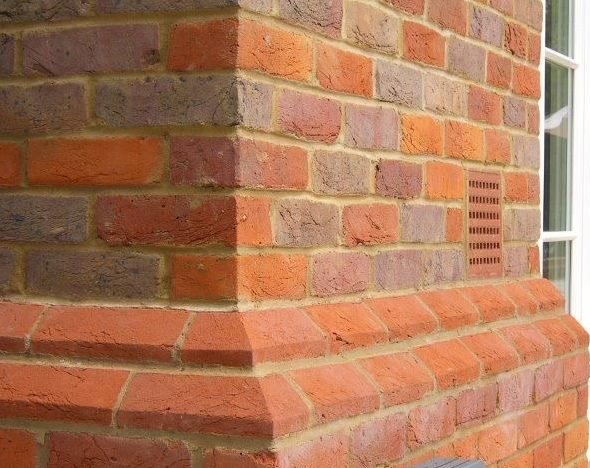
Low rise blocks, and who can instruct the work. Getting on for four in ten dwellings in Highcliffe are flats, mostly in low rise blocks put up from the late fifties onwards, and on those the outside walls are communal. If you are a leaseholder looking at eroded joints or a stained brick panel under a window, the quickest route is finding out who manages the block rather than booking a bricklayer. We will still come and look and put the work in writing so you have something to send them. One thing worth knowing early: above a threshold set per leaseholder, the leaseholders have to be consulted first under section 20 of the Landlord and Tenant Act 1985. That moves the timetable, not the wall, and it is easier arranged in spring than in November.
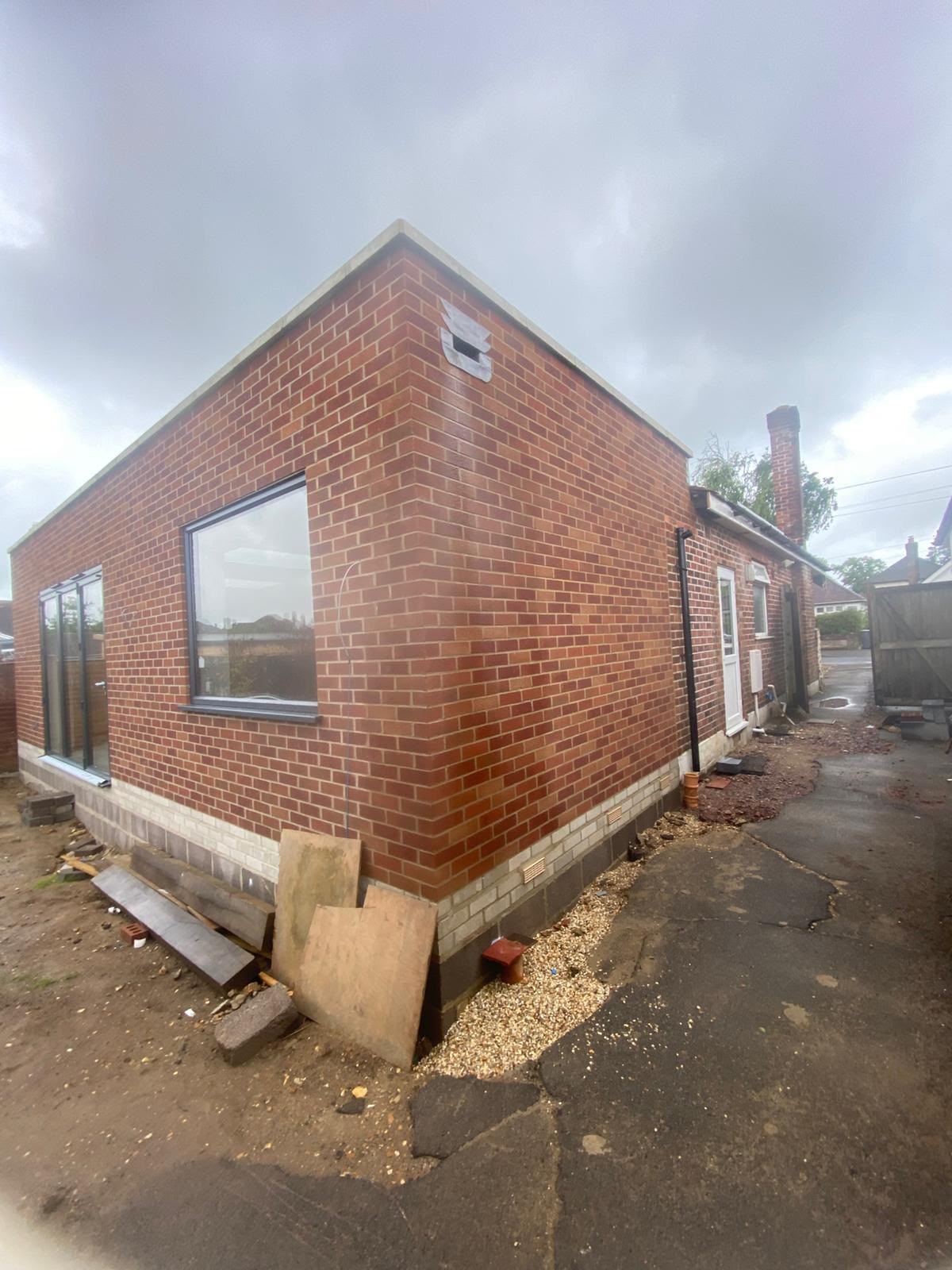
Bungalows and the long seaward elevation. Bungalows are nearly three in ten homes here, and they present one long low wall to the weather with very little roof overhang protecting it, a couple of hundred metres back from open water. The joints under the sills and along the bottom few courses go first, and the concrete lintels over the wide windows of that era crack their joints as the steel inside them rusts and expands. Raking out to twice the joint width and repointing in a mix softer than the brick is the right repair, finished to the profile the wall already has, whether that is a flush joint, a bucket handle or a weather struck one. On an exposed elevation the profile decides how much rain sits in the joint, and pointing it in something hard and waterproof just moves the damage into the brick.
Individual bricks get cut out and replaced with a match, which on post war stock usually means a sourced modern brick rather than a reclaimed or handmade one. Where a whole area has gone, it comes down to a sound course and goes back up in the same bond. Frost is the trigger, but this close to the sea the reason the brick was wet enough to freeze usually sits somewhere else on the elevation.
Two thirds of the stock here went up between 1945 and 1982, so cavity walls are old enough to be on their original ties. When a tie corrodes it swells and lifts the brickwork above it a fraction at a time, so you get fine horizontal cracking repeating every few courses and a wall that looks slightly bowed when you sight along it. That is remedial tie work rather than pointing, and we will tell you which one you have rather than pointing over it. A stack is exposed on every side at once, so it is usually first to need repointing, along with renewing the flaunching the pots are bedded in.
Nearer the castle there are a handful of older properties on solid wall construction, and those are a different job again: soft brick wants an NHL lime and sharp sand mortar with no cement in it, so the wall dries out through the joint instead of through the face. Anything we build new, front garden walls, gate piers, bin store and porch brickwork, goes on a foundation dug to firm ground, with proper footings, a damp proof course, stainless fixings and a coping bedded to throw water clear.
How it runs
From your call to a written price
Same team from the first visit to the last, one person to ring, and the quote itemised: access, raking out, the mortar mix, the area of each elevation, any brick replacement and disposal on separate lines. Repointing in the same materials is repair, so there is no planning permission to apply for and no building control sign off to get. It is different on a listed building, where consent is needed before any joint is raked. Highcliffe has no conservation area of its own, and the council keeps the list of conservation areas for the rest of the district, while the council's listed building records show which addresses are listed, mostly around the castle. A wall shared with a neighbour brings in the Party Wall etc. Act 1996.
Cost
What decides the price of a brickwork job
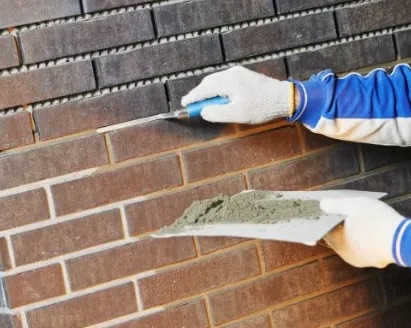
No rate per square metre: the metre of wall tells you nothing until you see the joints. A first floor flat in a block, a bungalow you can walk a tower around and a semi with a gable stack are three different jobs. How long the platform stands matters as much as its size, and the work at height rules are why it is a priced line. Raking by hand is slow, so joint depth and spalled faces decide the hours, and matching a mortar or sourcing a brick takes trial panels. Ask how deep joints are raked, by hand or disc, and whether the scaffold is in.
If something has moved
Loose brickwork, or a wall that has shifted
Ring rather than use the form. Anything overhead or leaning goes to the front of the queue. If anything is loose above a communal entrance, a bin store or a footpath, say so when you ring and it goes in front of whatever else is booked. The first visit is about making it safe. The phone is answered 24 hours for emergencies; scheduled work runs Monday to Friday, 8am to 6pm.
Worth knowing
Salt is why the sea side of your house goes first
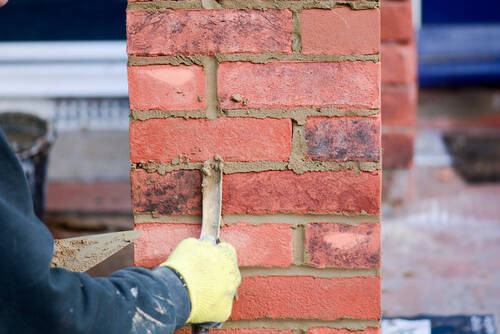
Highcliffe sits a couple of hundred metres from the water, and the wind carries salt inland and leaves it on the walls. Salt does two things to brickwork and neither of them is obvious. It holds moisture, so a wall that catches the sea wind stays damp between showers instead of drying out.
And as it does eventually dry, the salt crystallises in the pores just under the surface of the brick and pushes the face off. That is why spalling here often shows up on the seaward elevation of a house whose other three walls look untouched, and why a cold snap does so much damage to a wall that was already wet.
What that changes is the specification, not just the timetable. The mortar on that elevation should be softer than the brick so the joint takes the damage rather than the face, which means the sacrificial part is the part that is cheap to renew. Sealing or painting a salty wall is the common mistake: it traps what is already in there and the brick blows behind the coating.
Any new fixings, ties and cramps on that side want to be stainless, because ordinary galvanised steel does not last long in this air. Expect to repoint the seaward face on a shorter cycle than the rest, and treat that as normal maintenance rather than a sign the wall is failing.
Who you are dealing with
A local firm you can check
We cover Highcliffe, Walkford, Friars Cliff, Mudeford and Christchurch, all BH23. Bournemouth Roofing & Building Ltd, registered in England and Wales, company number 15471719, which you can look up in a minute. Thomas Hannen's business, and he is the one who comes out to price the job, not a salesman. A verified customer's 10 out of 10 on Checkatrade. The visit and the written quote are both free.
Questions
Highcliffe questions we get asked
We own a flat in a block. Who authorises repointing?
The freeholder or the managing agent, not an individual leaseholder. Flats are 38.2% of Highcliffe dwellings, the largest single type here, so this comes up constantly. External walls are almost always retained by the landlord, repointing them is a service charge item, and the leaseholders are normally consulted before the work is let. We are glad to quote for a block, and Thomas Hannen will walk it with a director or an agent, but the instruction has to come from whoever holds the structure.
Our house sits 0.2km from the sea. Does that matter?
It matters most to the metal buried in the wall. At 0.2km from the coast salt lands on the seaward elevation, corrodes wall ties and any steel over an opening from the outside inwards, and holds moisture in the face so it never dries between showers. Rust staining at bed joint height, or a horizontal crack repeating every fifth or sixth course, is the tell. We check the ties on the sea side before pricing pointing that would only hide it.
Why did our whole road need pointing at the same time?
Because the whole road went up at the same time. 64.1% of Highcliffe was built between 1945 and 1982 and the peak was the late 1950s and early 1960s, so those walls have had an identical number of winters and reach the end together. Bungalows account for 28.7% of the stock, presenting a long low elevation to the weather rather than a tall narrow one. Neighbours comparing notes and all needing the same work is entirely normal here.
Where does the old mortar go on a small plot?
Into bags or a skip on the drive, then off site inside the week. Raking a full elevation produces a startling volume of grit, and plots in Highcliffe sit close together, so the boundary and the neighbour's path get sheeted along with our own working area. Ground here drains freely and dust washed into a border stays there, so we sweep and collect instead of hosing. Windows and anything left in the garden are covered before we start cutting.
Highcliffe Castle is listed. Does that reach our street?
No. Listing attaches to the named building and what stands within its curtilage, not to the streets around it. There are 18 listed entries in Highcliffe, the castle and Greystones among them, and the area has no conservation area of its own, so an ordinary house here is repointed as a straight repair with nothing to apply for. Bournemouth, Christchurch and Poole will confirm that in writing if a solicitor or a buyer wants to see it.
Nearby, and next door
Bricklaying and repointing near Highcliffe
Bricklaying and repointing nearby
Our other trades in Highcliffe
Everything we do in Highcliffe Bricklaying and repointing, all areas Every area we cover
Free quote
Get a price for your brickwork in Highcliffe
Tell us the address and which wall is bothering you. We will come out, scrape a joint and put an itemised price in writing. Free site visit, no obligation.