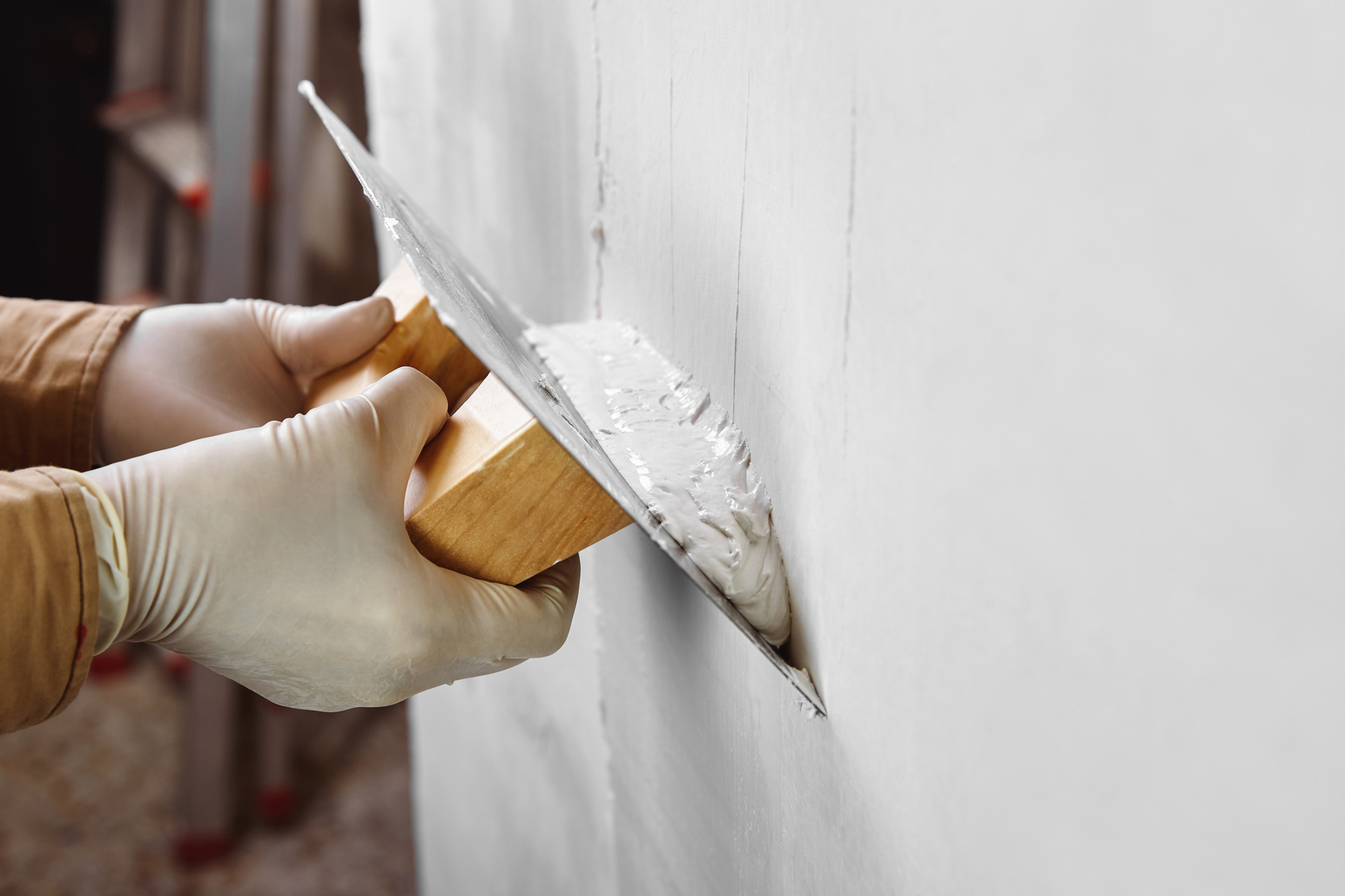
Plastering and rendering in Highcliffe
Ceilings, room re-skims, condensation damp and coastal render across Highcliffe and BH23. We find out why the plaster failed before we quote to replace it.
The site visit is free and so is the written itemised quote. Thomas Hannen prices every job himself.
Before you pay anybody to replaster a wall in Highcliffe, find out why the plaster failed. A wall that is wet from outside, or cold enough to run with condensation, will wreck a new finish inside a winter. We work that out on the free site visit and tell you what has to be sorted first, even when the answer is that the job is not ours.
Three things bring people to the phone here. A ceiling that has gone cracked and patchy and is holding up the decorator. Black mould that keeps coming back in the same cold corner of a bedroom, no matter how often it is wiped off. And render on the seaward side of the house that has crazed, cracked and started letting go in sheets.
The first is a straight plastering job. The other two are only half plastering, and the half that comes first is finding out where the water is coming from. We go round with a knuckle, a palm and a moisture meter before anybody talks about money.
The work
The coldest corner in the room is where mould starts
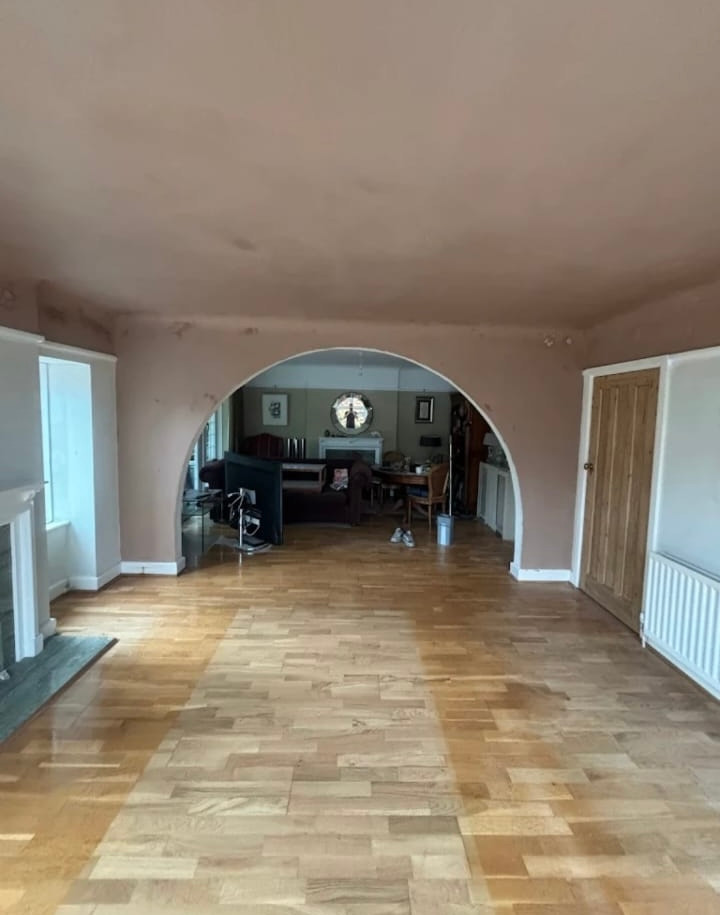
Bungalow ceilings, and the artex on them. Highcliffe is full of low, wide bungalow ceilings from the fifties and sixties, close on three in ten dwellings here being bungalows, and most of those ceilings are plasterboard with a textured coating rolled over the top. Artex does not get sanded or scraped, because anything applied before the turn of the century can hold asbestos fibre. A fresh board goes over the whole ceiling and gets skimmed, coving back on if you want it, and a normal room is a day.
Getting on for four in ten dwellings here are flats or maisonettes, and inside them the work is hallways and living rooms brought back to one flat surface, ceilings boarded and skimmed, and making good after a kitchen or a bathroom comes out. A flat needs more planning than a house: boards cut outside, the communal stair sheeted and kept clear, waste carried out the same day rather than left on a landing, and noisy work kept to sensible hours so your neighbours stay your neighbours. The outside of a flat belongs to the freeholder and is managed out of the service charge, so on render, or on a ceiling under someone else's roof, we will tell you whose repair it is before you spend anything on it.
The coldest corner is where mould starts. A lot of the fifties and sixties stock here has an unfilled cavity or a solid wall, and the corner where two outside walls meet is the coldest point in the room. Warm damp air condenses there and mould follows. Replastering on its own just gives it a clean surface to grow on. The fix is insulated board dry lined onto the wall, which makes it a thermal element that building control want to see and that Approved Document L sets a target for, plus enough ventilation to carry the moisture out, which is what Approved Document F is about.
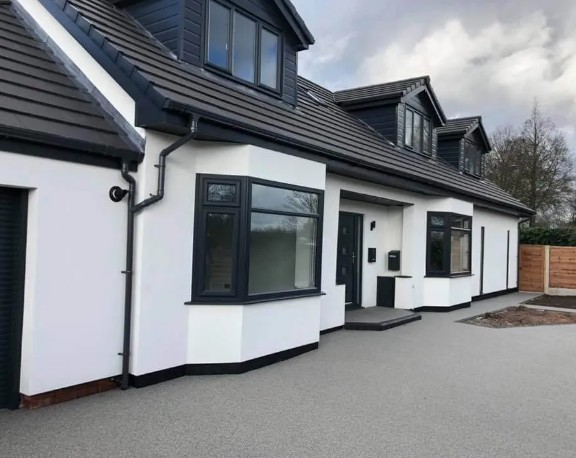
The seaward elevations are two hundred metres from the water and take salt and driven rain together, and they show it first at the edges: a bell cast that has crumbled, a cracked sand and cement render lifting off the blockwork, rust bleeding through the paint where an old bead or a lintel is corroding behind. What goes back is stainless or plastic beads, a primer, a mesh reinforced basecoat and a silicone thin coat topcoat that stays flexible and sheds water. Monocouche, K Render and pebbledash all have their place; the choice is about how much movement the wall does, not about the brochure.
New windows leave the reveals broken out, a radiator comes off and takes the finish with it, a stud wall goes up and wants tape and joint: angle bead on every external corner, stop bead where new plaster meets a frame, and the patch worked into what is there instead of standing proud of it. Up by the castle there are solid brick walls with lime plaster on lath, and those have to stay breathable, so they get a lime plaster and a lime render coat back rather than a modern backing coat.
How it runs
From your call to a written price
Same team from the first visit to the last, one person to ring, and the quote itemised: protection and preparation, board or backing coat, beads, finish coat, making good and disposal on separate lines. Plastering inside needs no planning permission and rendering a house is usually permitted development. Highcliffe has no conservation area of its own, although the council keeps the list for the wider area and it is worth half a minute if you are near the castle. Listed buildings are the real exception: the castle and a number of houses around it are on the list, and on one of those even taking off internal lime plaster needs consent first.
Cost
What decides the price
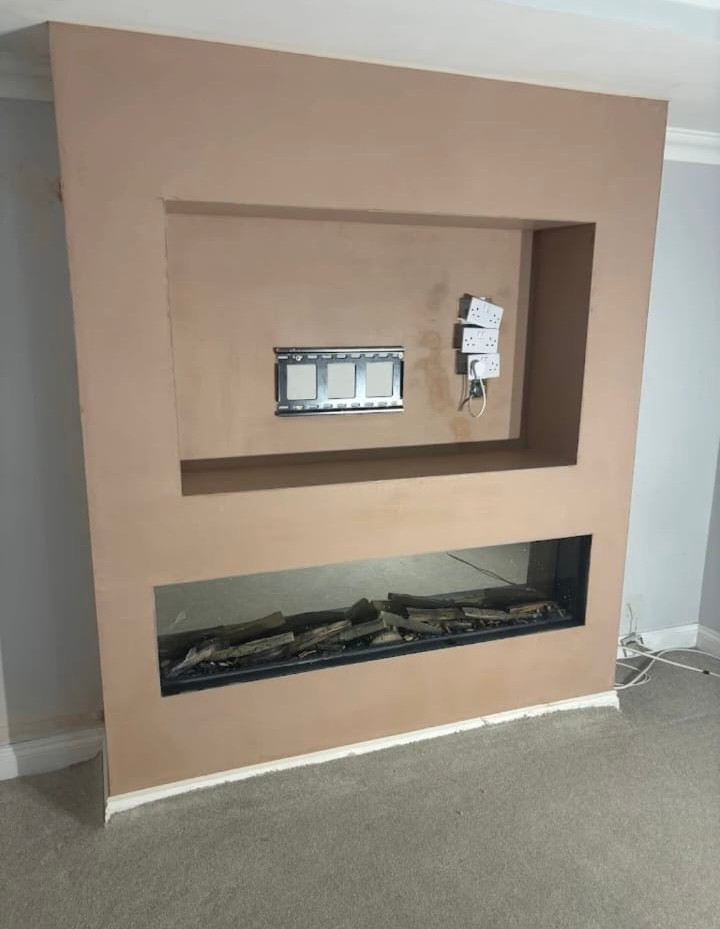
No rate per square metre. A ground floor flat with a bay window and a communal hall is a different day from the same room three flights up with no lift; a bungalow having all its ceilings done is a whole house at once; a rendered seaward gable is a scaffold job before it is a plastering one. A sound wall that wants a skim is a different job from one where the backing coat has blown and has to come off back to the masonry. Ask whether it is a skim or a full replaster, and who takes the waste away.
If it has come down
A ceiling down, or plaster blown off the wall
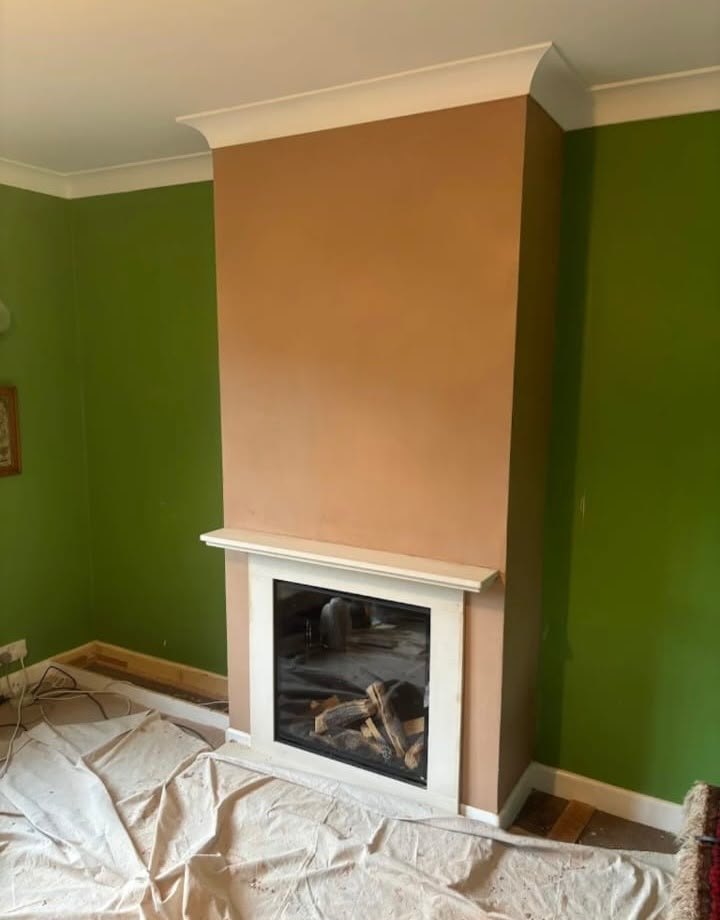
Ring rather than use the form. A ceiling that has dropped or plaster coming away in sheets goes to the front of the queue. Highcliffe is a short run along the coast road for us, so a first look is usually the same day, and in a flat we will tell you whose repair it is before you spend anything on it. The phone is answered 24 hours for emergencies; scheduled work runs Monday to Friday, 8am to 6pm.
The one local thing
In a Highcliffe flat, you may not be the one who can order the work
About a third of the homes in Highcliffe are flats or maisonettes, and that changes who you ring. Inside your own front door, the plaster is yours: skim the living room, board and skim the ceiling, make good after a new kitchen, all of it is your decision and your bill.
The outside walls, the render, the roof over the top flat and the communal hall and stairs almost always belong to the freeholder and are paid for out of the service charge. So when the damp patch on your living room wall is water tracking through cracked render outside, you cannot simply book somebody to replaster it. The managing agent has to instruct the outside work, and replastering before that happens is money spent twice.
The practical steps are short. Get the lease out and find the repairing clause, then put the problem to the agent in writing with photographs and a date. If the freeholder is going to spend more than section 20 of the Landlord and Tenant Act 1985 allows without asking, currently £250 for any one leaseholder, they have to consult the leaseholders first, which means you get notice, you see the estimates and you can comment.
We are happy to price external repairs for a managing agent or a residents' company, and equally happy to quote your inside work separately so you are not held up by the block. What we will not do is put a new finish on a wall that is still getting wet from the other side.
Who you are dealing with
A local firm you can check
We cover Highcliffe, Walkford, Friars Cliff, Mudeford, Christchurch and the rest of BH23, in the Bournemouth, Christchurch and Poole council area. Bournemouth Roofing & Building Ltd, registered in England and Wales, company number 15471719, which you can look up in a minute. Thomas Hannen's business, and he is the one who comes out to price the job, not a salesman. A verified customer's 10 out of 10 on Checkatrade. The visit and the written quote are both free.
Questions
Highcliffe questions we get asked
Who authorises render work on a Highcliffe block of flats?
The freeholder or the managing agent, not usually the person who rings up. Flats and maisonettes are 38.2% of dwellings in Highcliffe, and on a leasehold flat the outside walls belong to the building rather than the individual home, with work paid for out of the service charge. Above a certain spend the leaseholders have to be consulted first. We will price it, but the instruction has to come from whoever holds the freehold.
Two hundred metres from the sea. Does that change render?
Only on the seaward face. Highcliffe sits 0.2km from the coast with its exposed elevation looking south west, so that wall gets salt and driven rain together and stays wet longer between showers. A mesh reinforced silicone system copes with that repeated wetting. Rigid sand and cement goes hard, splits at the corners of openings, and then holds water behind itself, which is the worst of both worlds.
White powder keeps coming through the paint. Is it the plaster?
It is salt in the wall pushing out to the surface as it dries, and this close to the water there is more of it about than inland. Wiping it off achieves nothing while the background is still drying, and painting over it lifts the paint again. The answer is to let the wall dry, brush the salts off dry rather than wet, and use a backing that tolerates them before any finish goes on.
The bungalow dates from about 1960. What is behind the walls?
A sand and cement backing on blockwork with a thin gypsum finish over it, in most cases. The late 1950s and early 1960s is the peak building period in Highcliffe at 22.5%, and 64.1% of the housing went up between 1945 and 1982, so that build-up is the local default. Bungalows are 28.7% of the stock. Those walls patch and re-skim well, provided the backing is still stuck to the block.
Highcliffe Castle is listed. Does that affect nearby houses?
Not directly. Listing attaches to the building itself, so the 18 listed entries in Highcliffe, the Castle and Greystones among them, carry controls on their own fabric rather than on the street around them. Highcliffe has no conservation area of its own either, which means most houses here have no external appearance controls at all, and Bournemouth, Christchurch and Poole Council is only interested if the shape of the building changes.
Nearby, and next door
Plastering and rendering near Highcliffe
Plastering and rendering nearby
Our other trades in Highcliffe
Everything we do in Highcliffe Plastering and rendering, all areas Every area we cover
Free quote
Get it looked at properly, then priced
Tell us what the wall or the ceiling is doing. We come out, work out the cause, and put a written itemised price in front of you.