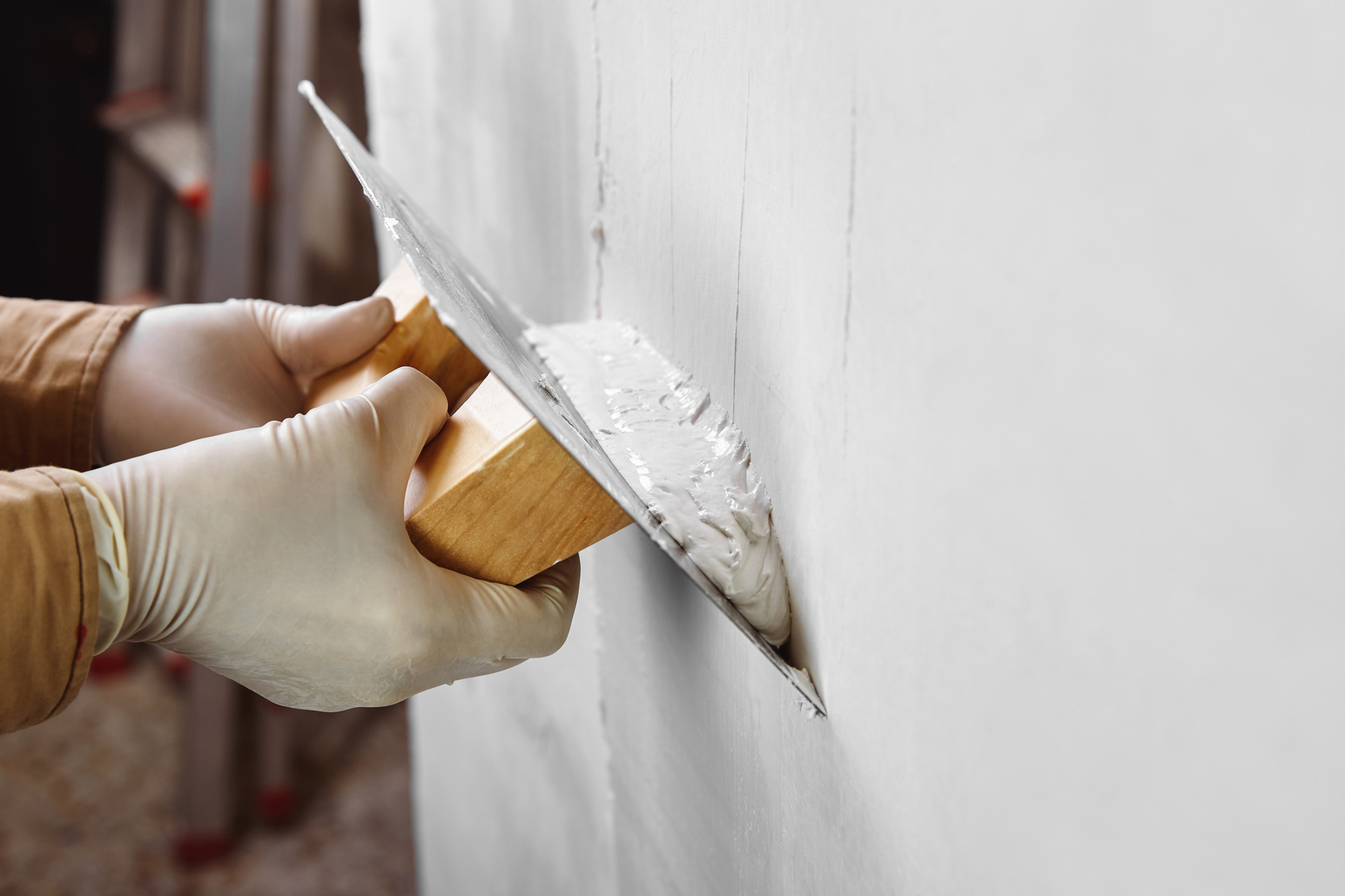
Plastering and rendering in Ashley
Skimming, blown plaster, artex ceilings, dry lining and external render across Ashley and New Milton. Free site visit, free written itemised quote.
The site visit is free and so is the written itemised quote. Thomas Hannen prices every job himself.
If a wall in Ashley sounds hollow, that on its own does not mean it has failed. Half the houses here are floated in sand and cement on block, where a drummy patch is a real fault, and the newer half is dry lining on dabs, where hollow is how it was built. We sound it and tell you which you have before anything comes off.
Most calls here start the same way. Somebody has stripped the wallpaper to redecorate and found a surface too rough to paint. A ceiling has cracked. An extension or a knock through has left a patch nobody wants to look at. Or a corner of a room stays cold and marks up every winter.
We come out, sound every wall and ceiling in the room, and separate the surfaces that only want a skim from the ones that have to come off. New Milton and Ashley are a short run for us, so a site visit is rarely more than a few days away, and the quote that follows is written and itemised.
The work
The fault is at the surface, not behind it
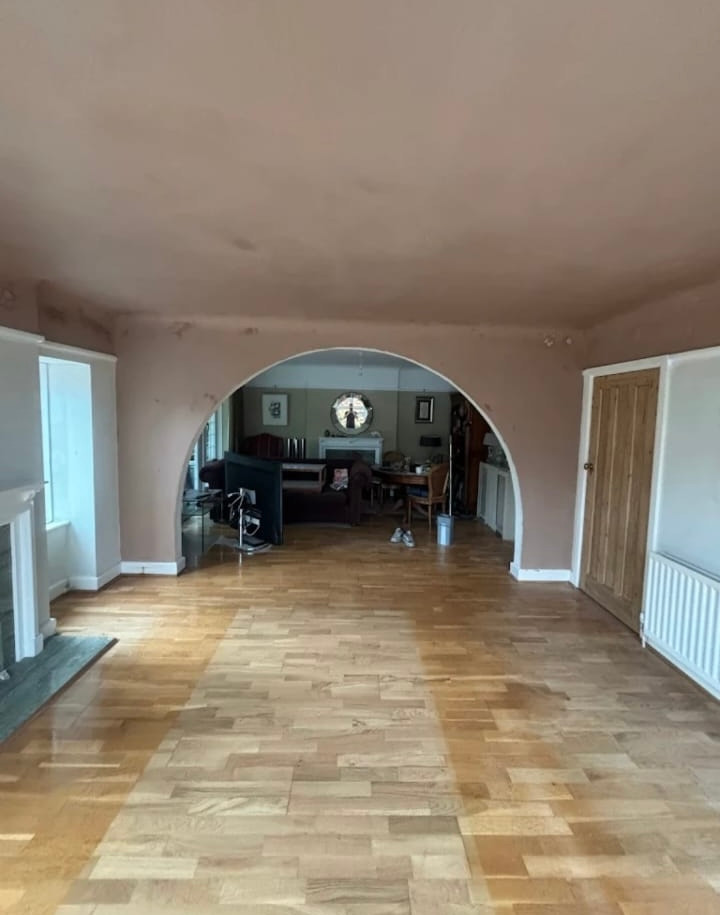
Re-skimming tired walls. The house we see most here went up in the fifties or sixties, and half the village is that vintage: cavity walls with a block inner leaf, floated in sand and cement and finished on top. That backing is hard and usually still perfectly stuck, so the fault is at the surface rather than behind it. Papered, painted and papered again over sixty years, it goes rough and patchy. That is a prepare, prime and two coats of finish job, a room at a time, and the wall ends up flat enough to paint without lining paper.
When a sand and cement float does fail it goes in one area rather than all over: a band along the base of a wall, or around a window where water has found its way in. That patch is hacked off back to the block, the cause is dealt with first, and the wall is rebuilt in bonding or hardwall to the same line as the sound work either side, then skimmed. Patching a blown area without dealing with what made it blow just books you a second visit.
Bungalow ceilings, and the artex on them. Bungalows are over forty per cent of the housing here, so most ceilings we look at sit straight under the loft. They crack where the boards meet, sag where somebody has been storing boxes across the joists, and a great many still carry swirled or stippled artex. Sound artex gets prepared and skimmed flat. Loose or very heavy artex is overboarded and the new board skimmed instead. The newer end of Ashley and nearly every extension since is plasterboard on dot and dab or on a stud: moisture resistant board behind a shower, a full skim where the room is going to be painted, angle bead on the corners and stop bead at the reveals.
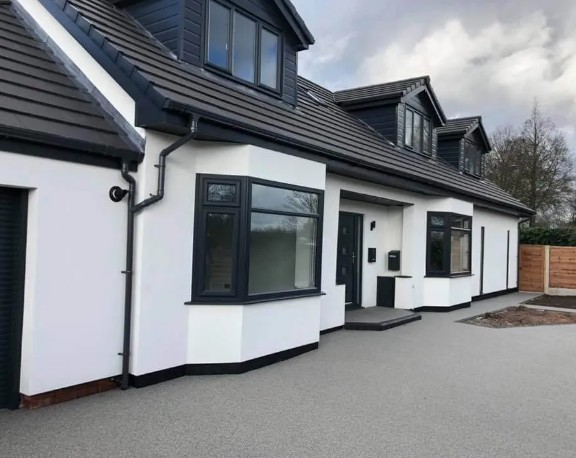
Outside, the exposed elevation faces south west and the coast is under four kilometres away, so render here takes driven rain. Pebbledash on the older houses, plain sand and cement on most of the postwar ones. A repair is a scratch coat and a mesh reinforced basecoat, then primer and topcoat, with a bell cast bead at the bottom so water leaves the wall clear of the damp proof course. Cracks get cut out and reinforced rather than filled, because a filled crack opens again in the first hard winter. A handful of houses here predate the rest by a long way, and those are solid wall, lime on lath, and want a breathable repair rather than a gypsum one.
How it runs
From your call to a written price
The site visit costs nothing, and we survey every wall and ceiling in the room rather than the patch you rang about. The quote is itemised: protection, whatever comes off, boarding, backing coat, finish coat, beads, making good and disposal on separate lines. Inside needs no permission. Outside, re-rendering a whole elevation counts as renovating a thermal element and building control expects the wall to reach Approved Document L, while Planning Portal guidance on external walls sets out when a change of finish needs an application. Ashley has no conservation area and five listed entries, so for most addresses the finish is yours, with New Forest District Council the authority.
Cost
What decides the price
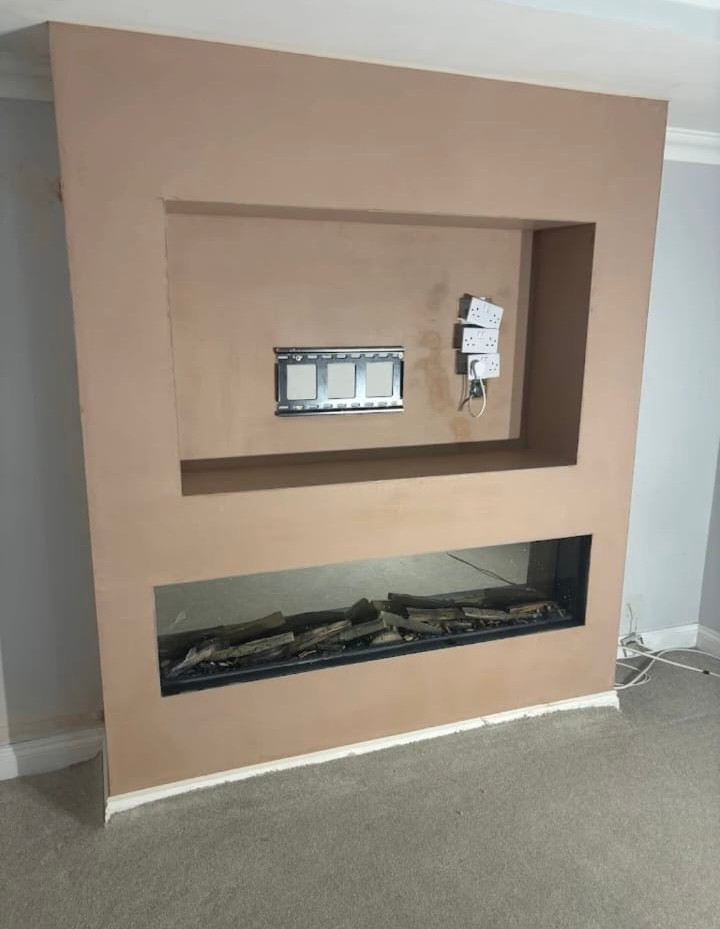
No rate per square metre, because the square metres are the easiest thing to measure and the least useful thing to know. What answers solid under a knuckle gets a skim, what drums comes off back to the background, and that split moves the price further than the size of the room. A sixties semi with a driveway, a bungalow where every room is in use, and a first floor flat up a communal hall are three different jobs before a bag is opened. Ask any quote what the backing coat is, and how long the room is out of use while it dries.
If it has come down
A ceiling sagging, or plaster blown off a wall
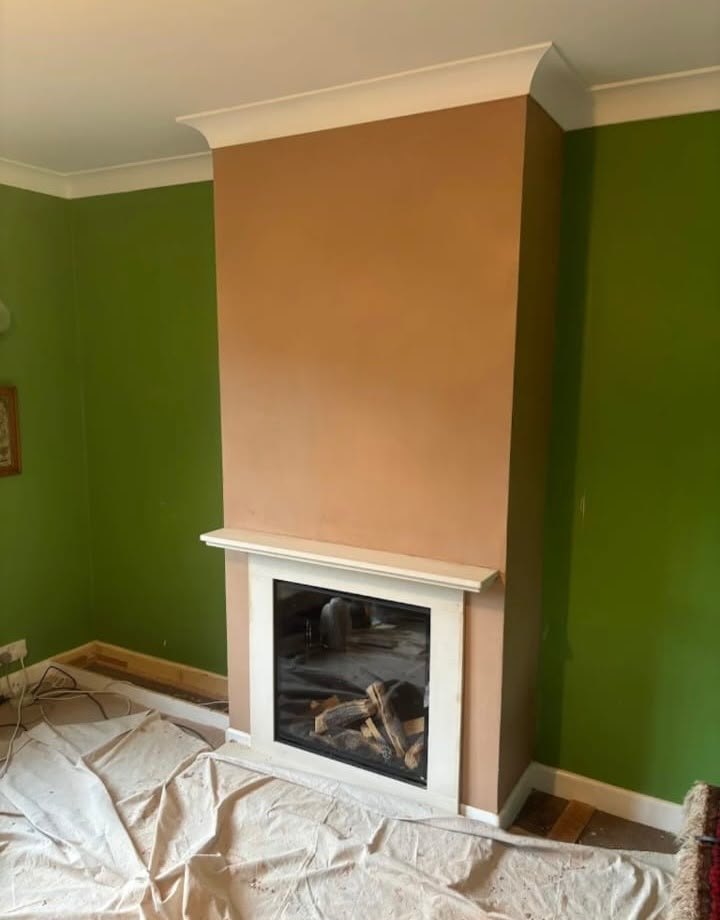
Ring rather than use the form. A ceiling pulling away from the joists, or plaster coming off a wall in sheets, goes to the front of the queue, because the next piece follows within days. Ashley is one of the shorter runs we make, so a ceiling genuinely on the move is usually same day or next. The phone is answered 24 hours for emergencies; scheduled work runs Monday to Friday, 8am to 6pm.
Worth knowing
Hollow does not always mean broken here
Ashley is split down the middle by how the walls were built, and the two halves fail in completely different ways. In the postwar houses that make up most of the village, the inner leaf is block with a wet float coat on it. Tap those and you get a dead, solid note.
Anywhere that drums is genuinely hollow and the plaster has parted from the block, so it has to come off. In the houses built from the eighties onward, and in nearly every extension, the walls are plasterboard stuck on dabs of adhesive with a cavity of air behind the board. Those sound hollow everywhere, and that is not a defect at all.
It matters for two reasons. First, it decides the quote: hacking off a floated wall and rebuilding it in bonding is a different job from skimming a sound dabbed wall, and anyone pricing over the phone is guessing at which one you have. Second, it changes what you can hang.
On dot and dab, a heavy mirror, a TV bracket or a run of kitchen units needs a fixing that reaches the block behind, not a plasterboard plug in a void. If we are skimming a room for you and you know where the heavy things are going, say so before we start and we will mark the solid line for you while the wall is still open.
Who you are dealing with
A local firm you can check
We cover Ashley and the rest of BH25, out through New Milton to Bashley, Barton on Sea and Everton, and New Forest District Council is the planning and building control authority here. Bournemouth Roofing & Building Ltd, registered in England and Wales, company number 15471719, which you can look up in a minute. Thomas Hannen's business, and he is the one who comes out to price the job, not a salesman. A verified customer's 10 out of 10 on Checkatrade. The visit and the written quote are both free.
Questions
Ashley questions we get asked
Why do our bungalow ceilings crack along the wall line?
Because every ceiling in a bungalow sits directly under a cold loft, and 41.8% of Ashley's dwellings are bungalows. The joists move with the seasons while the walls stay put, so the crack opens where the two meet. Filling it does nothing on its own. We tape that junction, or form a shadow gap so the movement has somewhere to go, and check the insulation has not been dragged over the eaves.
Which render suits a wall this close to the coast?
A mesh reinforced silicone system rather than rigid sand and cement. Ashley is 3.7km inland with its exposed elevation facing south west, so that wall gets wetted and dried again and again through the winter. A hard cement render has nowhere to move and cracks at the openings, then holds water behind itself. The mesh spreads the movement and the silicone top coat sheds rain instead of soaking it up.
What sits behind the plaster in a late fifties house?
Usually blockwork with a sand and cement backing coat and a thin finish over the top. Just under half of Ashley, 49.6%, went up between 1945 and 1982, with the late fifties and early sixties alone at 18.1%. Ceilings from that period are plasterboard nailed to the joists, which is why nail heads show through as small round marks. We refix into the joist and skim rather than fill and repaint.
Is Ashley inside the New Forest National Park?
No. Ashley falls to New Forest District Council rather than the National Park Authority, so an application here is judged on ordinary district policy. There is no conservation area over the village and five listed entries across the wider parish area. If yours is not one of them, changing the external finish is normally permitted development. It is worth confirming the address before you commit to a different colour or material.
Where does the old render go once it is off?
Into bags and out to the van the same day, or into a skip on the drive if a full elevation is coming off. Hacking render off a single storey building means the debris lands in the borders rather than on scaffold boards, so we sheet the beds and the path first. Nothing is left leaning against a wall you have to walk past overnight. Waste removal is priced in the quote.
Nearby, and next door
Plastering and rendering near Ashley
Plastering and rendering nearby
Our other trades in Ashley
Everything we do in New Milton Plastering and rendering, all areas Every area we cover
Free quote
Get a price for plastering in Ashley
Tell us the address and what the wall or ceiling is doing. We will come and sound it, then put an itemised price in writing. Both are free.