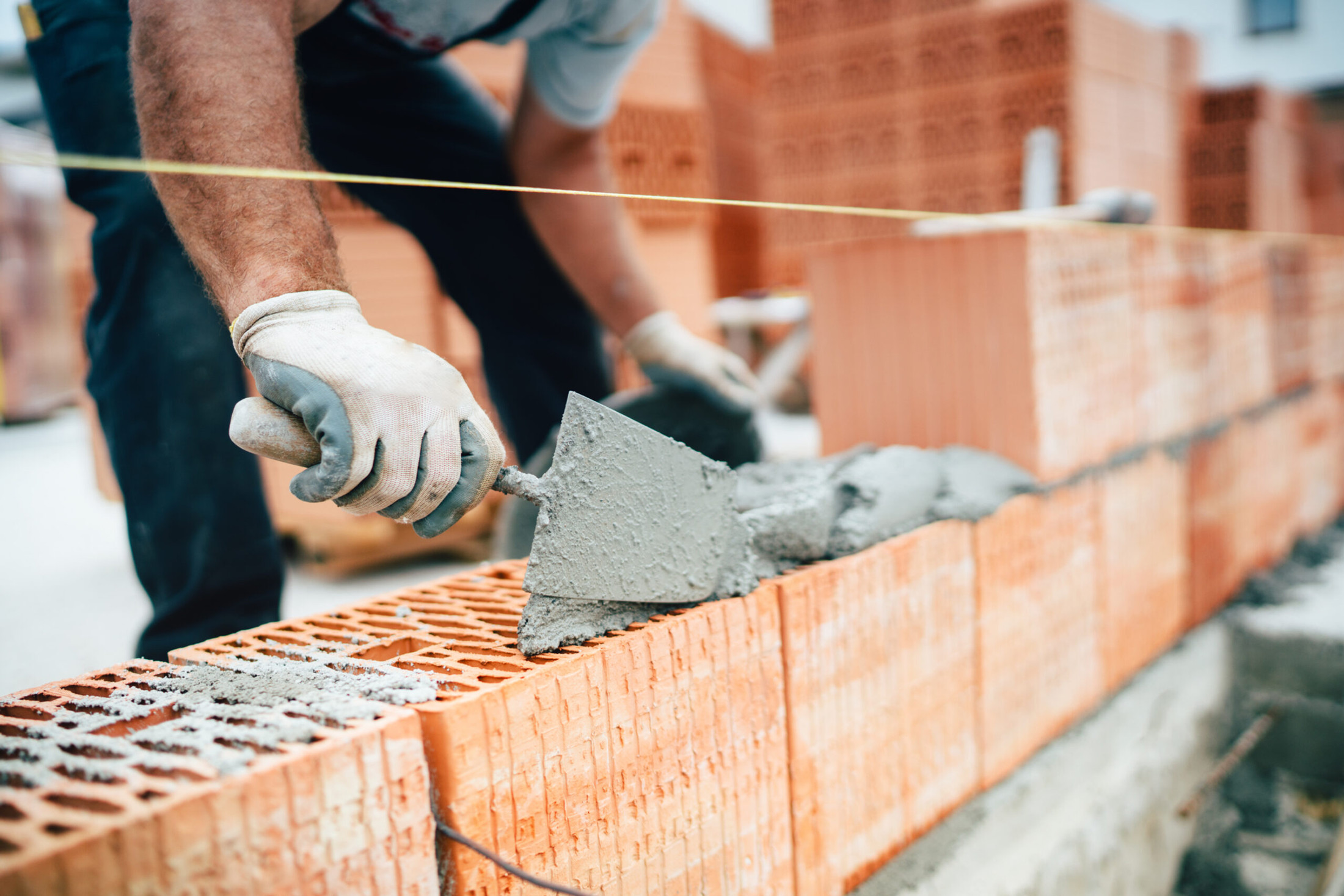
Repointing in Ashley, one elevation at a time
The south west wall is usually years ahead of the other three, so we survey all four and price the one that is actually due.
The site visit is free and so is the written itemised quote. Thomas Hannen prices every job himself.
You very rarely need to repoint a whole house in Ashley. The south west elevation runs a decade or more ahead of the sheltered ones, so the sensible job is the wall the weather reaches, priced on its own, with the other three left until they are genuinely due.
People ring for four reasons here. One elevation gone visibly open while the rest of the house looks fine. Mortar you can rake out of a joint with a car key. Brick faces flaking in thin plates under a sill or beside a downpipe. A chimney putting sand into the gutter every time the wind gets up.
All of it is mortar rather than anything that needs a wall taking down. The site visit surveys all four faces, not the one you noticed, because the point is to work out which are due and which are not. Joints get scraped, courses tapped for the hollow note that means the pointing has parted from the brick, and a sample of the sound original comes off a sheltered spot to match to. Everything is photographed and priced elevation by elevation, in writing, free.
The work
Where the mortar goes first on an Ashley wall
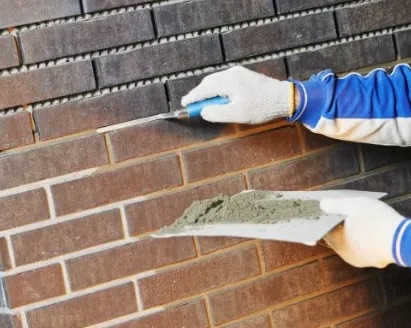
The weather elevation. Driven rain arrives from the south west, and it works at the edges and openings rather than the middle of a wall: around window heads and sills, at the verge, at a corner, and anywhere a joint has opened enough for water to stand in it. That face gets raked deeper and pointed in a mortar a shade softer than the sheltered walls, so it gives the water back through the joint rather than the brick face.
Late fifties and early sixties brickwork. Nearly half the housing here dates from between 1945 and 1982, the busiest years being the late fifties and early sixties. That is a single skin of fired brick over a cavity, and the mortar of that period was often gauged with lime as well as cement, so it fails gently: the joint erodes at the arris, water stands in it, and frost takes the surface off in flakes. A hard modern mix in a softer old joint gives sound pointing and spalling brick.
The inter-war and pre-1919 properties. A useful share of the housing is from between the wars, and the oldest of it is period solid wall construction with no cavity, breathable by design. Those want an NHL lime or lime putty mix gauged to the original sand and raked by hand to about twice the joint width, flush or slightly recessed rather than weather struck. The angle grinder stays in the van: a disc cutter widens the joint and takes the arris off a soft brick. Joints are damped down before filling and brushed back once the mix has taken up.
Chimney stacks and flaunching. A stack is weathered on four sides with nothing warming it, so its joints go loose, friable and crumbling well before the walls do, and the water that gets in arrives as penetrating damp on a bedroom ceiling. We repoint the stack, cut out the frost damaged bricks and renew the flaunching. The platform is its own line on the quote.
Spalled faces, cut out and replaced. Where a face has blown we cut the brick out whole and turn or replace it against a sample held on the wall, rather than filling the hollow with mortar, which never matches. Spalling collects under sills, beside downpipes, at the corners of a bay and just above the damp proof course where a drive or patio has been built up against the house.
Porches, garages and low front walls. Short lengths of brickwork around a porch, beside a garage opening or along the front of a plot have no shelter and often a coping that has stopped shedding water. Rain gets in at the top, freezes and opens the joints from inside. Repointing the coping bed is small work at the right time. What we will not do is point a wall being soaked by a gutter running over.
How it runs
From your call to a written price
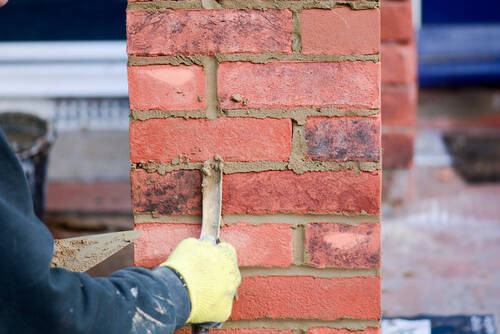
Same team from first visit to last, one person to ring, and no sub-contracting. The quote is itemised rather than a figure on the back of a card: access, raking out, the mortar mix, the area of each elevation, brick replacement and disposal all on separate lines.
Nothing is left open overnight. The site is swept at the end of each day rather than the end of the job, and what comes out leaves with us. If something turns up that nobody could have seen, you get a photograph and a price first.
Repointing like for like is repair rather than development, so there is no planning application and nothing for building control to sign off. Appearance is what can change. Ashley has no conservation area of its own and five listed entries in the area, where the mortar counts as protected fabric, so a change of mix, sand colour or joint profile is a change of character needing listed building consent. We check an address against the list before a mixer is filled.
Cost
What decides the price of a repointing job
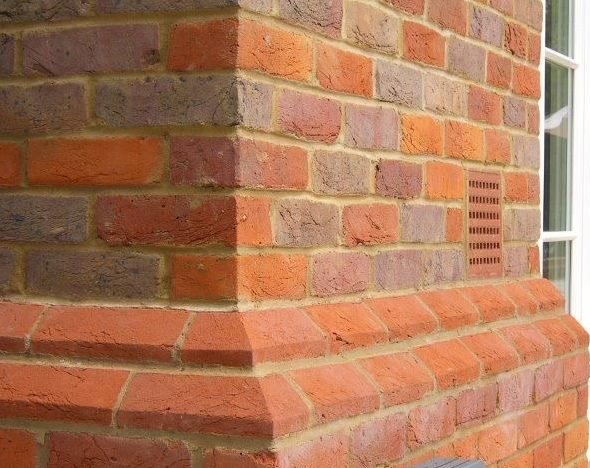
No rate per square metre: the square metres tell you almost nothing until somebody has looked at the joints.
Getting to it. Nearly all of a single storey elevation is inside reach of a tower, the gable of a post-war semi is not, and a low front wall wants nothing but a bucket and a board. How long the platform stands matters as much as how big it is, and the work at height rules make it a priced line.
The joints decide it, not the wall. Raking out by hand is slow, and on soft brick the only safe way, because a disc cutter widens the joint and takes the arris off. How deep the joints come back, and whether faces have already spalled, sets the hours far more than the area does. The mix matters as much: cement holds water against a soft brick and the face blows off in the first frost, while lime is the right answer on most pre-1919 walls here.
Comparing quotes? Ask how deep the joints are raked, by hand or by disc, what the mix is and whether it was matched, how many spalled bricks are cut out, and whether the scaffold is in. Two quotes for the same job are usually two different jobs.
If water is getting in
Open joints, and water coming through the wall
Ring rather than use the form. Joints washed out let driven rain straight through to the inside face, and penetrating damp on a chimney will find the flashings as well. We look, sheet or temporarily point the worst if the weather is against us, and price the full elevation once it has dried enough. In Ashley it is nearly always the south west wall or the chimney above it, so say which side the damp shows on when you ring. The phone is answered 24 hours for emergencies; scheduled work runs Monday to Friday, 8am to 6pm.
Worth knowing
Point the wall the weather reaches, and leave the rest
On a two storey house the worst of the weathering is in the top third of the exposed elevation, and the lower half often has years left in it. Something over four in ten homes here are single storey, and on those there is no upper floor taking the brunt: the whole exposed face weathers at the same rate from the ground to the eaves. That is why a bungalow's south west wall can be thoroughly open along its full height while the other three still look almost new. It is not neglect. It is one wall doing all the work.
The useful thing is to buy it in the right order. Have all four elevations surveyed and priced, do the one that is due, and get the sheltered faces marked in the quote as not due rather than quietly left off it. Decide before the work starts where it stops, because fresh mortar reads lighter than aged and a repair ending halfway along a blank wall shows for good. If a quote arrives as one figure for the whole property, ask for it broken down by elevation.
Who you are dealing with
A local firm you can check
We cover Ashley, New Milton, Bashley, Barton on Sea, Milford on Sea and Everton, broadly BH25, under New Forest District Council. You are dealing with Bournemouth Roofing & Building, the trading name of Bournemouth Roofing & Building Ltd, registered in England and Wales, company number 15471719, which you can look up in a minute. Thomas Hannen's business, and he prices every job himself. A verified customer's 10 out of 10 on Checkatrade. The site visit and the written quote are free.
Questions
Ashley questions we get asked
Which elevation should we do first?
Whichever one is taking the weather, which here is almost always the south west face. It will be further gone than the others by years, and dealing with it is what stops water reaching the inside face. We survey all four so the decision rests on scraped joints and photographs.
If we point one wall now, will the join show later?
Not if it stops somewhere the eye expects. Fresh mortar reads lighter than aged for a year or two, so a repair ending mid elevation stays visible. Taken to a corner, a downpipe or a porch return it disappears. We agree those break points at the survey.
How long should a repointed elevation last before it is due again?
Longer than the one it replaced, if the mix is right, which is the point of matching rather than defaulting to something strong. A properly gauged joint on a sheltered wall is a generation. On the weather face it is less. What shortens it every time is a mortar harder than the brick, which pushes the damage into the face.
Is it worth doing the sheltered sides while you are here?
Usually not, and we would say so. If the joints on those faces are sound there is nothing to gain from opening them up. The exception is anything needing the same access as work you are already paying for, a stack being the obvious one.
What time of year is best for this kind of work?
Spring through to early autumn is easiest, because mortar needs to cure rather than freeze or flash off. Lime has to be protected from frost while it takes up. We work through the winter on sheltered elevations and on anything letting water in, and will say when a job is better left a few weeks.
Nearby, and next door
Repointing near Ashley
Repointing nearby
Our other trades in Ashley
Everything we do in New Milton Repointing, all areas Every area we cover
Free quote
Find out which walls are due and which are not
Thomas comes out, scrapes and taps all four elevations, photographs them and sends a written itemised quote with the sound faces marked as sound. Free.