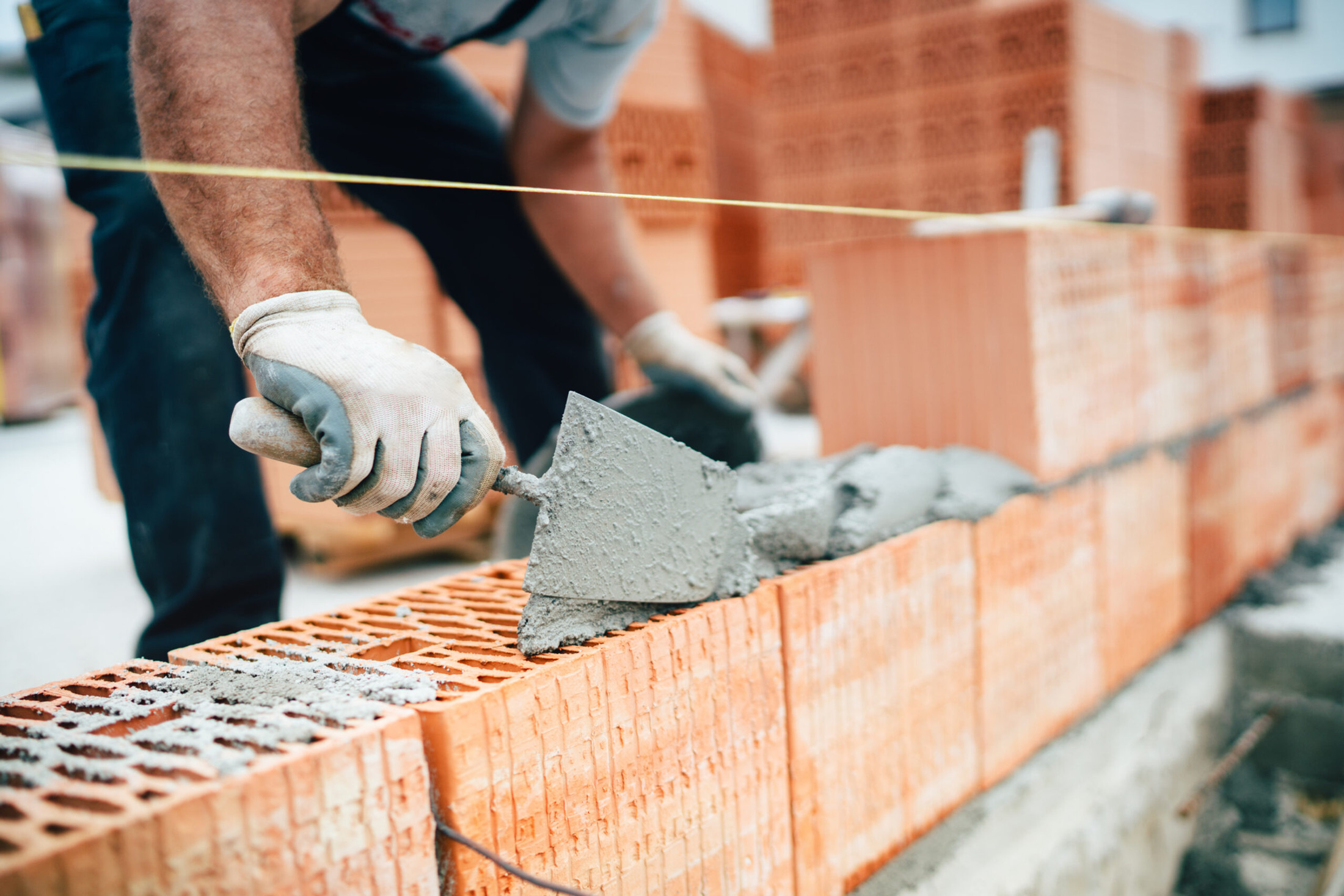
Repointing in New Milton
Later brickwork, machine struck joints, and a repair that has to match the shape of the joint as well as its colour.
The site visit is free and so is the written itemised quote. Thomas Hannen prices every job himself.
Last updated
Your joints are due when a hairline has opened where mortar meets brick, the perpends have gone, or a key drags sand out. On most New Milton brickwork what gives a repair away is the shape of the joint, not the colour: every joint on an eighties elevation was struck the same way, so the job is raking out the failed patch and striking it to match. Bricks with blown faces are cut out and replaced alongside.
The jobs in New Milton divide fairly neatly. Joints opening on a gable or round a bay. A parapet or stack shedding grit into the gutter. Brick faces flaking under a sill. A patch somebody put in a few years ago that now stands out worse than the fault it cured. A communal elevation where nobody is sure who deals with it.
The site visit to a New Milton house walks every face, not just the one you have pointed at, tests the joints with a key to see how far back the decay goes, taps courses for the hollow note that says the pointing has parted from the brick, and photographs the lot. You get a written itemised quote, elevation by elevation, with the mix and joint profile named on it. Both are free.
The work
Later brickwork, and where it actually lets go
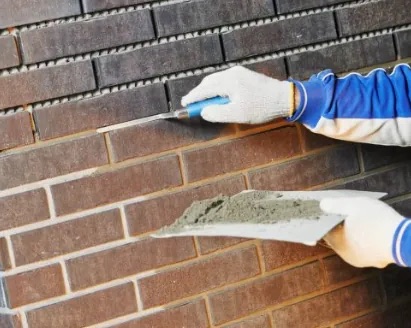
Eighties and after. A third of New Milton was built from 1983 onwards, the eighties busiest of all. That brickwork is hard: dense fired bricks in a strong cement and sand mortar struck to a bucket handle as the gang went up the scaffold.
It debonds rather than eroding, so a hairline opens where mortar meets brick, the perpends go first, and rain gets into the cavity through joints that still look full. On the weather side those joints pit and a frost takes the arris off.
Post-war housing. Nearly half of New Milton dates from the thirty odd years after the war, when the mortar was often gauged with lime as well as cement. It fails more gently: the joint wears back at the arris and the face goes in flakes. Matching means matching the sand and the gauge, not only the colour.
Getting the profile right. Bucket handle is the rounded one, weather struck is angled back at the top so water runs off, flush sits level with the brick face and recessed behind it. We identify the profile first, strike the repair to match, and put up a trial panel for you to judge in daylight on how it will look weathered.
Terraces, flats and communal walls. A quarter of the homes in New Milton are terraced and another quarter flats, so much of the brickwork is shared: gables belonging to two households, parapets running over more than one property. We price that for a management company as readily as for a single owner. Leaseholders should note that major works are usually consulted on under section 20 of the Landlord and Tenant Act 1985.
Faces that have already blown. We cut the brick out whole and turn or replace it against a sample held on the wall, rather than filling the hollow with mortar that never matches. Spalling gathers under sills, beside downpipes and just above a path laid up against the house.
The older end of the town, and the stacks. A small share of New Milton predates the war and some of that is solid wall, which loses water only through the joint and so has to stay breathable. Those walls get an NHL lime or lime putty mix matched to the original sand, finished flush or slightly recessed. Whatever the age, the method is the same: joints out to twice their width, by hand, the angle grinder left in the van on anything soft, damped down before filling and brushed back once the mix has taken up. Stacks go loose and friable first because nothing warms them, and repointing one with the flaunching round the pots is priced as its own line.
How it runs
Repointing an eighties elevation, joint by joint
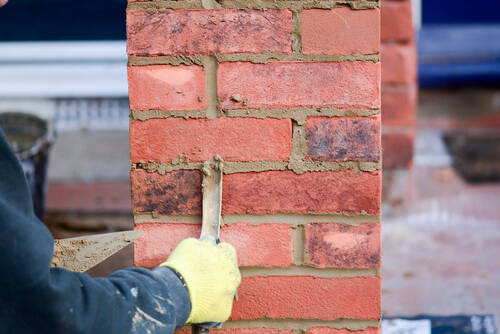
Thomas comes out to New Milton and prices it himself, and he rakes a small test area so he can see how deep the joints have gone and what the original mortar was. One company is answerable for the whole job. The written quote itemises access, raking out, the mortar mix, the area of each elevation, any brick replacement and disposal.
Most New Milton walls are post-war or eighties brick with cement joints, often a recessed or bucket-handle profile. Where the brickwork is older, around Old Milton Green, the mix may be lime. We match colour and profile with a trial panel before the main job starts. Windows and doors are sheeted, and dust is swept up at the end of each day. Terraced fronts often need a scaffold across the pavement, and a block of flats means working to the managing agent's arrangements. If more spalled bricks need cutting out than we allowed for, you get a photograph and a price first.
Repointing like for like is repair, so there is no planning application and building control is not involved. Old Milton Green is the town's conservation area, and inside it a change of mortar colour or joint profile should go past New Forest District Council first; Planning Portal guidance on external walls explains the general position. On a listed building the mortar is protected fabric, so listed building consent comes first.
Cost
Raking depth, the mix and the match
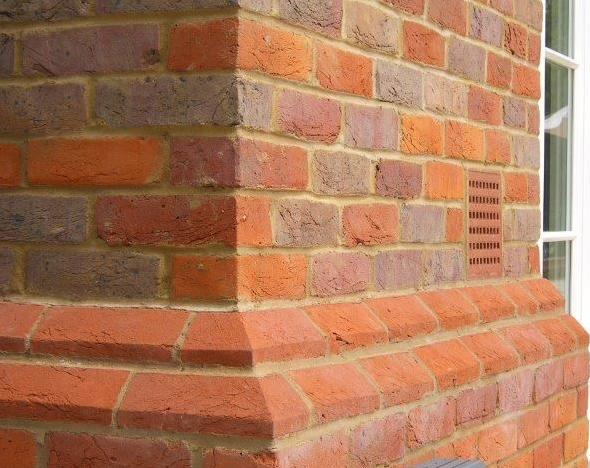
Depth and method come first. Joints have to be raked back to sound mortar. Hand raking is slow; a disc is quicker, but on soft brick it widens the joint and takes the arris off if it is not controlled. How deep and how carefully sets most of the hours.
The mix. On New Milton's post-war and eighties brick a cement-lime mortar usually matches. On older walls lime is the right answer, because hard cement holds water against a soft brick and the face blows off in a frost. Matching the colour takes trial panels and a few days to dry.
The weather side. The south west elevation takes the driven rain and salt off the sea, so it is usually the most eroded, and often the only one that needs doing now.
Access. A shared gable on a New Milton terrace, an eighties detached with a chimney on the ridge, and a long communal wall on a block of flats are all set up differently. A chimney or gable wants a scaffold, a low wall may need nothing, and the work at height rules make the platform a priced line.
When comparing quotes, ask how deep the joints are raked and by hand or disc, what the mix is and whether it was matched, and how many spalled bricks are being replaced.
If water is getting in
Driven rain getting through open joints
Ring us instead of using the form. Joints that have washed out let rain straight through to the inside face, and on a chimney the water reaches the flashings too. In New Milton it is usually a gable or a parapet facing south west.
The first visit finds the worst joints and seals them temporarily, or sheets the wall if the weather is against us, and we price the full elevation once it has dried out. If you live in a flat, ring anyway, and we can deal with the managing agent for you. Scheduled work runs Monday to Friday, 8am to 6pm. For problems that cannot wait, call us; if nobody answers, you get a call back as soon as we can.
Worth knowing
On later brickwork the profile gives a patch away before the colour does
Estate brickwork from the eighties has a uniformity older walls never had. The original bricklayers laid an elevation over a few days, struck every joint with the same tool at the same angle, and used mortar out of the same mixer. The joints are effectively identical, and the eye is very good at spotting the one that is not.
That changes what a good repair looks like. On a Victorian wall you can get away with a colour slightly out, because the original was never consistent. Here you cannot, and colour is not what betrays it. Profile is. A flush patch in a bucket handle wall reads as a pale stripe in low sun because it throws no shadow, and it will still be doing that in ten years. Failures on this brickwork are local, not general, so you are almost always patching, which makes matching the shape the whole game.
So get the profile named in the quote, so it says bucket handle or weather struck to match rather than just repointed. And look at the trial panel from where people actually see the wall, in raking light, not at midday.
Who you are dealing with
The repointing firm, and how to check us
New Milton is eight miles from Boscombe, where our base is. We repoint across the town and BH25, Barton on Sea, Bashley, Ashley, Hordle and over to Milford on Sea, and the authority is New Forest District Council.
The company you are dealing with is Bournemouth Roofing & Building Ltd, registered in England and Wales, company number 15471719, and Thomas Hannen, who owns it, rakes the test patch and writes the price himself. A verified Checkatrade customer scored us 10 out of 10. There is no charge for the visit or for the written quote, which lists every item. Before you book a visit in New Milton, you can read our customers' Google reviews, word for word, on our reviews page.
Planning at a glance
Do you need planning permission in New Milton?
Most repairs in New Milton need no application at all. What decides whether a change to the outside of your house does is who the council is, whether a conservation area or a listing applies, and whether the place sits in a protected landscape.
| Question | In New Milton |
|---|---|
| Who decides | New Forest District Council is the planning authority for New Milton. The National Park boundary runs close by, and the Park's property map shows which side an address falls. |
| Conservation area | Yes: Old Milton Green Conservation Area. Check whether your street is inside the boundary before changing anything visible. |
| Listed buildings | Yes, there are listed buildings in and around New Milton. If yours is one, work can need listed building consent. |
| Protected landscape | No National Park or National Landscape covers New Milton. |
Questions
Questions about repointing in New Milton
What is a bucket handle joint, and how do you know which one we have?
The rounded profile you get by running a jointing tool down a joint while the mortar is still green, and what most later housing here was built with. We identify it from a sheltered part of the wall where the original finish survives, then match it. If a previous repair has confused things, the original is usually readable round the back.
Our brickwork is only forty years old. Why would it need pointing already?
Modern mortar fails by letting go instead of wearing away. A strong mix shrinks as it cures and can debond from a dense brick, opening a hairline along the edge of the joint that water gets into. Add frost and an exposed gable and you get pitting, then spalled faces. Often one elevation, not the whole house.
A repair somebody did on our wall stands out badly. Can that be put right?
Usually, yes. Usually the problem is the shape of the joint, not the shade, so the fix is to rake the patch out and strike it again to match. If the mortar itself is wrong as well, we take it back and put up a trial panel first.
There is a crack running down through the bricks as well as the joints. Is that a pointing job?
No, and we would not take it as one. Mortar failure follows the joints, the weakest path. A crack straight through the bricks says the wall has moved, and filling it hides that until the next season. We put what we think is going on in writing and do not sell you the easy version.
Do you have to repoint a whole wall to make a patch blend in?
Not usually: if the profile and the sand are matched a patch settles within a couple of years and stops being the first thing you see. We would suggest a full elevation when the failure is general rather than local, or when the patch would land in the middle of a plain front wall.
Nearby, and next door
Repointing near New Milton
Nearby places we also cover for repointing, with straight-line distances from New Milton, and the other trades we offer in New Milton itself.
Repointing nearby
Our other trades in New Milton
Repointing guides
Lime or cement mortar: which do you need? Reading a repointing quote: rake out Listed building consent for repointing and re-renderingBuilders in New Milton: all our building work Everything we do in New Milton Repointing, all areas Every area we cover
Free quote
Get the joint profile written into the quote
Thomas identifies what is on your wall now, photographs every elevation and sends a written itemised quote naming the mix and the finish. Free.