Insulation in New Milton
Loft top-ups on the post-war estates, top floor flats, cold rear extensions and cavity walls, surveyed properly and priced in writing.
The site visit is free and so is the written itemised quote. Thomas Hannen prices every job himself.
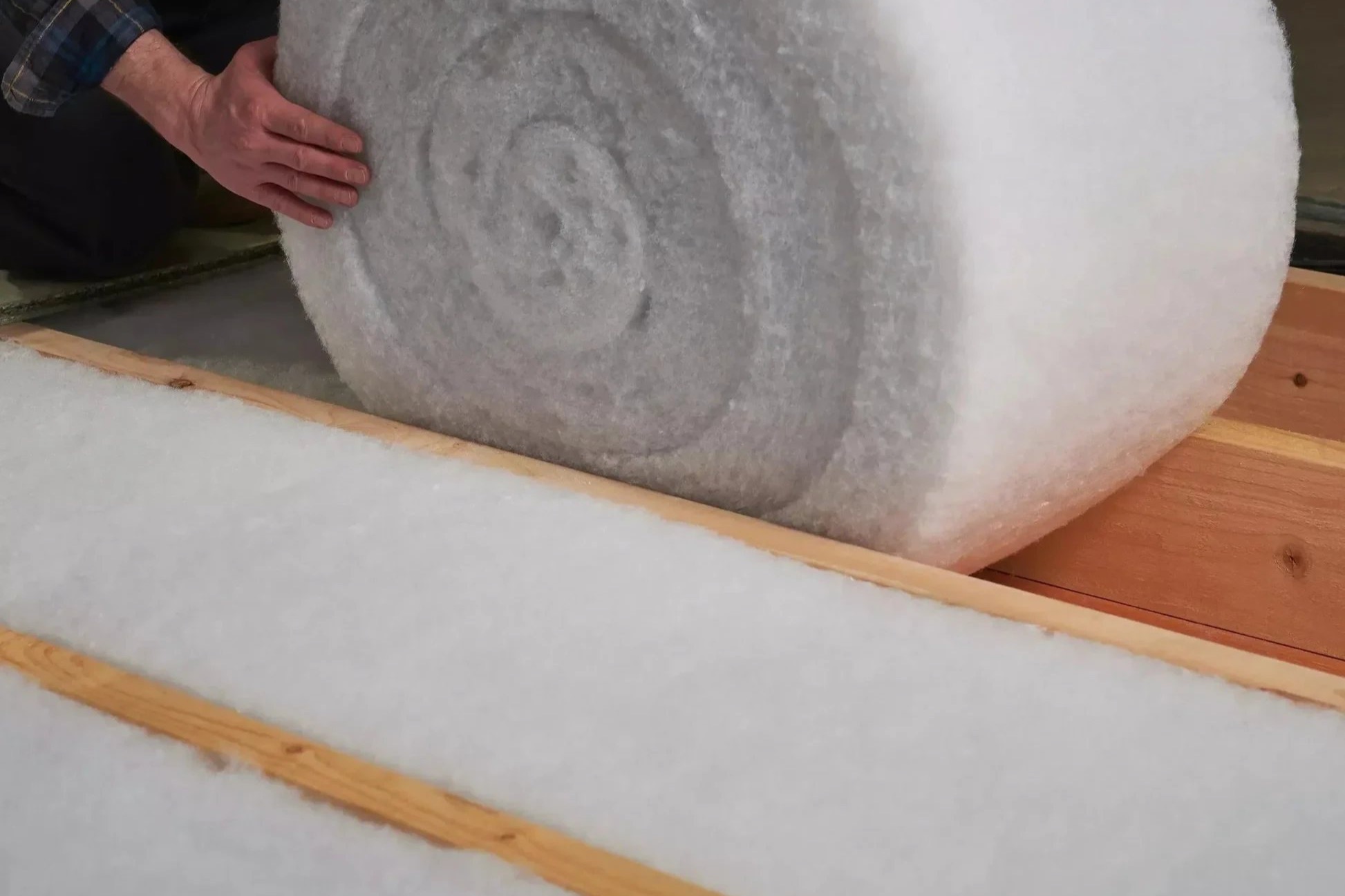
New Milton is a post-war town, so most lofts here were built with a shallow layer of wool between the joists and nothing across the top of them. Adding a second layer at right angles, opening the eaves back up and sealing the hatch is the whole job on the majority of these houses, and it is a day at most.
The calls we get from New Milton fall into a few types. A back bedroom or a top floor flat that never feels warm, whatever the thermostat says. A loft somebody has finally climbed into, where the wool has settled to half its depth and there are bare boards showing where the storage goes. A cold single storey extension or sun room off the back of the house. And condensation: water on the inside of the windows in the morning, or dark spotting where a wall meets a ceiling.
We come and look before anybody talks about materials. The site visit is free, the itemised written quote is free, and on a straightforward loft we will tell you it is a straightforward loft. Where the problem is really a flat roof or a wall rather than the ceiling, we would rather say so on the first visit than sell you depth you will not feel.
The work
Laying over the joists is the half that matters
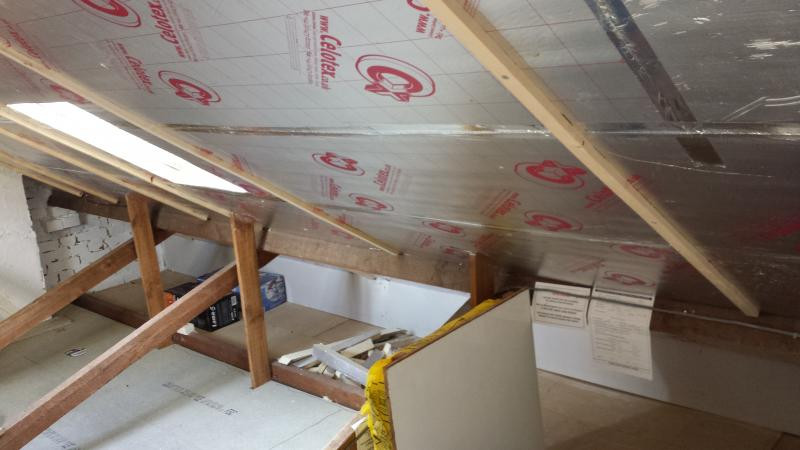
Laying over the joists is the half that matters. Most of the estates here went up between the fifties and the late eighties, and those roofs are trussed rather than cut on site, so the loft is a forest of thin timbers with a single thin layer of mineral wool threaded between the ceiling joists. We work the existing layer back into the corners and the awkward triangles the truss webs make, then run a fresh layer of Eco Roll across the whole ceiling at right angles, between and over, to a finished depth of about 270mm. Bare timber is a cold bridge straight through to the plasterboard. Nothing has to come out unless it is wet, black or has been lived in by something.
Flats, and who owns the roof space above you. A quarter of the homes in New Milton are flats, and the top floor ones are where the heat loss is. Sometimes the hatch in your hall opens into a roof space that is yours alone, and the work is the same as a house. Sometimes it opens into a single space running over the whole block, in which case the freeholder or the management company has to agree, and if the block is paying for it, section 20 of the Landlord and Tenant Act 1985 sets out the consultation the leaseholders are owed. We will quote in a form a managing agent can put out, and we will tell you honestly when a job needs that route.
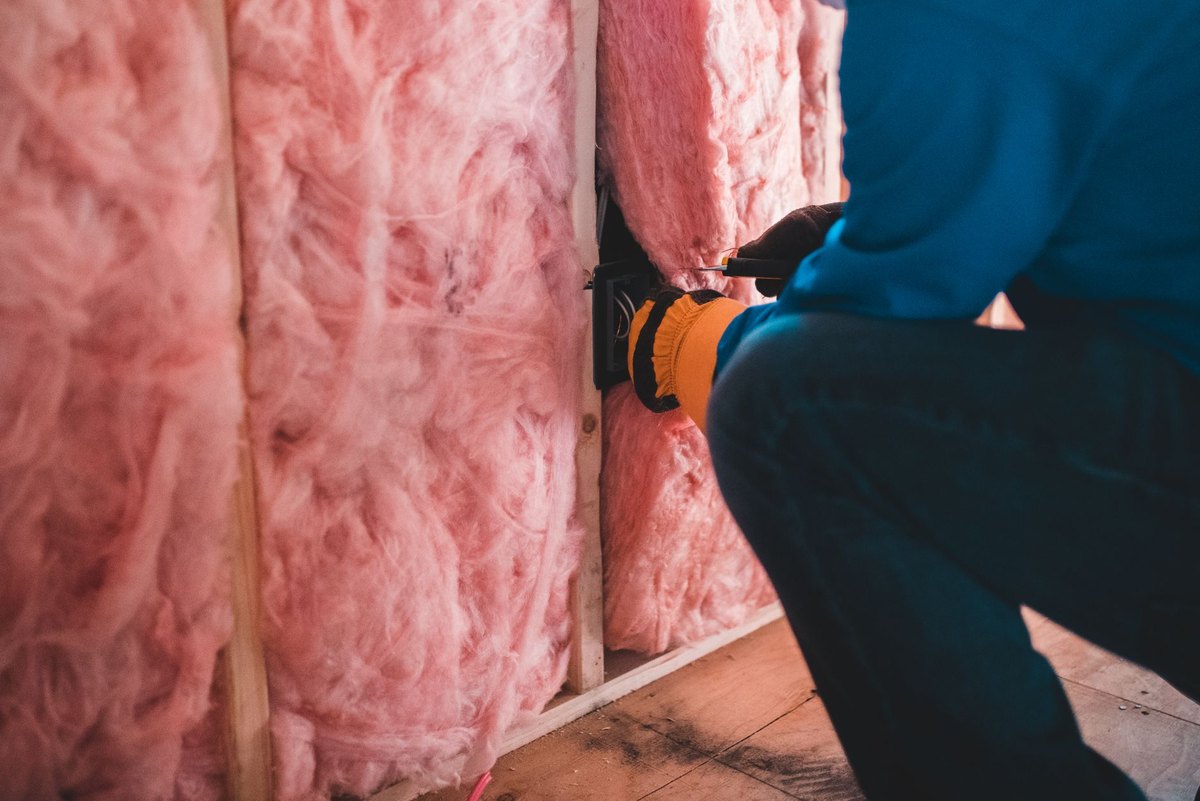
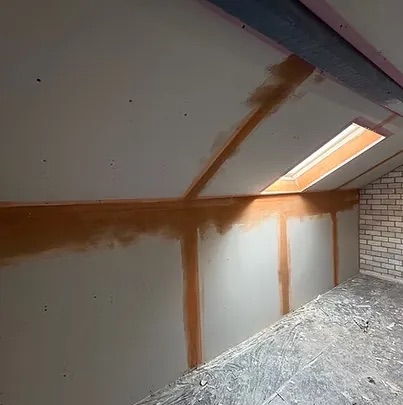
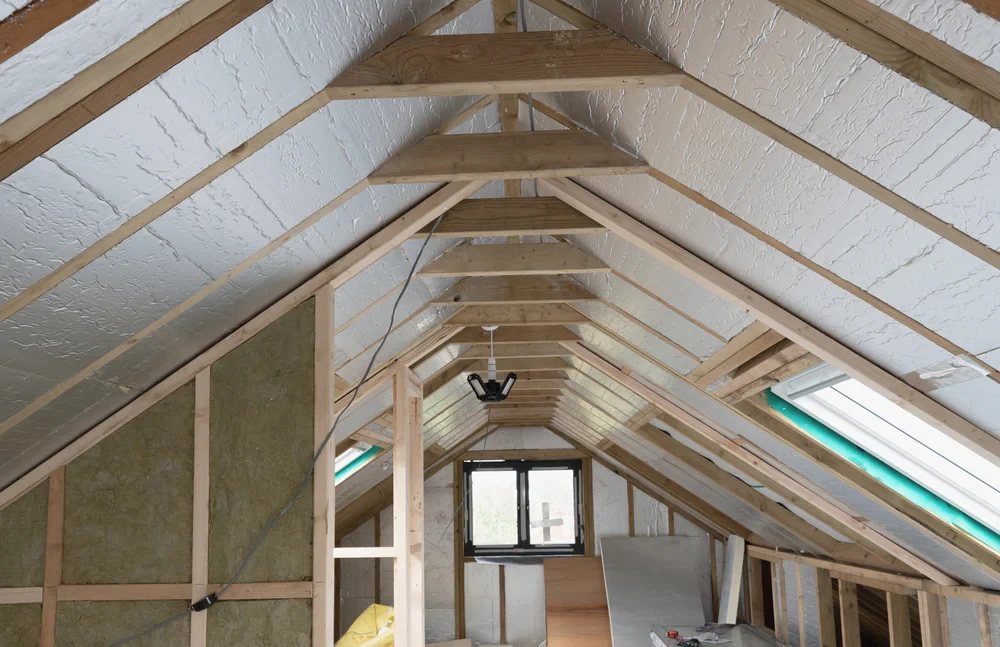
The other cold spot on this stock is the single storey extension with a flat roof, often added long after the house and often with little or nothing in the deck. If the covering is due anyway the answer is a warm roof, rigid board over the deck rather than stuffed under it. Where a loft has been converted, insulation goes at rafter level in Celotex or another PIR with a ventilation gap above and a taped vapour control layer facing the room, and a dormer cheek gets the same attention as the flat part. A third of the town went up between 1983 and 2008, and those houses have a cavity wall with something already in it, so the survey starts with a borescope: what is in there, has it slumped, is the cavity clean at the bottom. On the inter-war houses at the edges of the town there may be no useful cavity at all, and then it is internal wall insulation on the coldest rooms.
How it runs
From your call to a written price
Insulation inside a loft or on the inside of a wall needs no planning permission. New Milton sits outside the National Park and has no conservation area over it, so insulation on the outside of a wall is normally permitted development here too, and Planning Portal guidance on insulation sets out the limits. There are nine listed entries in the town, and if the house is one of them the rules change, so tell us on the first call. regulation 23 means renovating more than half of a roof, wall or floor brings the whole element up to the current standard, which is why a re-covered flat roof is quoted as a warm roof. New Forest District Council handles both.
Cost
What decides the price of an insulation job
No rate per square metre: the area is the easy part and everything round it is the awkward part. A top floor flat with a small hatch over the stair is one morning; a semi with half the loft boarded out for suitcases is another. Old material to bag and take away, and boarding to lift and put back, come before anything new goes down. Approved Document L sets what the work has to reach. Ask what depth is being laid, whether the old material comes out, and whether the eaves and hatch are included.
If it is urgent
Damp, condensation or a room you cannot heat
Ring rather than use the form. A loft dripping with condensation, mould that keeps coming back, or a room that will not hold heat gets seen quickly. The first visit settles whether that is insulation, ventilation or both, because insulating a space that cannot breathe makes it worse. On a top floor flat, find out first whose the roof space is. Outside Monday to Friday, 8am to 6pm is by arrangement.
Worth knowing
The wind off the open ground to the south west takes depth out of a loft
The weather here arrives from the south west with very little in its way, and that changes one specific thing about a loft. Wind driven into the eaves does not stop at the fascia, it tracks along the underside of the roof and blows through the open face of the quilt at the perimeter.
It is called wind washing, and it is why the first metre in from the wall plate on an exposed elevation performs worse than the middle of the same ceiling, sometimes badly worse. On a sheltered house you can get away with ignoring it. Here you cannot.
What that means in practice is that the perimeter is where we spend the time. Vent trays go in to keep a clear air path without letting the airflow scour the insulation, the quilt is taken right out over the wall plate rather than stopping short of it, and where the roof is exposed we will often finish the outer edge in rigid board instead of soft wool so there is nothing for the wind to get into.
The same weather matters on the walls. Driven rain keeps an exposed elevation wet, and a wet wall conducts heat better than a dry one, so if you are thinking about lining that wall on the inside, the pointing, the render and the rainwater goods get sorted first. Insulating the back of a wall that is soaking from the front just moves the damp somewhere you cannot see it.
Who you are dealing with
A local firm you can check
We cover New Milton, Barton on Sea, Bashley, Ashley, Everton and the BH25 addresses across the town, with New Forest District Council for planning and building control. Send us the postcode and we will confirm before we come out.
Bournemouth Roofing & Building Ltd, registered in England and Wales, company number 15471719, which you can look up in a minute. Thomas Hannen's business, and he is the one who comes out to price the job, not a salesman. A verified customer's 10 out of 10 on Checkatrade. The visit and the written quote are both free.
Questions
New Milton questions we get asked
The house was built in the eighties. Is the loft good enough?
It was good enough on the day and it is not now. The biggest single cohort in New Milton is the 1980s at 19.9%, and a loft from then typically carries 100mm of wool between the joists where current practice is more than double that depth. The material is usually still sound, so it stays put and new wool goes over the top at right angles to close the joist line. That is a top-up, not a strip out.
We are a couple of miles inland. Does salt still reach us?
It does, carried in the wind rather than as spray. New Milton sits about 2.8km back from the coast, far enough that the covering weathers normally but close enough that salt on a south westerly settles on metalwork and holds damp against it. Ventilation grilles and the eaves trays are what suffer for it. If those have corroded shut, adding depth without opening them up leaves you with a wet roof space.
A quarter of homes here are terraces. Does that change access?
The material comes in through the front door, which is the only real difference. Terraces are 25.4% of New Milton and a mid terrace usually has no side access, so bales are carried in over sheeting and waste goes back out the same way. There is no scaffold and no skip for a loft job. Where the roof space runs on over a party wall, we check whether that wall is closed off at the top.
Why did the last top-up not show on the bill?
Usually because it stopped at the eaves or the hatch was left bare. Wool laid neatly between joists and finished a foot short of the wall plate leaves a cold ring right round the ceiling, and an uninsulated hatch is a hole in the middle of it. Air moving through those gaps carries away more than a thin patch does. On a New Milton top-up the eaves trays, hatch and tank are separate lines for that reason.
Is there a better time of year to have this done?
Any month, though the roof space itself sets the limit. A loft in New Milton is unpleasant in July and perfectly workable in February, so winter is often quicker to book and you feel the difference straight away. What we do avoid is opening the eaves or a flat roof in a strong south westerly, because the exposed side takes the driven rain and a stripped section will not stay dry.
Nearby, and next door
Insulation near New Milton
Insulation nearby
Our other trades in New Milton
Everything we do in New Milton Insulation, all areas Every area we cover
Free quote
Want to know what depth you have got?
We will get into the loft, measure what is down, check the eaves and the hatch, and put the options in writing. The visit and the quote are both free.