Insulation in Barton on Sea
Loft top-ups finished properly at the exposed edges, warm roof build-ups over flat roofs, cavity checks and top floor flats surveyed, across Barton on Sea and BH25.
The site visit is free and so is the written itemised quote. Thomas Hannen prices every job himself.
Two things decide whether insulation works in Barton on Sea: the depth in the middle of the loft, and how the edges are finished against the wind coming off the water. We do both as one job, because a loft that is deep in the middle and open at the eaves is money half spent.
Most people ring us here after a windy fortnight. The house feels colder than it used to, one end of it is worse than the other, and the heating is on longer for the same result. Behind that, more often than not, is a loft that was insulated decades ago to a depth nobody would accept today, with the wool thinned out and pushed about around the edges where the air gets in.
The other two calls are a top floor flat where the ceiling is cold and nobody is sure who owns the roof space, and a garage or an extension with a flat roof over it that has always been the coldest part of the house. All three are worth a free survey rather than a phone diagnosis. We get up there, measure the real depth, look at the eaves and the perimeter, and give you an itemised written quote for the parts that are actually worth doing.
The work
A cold flat roof stuffed with quilt will stain
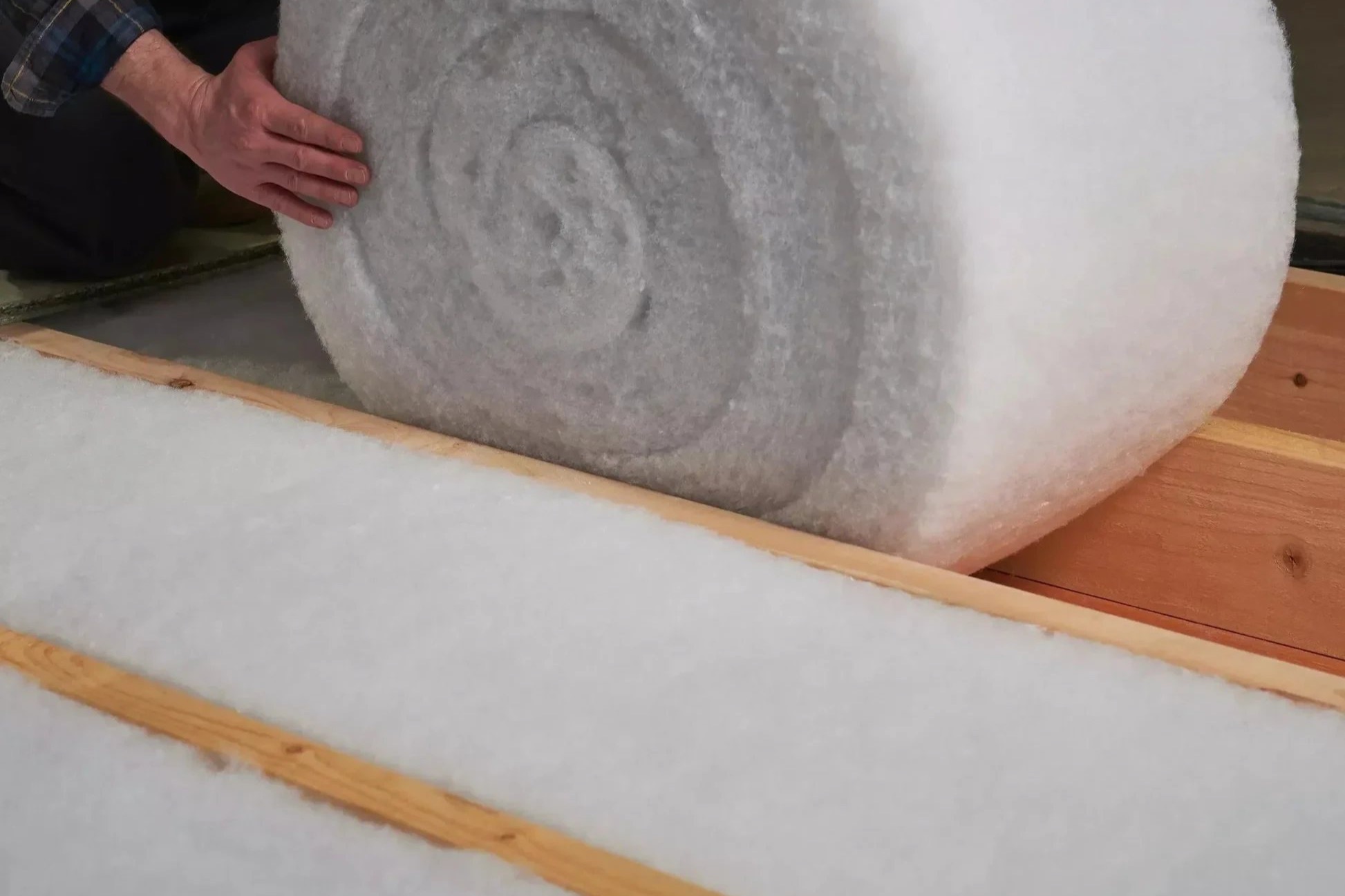
Loft top-ups on the bungalows. Much of Barton went up between the late 1950s and the 1970s and a great deal of it is single storey, so the loft is the lid on the whole house. Those roof spaces usually hold a thin layer of mineral wool from a long time ago, settled, compressed and stopping short of the wall. New wool goes down as ordinary eco roll between the joists and a second layer across them to about 270mm, which is what takes a ceiling to the 0.16 U-value Approved Document L sets for a renovated thermal element. A kilometre from the cliff and with the weather coming off the south west, the edge is where it is lost, so we hold the depth right out over the wall plate rather than letting it feather away.
Top floor flats, and who can instruct the work. Close to a fifth of the homes here are flats, and the roof space over the top floor is normally common parts rather than yours. That means the freeholder or the managing agent instructs the job, not the leaseholder with the cold ceiling, and where the cost falling on any one leaseholder passes a set threshold the leaseholders have to be formally consulted first under section 20 of the Landlord and Tenant Act 1985. It is worth knowing before you chase quotes. We will survey the roof space and put the work in writing so you have something to hand to the agent, and a whole block in one visit goes further than one flat at a time.
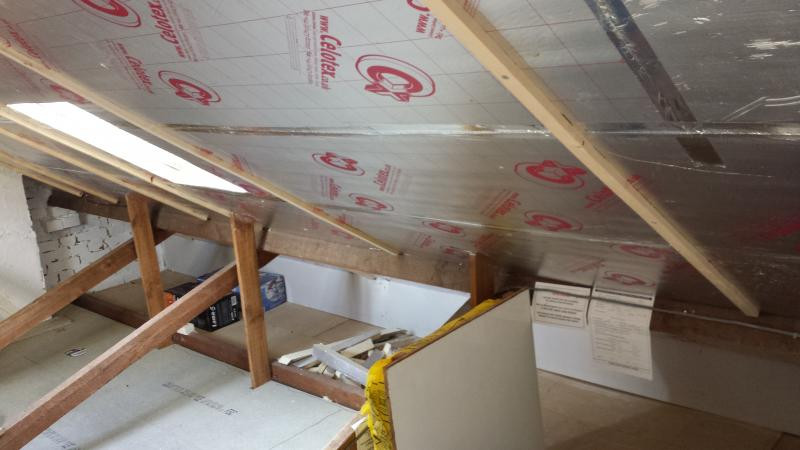
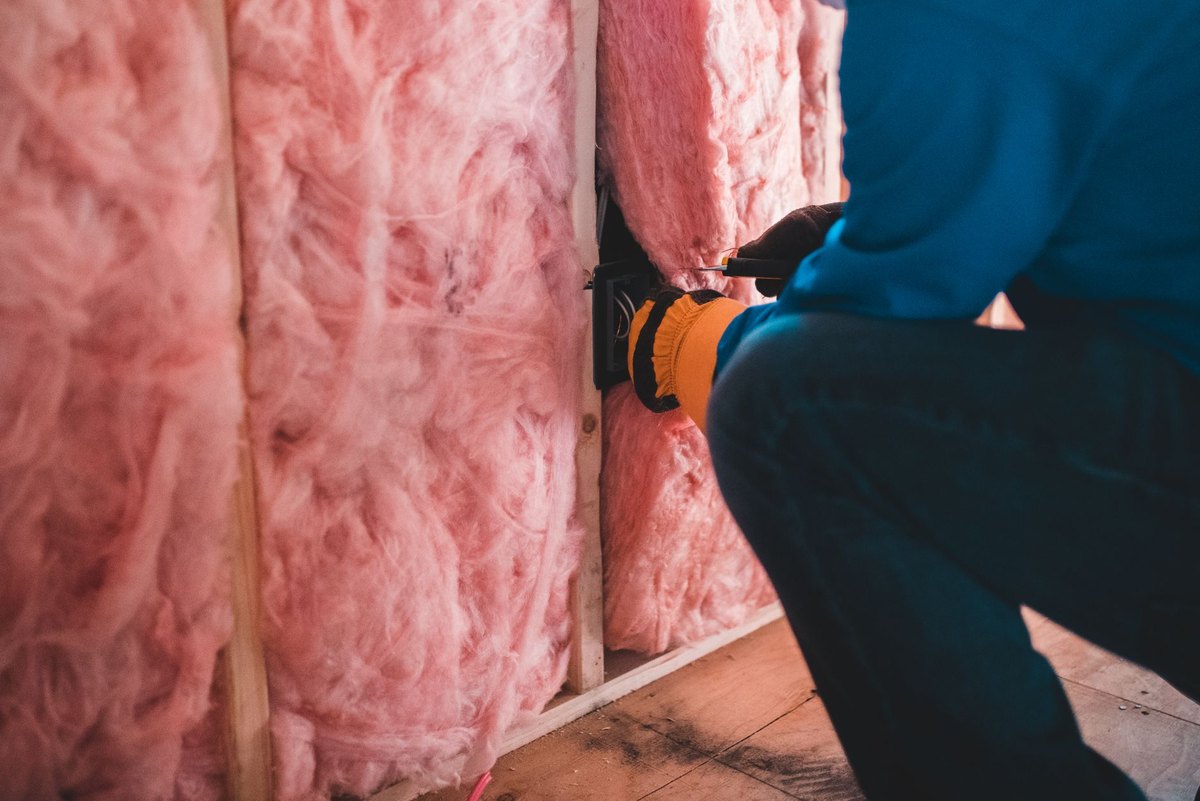
Flat roofs over extensions, garages and porches are everywhere in Barton, and the most commonly botched insulation job there is. Stuffing one full of quilt from underneath, with no ventilation left above, is how you get condensation on the deck and a ceiling that stains for no obvious reason. Where a flat roof is being re-covered anyway the right answer is a warm roof: rigid board and a vapour control layer over the deck with the new covering on top, so the structure sits on the warm side. The stock here is mostly cavity built and some was filled years ago, so we borescope first. An empty cavity takes blown bead or mineral fibre, a settled fill leaves the top of the wall cold, and a wall taking water on the seaward side may be better left alone until the outside is put right. This close to the sea a full fill is a decision, not a default. Dormers and sloping ceilings take rigid PIR board between and under the rafters with an air gap kept clear above, or a multi-layer foil quilt such as TLX where there is no depth to give away. Then the hatch is insulated and draught sealed, boarding over the joists comes up and goes back on legs so storage does not squash the depth, the tank and its pipework get lagging once the loft has gone cold, and downlighters get fire rated covers.
How it runs
From your call to a written price
The quote is itemised: survey, clearing, material and depth, ventilation and disposal on separate lines. Nothing about a loft or a cavity fill needs planning permission or a building control notice, and the Planning Portal covers that in plain terms. External wall insulation is the one part of this trade that changes how the building looks, and that is where an application can come in. New Forest District Council is the planning authority for Barton on Sea, which sits outside the National Park boundary, and there is no conservation area over the housing, so most addresses have nothing to apply for. Insulation fitted in a home is also currently zero rated for VAT.
Cost
What decides the price of an insulation job
No rate per square metre: the area is the easy part. A clifftop bungalow with a hatch in the hall, a top floor flat where the roof space is reached from a communal landing, and a house with a converted loft and no hatch left at all are three different jobs before any material is unwrapped. Old material that has to come out and be bagged is a cost of its own. Approved Document L sets what the work must reach. Ask what depth is going down, whether the cavity is being looked into before it is filled, and whether the eaves are being kept clear.
If it is urgent
Damp, condensation or a room you cannot heat
Ring rather than use the form. A dripping loft, black mould that comes back faster than you can wash it off, or a room that will not hold heat gets looked at quickly, and the first visit works out whether it is insulation, ventilation or both. Barton is a short run, so it is not booked in for the spring. The phone is answered 24 hours for emergencies; scheduled work runs Monday to Friday, 8am to 6pm.
Worth knowing
Wind off the sea decides how the edges are done
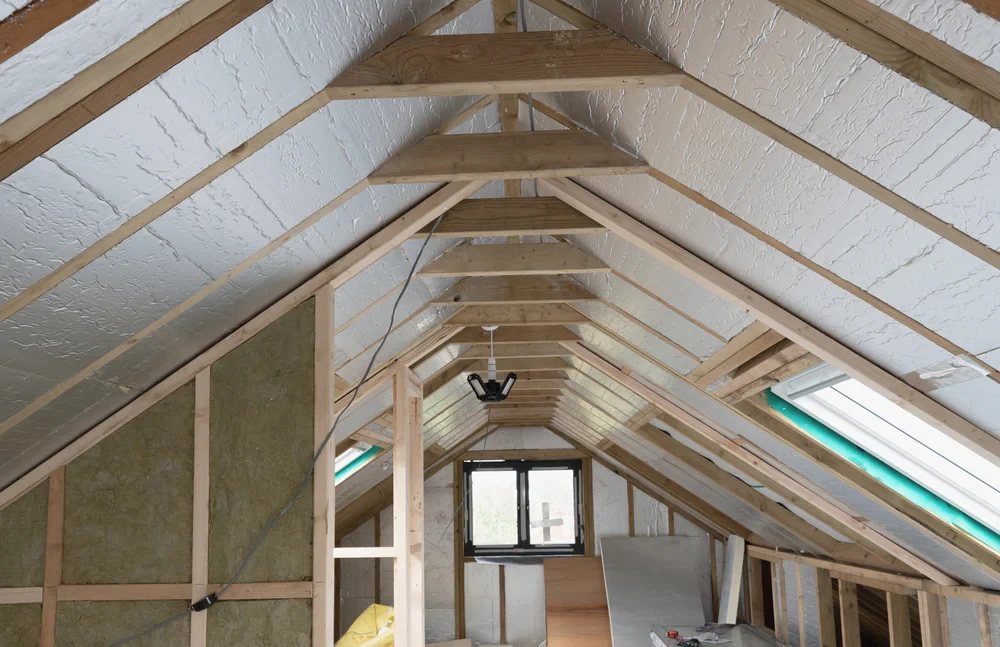
Barton sits less than a mile from the cliff top with nothing between it and the water, and that changes insulation more than most people expect. Mineral wool works by holding still air. Blow air through it and it stops doing its job, which is why a loft with open eaves in an exposed spot performs worse than the same loft inland even when the depth is identical.
The wind gets in at the perimeter, lifts and scours loose material near the wall plate, and leaves a cold ring around the outside of every room. Holding the edge, keeping the depth right out to the plate and fitting proper vent trays so the air path runs above the insulation rather than through it is not detailing for its own sake here. It is most of the difference.
The same exposure argues for care with cavity walls. This strip of coast takes driven rain about as hard as anywhere in the country, and a wall that gets soaked repeatedly is a wall where a full cavity fill can carry moisture across to the inner leaf. That does not mean never fill one.
It means look first: the condition of the pointing and the render, the state of the verges and sills, which elevation faces the weather, and what the cavity already contains. Sometimes the right sequence is to put the outside of the wall right, then fill. Anyone who quotes a coastal cavity fill without looking inside the wall is guessing, and it is your damp problem afterwards, not theirs.
Who you are dealing with
A local firm you can check
We cover Barton on Sea, New Milton, Milford on Sea, Hordle and the BH25 coast strip. Bournemouth Roofing & Building Ltd, registered in England and Wales, company number 15471719, which you can look up in a minute. Thomas Hannen's business, and he is the one who comes out to price the job, not a salesman. A verified customer's 10 out of 10 on Checkatrade. The visit and the written quote are both free.
Questions
Barton on Sea questions we get asked
We are a mile from the cliff. Does salt reach the loft?
It reaches the metal above it, which comes to the same thing. Barton on Sea is about 1.2km from the coast, and salt corrodes nails, clips and fixings from the edge inwards while keeping surfaces damp between showers. Before we cover a roof space we look up at the underside, because a slipped tile or a rusted clip buried under a fresh layer is found later as a stain on your ceiling. Fixings first, depth second.
Our block has a shared roof space. Who has to agree?
The freeholder or the managing agent, not the top floor flat on its own. Flats are 17.6% of the dwellings in Barton on Sea, so this comes up here often. A shared void is normally part of the common parts under the lease, which means whoever owns the structure authorises the work and usually recovers it through the service charge. We will price it for whoever holds that responsibility and put it in writing for a leaseholder to hand over.
Our bungalow dates from about 1960. Where does the heat go?
Straight up, through more ceiling than a two storey house of the same size has. 42.0% of the homes in Barton on Sea are bungalows and 25.1% of the whole stock went up in the late fifties and early sixties. Roofs of that period sit shallow at the wall plate, so the last couple of feet either side are awkward to reach and are almost always left bare. That strip decides whether a loft works.
What can I look at myself before calling you out?
From inside, open the hatch and look along the eaves on the seaward side: daylight at the wall plate means wind is getting under whatever is up there. From outside, look for rust runs below fixings and any lifted ridge, because in Barton the metal goes before the tile does. Then look at the ceiling of your coldest room for a faint grid of lines, which is warmth tracking up the joists. Photograph it and we will start there.
Is spray foam an option under our tiles?
Not from us. Foam sticks the covering to the timber, hides the battens and the fixings and turns the next repair into a strip out. On a roof this close to the sea that is worse than usual, because salt works quietly on nails and clips and foam is exactly what stops anyone seeing it happen. Where a room in the roof needs doing we use board and quilt between and under the rafters, ventilation gap kept clear.
Nearby, and next door
Insulation near Barton on Sea
Insulation nearby
Our other trades in Barton on Sea
Everything we do in New Milton Insulation, all areas Every area we cover
Free quote
Get a price for insulating your Barton on Sea home
Tell us the address and which rooms feel the wind. We will measure the loft, look at the edges and put an itemised price in writing. No charge and no obligation.