Repointing bungalow brickwork in Everton
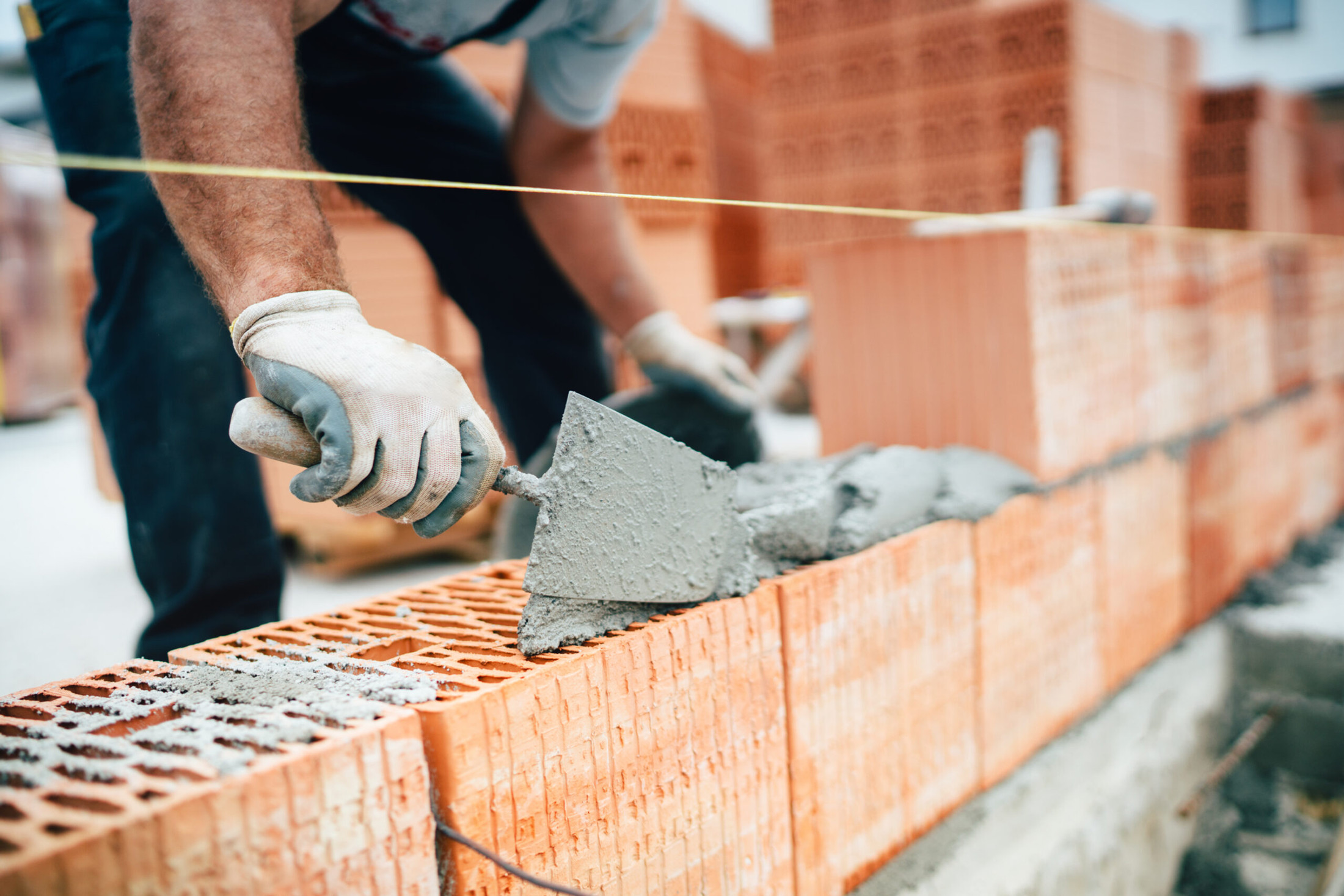
Long single storey elevations, joints raked by hand and matched on a trial panel you can look at before we commit to the rest of the wall.
The site visit is free and so is the written itemised quote. Thomas Hannen prices every job himself.
On a single storey house nearly every joint is at eye level, so repointing here is judged on the finish as much as on the weathering. The joint that has to come out is the one that crumbles under a key, sounds hollow when you tap the course, or has weathered back behind the face of the brick.
Where it starts
What people in Everton ring about
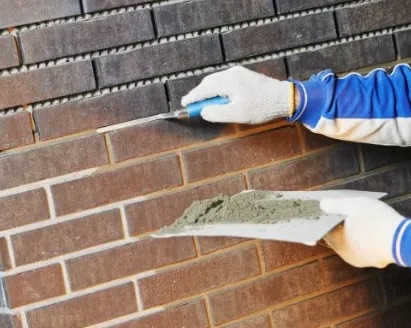
Usually one of three things. Sand and grit collecting on the path below a wall, which means a joint above it is washing out. Brick faces flaking off in the bottom two or three courses, where a path, a drive or a border sits tight against the house. Or a damp patch on an inside wall that appears only after a long wet blow from the west.
Everton is a village of low buildings, and that changes the survey. There is a lot of wall per house and most of it can be read from the ground, so we can be specific: which elevations are due, which have years left, and how deep the failed joints go. We scrape and tap rather than guess, photograph each face, and put it in writing with the elevations priced separately. The visit and the written quote are free.
The work
Mortar repairs on low buildings
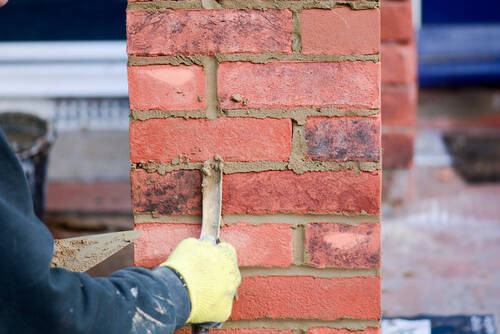
Late fifties and sixties outer skins. Around half the housing here went up between 1945 and 1982, the busiest years being the late fifties and early sixties. That is cavity work: a single skin of fired brick in cement and sand mortar, struck bucket handle or weather struck. Mortar of that period was often gauged with lime as well as cement, and it fails gently: the joint erodes back at the arris, water stands in the hollow, and frost takes the surface off in flakes. Matching means matching the gauge and the sand, not just the colour, so we take a sample of the sound original from a sheltered spot first.
Raking out, and how deep. Joints come back to twice their width, the perpends by hand, and the angle grinder stays in the van on anything soft, because a disc widens the joint and takes the arris off the brick. Joints are damped down before filling and brushed back once the mix has taken up, so the texture reads like the wall rather than a repair.
The bottom courses. On a low building the wall meets the ground almost everywhere, and rain bouncing off a path, a drive or a hard border throws water back into the same two or three courses. Those joints stay wet, take the frost first, and the faces above them spall first. We cut out and replace the blown bricks rather than filling the hollow with mortar.
The older tenth of the village. About one house in ten here predates 1919 and is solid wall rather than cavity: no gap behind the brick, and a wall that sheds water only by letting it evaporate back out through the joint. Those want an NHL lime or lime putty mix matched to the original sand, struck to whatever profile the wall carries, and nothing shortens the life of one faster than hard cement pointing. Lime is slow to work and slow to cure, which on a single storey elevation is easier to live with than it sounds, because the platform is trestles rather than a scaffold.
Chimneys. The stack is the one piece of masonry on a bungalow you cannot reach from the ground, and it is the coldest and most weathered. Its joints go friable years before the walls do, and the water comes out as a stain on a ceiling. If it is due, that is the part of the job needing a proper platform, so the pointing and the flaunching round the pots go in one visit.
How it runs
From your call to a written price
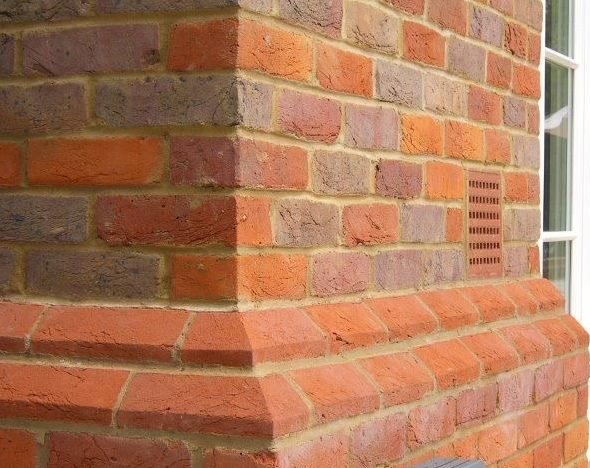
Same team from first visit to last, one person to ring, and no sub-contracting. The quote is itemised: access, raking out, the mortar mix, the area of each elevation, brick replacement and disposal on separate lines, so you can compare it against anyone else's.
Nothing is left open overnight, the site is swept at the end of each day rather than the end of the job, and what comes out leaves with us. Anything nobody could have foreseen gets a photograph and a price before we carry on.
Repointing like for like is repair rather than development, so no planning application is involved and nothing for building control to sign off. Everton has no conservation area of its own and fifteen entries in the area are listed. Where a building is listed the mortar counts as protected fabric and a change of mix, colour or joint profile needs consent before a joint is opened, which is worth checking against the other permissions you may require. This is New Forest District rather than the National Park. We check an address first.
Cost
What decides the price of a repointing job
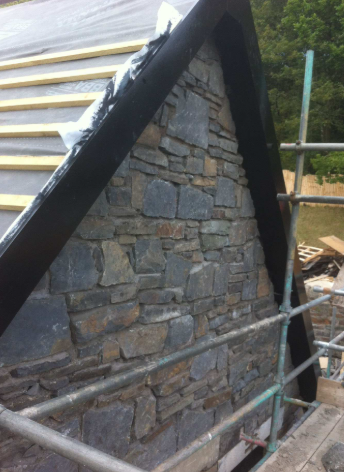
No rate per square metre, because the square metres tell you almost nothing until somebody has looked at the joints.
Getting to it. A bungalow elevation you can walk the length of, a chalet with a dormer gable and a stack on a main ridge are three different platforms, and only one is a scaffold. How long the platform stands matters as much as how big it is, and the work at height rules are why access is a priced line rather than one absorbed into a rate.
The joints decide it, not the wall. Raking out by hand is slow, and on soft brick it is the only safe way. How deep the joints come back, and whether the faces have already spalled, sets the hours far more than the area does.
Matching is the part that shows. Too strong a mix is the classic mistake: cement holds water against a soft brick and the face blows off in the first hard frost. Lime is slower to work and to cure, and it is the right answer on most pre-1919 walls.
Two quotes for the same job are usually two different jobs, so ask each one how deep the joints are raked and whether the scaffold is in the price.
If water is getting in
Open joints, and water coming through the wall
Ring rather than use the form. A wall with the joints washed out lets driven rain straight through to the inside face, and on a chimney it finds the flashings too. We come and look, sheet or temporarily point the worst of it, and price the full elevation once it has dried enough to see what is sound. Here it tends to be the stack or the west facing end wall, and on a single storey house an open joint puts water into the wall at skirting height rather than up in a loft where it has somewhere to go. The phone is answered 24 hours for emergencies; scheduled work runs Monday to Friday, 8am to 6pm.
Worth knowing
When the wall is at eye level, the match is the risk
Four homes in ten in Everton are bungalows, and that changes what to watch in a repointing quote. On a two storey house the expensive line is getting to the wall, so that is where people look. Here most of the elevation can be worked from trestles or a low tower, the access line shrinks to almost nothing, and the money moves into raking out and matching. Those are the two lines that decide whether the job looks right.
So patching is a worse idea here than almost anywhere. A metre of fresh mortar in the middle of a wall you walk past at arm's length will show, and keep showing, because fresh mortar reads lighter than aged mortar for a couple of years. We point to a natural break instead: a corner, a downpipe, a change of course, the edge of a bay. That sometimes means doing more wall than the failure needs, and on a low building it is affordable precisely because there is no scaffold in the price. The trial panel goes up where you can judge it in daylight before the rest is committed.
Who you are dealing with
A local firm you can check
We cover Everton, Hordle, Milford on Sea, Sway and across to Lymington and New Milton, broadly SO41, under New Forest District Council. You are dealing with Bournemouth Roofing & Building, the trading name of Bournemouth Roofing & Building Ltd, registered in England and Wales, company number 15471719. Thomas Hannen's business, and he is the one who comes out to price the job, not a salesman. A verified customer's 10 out of 10 on Checkatrade. The visit and the written quote are both free.
Questions
Everton questions we get asked
The joints have gone dark and green. Is the mortar failing?
Not necessarily: colour is a poor guide. Growth sits happily on the surface of a sound joint, particularly on a north facing wall or under a tree. Run a key along it instead. If it powders or the point sinks in, the mortar has gone. If the key skates across, you have a cleaning job rather than a repointing one.
Why do the bricks just above the path lose their faces first?
Splash back. Rain hitting a hard surface next to the house bounces into the same two or three courses, so those joints never dry and take the frost first. We replace the blown bricks and point the band in a mix that can dry. If the path sits up over the damp proof course we will say so, because otherwise it comes back.
How do you decide where a repointed section stops?
At something the eye already reads as a line: a corner, a downpipe, the edge of a bay, a change of course. Stopping in open wall leaves an edge no matching hides, because new mortar starts lighter than old. It sometimes means pointing more than the failure needs, and that extra is labour rather than access.
How do you keep the fresh mortar off the brick faces?
By brushing at the right moment rather than washing afterwards. Mortar is pressed in off a hawk with an iron sized to the joint, and once it has taken up but before it sets it is brushed back. Smeared mortar left to harden on a soft brick face stains it for good, and acid later does more damage than the smear. On a wall you stand a foot from, that timing is most of the finish.
Will the work make a mess of the borders and the drive?
There is dust and there is spoil, and on a low building both land in the garden rather than on a scaffold deck. We sheet the beds and the paving under the elevation being worked, and the old mortar and broken brick leave with us. Anything planted tight to the wall is better cut back first.
Nearby, and next door
Repointing near Everton
Repointing nearby
Our other trades in Everton
Everything we do in Lymington Repointing, all areas Every area we cover
Free quote
Have the joints tested before the frost does it
Thomas comes out, runs a key along the joints on every elevation, photographs what he finds and writes the price down, itemised, at no cost to you.