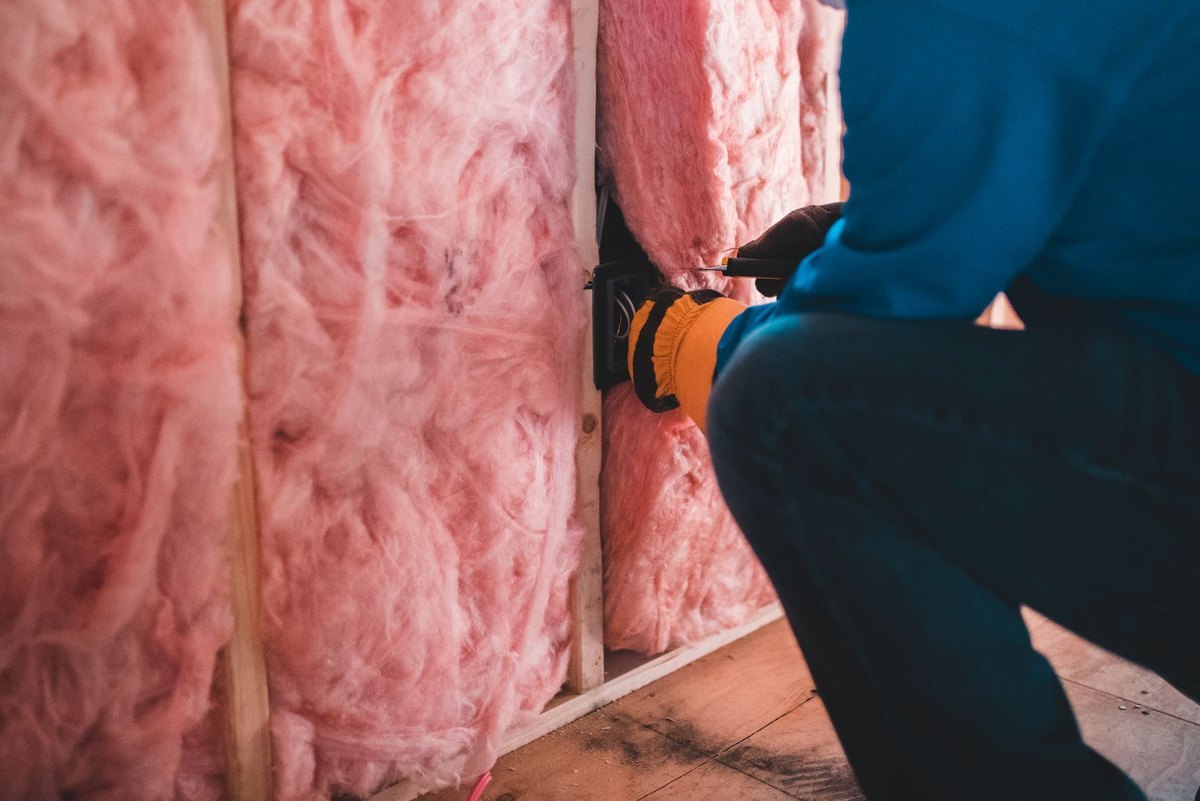
Wall insulation in Everton
In a bungalow there is no upstairs to shelter behind, so the walls are doing all the work and a narrow late fifties cavity is doing very little of it.
The site visit is free and so is the written itemised quote. Thomas Hannen prices every job himself.
Last updated
Most Everton houses have a cavity wall, and a borescope shows whether it is wide, clean and dry enough to fill; a narrow one is lined instead. Bungalows are a big part of the village, and that changes the sum. Every heated room has at least one outside wall, often two, so the walls lose more of the heat than they would in a two storey house of the same floor area. It also means a lining takes floor space out of every room, not half of them.
The symptoms in Everton follow from that. A bungalow that is cold along one side. A hall and back bedroom that feel different from the rest of the house. Condensation running down the window of the coldest room, and mould in the corner behind the wardrobe.
We start with a borescope through one drilled hole, because a cavity built in the late fifties or early sixties is often narrow, sometimes only wide enough to have collected mortar rather than to hold anything useful. That check tells you whether a fill is on the table, whether something is already in there and has slumped, and whether the wall is dry. Then it goes into a written itemised quote with the survey, the system, the junctions and the ventilation on separate lines. The visit and the quote are free, and insulation in Everton weighs the walls against the loft.
The work
Cavity fill, internal linings, and what a bungalow needs
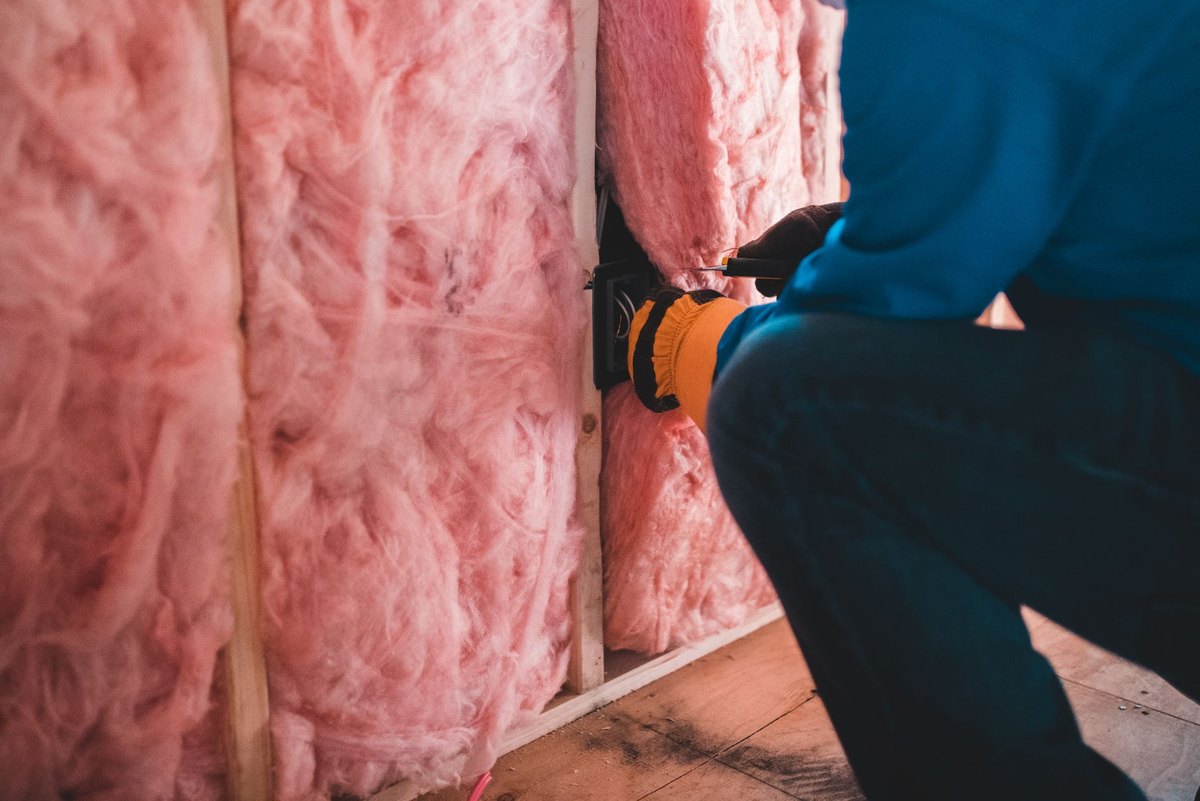
The survey comes first. One Everton hole, a borescope, and a look at the width of the cavity, whether it is clear and whether the ties are bridged with mortar. It also shows an old fill that has failed and slumped, or an outer leaf cracking and letting water into a wet cavity. A narrow or bridged cavity is not a fill, and we would rather tell you that on the first visit than after the holes are drilled.
Bead fill. Bonded polystyrene bead flows into a narrow Everton cavity better than anything else and sets into a mass that cannot slump later. It is blown through a drilled pattern, the holes are made good in a matched mortar, and a bungalow is normally a single day. Low eaves mean it comes off a tower rather than a scaffold, which keeps the access simple.
Blown mineral wool. Water repellent, quick and long established, and the sensible choice on a sheltered wall with a sound outer leaf. On the exposed side of a house this close to the water we would put bead in instead.
Solid walls. The older Everton cottages along the lanes have no cavity at all. A nine inch brick wall cannot be filled, and neither can a rendered rubble one, so it is internal wall insulation or external wall insulation. On a bungalow the internal route is worked room by room and you notice the lost width, because there is no upstairs to spread it over.
What internal lining is made of. Either insulated plasterboard bonded and fixed straight to a flat wall, or PIR board, Celotex or Kingspan, between battens or a timber stud, then boarded and skimmed. Where a wall needs to stay breathable we use wood fibre and a lime plaster instead, so vapour can pass rather than stall inside the build up.
External wall insulation. Board, a render carrier with mesh, then a through coloured finish. On a bungalow it is easier than on most houses because the whole elevation is within reach, and it keeps the masonry warm so interstitial condensation has nowhere to form.
Reveals, eaves and the floor junction. These are most of the labour and all of the risk. A shallow reveal takes a thin aerogel board. The eaves on an Everton bungalow sit low, so the wall head and the joist ends need care. Miss any of them and you have left a cold bridge, and a thermal bridge is where the dew point lands and black mould appears.
Ventilation. Trickle vents, a working extract in the kitchen and bathroom, and air bricks kept clear. Approved Document F sets the expectation, and a tighter house with no way of losing moisture is how a draught becomes damp.
How it runs
Checking the walls before anything is drilled or lined
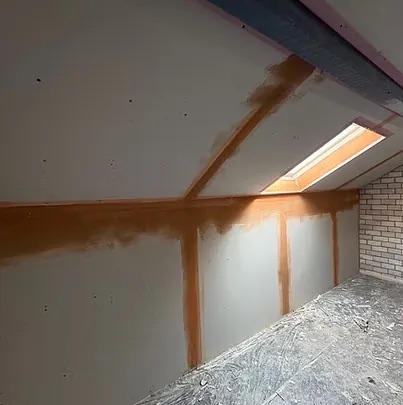
Before any drilling, Thomas comes to Everton to look at the walls. He reads the brick bond, checks the wall depth at a window reveal, and, if you are happy, bores one small hole to see inside the cavity with a borescope.
You then get a written price broken into the survey and borescope check, which insulation system and at what thickness, making good at the windows and doors, ventilation works, and disposal. Any fill goes in through a registered installer, with a CIGA certificate.
Most houses in the village went up after the war and were built with a cavity. Cavity fill goes in through a grid of small holes drilled from outside, and each is pointed up afterwards to match the wall. A bungalow can be done from the ground or a small tower. The older cottages with solid walls take insulated plasterboard on the inside instead, one room at a time, with sockets, skirtings and window reveals refitted as we go. No wall is left open overnight, rooms are cleaned daily and waste goes with us. Anything unexpected is photographed and priced for you before any extra work.
New Forest District Council is the authority. Lining a wall on the inside is not development, as the Planning Portal confirms. Insulating the outside face changes how the house looks and is treated differently. Everton has no conservation area. Building control is involved under regulation 23 once a wall is renovated, and Part L sets the U value it has to reach.
Cost
Cavity or solid wall: what sets the insulation price
Wall insulation is priced wall by wall, never per square metre. Is there a cavity? Most of Everton was built after the war with cavity walls, and a clear, dry cavity is usually filled within a day. The older cottages may be solid brick, which cannot be filled and has to be lined inside or clad outside, a larger job. Thomas's borescope settles it before he writes a figure.
Getting to the wall. Drilling a bungalow is done from a tower; a taller gable needs scaffold, and the work at height rules set which. A semi means stopping at the party wall line, and inside lining is done from within the rooms.
The weather side. The south west walls take the hardest rain. Before filling there, the pointing has to be sound and the cavity clean, or rain can track across.
Reveals and junctions. Heat slips out round window and door openings, at the floor, at the eaves and at the join with next door, and that is also where mould appears if the detailing is skimped. It is fiddly work and the first thing a low quote drops.
Ask other firms whether they have looked inside the wall, what product and thickness they plan, and who puts the plaster right afterwards.
If damp has appeared
Mould or wet patches on a newly insulated wall
Phone us; the form is slower. Wet patches or black mould showing on an outside wall since it was filled or lined usually come down to rain getting across the cavity, or warm air from the room condensing on a cold edge.
Tell us which room and which wall. In a single storey house it tends to be the coldest corner rather than the whole wall. Wipe the mould down, open a window for a while each day, and leave the painting for now. The first visit checks the outside face, the pointing and the gutters before anything is removed. Wall insulation is booked Monday to Friday, 8am to 6pm. No answer means we ring you back as soon as we can.
Worth knowing
Why a bungalow is mostly wall
Put the same floor area on one level instead of two and you get roughly the same roof spread over more ground and a longer run of external wall around it. Every room sits on the outside of the building. There is no landing, no stairwell and no upstairs bedroom buffering anything, so heat loss through the walls is a bigger share of the total here than in the two storey houses on the same road.
Everton bungalows change the sums on walls. A cavity fill usually earns its keep faster in a bungalow than anywhere else, because there is simply more wall per household to treat and the work is all within reach off a tower. An internal lining, by contrast, costs you more than it would elsewhere, because you feel the lost width in every single room rather than in half of them.
The vintage matters too. A great many of these bungalows went up in the late fifties and early sixties, when a cavity was often narrow and built with less care about mortar droppings than later work. Sometimes there is a good clear cavity waiting to be filled. Sometimes the borescope shows a gap half bridged with mortar, and the honest answer is to leave it alone and put the money into the loft, the draughts and the coldest room instead.
Who you are dealing with
From Hordle to Lymington, wall insulation in SO41
We insulate walls in Everton, Hordle and Downton (by Hordle) and along the lanes towards Lymington, in the SO41 postcode. The drive from our base in Boscombe is 10.8 miles, and the council is New Forest District. The firm is Bournemouth Roofing & Building Ltd, company number 15471719, registered in England and Wales. Before you book a visit in Everton, you can read our customers' Google reviews, word for word, on our reviews page.
Thomas Hannen is its owner, and he does the survey and the borescope check and prices the work himself. One verified customer has rated us 10 out of 10 on Checkatrade. Coming out to survey is free, and so is the written quote with each item listed.
Planning at a glance
Do you need planning permission in Everton?
Most repairs in Everton need no application at all. What decides whether a change to the outside of your house does is who the council is, whether a conservation area or a listing applies, and whether the place sits in a protected landscape.
| Question | In Everton |
|---|---|
| Who decides | New Forest District Council is the planning authority for Everton. The National Park boundary runs close by, and the Park's property map shows which side an address falls. |
| Conservation area | None covers Everton, so a like-for-like repair is ordinary maintenance. |
| Listed buildings | Yes, there are listed buildings in and around Everton. If yours is one, work can need listed building consent. |
| Protected landscape | No National Park or National Landscape covers Everton. |
Questions
Questions about wall insulation in Everton
Is a late fifties cavity wide enough to fill?
Sometimes, and sometimes not. Cavities of that period are often narrow and partly bridged with mortar. The borescope decides it, and we would rather find out before you spend anything.
Which is better in a bungalow, bead or mineral wool?
Bead usually, because it flows into a narrow cavity and bonds so it cannot settle. Mineral wool is a fair choice on a sheltered wall with a sound outer leaf.
How much room does an internal lining take?
The board plus any batten behind it, off each wall you line. In a bungalow that is felt in every room, which is exactly why we would fill a cavity instead wherever the wall allows it.
Can you insulate just the cold side of the house?
Yes, and often that is the right call. Treating one elevation properly beats treating four badly, and the quote itemises them separately so you can choose.
Will the drilled holes show afterwards?
They are made good in a mortar matched to what is there. On rendered walls they are patched and are harder to hide until the render weathers back in.
Nearby, and next door
Wall insulation near Everton
Nearby places we also cover for wall insulation, with straight-line distances from Everton, and the other trades we offer in Everton itself.
Wall insulation nearby
Our other trades in Everton
Wall insulation guides
Damp at the bottom of a wall: what it is PIR board vs mineral wool: which insulation? Hollow-sounding wall: blown plaster or dot and dabEverything we do in Lymington Wall insulation, all areas Every area we cover
Free quote
Find out what is in your cavity
Thomas comes out, puts a borescope through one hole and prices the wall, the junctions and the ventilation in writing. The visit and the quote are free.