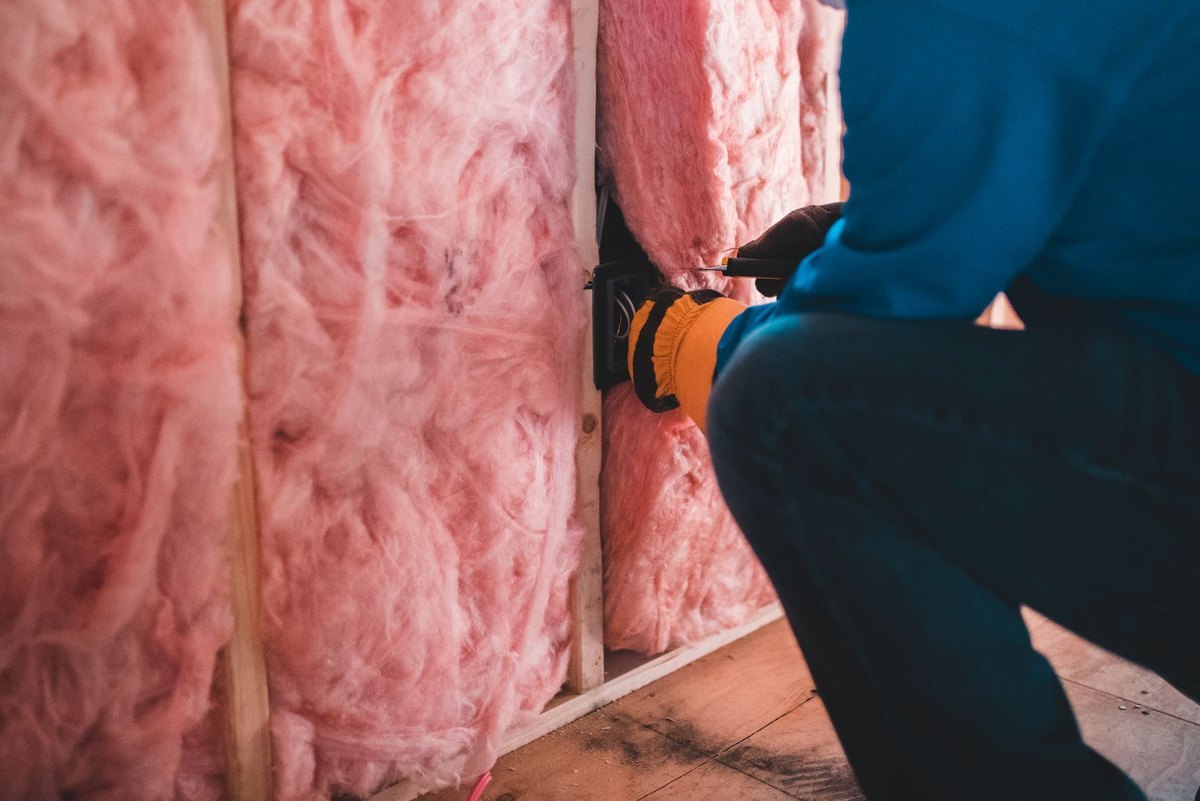
Wall insulation in Lymington
With 160 listed entries in the town, the surprise for a lot of owners is that lining a wall on the inside can need consent as much as touching the outside.
The site visit is free and so is the written itemised quote. Thomas Hannen prices every job himself.
Last updated
In Lymington a post-war house usually has a cavity a borescope can check for a fill, while the old town is solid wall and is lined, often with consent. People assume listed building consent is about the front elevation. It is not. It covers anything that affects the special interest of the building, inside as well as out, so stripping original plaster off a wall and screwing insulated boards to it is exactly the sort of work that needs an application. That is the first thing we check in this town.
The work in Lymington splits neatly. Owners of the older houses on the hill and behind the quay, with solid walls and listing to think about. And owners of the post war and eighties houses out towards Pennington, where the question is simply whether the cavity is clear enough to fill.
Either way the visit starts with the wall. One drilled hole and a borescope where a cavity is possible, and on a solid wall the thickness, the plaster, the pointing or the render, and where the floor joists sit in it. Then a written itemised quote with the survey, the system, the junctions and the ventilation on separate lines. The visit and the quote are free, and insulation in Lymington covers the loft and floors.
The work in town
Two towns in one, and two different jobs
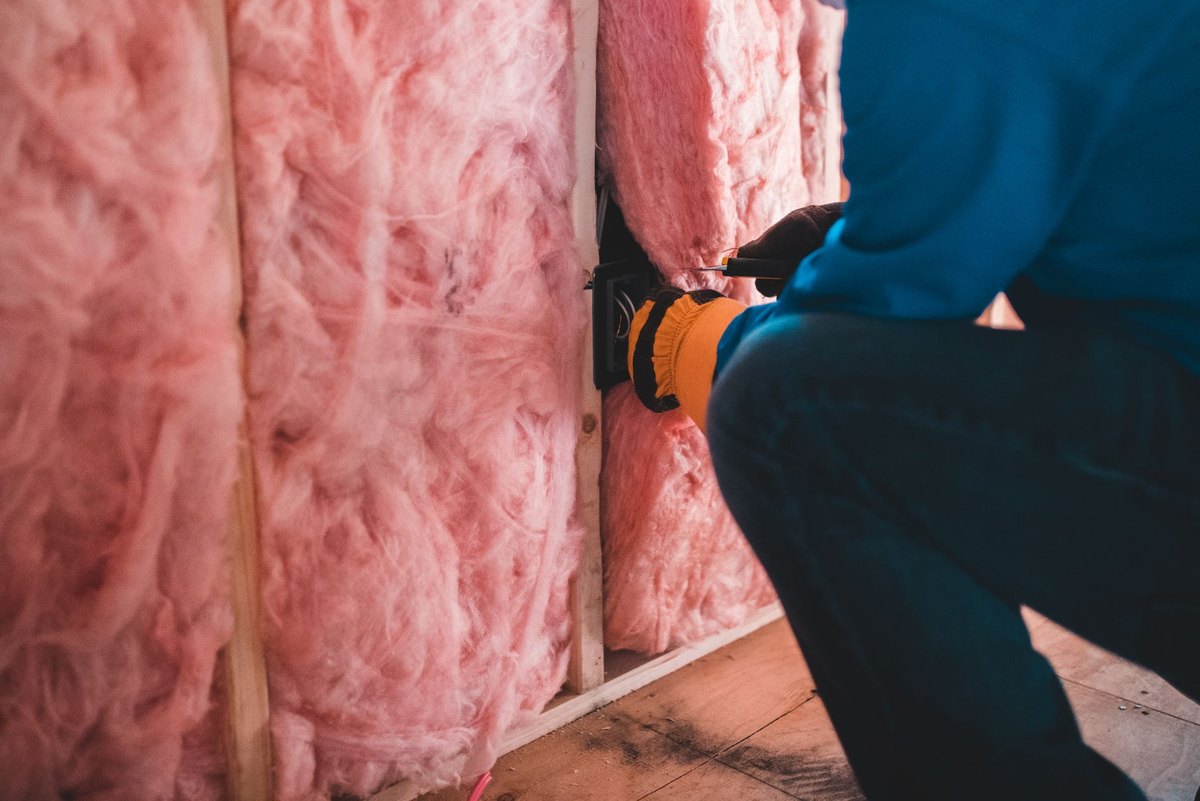
Cavity fill on the newer stock. Bonded polystyrene bead blown through a drilled pattern, or blown mineral wool where the wall is sheltered and the outer leaf sound. The cavity has to be clear, dry and wide enough, and this close to the water we would rather put bead into an exposed elevation than a fibrous fill. Holes are made good in a matched mortar and a house is normally a day.
What the borescope is looking for. In a Lymington wall it checks width, mortar bridging the ties, whether the cavity is wet, and whether an old fill has failed and slumped down it leaving the top of the wall bare. An outer leaf that is cracking or has blown render is a repair before it is an insulation job.
Solid walls behind the quay and on the hill. A nine inch brick wall in Lymington has nothing to fill and cannot be injected, whatever anybody says at the door. It is internal wall insulation or external wall insulation, and on a listed or a street facing building the external route is usually closed.
Internal wall insulation on an old building. Where consent allows it on a Lymington house, the build up is chosen for the wall, not the catalogue. Wood fibre bedded in lime and finished in lime plaster on a soft or damp wall, so it stays breathable and vapour can pass. Insulated plasterboard, or PIR board such as Celotex or Kingspan on battens or a stud, only where the wall is dry, hard and modern enough to take a sealed face.
The joinery and the reveals. Old Lymington sash boxes and panelled shutters leave very little depth at a window reveal, and a standard board simply will not fit without butchering the joinery. A thin aerogel board goes in instead. That one detail decides more of these jobs than the wall itself.
The rest of the junctions. The threshold, the floor junction, the eaves, the joist ends and the party wall in a Lymington terrace. Each is a place where a cold bridge can be left behind, and a thermal bridge is where the dew point lands and black mould appears first.
Ventilation. Trickle vents, a working extract in the kitchen and bathroom, and air bricks kept clear. Approved Document F sets the expectation. On sash windows that cannot take a trickle vent we look at what else can be done rather than pretend the question does not arise.
How it runs
Cavity fill or lining: checking the wall before choosing
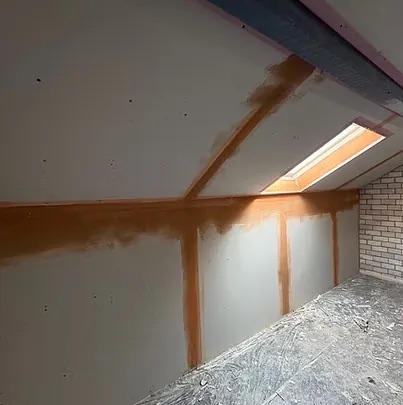
Before recommending anything, Thomas finds out what your walls actually are. The bulk of Lymington's housing dates from after the war and has cavity walls, some filled already, some half filled and some empty. Older houses in the town centre tend to be solid brick, with no cavity to fill.
He drills one small hole and looks through a borescope to see what is in the cavity and whether it is clear. The quote prices that survey, the system and its thickness, making good at windows and doors, ventilation, and disposal.
For cavity fill a registered installer drills the wall from outside, with a CIGA certificate to follow, the insulation blown in, and each hole pointed up to match. Internal lining goes one room at a time: furniture is moved and covered, skirtings and sockets come off, insulated board goes up, then it is plastered and put back. Rooms are cleaned daily. Nothing is closed up until you have seen a photograph and agreed a price for any damp or bridged cavity we find.
Planning here sits with New Forest District Council. Insulating inside an ordinary house is not development, which the Planning Portal confirms, but external wall insulation alters the outside and is treated differently, especially within the conservation area that covers Lymington's historic centre. The parish church of St Thomas the Apostle is one of the town's many listed buildings, and under the listed buildings act consent is needed for works affecting character, inside included. Regulation 23 brings building control in when a thermal element is renovated, with Part L setting the U value to reach.
Cost
Which wall you have, and the junctions around it
We do not quote wall insulation by the square metre, because the flat field of the wall is quick and the edges are not.
Cavity or solid. Where the cavity is open and dry, as in many of the post-war semis and the Pennington houses from the eighties, filling it usually takes a day. A solid wall on an older house in the centre has no cavity, so it is lined inside or insulated outside, which is a much bigger job.
Exposure. Walls facing south west take the driven rain. The code for assessing wind-driven rain is why an exposed wall needs sound pointing or render before its cavity is filled right across, otherwise the fill can carry water to the inner leaf.
Edges and junctions. Window and door reveals, the line where the floor meets the wall, the eaves and any party wall all leak heat, and mould shows up there first if the detail is poor. Doing them properly is slow, and cheap quotes tend to skip them.
Reach. Filling a bungalow wall is done from the ground; a three storey gable needs a tower or scaffold under the work at height rules. Lining causes disruption indoors rather than outside.
Before you choose, find out from any other installer whether the cavity was inspected or guessed at, which board or fill and at what thickness, and whether putting the plaster and paint right is in their price.
If damp has appeared
Damp patches or mould after walls were insulated
Mould or damp patches on an outside wall that were not there before the insulation went in usually come down to rain crossing the filled cavity, or warm room air meeting a cold patch at a junction.
Air the room well, clean the mould off with a household product and pull furniture away from that wall. Ring, not the form, and the first visit will find which it is, with a borescope and a look at the pointing, render and gutters outside, before anything is taken out. Tell us if the house is listed, because that limits what we can open up. Scheduled wall work runs Monday to Friday, 8am to 6pm, and a call we miss is returned as soon as we can.
Worth knowing
Consent does not stop at the front door
Around 160 entries in this town are listed, and listing protects the whole building, not the facade. Original lath and lime plaster, panelling, shutters, cornices, fireplaces and the wall surfaces themselves are all part of what is protected. Taking any of that off to fit insulation is work affecting the character of the building, and doing it without consent is an offence rather than an oversight.
In practice that has three consequences. Internal wall insulation on a listed house needs an application and a conversation with the conservation officer before it is priced, not after. The build up is likely to be a breathable one, in wood fibre and lime, because that is what the officer will expect and what the wall needs anyway. And the reveals, the shutters and the joinery usually have to be worked around rather than removed, which is where the thin insulation materials earn their keep.
None of that means nothing can be done. Heat loss through the walls of an old town house is a big number and the payback is real. It means the job is planned properly, the paperwork is done first, and the parts of the building that make it worth living in survive the process.
Who you are dealing with
The firm checking your walls in SO41
Lymington is 12.5 miles from Boscombe, where we are based. We cover the town, Pennington, Boldre and the villages down to Milford, across SO41, with New Forest District Council as the authority. The limited company is Bournemouth Roofing & Building Ltd, registered in England and Wales, company number 15471719. Before you book a visit in Lymington, you can read our customers' Google reviews, word for word, on our reviews page.
Its owner is Thomas Hannen, and he does the survey, runs the borescope and prices the work himself. You can read a verified customer's 10 out of 10 for us on Checkatrade. The survey visit is free and the itemised written quote is free too.
Planning at a glance
Do you need planning permission in Lymington?
Most repairs in Lymington need no application at all. What decides whether a change to the outside of your house does is who the council is, whether a conservation area or a listing applies, and whether the place sits in a protected landscape.
| Question | In Lymington |
|---|---|
| Who decides | New Forest District Council is the planning authority for Lymington. The National Park boundary runs close by, and the Park's property map shows which side an address falls. |
| Conservation area | Yes: Lymington Conservation Area. Check whether your street is inside the boundary before changing anything visible. |
| Listed buildings | Yes, there are listed buildings in and around Lymington. If yours is one, work can need listed building consent. |
| Protected landscape | No National Park or National Landscape covers Lymington. |
Questions
Questions about wall insulation in Lymington
Do I need consent to insulate the inside of a listed house?
Very often yes, because consent covers work affecting the character of the building inside as well as out. We check before quoting rather than after.
What can be done on a listed wall that has to keep its plaster?
Sometimes very little on that particular wall, and the money is better spent on the windows, the draughts and the walls that are not original. We will tell you which is which.
Is there anything thin enough to fit behind a shutter box?
Aerogel board is, and it is the reason a lot of these reveals can be treated at all. It is expensive per sheet and used only where the depth genuinely is not there.
My house is out at Pennington. Is it a simpler job?
Usually much simpler: Post war and eighties houses have a proper cavity, and where the borescope shows it clear and dry a bead fill is normally a single day.
Does being near the water affect which fill you use?
It does on an exposed elevation. Bead bonds and does not wick, so we prefer it where driven rain hits the wall hardest.
Nearby, and next door
Wall insulation near Lymington
Nearby places we also cover for wall insulation, with straight-line distances from Lymington, and the other trades we offer in Lymington itself.
Wall insulation nearby
Our other trades in Lymington
Wall insulation guides
Damp at the bottom of a wall: what it is PIR board vs mineral wool: which insulation? Hollow-sounding wall: blown plaster or dot and dabBuilders in Lymington: all our building work Everything we do in Lymington Wall insulation, all areas Every area we cover
Free quote
Find out what you are allowed to do, then what it costs
Thomas comes out, checks the wall and the listing position, and prices the system, the junctions and the ventilation in writing. Both are free.