Insulation in Christchurch
Loft top ups, rafter board and wall insulation across Christchurch, from estate houses to top floor flats and solid walled town houses.
The site visit is free and so is the written itemised quote. Thomas Hannen prices every job himself.
Insulation in Christchurch splits three ways, and which one you are is decided by the building rather than by what you want. A house with a proper loft gets rolls laid between and over the joists. A solid walled place near the centre gets the walls looked at as well as the roof. And a top floor flat gets a conversation about who actually owns the space above the ceiling before anybody opens a hatch.
People ring us here for three reasons. A top floor or a back bedroom that runs cold however long the heating is on. Black mould coming back on a cold outside wall a fortnight after it has been washed off. And a loft that has some ancient wool in it that nobody has looked at since the house was bought.
The first visit is about telling those apart, because they need different work and two of them are as much about air as about material. We measure what depth is really up there, look at the eaves, look at the hatch, and check whether the walls are cavity or solid. Free site visit, free written itemised quote, and a straight answer about what is worth doing first.
The work
Driven rain off the water finds a bridged cavity
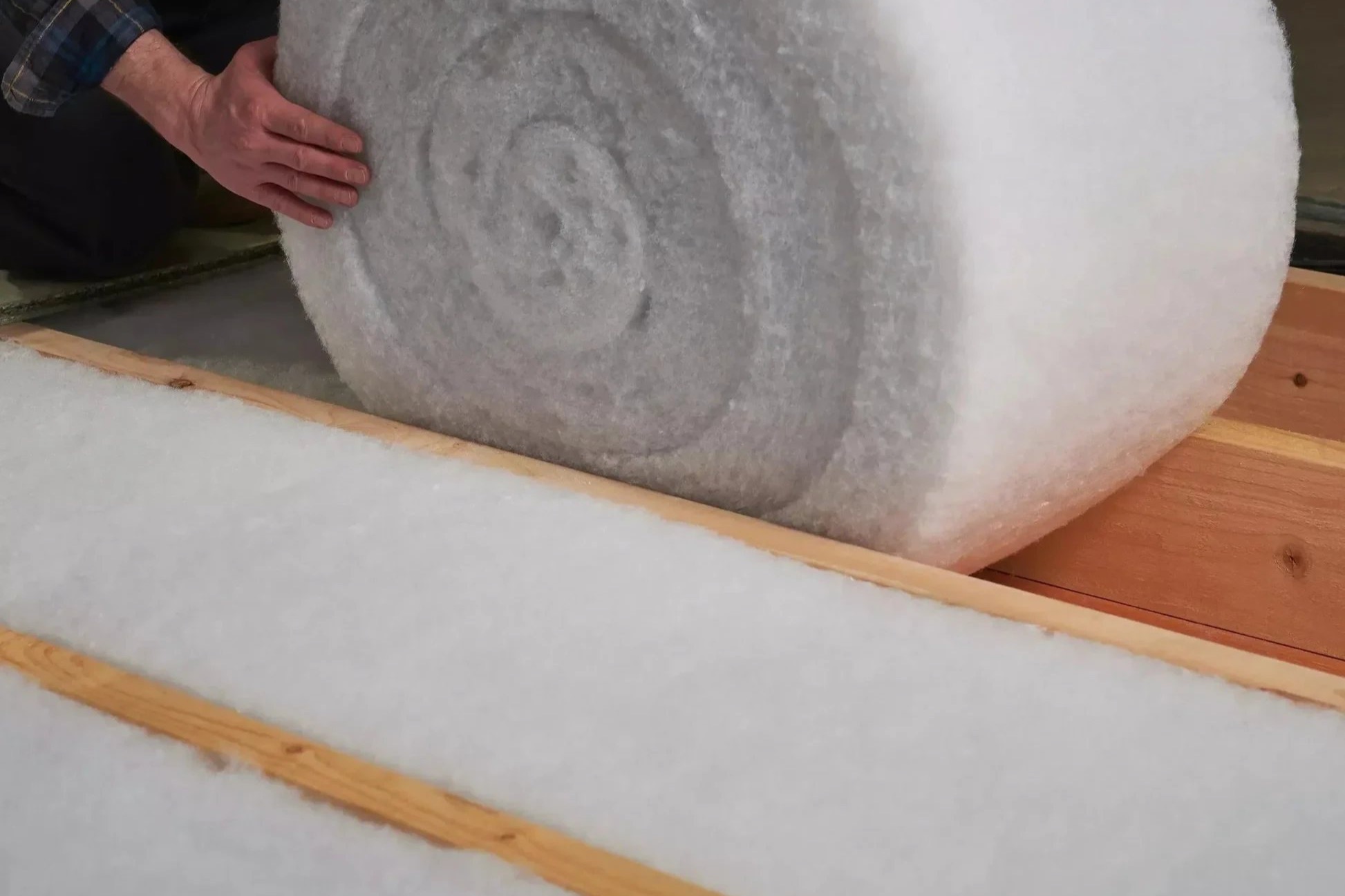
Loft top ups on the estate houses. Almost a third of the housing here went up between 1983 and 2008, with the peak in the 1980s, and it was insulated to the standard of the day, which is roughly a third of what is expected now. Mineral wool, ordinary eco roll, goes down in two layers, the first between the joists and the second across them at right angles so the timber is not a cold bridge and a line of heat loss running through the middle of it. Between and over, to something like 250 to 270mm, which is where the loft stops being the weak point in the house and the 0.16 u-value a renovated element is expected to reach. Old wool that has settled stays where it is and counts towards the depth.
Top floor flats and maisonettes. Flats are 39.5 per cent of the dwellings in Christchurch, and the roof space over the top floor is usually the single reason that flat is colder than the one below it. The work itself is ordinary: a communal hatch off the landing, boards lifted where there is boarding, roll laid between and over, the hatch sealed and the tank lagged. What is not ordinary is who can instruct it, because the roof space and the structure normally belong to the freeholder rather than to you.
A fifth of the stock predates 1919, and those streets towards the centre have no cavity to fill, so a wall is either lined on the inside or insulated on the outside, EWI on a quote. Internal wall insulation, board on battens or a rigid board bonded to the wall, costs you an inch or two of room and nothing else. On any old solid wall the thing to get right is vapour, because a wall built to dry outwards has to be allowed to.
On the later stock the question is not whether to fill the cavity wall but whether somebody already has, and whether that fill has slumped or gone damp on the exposed side. Two kilometres from the water the seaward elevation takes the driven rain, and a fill that has bridged the cavity shows up as damp patches inside. That is a borescope check, not a guess from the pavement.
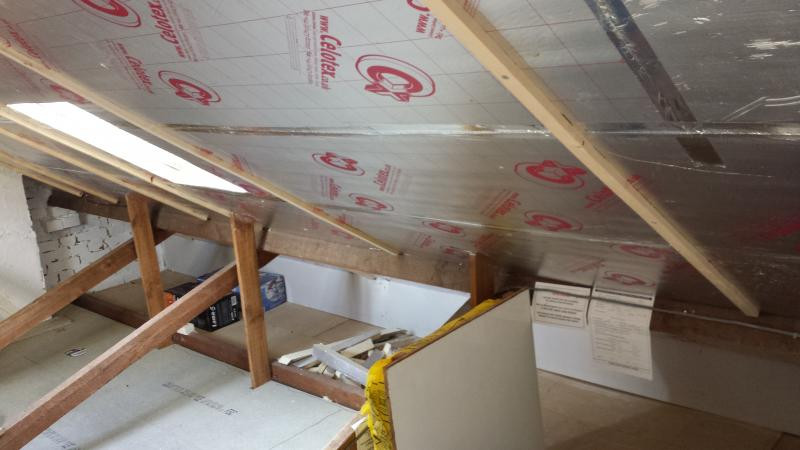
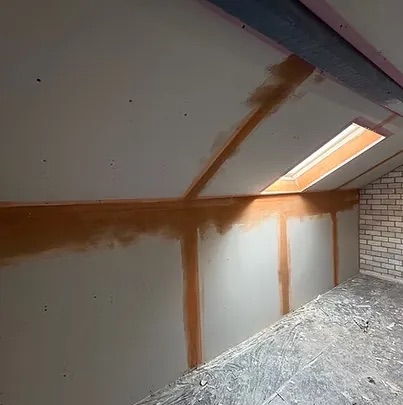
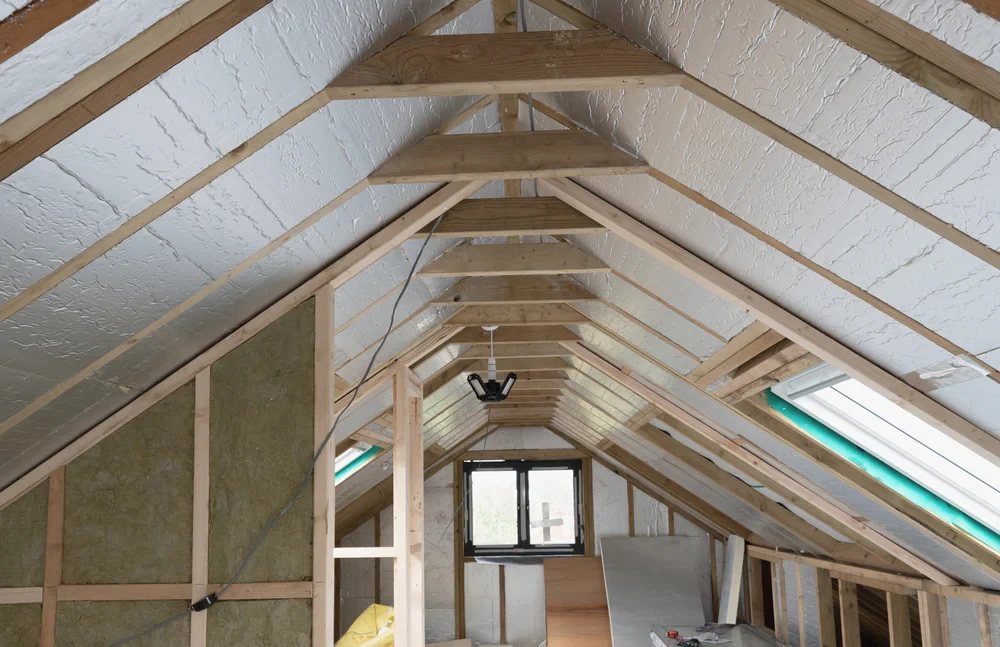
Where an attic has been turned into a room, or the house was built as a chalet with a dormer, rigid PIR board goes between and under the rafters, foil faced, cut tight and taped, with the air gap kept above it, or a multi-layer foil quilt such as TLX where a sloping ceiling has nothing to give away. Wool rammed into the eaves blocks that air path and turns a warm loft into a damp one, so vent trays go in at the eaves first, and Approved Document F is the standard on the ventilation side. Then an insulated, draught sealed hatch, lagging on the tank and on pipework now sitting above the warm layer, and covers over the downlighters.
How it runs
From your call to a written price
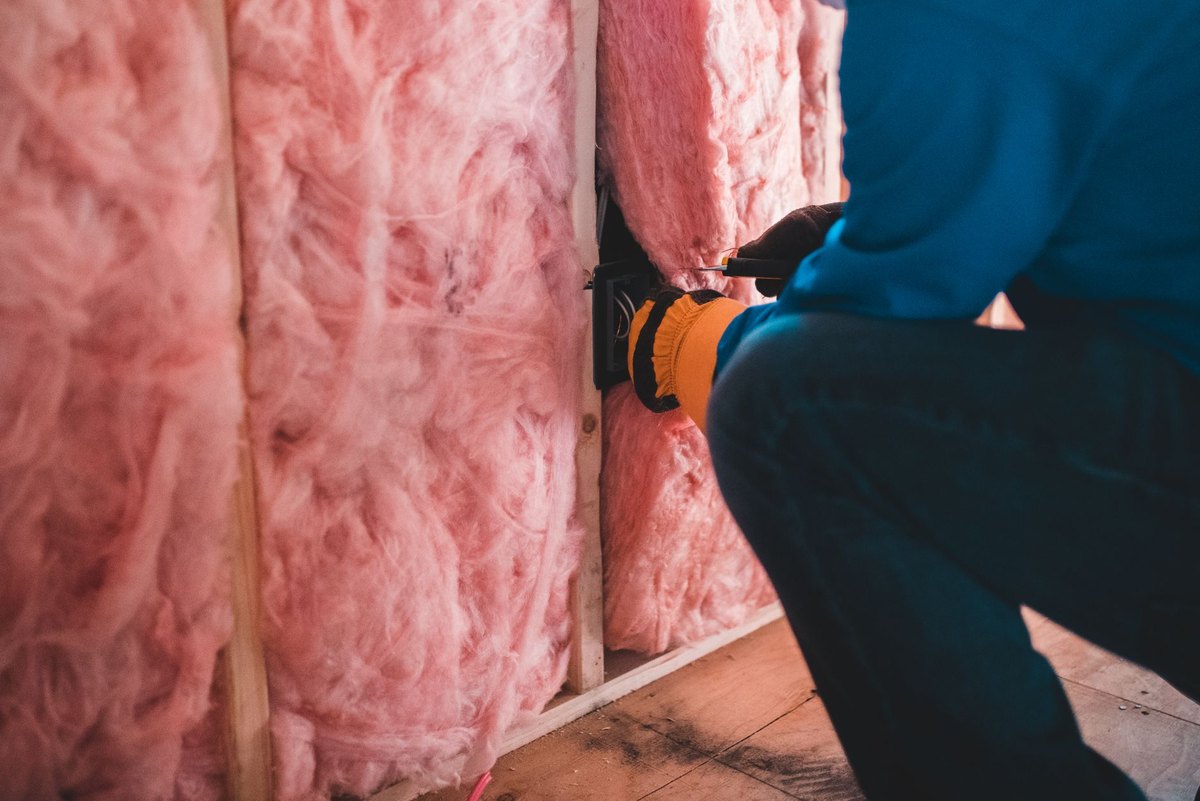
The quote is itemised: survey, clearing, material and depth, ventilation works and disposal on separate lines, and the site is swept at the end of each day.
Insulation in a loft or on the inside of a wall is invisible from the street, counts as permitted development and needs no permission, though building control comes into it under the regulation covering a renovated thermal element. Insulating the outside of a wall does change the look of the building, and in Christchurch Central that is controlled, so it is worth knowing which side of the boundary you are on, and the council keeps the list of the areas that are covered. On any of the 24 listed entries in the town, consent comes before anything touches the fabric.
Cost
What decides the price of an insulation job
A top floor flat with a small communal hatch on the landing, a town terrace with an opening over the stairs and a loft chopped up by party walls, and an estate house with a drop down ladder are three different jobs before any material goes down. Old material to bag and take away, storage to move and put back, and eaves that must stay clear all come first, and Approved Document L sets what the work has to reach. Comparing quotes, ask what depth is being laid, whether the old material is removed or covered, and whether the hatch and pipework are included.
If it is urgent
Damp, condensation or a room you cannot heat
Ring rather than use the form. A loft dripping with condensation, mould coming back faster than you can wash it off, or a room that will not hold heat gets looked at quickly. Insulating a roof space that cannot breathe makes it worse, so the first visit settles which of the two you have. We are under four miles away, so it gets seen rather than booked for next month.
The one local thing
In a flat, find out who owns the loft before anything else
A large part of the housing in Christchurch is flats and maisonettes, which makes one question more useful here than anywhere else on this list: is the roof space above your ceiling part of what you lease, or is it retained by the freeholder? Plenty of leases stop at the plaster.
If yours does, the loft is not yours to insulate, and a contractor who goes up there on your say so has put you in breach rather than saved you money. Check the lease plan and the demise wording, then ask the managing agent in writing. We are happy to quote off the back of that and to send the specification straight to the agent if it helps, but we will not open a communal hatch on a verbal yes.
If the block does the work rather than you, the timetable changes. Once the cost per leaseholder passes the statutory threshold the freeholder has to consult everybody formally under section 20 of the Landlord and Tenant Act 1985, which takes months and cannot be skipped, so a block loft is a spring decision for the following winter rather than something to arrange in November.
In the meantime the work inside your own front door is entirely yours: draught sealing the hatch, insulating the sloping ceiling of a room in the roof, lining a cold external wall on the inside, lagging pipework, and stopping the draughts at the skirtings and around the soil pipe. It is not as dramatic as a full loft, and on a top floor flat it is usually the difference people actually feel.
Who you are dealing with
A local firm you can check
We cover Christchurch and the roads around it, the town centre, Purewell, Somerford, Jumpers and Mudeford, and the BH23 addresses across them. Bournemouth Roofing & Building Ltd, registered in England and Wales, company number 15471719, which you can look up in a minute. Thomas Hannen's business, and he is the one who comes out to price the job, not a salesman. A verified customer's 10 out of 10 on Checkatrade. The visit and the written quote are both free.
Questions
Christchurch questions we get asked
We are a mile or so from the sea. Does that matter indoors?
It matters at the eaves. Christchurch sits about two kilometres from the coast and salt laden air keeps surfaces damp between showers, so ventilation gaps at the eaves silt up and metal fixings in the roof corrode from the edge inwards. If those gaps close, the loft stops drying out and new insulation sits in still, humid air. We check the eaves are clear before we add anything.
Our house is in Christchurch Central. What is restricted?
The outside of it. The Christchurch Central conservation area and the twenty four listed entries in the town mean the council look at what changes the appearance, so a covering swap, external wall insulation or a new rooflight all need checking with Bournemouth, Christchurch and Poole first. Insulation laid on the ceiling joists is invisible from the street and is treated as maintenance. Listed buildings are a separate case again.
Nearly forty per cent of Christchurch is flats. Any options?
There are, but they depend on what you own. Flats are 39.5% of the housing here, so most enquiries in Christchurch are about a communal roof space rather than a private loft. If you are on the top floor and the roof void is common parts, the freeholder or managing agent has to instruct the work. Ground and middle floors get more out of draught sealing and floor voids than anything in the roof.
Our house is 1980s. Is the loft already done properly?
It was done to an eighties standard, which is well short of current. Nearly a third of Christchurch stock went up between 1983 and 2008, with the peak in the 1980s, and those lofts typically got a single layer between the joists. What is missing is the second layer laid across them. We measure what is there with a probe rather than guessing from the hatch.
Is it worth insulating a Victorian terrace in the town?
Yes, though the order of work matters in an old terrace. A fifth of Christchurch housing predates 1919 and a quarter of it is terraced, so the typical job here is a narrow loft, a party wall open at the top and lath and plaster ceilings that will not take weight. We seal the party wall head, lay quilt in two directions and keep boards off the ceiling. Solid walls come later.
Nearby, and next door
Insulation near Christchurch
Insulation nearby
Our other trades in Christchurch
Everything we do in Christchurch Insulation, all areas Every area we cover
Free quote
Find out which of the three jobs yours is
A free site visit, the depth measured and the walls checked, and a written itemised quote for the work worth doing first.