Insulation in Bransgore
Loft insulation, rafter level work in rooms in the roof, cavity and solid wall insulation around Bransgore. We measure what is already up there before we price a thing.
The site visit is free and so is the written itemised quote. Thomas Hannen prices every job himself.
Whether you need insulation is almost never the question in Bransgore, because nearly every loft we open already has something in it. What matters is whether what is up there is deep enough, laid into the corners rather than just across the middle, and whether the eaves are still clear.
People ring us for one of three reasons. A bedroom that never warms up, usually the one over the garage or under a sloping ceiling. A loft that drips or smells damp in a cold snap, or black mould coming back in a bedroom corner faster than it can be washed off.
Or they are about to board the loft out for storage and want the insulation sorted first, which is the right order to do it in. We come out, get properly into the loft rather than looking through the hatch, and measure what is actually there before anyone talks about topping it up.
The work
Slumped fill leaves the top metre of wall bare
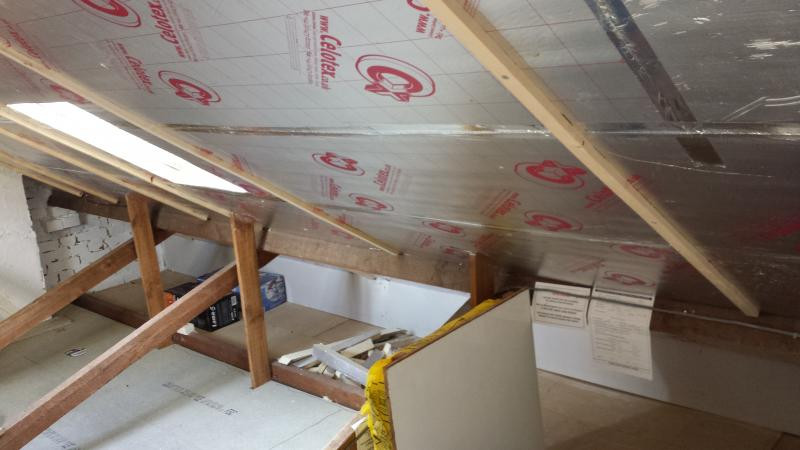
Loft insulation, topped up or relaid. Most of the village went up between the mid 1960s and the early 1980s, on trussed rafters finished with a single thin layer of mineral wool laid between the ceiling joists. Four decades on it has settled, been trodden on, pulled aside for cables and pushed back badly. The standard now is 270mm in two layers: one between the joists, a second across them at right angles so the timber is not a cold bridge and a straight line of heat loss through the middle of your insulation, which is what takes a ceiling to the 0.16 u-value expected of a renovated element. An even 250mm carried right out to the wall plate is worth more than a deeper heap in the middle. Where the old material is dry and still lofted we lay ordinary eco roll over it; where it is compressed, sooty or wet it comes out and goes with us.
Slumped fill leaves the top metre of wall bare. Anything built here from the 1930s on has a cavity wall, and on the 1970s and early 1980s stock it is often either unfilled or filled with material that has slumped down the wall and left the top metre bare. That is checked with a borescope, not guessed at. Close to one house in five in the parish predates 1919, and those older cottages have solid walls with no cavity at all, so the choice is internal wall insulation, which costs you a little room size, or external wall insulation, EWI on a quote, which changes how the building looks from the lane.
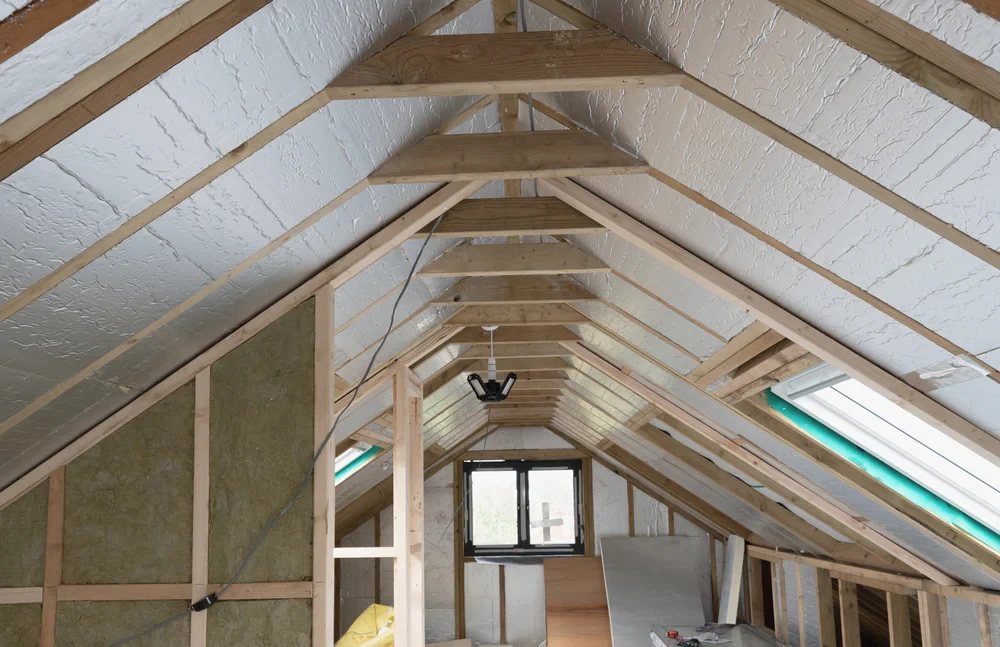
The W of timber in a trussed roof is why so many of these lofts hold nothing but a suitcase, and you should not squash the insulation flat under chipboard to make a floor, because compressed wool has almost no thermal value left. Raised loft legs sit the boards above a full depth and give you back a storage deck without wrecking what is underneath, and we would rather board a small usable area properly than the whole loft badly. Bungalows are close to a quarter of the housing here and plenty of them have had the roof space converted or a dormer added, so there is no loft floor to insulate: the work goes to rafter level, rigid PIR board cut between the rafters with the ventilation gap kept above it and a second layer under them to kill the cold bridge, or a foil faced multi-layer quilt such as TLX where the depth is not there. Multi-layer only performs with sealed laps and an air gap either side, so we will tell you which of the two your ceiling can take. An uninsulated hatch undoes a surprising amount of a good loft, so does an unlagged tank once the space around it is properly cold, and downlighters need fire rated covers.
How it runs
From your call to a written price
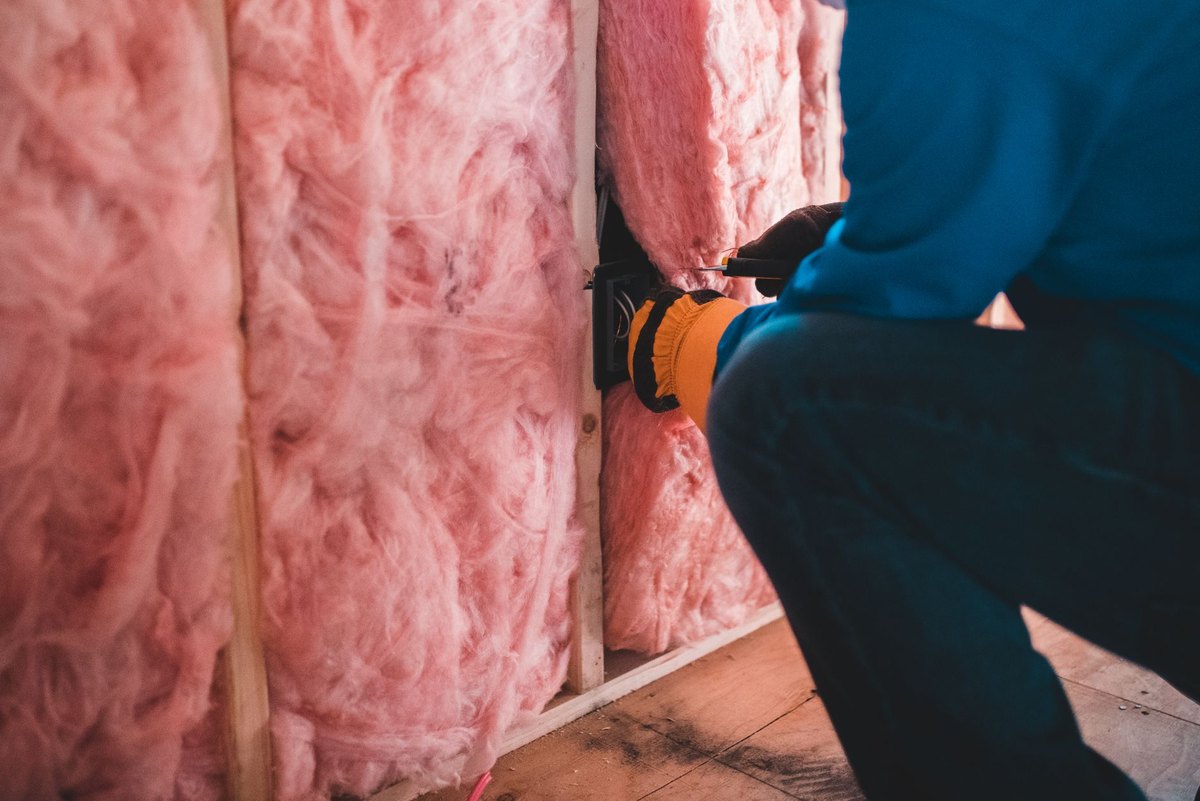
The quote is itemised: survey, clearing, material and depth, ventilation and disposal on separate lines. Insulating a loft, a cavity or a floor is maintenance rather than development, so on almost every Bransgore address there is no application to make and nothing for building control to sign off. The Planning Portal sets out where that stops: external wall insulation changes the appearance of the building, a room in the roof is a building regulations job in its own right, and the thirteen listed entries in the parish need consent before anything touches the fabric. Bransgore has no conservation area of its own, so for most houses here the only question about other permissions is whether you own the roof outright.
Cost
What decides the price of an insulation job
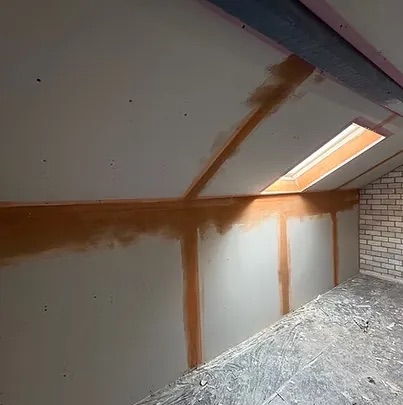
No rate per square metre: the area is the easy part. A 1970s bungalow with a hatch on the landing, a detached house with a loft already boarded out and full of boxes, and an older cottage where the only way in is a small hatch over the stairs are three different days before a single roll is unwrapped. Old material that has to come out and be bagged is a cost of its own. Approved Document L sets what the work must reach. Ask what depth is going down, whether the cavity is being looked into before it is filled, and whether the boarding is being raised.
If it is urgent
Damp, condensation or a room you cannot heat
Ring rather than use the form. A dripping loft, black mould that comes back faster than you can wash it off, or a room that will not hold heat gets looked at quickly, and the first visit works out whether it is insulation, ventilation or both. We are seven or eight miles up the road, so within a few days. The phone is answered 24 hours for emergencies; scheduled work runs Monday to Friday, 8am to 6pm.
Worth knowing
Why the edges of a Bransgore loft feel colder than the middle
The weather that matters here comes off the southwest, and it arrives at the eaves. Where a roof has open eaves or a soffit that has never been sealed, wind gets into the edge of the loft and blows straight through the surface of soft mineral wool.
It is called wind washing, and it is why a loft that measures a good 270mm at the hatch can be doing very little in the last metre before the wall plate, which is exactly the strip sitting over your bedroom walls. If the upstairs rooms are cold around the outside edges but fine in the middle, that is usually what you have, not a shortage of depth.
The fix is not to stuff the eaves, because the roof still has to breathe or you trade a cold room for condensation. Vent trays hold an open ventilation path above the insulation while the edge itself is closed off to the wind, and a denser board or a tucked edge at the perimeter stops the draught crossing the surface.
Two things worth doing yourself: on a windy day put a hand at the edge of the loft and see whether you can feel air moving over the wool, and when you compare quotes, ask specifically whether the eaves are being baffled and the ventilation kept open. On an exposed elevation that detail is worth more than another 100mm laid across the middle.
Who you are dealing with
A local firm you can check
We cover Bransgore, Thorney Hill, Sopley, Burley, Hinton and the lanes down towards Christchurch, and most of BH23. Bournemouth Roofing & Building Ltd, registered in England and Wales, company number 15471719, which you can look up in a minute. Thomas Hannen's business, and he is the one who comes out to price the job, not a salesman. A verified customer's 10 out of 10 on Checkatrade. The visit and the written quote are both free.
Questions
Bransgore questions we get asked
Most houses here are detached. Does that change anything?
It puts more surface round the same rooms. 41.3% of Bransgore is detached and 31.6% of the whole village went up in the 1970s and early 1980s, so the typical house has four exposed walls and a loft laid to the depth that counted as right then. Four walls means the roof is doing proportionally more, not less. We measure what is actually up there rather than assuming a depth from the age of the house.
Can the ground floor be insulated from below round here?
Only where the void underneath is dry, and drainage around Bransgore is impeded, so often it is not. Before anything goes between those joists we lift a board and look: standing water, a wet oversite or blocked air bricks means the ground has to be dealt with first. Insulating a damp void puts a sponge where the air used to move. Over a solid floor the answer is different and usually waits until the finish comes up.
We are outside the National Park. Does that simplify permission?
It settles who you ask. Bransgore falls to New Forest District rather than the Park authority, there is no conservation area over the village, and the 13 listed entries are scattered rather than concentrated. For most addresses that means the outside of the building is not controlled and only the listed few need consent. It matters most if external wall insulation is on the table, because that is where the boundary changes the answer.
Our cottage roof has no felt under the tiles. Does insulating hurt?
It helps, as long as air can still move. 18.2% of Bransgore predates 1919 and roofs of that age were often laid straight onto battens with nothing beneath, so the space has always been ventilated through the gaps between tiles. Raising the depth makes it colder, which is fine, because those same gaps keep letting moisture out. What changes is the hatch and any pipework, now sitting in cold air and needing attention in the same visit.
The converted garage is freezing. What can be done to it?
Ceiling first, then the floor, then the walls. A garage converted after the event usually has a shallow flat or lean to roof over it, a solid floor laid on the old slab and walls built to a garage standard rather than a room one. If there is any depth above the ceiling that is the easiest gain and the least disruption. We open one small hole to see what is up there before quoting rather than guessing.
Nearby, and next door
Insulation near Bransgore
Insulation nearby
Our other trades in Bransgore
Everything we do in Highcliffe Insulation, all areas Every area we cover
Free quote
Get a price for insulating your Bransgore loft
Tell us the address and which room is cold. We will get into the loft, measure what is actually there, and put an itemised price in writing. No charge either way.