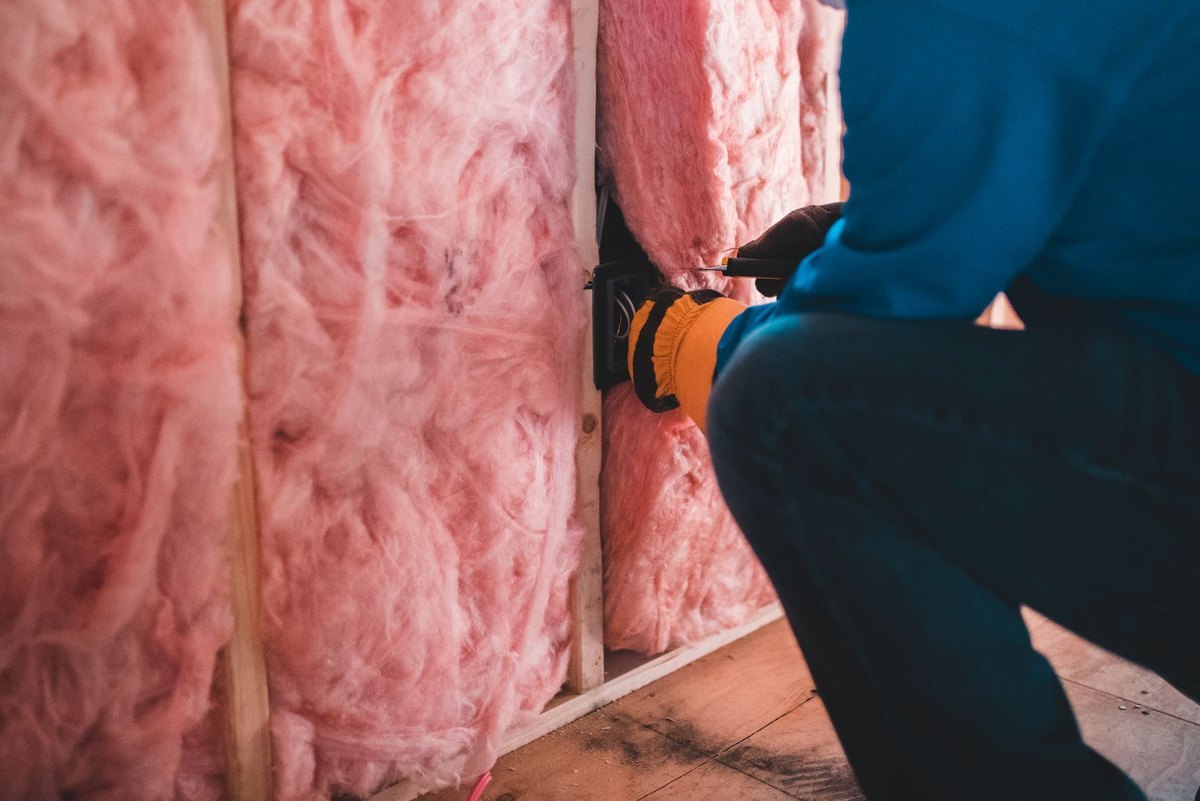
Wall insulation in Bransgore
Nearly a fifth of the village predates 1919 and cannot be filled at all, while half of it has an ordinary cavity, and they sit side by side.
The site visit is free and so is the written itemised quote. Thomas Hannen prices every job himself.
Last updated
In Bransgore a post-war house usually has a cavity that can be filled once a borescope shows it clear and dry, and an old cottage has a solid wall that has to be lined or clad. It is two villages in one as far as walls go. Getting on for a fifth of it predates 1919 and those cottages are solid brick, which cannot be filled with anything at all. Half of the rest went up between the war and the early 1980s with an ordinary cavity in it. The two need opposite answers, and they sit on the same lanes.
So the problems in Bransgore split the same way. A cottage with a cold front room, damp showing in the corners and a wall that feels wet to the back of your hand in February. And a 1970s detached house where the cavity was filled at some point and one elevation has started blowing damp patches after westerly weather.
We do not guess from the outside, because render and paint hide everything. One small hole and a borescope tells us whether there is a cavity, how wide it is and what is in it. On a solid wall we measure the thickness and look at the plaster and the joist ends. The site visit and the written itemised quote are both free, and insulation in Bransgore covers the loft and floors.
The work
One village, two kinds of wall, two different jobs
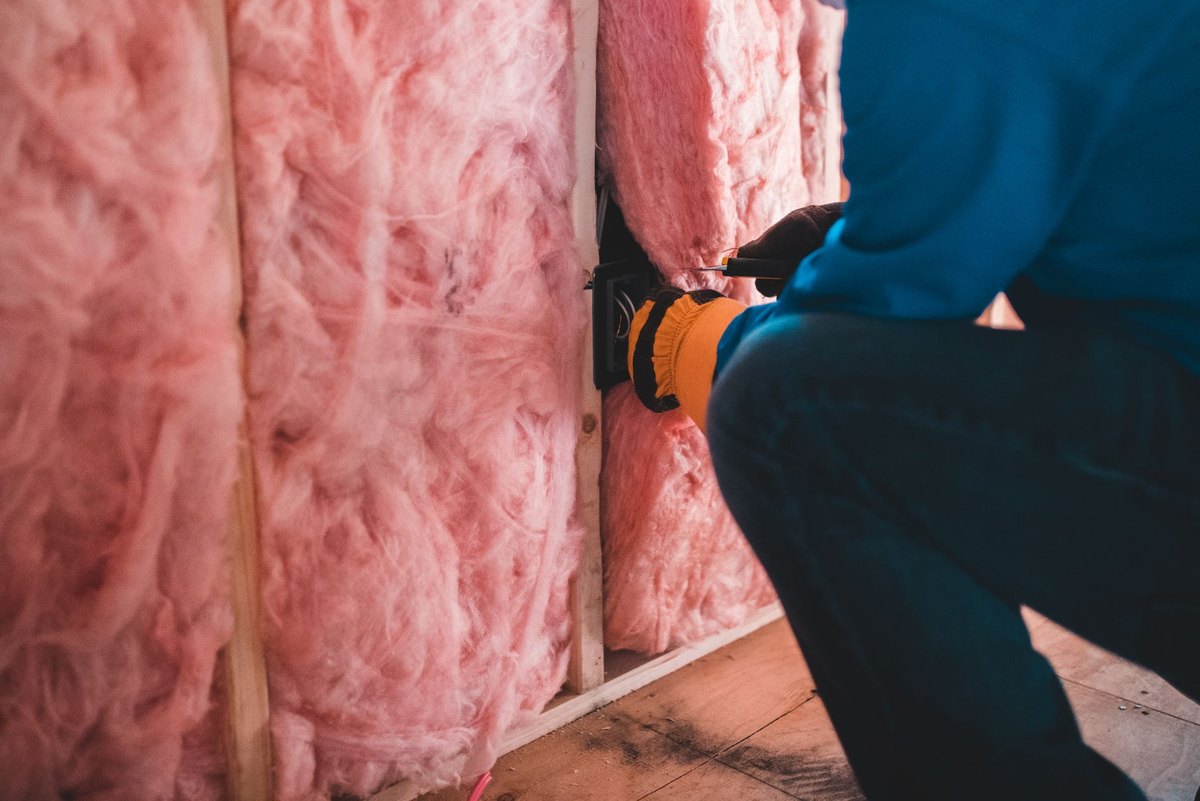
Solid brick, and why nothing goes in it. A nine inch solid wall has no gap in it. It handles rain by soaking some up and letting it evaporate again, so anything you fix to it has to leave that alone. Seal a face of it and the moisture stops inside the build up and condenses there, which is interstitial condensation and it goes at the joist ends first.
Internal wall insulation, IWI, on a Bransgore cottage. Insulated plasterboard bonded to the masonry, or a batten and stud frame filled with mineral wool and boarded. On old brick we lean towards a breathable build up, wood fibre and a lime skim, rather than a foil faced PIR such as Celotex or Kingspan, because the vapour tight board moves the dew point back into the masonry. Where a vapour control layer is used it is taped and sealed, per BS 8000-8.
External wall insulation, EWI. Boards fixed outside, a render carrier and a render finish. It keeps the room size, warms the masonry through and deals with the joist ends in one pass. On a modern house it is a straight choice; on a period cottage in the middle of the village it changes the frontage completely, so it is the option to settle first rather than last.
Cavity walls on the estates. Where the borescope shows a cavity that is wide enough, clear of mortar snots and dry, it is drilled on a pattern and filled in a day. Bonded polystyrene bead handles the exposed south west facing elevations in Bransgore better, because it does not wick water across. Blown mineral wool still does a sound job in a clean sheltered cavity.
Fill that has failed. Wool blown into a Bransgore wall decades ago slumps, leaving a cold band under the eaves and black mould inside on that line. A wet cavity, where fill has bridged the gap, shows as penetrating damp that follows the weather rather than the seasons. Both start with extraction, drilling out and vacuuming the old material, not with adding more.
The junctions. Reveals at each window and door, the threshold, the floor junction, the eaves and the joist ends. A cold bridge, or thermal bridge, left at any of those collects condensation whatever the u value of the wall beside it. Reveals take a thin high performance board or aerogel where the frame leaves barely 40mm, and a party wall gets a cavity barrier.
Ventilation and draughts. Any of this raises the airtightness of a Bransgore house, and the moisture inside needs a route out. Trickle vents, a working extract fan and air bricks left clear are part of the work, and Approved Document F sets what is expected. Sealing draughts alongside is what turns a better u value into a room that feels different and what shifts an EPC.
How it runs
Filling a cavity or lining a solid wall
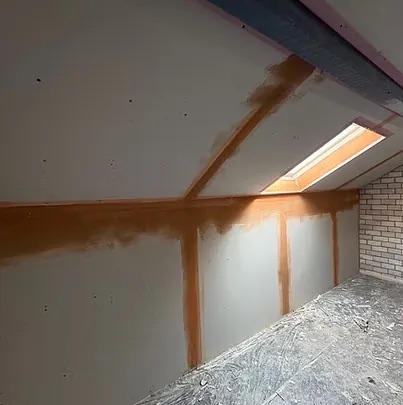
Thomas comes out and works out which wall you have. Bransgore has two kinds. The seventies and eighties houses and bungalows are mostly cavity walls, and some were filled years ago while others were left empty. The older cottages are solid brick with no cavity at all.
He drills a small hole and puts a borescope in, looks at the pointing and the exposure, and checks for damp inside. The written quote gives the survey, the system and its thickness, making good around windows and doors, ventilation works and disposal. Any fill is installed by a registered installer, and you should get the CIGA certificate.
Cavity fill is drilled and injected from outside, and a bungalow comes off a ladder or tower. The holes are filled in a matching mortar. Internal lining is done room by room, with furniture moved and floors covered. Waste leaves with us each day. Rubble in the cavity, or old fill that has got wet, is shown to you on the borescope pictures with a price for clearing it before any new fill goes in.
Cavity fill and internal lining are building regulations matters rather than planning ones. External wall insulation changes the outside of the building, and Planning Portal guidance on external walls sets out where permission bites. Bransgore has no conservation area. Upgrading an existing wall must meet regulation 23, through New Forest District Council.
Cost
What decides the cost of wall insulation
Which wall it is. A clear, dry cavity can be filled in a day from outside. A solid wall cannot be filled, so it has to be lined inside or clad outside, which is a different job at a different price. The borescope settles it before the quote is written.
How exposed the wall is. The gables facing the south west take the driven rain. If the pointing or the brick on that side is poor, a cavity fill can let water track across to the inner leaf and show as damp inside. Sometimes the right answer is to repoint first, or leave that elevation out.
The junctions. On internal lining, the reveals around windows and doors, the floor junction and the ceiling line are where heat escapes and condensation forms if the detail is wrong. Sockets, radiators and skirting have to come off and go back. That is most of the labour.
Making good. Lining a room means new plasterboard and a skim, and often redecorating. External insulation means render, new sills and moving the downpipes.
Access. A bungalow is quick to drill. Drilling a two storey gable is done from a tower, as the rules on working at height require.
Ask any other quote whether the wall was checked with a borescope, how the exposed side is being treated, and who makes good the plaster and decoration.
If damp has appeared
Damp patches after a wall was insulated
If damp patches or mould appear on an outside wall after cavity fill or lining, note which wall it is and when it shows. Damp after rain on the south west side usually means water tracking across the fill.
Damp in cold weather at a window reveal or a corner usually means condensation at a cold spot. Keep the room aired and heated. Ring us instead of using the form. Wall insulation work is booked Monday to Friday, 8am to 6pm, and any call that is not picked up gets a call back from us as soon as we are free. On site we work out which of those it is before anything is taken out, because the fixes are different.
Worth knowing
Why your neighbour's cavity fill tells you nothing
On a lane here you can have a Victorian brick cottage, a pair of inter-war semis and a 1970s detached house within a hundred yards of each other. They look like the same kind of house from the road once they have been painted or rendered, and they are not the same at all.
One has no cavity, one has a narrow cavity that may be full of mortar droppings, and one has a clean 50mm gap that would take bead tomorrow.
That is why the advice that travels around a village is so unreliable here. Somebody has their cavity filled, tells the neighbours it was the best thing they ever did, and the neighbour with the solid wall books the same job. At best the surveyor turns up and says no. At worst somebody less careful drills it anyway and the owner has bought a damp problem instead of a warm room. One hole and a borescope on your own wall is the only thing that settles it, and it takes minutes.
Who you are dealing with
Who checks the cavity before anything goes in
Thomas Hannen owns the business, and he puts the borescope in the wall and prices the job himself. Boscombe, where the business is based, is 5.6 miles away. Thorney Hill Road, Neacroft and the Sopley side are all in reach, under New Forest District Council.
You can check who you are dealing with: Bournemouth Roofing & Building Ltd, registered in England and Wales, company number 15471719. The firm holds a 10 out of 10 on Checkatrade from a verified customer. The survey visit is free, and the written quote, set out line by line, is free as well. Before you book a visit in Bransgore, you can read our customers' Google reviews, word for word, on our reviews page.
Planning at a glance
Do you need planning permission in Bransgore?
Most repairs in Bransgore need no application at all. What decides whether a change to the outside of your house does is who the council is, whether a conservation area or a listing applies, and whether the place sits in a protected landscape.
| Question | In Bransgore |
|---|---|
| Who decides | New Forest District Council is the planning authority for Bransgore. The National Park boundary runs close by, and the Park's property map shows which side an address falls. |
| Conservation area | None covers Bransgore, so a like-for-like repair is ordinary maintenance. |
| Listed buildings | Yes, there are listed buildings in and around Bransgore. If yours is one, work can need listed building consent. |
| Protected landscape | No National Park or National Landscape covers Bransgore. |
Questions
Questions about wall insulation in Bransgore
My neighbour had their cavity filled. Can I have the same?
Not by the age and not from the pavement, because render and paint hide the brickwork. A borescope through one small hole shows the cavity, its width and what is in it, and it takes a few minutes.
Can an old Bransgore cottage have its walls insulated at all?
Yes, but from the inside or the outside rather than into the middle. On solid brick we would normally line inside with a breathable build up so the wall can still dry out the way it always has.
What does the filling day actually involve?
How long it takes is a day on a normal house with clear access, drilled and filled from outside with the holes made good in matching mortar. Internal lining is much slower, room by room.
Is bead better than the old blown wool?
On an exposed elevation, yes. Bonded bead does not carry water across the cavity and it holds its position instead of settling. In a sheltered clean cavity wool is still perfectly sound.
Will insulating the walls fix the damp in my cottage?
Only if the damp is condensation, which it often is. If water is coming through the wall or up from the ground, lining over it hides it and makes it worse, so we find out which it is first.
Nearby, and next door
Wall insulation near Bransgore
Nearby places we also cover for wall insulation, with straight-line distances from Bransgore, and the other trades we offer in Bransgore itself.
Wall insulation nearby
Our other trades in Bransgore
Wall insulation guides
Damp at the bottom of a wall: what it is PIR board vs mineral wool: which insulation? Hollow-sounding wall: blown plaster or dot and dabEverything we do in Highcliffe Wall insulation, all areas Every area we cover
Free quote
Find out which wall you have before anybody quotes
Thomas comes out, reads the wall with a borescope or measures the solid one, and prices the work in writing. The visit and the quote are free.