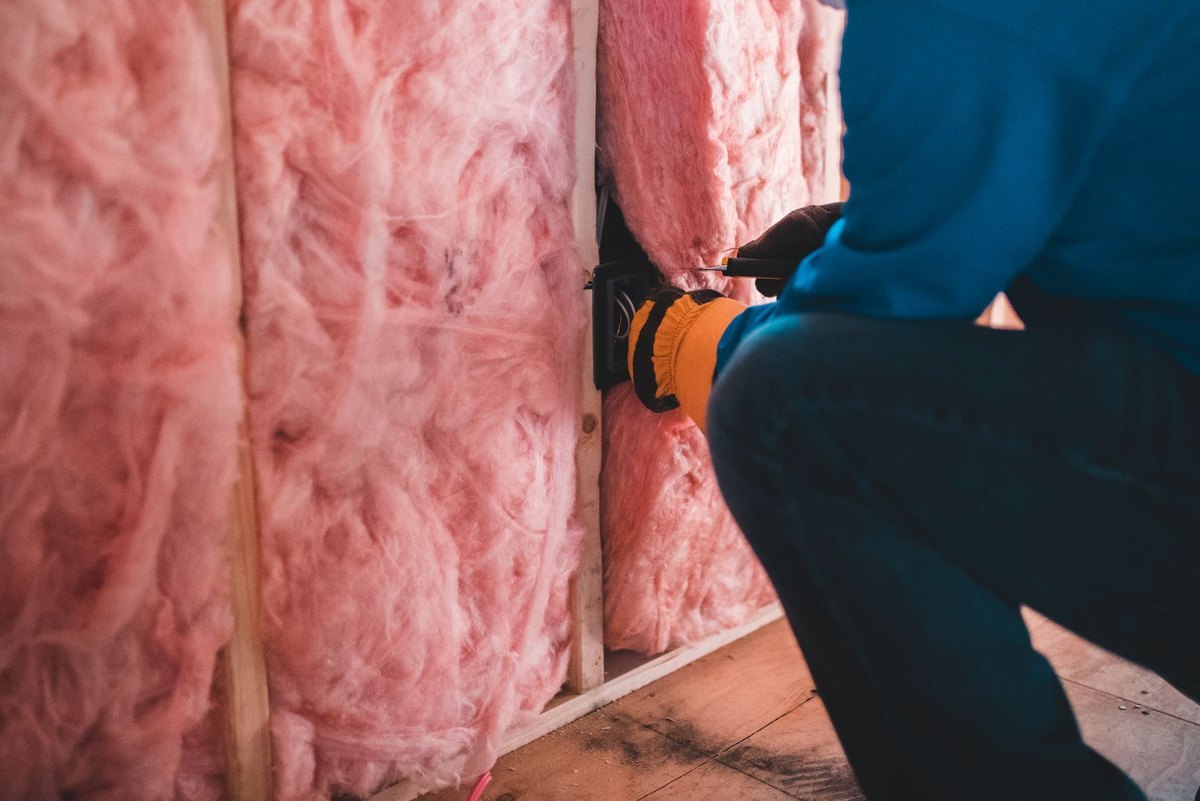
Wall insulation in Bashley
Cavities checked with a camera before anyone injects them, because a 1990s wall here often already holds insulation boards and a gap that is meant to stay clear.
The site visit is free and so is the written itemised quote. Thomas Hannen prices every job himself.
Last updated
A lot of Bashley was built in the 1990s, and a 1990s cavity is not an empty one. Houses of that age were often built with partial fill insulation boards already clipped to the inner leaf, with a deliberate clear gap in front of them. Blowing bead into that gap is at best money wasted and at worst a path for water across the wall.
So the first job on a Bashley wall is to look inside it. Good reasons to get it checked are a quote for a full fill you want a second opinion on, a cold bungalow where one end is worse than the other, or mould appearing on an outside wall in a room that never used to have it.
One small hole, a borescope, and you know what you have. The loft may be the better spend, and insulation in Bashley weighs the two. Then it goes into a free written itemised quote with the survey, the system, the reveals and the making good on separate lines.
The work
What a 1990s cavity already has in it
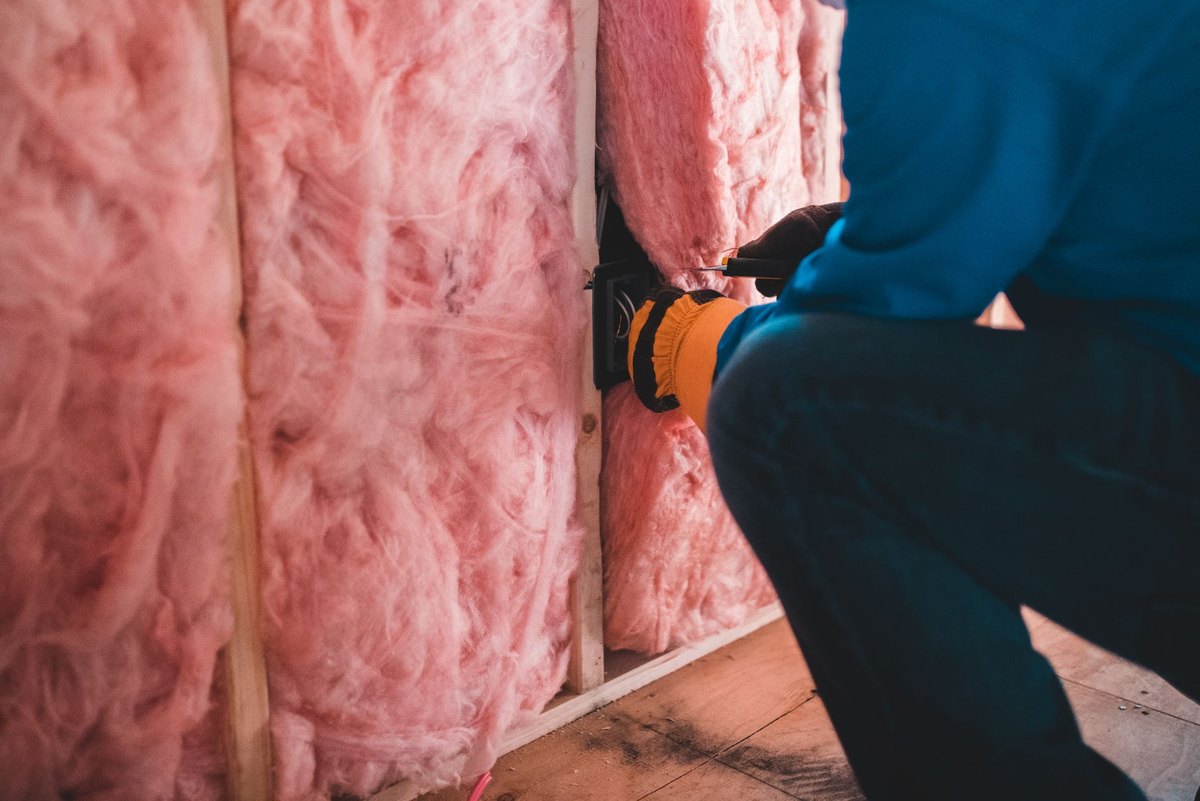
The borescope, and what it finds. The camera shows the cavity width, whether there are boards clipped to the inner leaf, how wide the residual gap in front of them is and whether the outer leaf is wet.
On a house built in the 1990s the cavity is often 75 or 100mm with 40 or 50mm of board already in it. That is a wall that is already performing, and the honest advice is usually to leave it alone and spend the money on the loft or the draughts.
Full fill, where the cavity is genuinely empty. Older houses in the area, and plenty of the 1960s and 1970s bungalows, do have a clear cavity. Bonded polystyrene bead or blown mineral wool, drilled on a pattern, injected under control, eaves and every reveal closed off first, holes made good in matching mortar. A fill is normally covered by an independent scheme run separately from the installer, so ask what paperwork you get.
Why filling a residual gap is a bad idea. That clear gap in front of a partial fill board is doing the same job as an empty cavity: it stops water that gets through the outer leaf from reaching the boards and the inner leaf. Fill it and you bridge it. The gain in U value is small because the board is already there, and the risk of penetrating damp on the weather side is real. We will tell you that even though it means not selling you a fill.
Failed and slumped fill. Where an older wall was filled decades ago the camera often shows an empty band at the top and a compacted mass below, or wet fibre. That is extracted with a vacuum through a drilled pattern, bagged and taken away, and refilled in bead once the wall is dry.
Solid walls. The pre 1919 properties scattered around Bashley are nine inch solid brick with nothing to fill. Internal wall insulation means insulated plasterboard fixed back, or a stud and batten frame with mineral wool or PIR board, Celotex or Kingspan, between it, with an aerogel backed board where a threshold has no room. External wall insulation, boards and a render carrier under a thin coat finish, is the alternative.
Junctions. Reveals returned, the floor junction carried down, joist ends thought about, the eaves closed and a breathable vapour control layer taped so the dew point cannot sit in the build up as interstitial condensation. On a bungalow the eaves are low and the cavity closer up there is the detail that stops bead ending up in the loft.
Ventilation. Extract in the kitchen and bathroom, trickle vents in the windows and air bricks clear. Approved Document F sets what it has to achieve once airtightness improves.
How it runs
Checking a partial fill cavity before any drilling
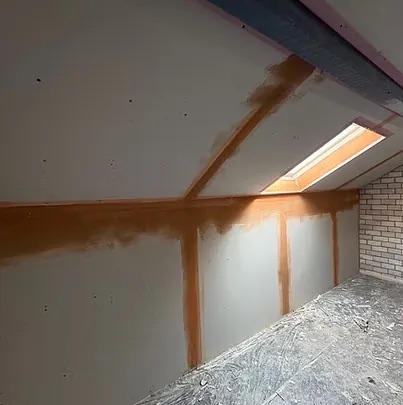
Thomas starts with the wall: its age, whether it has a cavity, what is already in it, and whether there is damp inside. A lot of Bashley was built in the late twentieth century, often with partial fill boards already in the cavity, so he drills a small hole and checks with a borescope before recommending anything. The quote itemises the survey, the system and thickness, making good at windows and doors, ventilation, and disposal.
Cavity fill is drilled from outside: a bungalow from a ladder or tower, a two storey gable from scaffold. Lining goes in room by room, and we plan which rooms you lose and when. We cover floors, make good the drill holes to match the mortar, and take offcuts away. If the cavity holds rubble or old fill, you are shown it and given the cost before we carry on.
Bashley is inside the New Forest National Park, which is its own planning authority, and you can check the boundary on the National Park property map. That matters only outside: external wall insulation changes the appearance and design scrutiny is tighter here, as the Planning Portal guidance on external walls explains. There is no conservation area over the housing, and internal work needs no permission under the Planning Portal page on insulation. Building control applies through regulation 23 and Approved Document L.
Cost
Partial fill, full fill or leave it alone
Wall insulation is not priced per square metre, because the wall is easy to measure and the junctions are not. What is already in the cavity. A nineties wall with partial fill boards may already perform well. Filling the remaining gap can bridge the cavity and bring damp across, especially on the south west side. The borescope tells us what is there.
Which wall you have. A sixties bungalow with a clear cavity can usually be filled in a day. An older solid brick cottage cannot be filled, and needs lining inside or insulating outside, which is a very different job.
Getting to it. A nineties detached, a sixties bungalow and an older brick cottage each need a different platform, from a tower to a full scaffold on a two storey gable, and the work at height rules decide which.
The junctions. Reveals, the floor junction, the eaves and a party wall are the places heat leaks out and condensation forms if the detail is wrong. It is slow work and the first thing a cheap quote drops.
Ask other quotes whether a borescope was used, which system at what thickness, how the reveals and floor junction are handled, whether ventilation is covered, and who does the making good to plaster and decoration afterwards.
If damp has appeared
Mould on a wall that used to be dry
Mould or damp on an outside wall that used to be dry, since the cavity was filled or an internal lining went in, usually comes from rain crossing the cavity, or warm air meeting a cold spot at a window reveal or the floor junction.
Clean the mould off, keep the room warm with a window cracked open, and leave the paint alone for now. Ring rather than using the form. When Thomas comes, he looks first, with the borescope if needed, and takes nothing out until the cause is clear, since that decides the fix. Scheduled work runs Monday to Friday, 8am to 6pm. If the line is busy, the missed call is returned as soon as we are free.
Worth knowing
Partial fill boards, and the gap in front of them
The single biggest share of Bashley's housing went up in the 1990s, and that decade is the awkward one for this trade. By then the building regulations wanted more insulation than a 50mm cavity could give, and the usual answer was a wider cavity with rigid boards clipped to the inner leaf and a deliberate 25 to 50mm clear gap left in front of them.
Partial fill, in the trade. The wall looks identical from outside to a wall with nothing in it.
That gap is not a mistake and it is not spare space. It is the drainage cavity, and it is what keeps water that gets through the brickwork away from the boards and the inner leaf. A firm working from the outside, or from a database, cannot tell the difference between that wall and an empty one, which is how houses that were already insulated end up being sold a full fill.
It is why we borescope every wall before quoting, and why the answer can be no. If the boards are there and the gap is clear, the wall is doing its job and the money belongs elsewhere. If the boards have slipped or were never clipped properly, which the camera does show, there is a real job to do.
Who you are dealing with
The firm that looks before it fills
Thomas drives about eight and a half miles from Boscombe to reach Bashley. We insulate walls on houses and bungalows in Bashley, Sway Road and the New Milton edge, and over in Ashley, with planning under the New Forest National Park Authority.
The registered company is Bournemouth Roofing & Building Ltd, England and Wales, number 15471719. It belongs to Thomas Hannen, who checks your wall and prices it himself. A Checkatrade customer, verified, gave us 10 out of 10. Thomas charges nothing for the survey visit or for the itemised written quote. Before you book a visit in Bashley, you can read our customers' Google reviews, word for word, on our reviews page.
Planning at a glance
Do you need planning permission in Bashley?
Most repairs in Bashley need no application at all. What decides whether a change to the outside of your house does is who the council is, whether a conservation area or a listing applies, and whether the place sits in a protected landscape.
| Question | In Bashley |
|---|---|
| Who decides | New Forest National Park Authority is the planning authority for Bashley. New Forest National Park Authority's heritage pages set out what it controls. |
| Conservation area | None covers Bashley, so a like-for-like repair is ordinary maintenance. |
| Listed buildings | Yes, there are listed buildings in and around Bashley. If yours is one, work can need listed building consent. |
| Protected landscape | Inside the New Forest National Park, where design is looked at more closely and permitted development rights are narrower. |
Questions
Questions about wall insulation in Bashley
What is partial fill cavity insulation?
Rigid boards clipped to the inner leaf with a clear gap left in front of them, which is how most 1990s houses were built. The gap drains water away from the boards and is supposed to stay empty.
Should the gap in front of the boards be filled?
Usually not: the extra improvement is small because the boards are already doing the work, and filling the drainage gap can carry water across to the inner leaf on the weather side.
How do we know which sort of cavity we have?
Only by looking: a borescope through one small hole shows the boards, the width of the gap and the condition of the outer leaf. Nothing on the outside of the wall tells you.
Our 1960s bungalow has never been done. Is it worth it?
Very likely: a genuinely empty cavity in a bungalow gives a large drop in heat loss for a day's work, and the payback is short. The camera confirms the cavity is clear and dry first.
Would you ever tell us not to bother?
Yes, and the newer houses in Bashley are where it is most likely to be the right answer. If the wall already performs, filling it is a cost with very little return, and we would rather say so than take the work.
Nearby, and next door
Wall insulation near Bashley
Nearby places we also cover for wall insulation, with straight-line distances from Bashley, and the other trades we offer in Bashley itself.
Wall insulation nearby
Our other trades in Bashley
Wall insulation guides
Damp at the bottom of a wall: what it is PIR board vs mineral wool: which insulation? Hollow-sounding wall: blown plaster or dot and dabEverything we do in New Milton Wall insulation, all areas Every area we cover
Free quote
Check the cavity before anyone fills it
Thomas comes out, puts a camera in the wall and tells you whether there is already insulation in there. The visit and the written quote are both free.