Roofing in Bashley
Repairs, ridge and verge work, re-covering, flat roofs and leadwork on the bungalows and houses of Bashley and the New Milton edge.
The site visit is free and so is the written itemised quote. Thomas Hannen prices every job himself.
Bashley is bungalow country, and a bungalow carries roughly twice the roof of a two storey house with the same floor area. Almost all of that extra is edge, which is why we are called out to a ridge, a hip or a verge here far more often than to the middle of a slope.
People ring for three reasons. Something has come loose after a blow and there is mortar on the drive. A ceiling has stained and nobody can say where the water is getting in. Or the roof looks tired and you want a straight answer on whether it is a repair or a new roof. We come out, get on the roof, put our head in the loft where there is access, and photograph what we find, so the survey gives you something to look at rather than a figure over the phone.
The work
Every tile has a pitch it will not go below
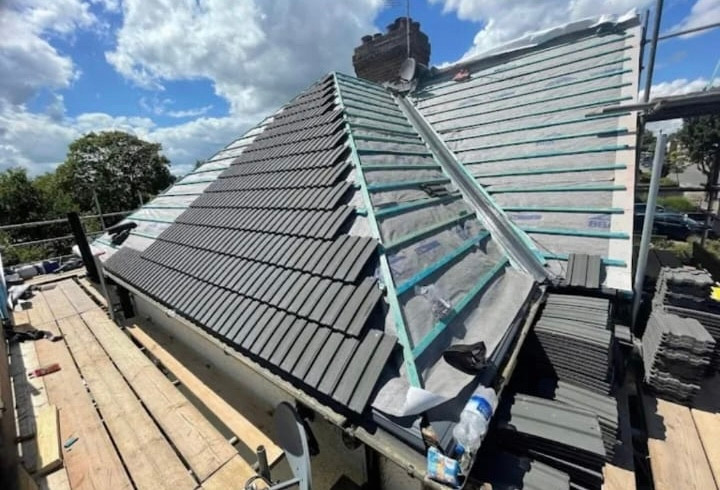
Every tile has a pitch it will not go below. Plenty of the roofs here sit at a shallow pitch, and every tile has a minimum pitch it is rated to work at. Swapping a low pitch interlocking tile for a plain tile or a slate that wants a steeper roof is how a roof that never leaked starts leaking, so we measure the pitch before we price a covering.
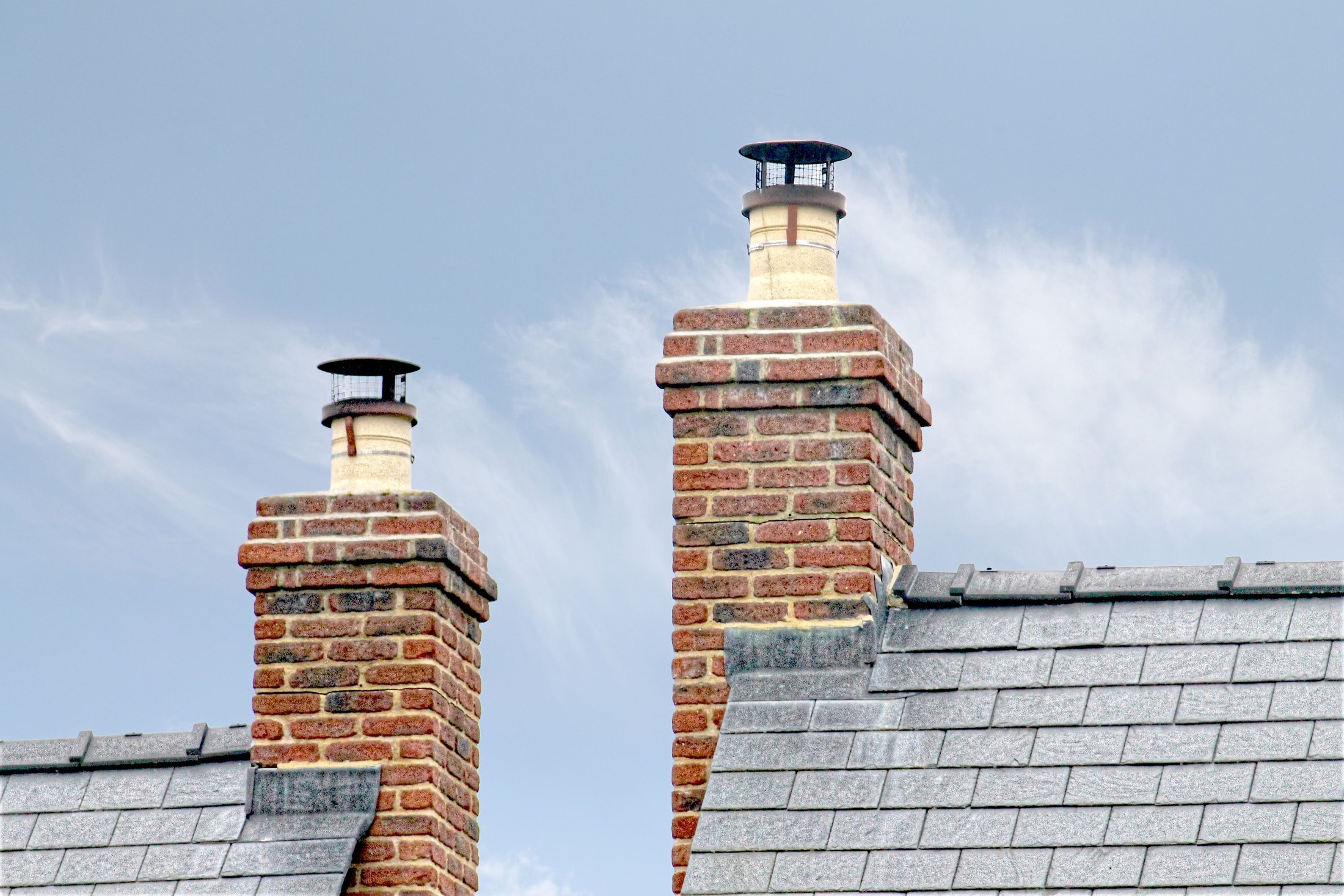
Ridge, hip and verge. The commonest job on this patch, because a low wide roof is mostly edge and two houses in five here are bungalows. Mortar bedding cracks, a ridge tile starts to rock and a verge loses its haunching long before anything goes wrong in the field of the slope. We convert ridge and hip to a dry fix system, screwed and clipped onto a ventilated roll, and gable ends to dry verge. That is the mechanical fixing BS 5534 asks for, and it ventilates the roof space along the ridge at the same time.
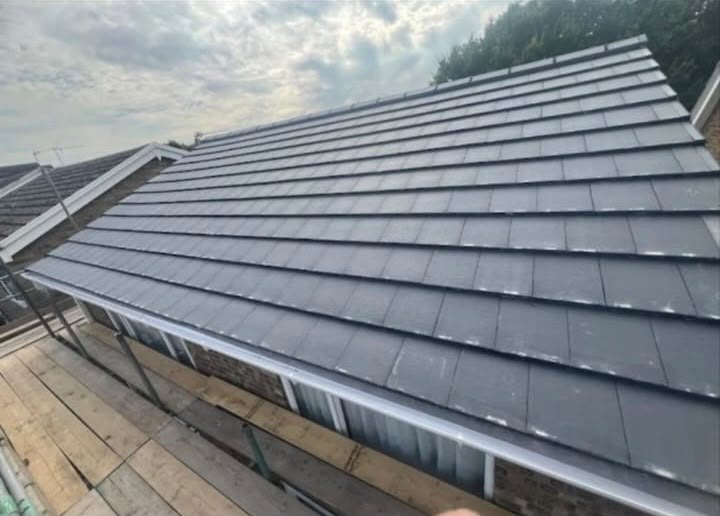
Repairs are slipped, cracked and missing tiles, storm damage, and a leak traced back to where water genuinely enters rather than patched where the stain shows. What is on the roofs round here is mostly concrete interlocking tile, with plain clay tile and natural slate on the older properties. When the nails have rusted through, the battens have gone soft and the underlay tears at a touch, the covering comes off, soft rafter feet are replaced, and it goes back on breathable membrane and treated battens with a matched tile.
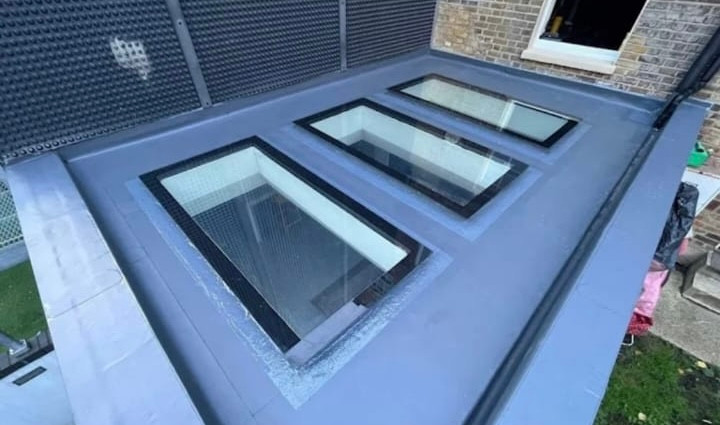
Garages, sun lounges, porches and rear additions in felt, GRP fibreglass or EPDM rubber, opened up at the deck before the falls, upstands and outlet are set. Chimney flashings, soakers, valleys and the abutments where a roof meets a wall go in code rated lead cut so it can move, and a hipped roof with something added on the back carries more valleys than you would expect.
Low eaves make a long run of rainwater goods easy to reach, and clearing leaves out of the gutter and downpipe heads off the rotted fascia it otherwise causes. The loft floor here covers the whole footprint rather than half of it, so insulation, eaves ventilation and any condensation problem are worth sorting while the access is already paid for, and Approved Document L sets the standard a renovated roof should reach.
How it runs
From your call to a written price
One team from first visit to last, an itemised written price rather than a figure on a card, and the old tiles and felt leave with us.
Bashley sits inside the New Forest National Park, and for a roof that changes less than people expect. A like for like re-cover, a repair, new rainwater goods and rooflights sitting no more than 150mm above the roof plane are permitted development, within the limits the Planning Portal sets out. What National Park land does remove is the dormer, since a roof enlargement is not permitted development here. There is no conservation area over Bashley but five entries are listed, so we check the address on the National Park map before the site visit.
Cost
What decides the price of a roof
No rate per square metre: the area is the easiest thing to measure and the least useful thing to know. Single storey roofs are cheap to reach, because the eaves are low and there is room to stand a platform. What you save on access you spend on edge, because dry fixing is priced by the metre of ridge, hip and verge.
How long the platform stands matters as much as its size, and the work at height rules are why it is a priced line. Ask whether the scaffold is in the price and whether battens and membrane are renewed or covered over.
If it is leaking now
Water coming in today
Ring rather than use the form. Anything letting water in goes to the front of the queue, and the first visit makes it safe rather than prices it. Walk round the outside, look along the ridge and the hips for a tile sitting out of line, and check the drive for lumps of bedding mortar. Stay off the ladder. The phone is answered 24 hours for emergencies; scheduled work runs Monday to Friday, 8am to 6pm.
Worth knowing
Bungalow country, and what it changes
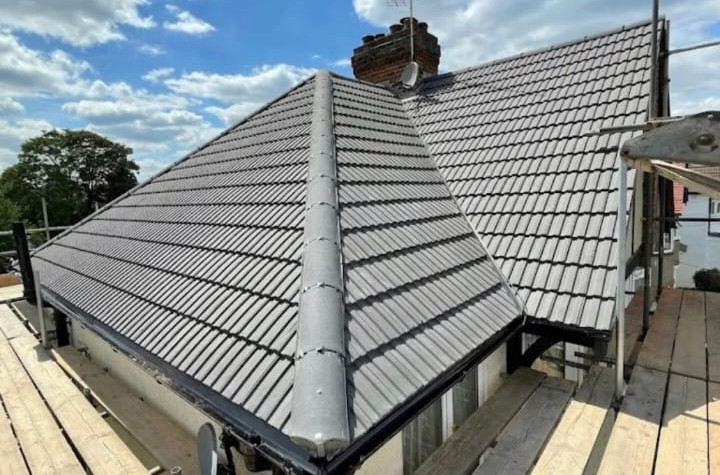
Two in five dwellings here are bungalows, a far higher share than the towns on either side, and it changes the arithmetic of a roof. Same floor area, roughly twice the covering, and most of the extra spread across hips and long ridge lines rather than two plain slopes. So the fixings holding the roof down matter more than the tiles themselves, and a bungalow that has never let a drop through the middle of a slope can still be quietly losing its ridge.
It also changes what is worth doing while we are up there. The loft covers the whole footprint, so topping up insulation and opening up eaves ventilation costs the same in labour as it would on a smaller loft and returns about twice as much. The drawback of the shape is that a broad shallow roof throws a lot of water into a short length of gutter, so the rainwater goods work harder than they look and want clearing more often.
Who you are dealing with
A local firm you can check
About ten and a half miles from us, covering Bashley, the New Milton edge and the BH25 addresses out towards Wootton, in the ward of Ashley, Bashley and Fernhill. The New Forest National Park Authority is the planning authority here rather than the district council.
Bournemouth Roofing & Building Ltd, registered in England and Wales, company number 15471719, which you can look up in a minute. Thomas Hannen's business, and he is the one who comes out to price the job, not a salesman. A verified customer's 10 out of 10 on Checkatrade. The visit and the written quote are both free.
Questions
Bashley questions we get asked
We are inside the National Park. Who decides on the roof?
The New Forest National Park Authority, not the district council. Bashley falls inside the park boundary, so anything visible from outside your plot gets more design scrutiny than it would a mile down the road, and permitted development rights are tighter. A like for like re-covering is normally fine. Rooflights, a change of material or anything that alters the roof line is where the park authority becomes the people to ask.
The house is from the nineties. Surely the roof is fine?
Newer than a lot of roofs we see, and still old enough to need looking at. The nineties were the busiest building decade in Bashley and nearly four in ten houses date from 1983 onwards, which usually means interlocking concrete tiles on a shallow pitch with mortar bedded ridges. Thirty years is about the working life of that bedding. The tiles will outlive it comfortably, so this is rarely a whole roof.
What happens to my roof if it rains mid job?
We only ever strip what can be closed the same day. On a Bashley bungalow that usually means one elevation at a time, felt and batten going on behind the strip so the roof is watertight by knocking off, with the ridge left until last. Heavy rain stops tiling and lead work. Scaffold sheeting keeps the wind out of an open pitch, which matters more here than the rain does.
What do you actually look at when you come out?
The parts you cannot see from the ground. Thomas Hannen goes into the loft first with a torch, looking at the underside of the felt, daylight at the eaves, staining on rafters and whether the insulation has been laid over the ventilation path. Then the roof itself: fixings, ridge bedding, verge, flashings and the gutter line. On a Bashley bungalow both halves take about an hour.
Would a loft conversion here be held up by anything?
It can be, and not by the roof. Bashley drains to the Solent, where new overnight accommodation has to be nutrient neutral before consent is granted, and a converted loft counts as a bedroom. Re-covering, repairs, insulation and gutters do not engage it at all. Being in the National Park adds a second layer, because the dormer or rooflight has to satisfy the authority on appearance as well.
Nearby, and next door
Roofing near Bashley
Roofing nearby
Our other trades in Bashley
Roofing guides
Concrete vs clay roof tiles: which is right? Planning, building regs or listed building consent Storm damage to a roof: the first 24 hoursEverything we do in New Milton Roofing, all areas Every area we cover
Free quote
Get a written price for your Bashley roof
Tell us the postcode and what the roof is doing. We come out, look properly and put it in writing, itemised, at no cost.