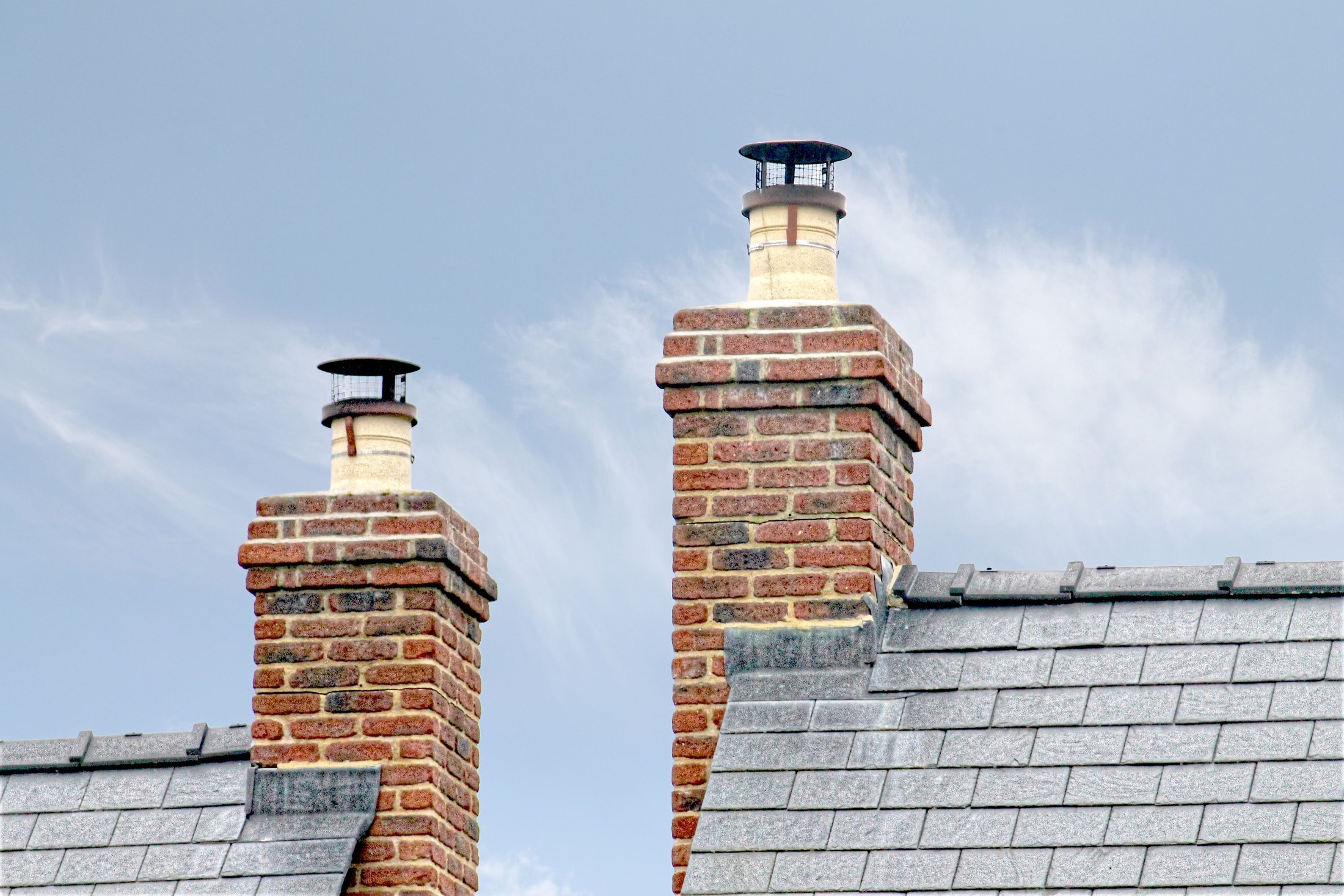
Roofing in Thorney Hill
Storm damage, re-fixing, dry ridge and verge, re-covers, flat roofs and leadwork at Thorney Hill and across BH23.
The site visit is free and so is the written itemised quote. Thomas Hannen prices every job himself.
Thorney Hill stands high and open with the forest on its weather side, so the fixing schedule matters more here than the tile does. A roof laid before 2015 was fixed to a weaker rule than the one in force now, and on this site that shows.
The hamlet sits on the rise above Bransgore, houses strung along the road with the commons and open forest running away from the back gardens. Almost every call is the same shape: a windy night, then a tile on the lawn, a gap in the ridge line, or water on a ceiling by morning.
What follows is a proper look rather than a guess from the drive. We get on the roof, put our head into the loft, and photograph the covering, the battens, the underlay and the rafter feet. Then you get a straight answer: a repair that will hold, edge and fixing work that buys years, or a covering that is finished. The site visit and the written itemised quote are both free.
The work
The corners and verges are where a gale starts
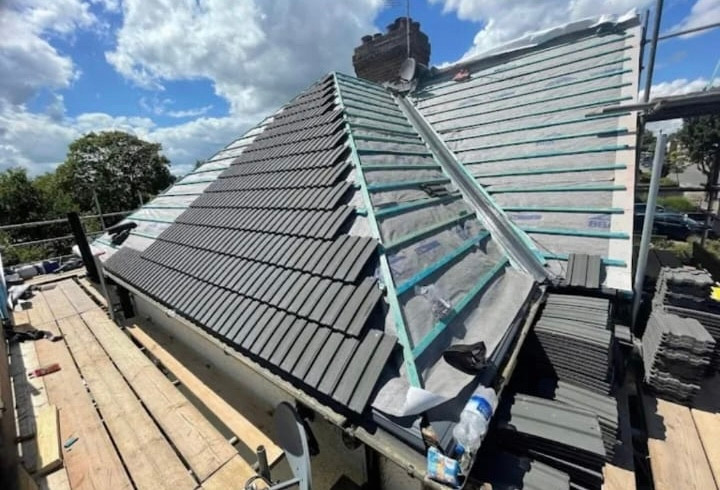
Re-fixing and the perimeter zone. The job this hamlet needs most. Wind does not lift a roof in the middle, it gets under the edges and the corners, and the most exposed elevation here faces south west. The code of practice, BS 5534, was tightened in 2014 so that a site like this now needs mechanical fixing well in from the verge and the eaves rather than a clip here and there. Where a roof predates that, we clip out the whole perimeter zone properly, for a fraction of what losing a slope costs. Mortar bedding on an exposed roof cracks, lets go and takes the tile with it, so off it comes and a dry ridge and dry verge go back screwed down on a ventilated roll, which is both stronger in wind and vents the ridge line as it goes.
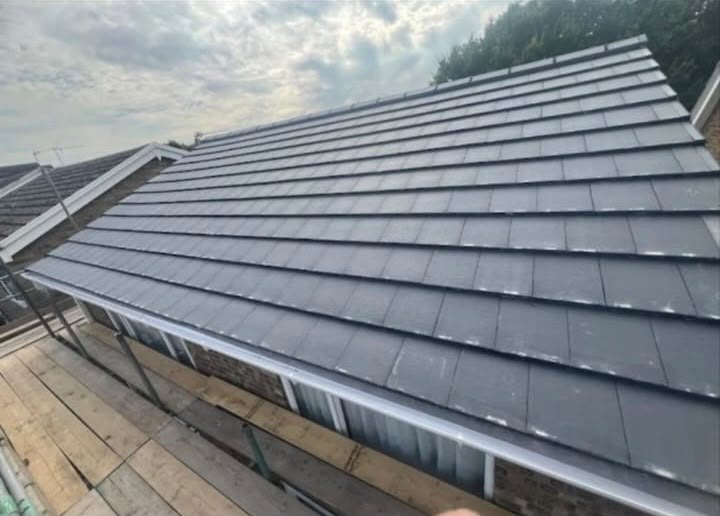
Storm damage and repairs. Slipped, cracked and missing tiles after a blow, a ridge tile gone, a verge stripped back along its length, and the leak that follows. Most houses here date from the 1970s and early 1980s, so it is concrete tile, nearly all of it interlocking, and the covering is generally in better condition than whatever is holding it down. Older cottages on the green carry plain tile, clay tile and a little natural slate on battens with no sarking under them. Thatch is a different trade and we say so before you ask: we tile and flash up to it. When the nails have gone, the batten ends are soft and the underlay has torn away at the eaves, the covering comes off, wet rafter feet come out, and it goes back on breathable membrane and treated battens with a matched tile, fixed to the current schedule rather than the old one.
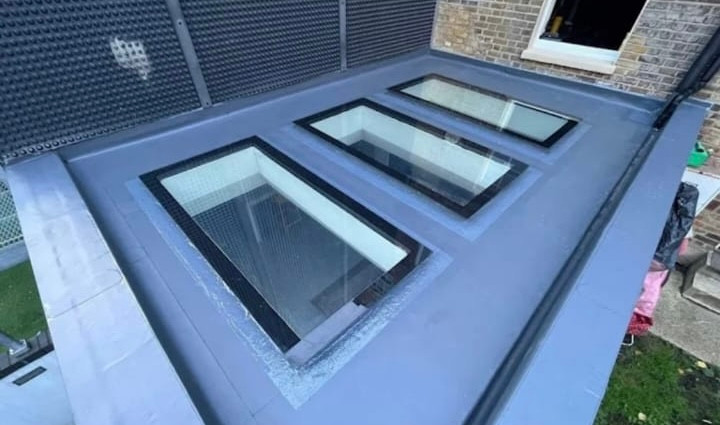
Garages, rear extensions, porches and dormers go in felt, GRP fibreglass or EPDM rubber, and the deck sets the life of all three, so it comes first, then the falls, the upstands and the outlet. On an exposed roof the flashings matter twice over: chimney soakers, back gutters, valleys and abutments go back in code rated lead, cut and clipped at the free edge so wind cannot get a grip on it. Oak and holly leaf off the forest side fills gutters and valleys every autumn, and on ground that shrinks and swells, where that water ends up beside a foundation is a structural question rather than only a damp one. While a covering is off, insulation and eaves ventilation cost a fraction of what they cost later, and Approved Document L sets the standard a renovated roof should reach.
How it runs
From your call to a written price
Nothing is sub-contracted, and the quote is itemised so it can be compared properly. Thorney Hill has no conservation area, and the New Forest National Park Authority is the planning authority here rather than the district council, with New Forest District Council for building control. On an unlisted house a repair, a like for like re-cover, new rainwater goods and rooflights all fall inside ordinary householder permitted development, provided nothing stands more than 150mm above the roof plane and the Planning Portal guidance limits are met. A dormer is the exception, because enlarging a roof is not permitted development on National Park land. Three entries here are listed, and those we check on the National Park Authority's property map before pricing.
Cost
What decides the price of a roof
No rate per square metre. Plots up here are generous and there is normally room for a scaffold to stand and a lorry to unload. The wind is the problem. An exposed platform needs more ties and often debris netting, and it stands longer because a strip cannot be opened up on a bad forecast, so here it is priced by the days it is booked as much as by its size, and work at height rules are why it is a priced line at all. Ask any quote what grade of lead goes on the chimney and who pays for the skip.
If it is leaking now
Water coming in today
Ring rather than use the form. Anything letting water in goes to the front of the queue, and the first visit is about making it safe. Before we get there, look along the ridge line and the gable verges from the garden for a gap and check the lawn for a tile, because here it goes at the edges first. The phone is answered 24 hours for emergencies; scheduled work runs Monday to Friday, 8am to 6pm.
Worth knowing
High, open, and with the forest on the weather side
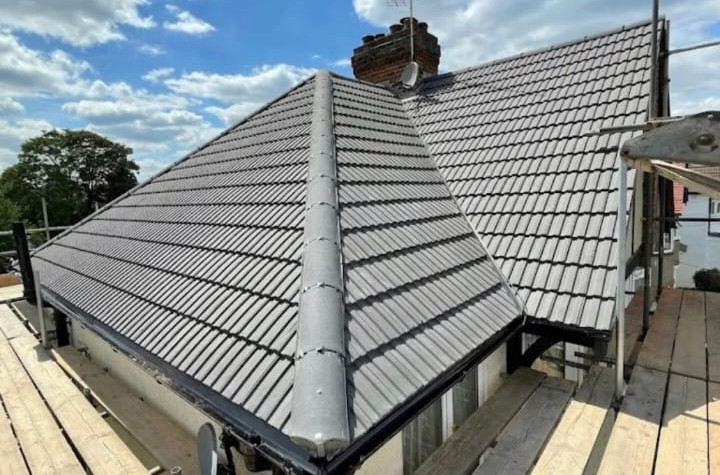
Thorney Hill is on the rise, with the exposed elevation facing south west and open commons and forest rather than other houses between the wind and your roof. Nothing upwind slows it down, and in practice that is the difference between a roof that shrugs off a gale and one that loses its verge.
The consequence is that fixing beats covering. Wind gets under the edge and the corner and peels inward, so the money is best spent on the perimeter: a mechanically fixed ridge and verge, clips carried well in from the edges rather than stopped at the last course, and lead clipped at its free edge. If you are being priced for a re-cover, ask which fixing schedule it is laid to and how far in the clips go. Two quotes for the same tile on this hill can be two very different roofs.
Who you are dealing with
A local firm you can check
About nine miles from us and inside the patch we are in every week, covering Thorney Hill, Bransgore, Burley and the BH23 addresses on that side, with the New Forest National Park Authority for planning and New Forest District Council for building control.
Bournemouth Roofing & Building Ltd, registered in England and Wales, company number 15471719, which you can look up in a minute. Thomas Hannen's business, and he is the one who comes out to price the job, not a salesman. A verified customer's 10 out of 10 on Checkatrade. The visit and the written quote are both free.
Questions
Thorney Hill questions we get asked
Is the National Park the authority here, not the district council?
The New Forest National Park Authority is the planning authority for Thorney Hill, so applications and any pre application questions go there rather than to a district office. It matters because the park applies design scrutiny to whatever is visible in the landscape, which reaches a good deal further than a village boundary would. Repairs and like for like re-covering are still maintenance and need nothing submitted to anyone.
My house stands in its own plot. Can you keep off the road?
Almost always here. Close to four in ten homes at Thorney Hill are detached and another fifth are bungalows, so there is usually ground on at least two sides to stand a scaffold, park the van and stack tiles without touching the highway. We walk the route in first even so, because soft verges and a loaded lorry do not mix and the ruts would be yours to look at.
Which side of the roof takes the weather here?
South west, and that is where the wear turns up first. Driven rain gets under edges and into openings rather than attacking the middle of a slope, so on that face the verge pointing, the ridge ends and the flashings around anything passing through the roof are first to let go. When we survey, that elevation gets looked at hardest and it often sets the order the work is done in.
The 1970s houses in the lane are losing verge mortar. Why?
Because they were all built at once to the same detail. Over four in ten homes here date from 1945 to 1982 and the largest group went up in the 1970s and early 1980s, bedded in sand and cement at the verge. Thirty odd winters of movement crack that bedding and the wind then works into the gap. A mechanically fixed dry verge ends the cycle without a full re-cover.
Hardly anything here is listed. Do I still need to ask?
Listing is rare at Thorney Hill, three entries in total with the Church of All Saints among them, and no conservation area covers the settlement. The park takes its place. Anything visible carries design weight, so a change of material is worth raising before it is ordered, even though a matching re-cover is not. For most callers here nothing has to be applied for at all.
Nearby, and next door
Roofing near Thorney Hill
Roofing nearby
Our other trades in Thorney Hill
Roofing guides
Concrete vs clay roof tiles: which is right? Planning, building regs or listed building consent Storm damage to a roof: the first 24 hoursEverything we do in New Milton Roofing, all areas Every area we cover
Free quote
Get your Thorney Hill roof priced properly
Send the postcode and what you have noticed. We come out, get on the roof and put an itemised price in writing.