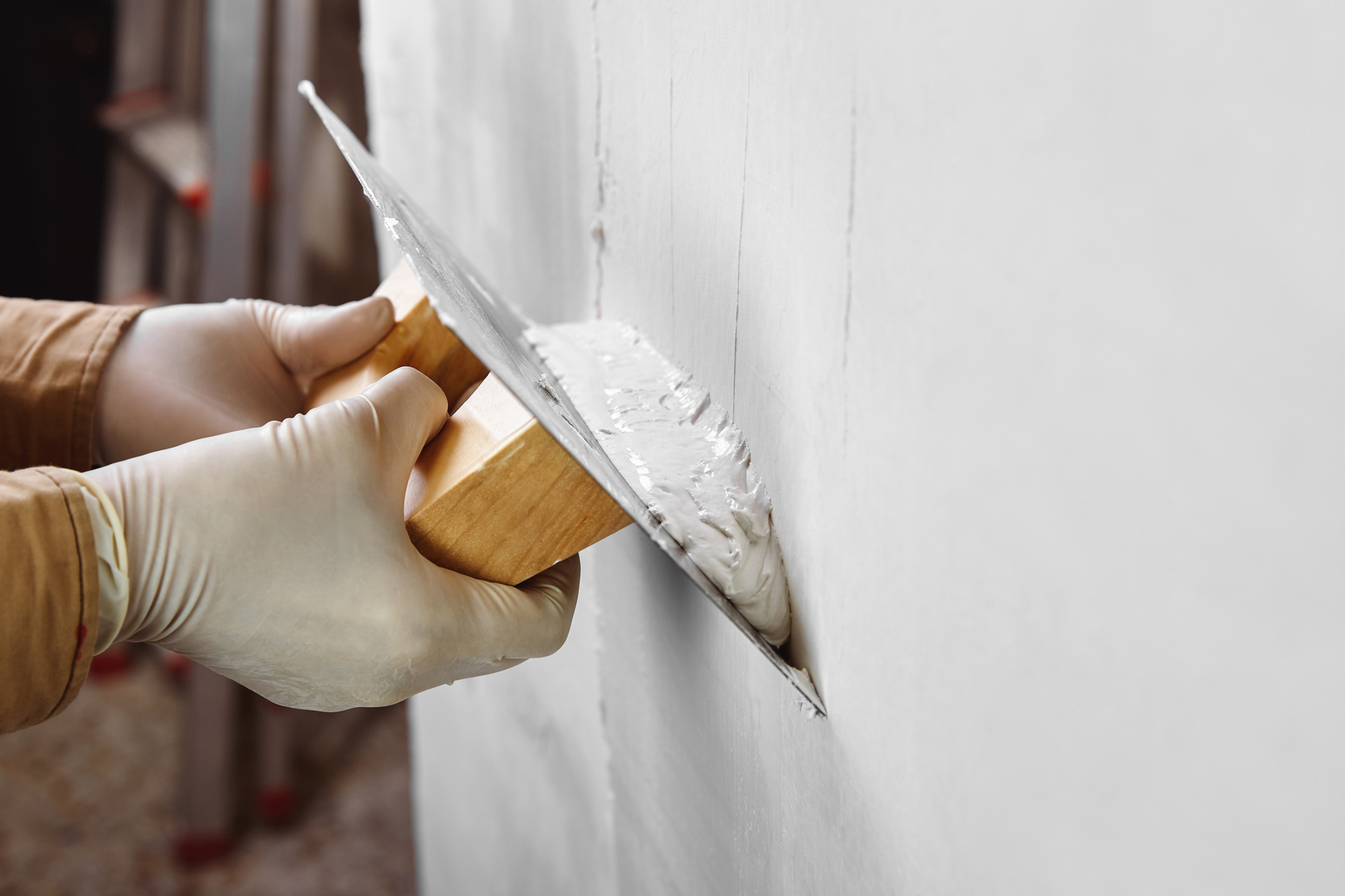
Plastering at Thorney Hill
Walls sounded and the damp worked out before anything is priced, then one written itemised quote for the repair and the finish.
The site visit is free and so is the written itemised quote. Thomas Hannen prices every job himself.
Before anybody prices plastering at Thorney Hill, the wall has to be dry and the reason it went wet has to be known. Half the walls we are called to out here are sound plaster with a water problem behind them, and a fresh skim on one of those is money you spend twice.
Three things bring people to the phone. A ceiling has cracked, sagged or started to shed, often in a bungalow where there is nothing above it but a cold loft. A wall has blown, gone soft or lifted the paper away, usually on the weather side of the house. Or a room is being decorated, the walls have had one coat too many and every light fitting shows a ripple, and somebody has said it needs skimming properly rather than filling again.
So the survey comes first and it takes longer here than it does in town. We knock every wall and ceiling, take a moisture reading where anything looks suspect, and work out whether we are looking at condensation, water getting in from outside, or plaster that has simply given up. Then the repair and the finish go on one itemised written price. The visit and the quote cost you nothing.
The work
If a wall answers dead, leave it alone
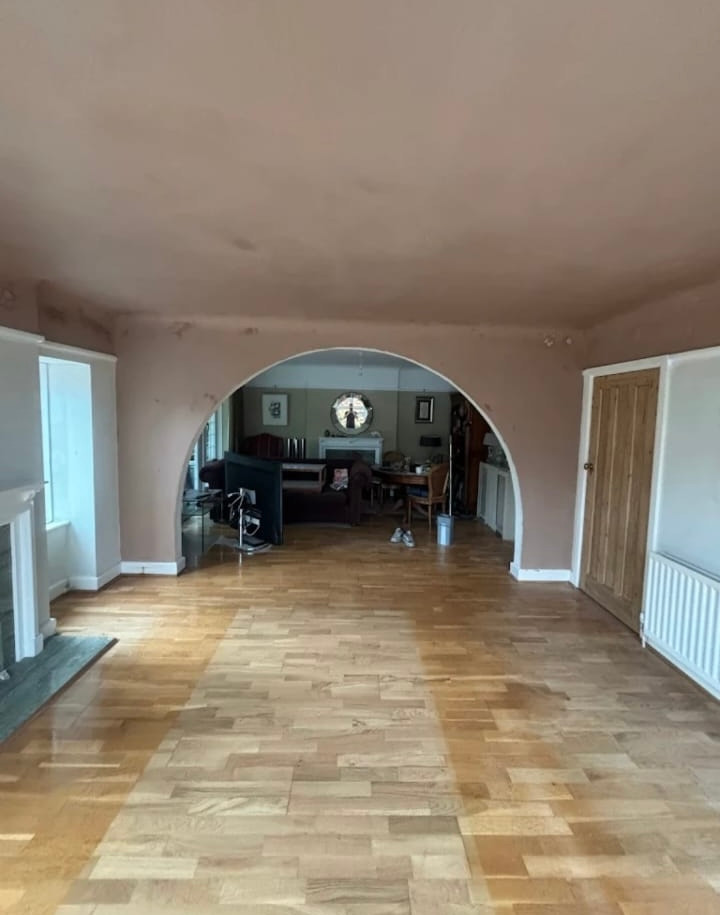
If a wall answers dead, leave it alone. Four homes in ten here went up between the war and the early eighties, nearly all of them built the same way: a block inner leaf, a float coat straightened onto it, a gypsum finish over that. Fifty years later the plaster is usually still stuck fast and what has failed is the surface, buried under textured paper, gloss and roller marks. Dust sheets go down and the surface is prepared and sealed with PVA where it is dusty, then those walls take two passes of finish coat, trowelled flat, one room at a time so you can carry on living in the rest of the house, with a mist coat over the new work before you paint. If a wall answers dead when we knock it, we will tell you to leave it alone rather than sell you a strip out. Where one has let go it comes off to the block for a backing coat first, browning or hardwall where the block pulls, bonding on a dense painted face.
A fifth of the homes here are bungalows, so their ceilings sit straight under a cold loft rather than under a heated bedroom. That is where sagging board, stained joints and cracks along the plasterboard edges show first, and it is why a ceiling here often needs the loft looked at before the trowel comes out. Most of the time overboarding and skimming beats pulling the old ceiling down, and lightly patterned artex can be sealed and skimmed flat, though anything from before the mid-1980s gets tested before it is scraped or sanded.
Roughly a fifth of the housing predates 1919, which means solid walls, lime plaster and often a lath ceiling. Those walls get rid of water through their own face, so a cement backing coat or a gypsum skim over one traps it and the finish blows again within a couple of winters. We keep the whole build-up breathable, patch in lime where lime is what is there. Later houses, extensions and loft rooms are plasterboard instead: on dot and dab or screwed to a stud, then tape and joint or a skim, with repairs skimmed wide enough that low winter light never picks the patch out.
Render on the weather side. Out here the wind and rain come off the open ground from the southwest, so one side of the house takes far more water than the rest and that is the side where a rigid sand and cement render crazes, drums and lets water sit behind it. Where it has gone, the honest choice is a like-for-like patch or a strip back to the masonry and a proper system: a scratch coat, a mesh reinforced basecoat, a primer and a silicone thin coat topcoat. Pebbledash comes off harder than anyone expects, so it is its own line on the quote, and a bell cast bead at the base throws water clear of the wall below.
How it runs
From your call to a written price
Same team from the first visit to the last, one person to ring, and nobody sub-contracted in. The quote is itemised line by line. Thorney Hill is inside the New Forest National Park, so your planning authority is the Authority rather than the council, and its interactive property map shows what applies to your address. Changing the outside finish is a change of appearance the Authority takes an interest in, and Planning Portal guidance on external walls sets out the national position. Three entries in the parish are listed, where consent covers internal plaster as well as render, which its heritage and conservation guidance explains. Stripping render off most of an elevation is where Approved Document L asks whether the wall should be insulated.
Cost
What decides the price
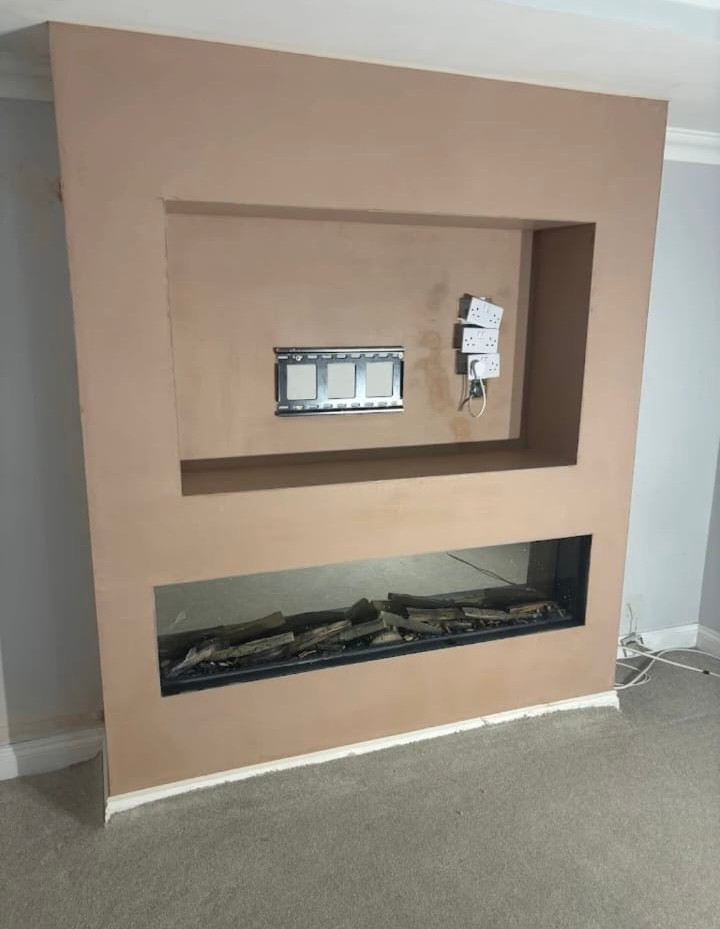
No rate per square metre, because two rooms the same size can be a day apart. A sound wall that only wants a skim is a different job from one where the backing coat has blown. A room with coving, deep reveals and a chimney breast has far more corners to bead than a plain box. Round here that is usually a bungalow with everything on one level and room on the drive to stand a mixer, or a detached house set back behind a hedge where the van parks on the verge. Outside, a tower or a scaffold is a priced line.
If it has come down
A ceiling on the move, or damp coming through a wall
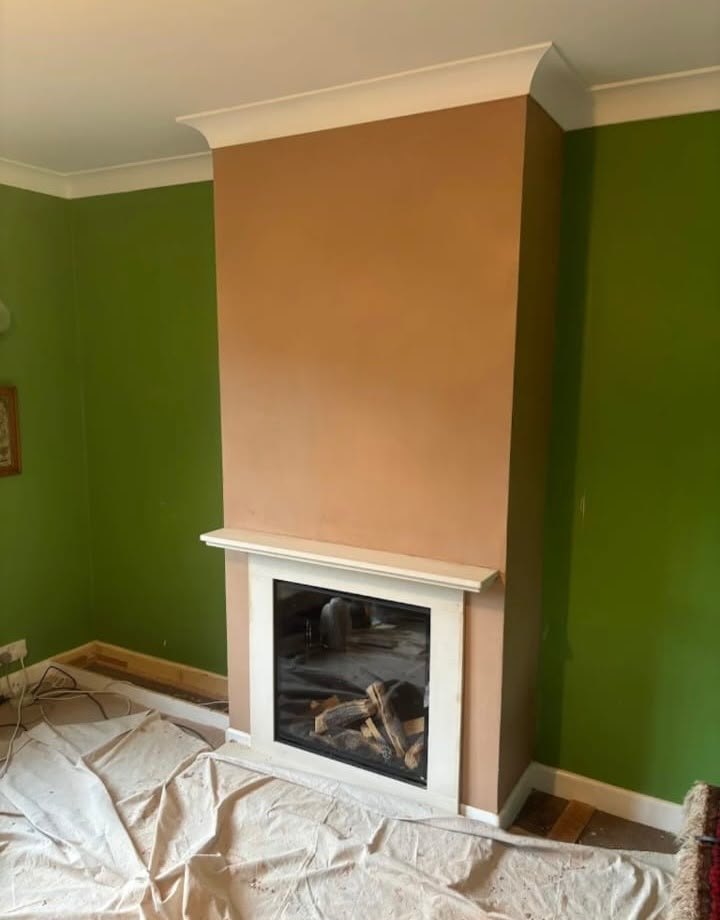
Ring rather than use the form. A ceiling that has cracked and dropped, plaster coming off in sheets, or a wet patch spreading across a wall all go to the front of the queue. We are about nine miles away on the Christchurch side, so a same-day look is usually possible and there is normally somewhere to put a van without blocking the lane.
Worth knowing
Black mould in the corners is not a plastering fault
The commonest thing we are asked to plaster over out here is mould, and plastering over it does not work. Condensation shows in the cold spots: the corners of outside walls, behind a wardrobe pushed flat against one, along the ceiling line, on the reveals beside a window. It is worst from November to March, it returns in the same places, and the wall behind it is usually sound.
Water getting in from outside looks different. It makes one patch with a definite edge, it is worse after driving rain than after a cold night, and it lines up with something on the outside face. Rising damp is different again and it stays low. Skim any of the three without dealing with the cause and you have only given it a fresh surface to appear on.
What actually changes it is air movement and warmth, which is why we say so before we quote: open the trickle vents, run the extract fan properly in the kitchen and bathroom, and keep a low background heat rather than short blasts. Approved Document F sets the ventilation standard a room is expected to reach.
Where an outside wall is genuinely cold, and a lot of the solid walled houses here are, an insulated plasterboard on the inside face changes the surface temperature and the mould stops forming. On a solid wall that has to breathe we would rather use a breathable insulating plaster than seal it up with foam board, because a sealed solid wall trades a mould problem for a damp one.
Who you are dealing with
A local firm you can check
About nine miles from us, covering Thorney Hill, Bransgore, Burley and the BH23 addresses on that side of the forest, with the National Park Authority for planning and New Forest District Council for building control. Bournemouth Roofing & Building Ltd, registered in England and Wales, company number 15471719, which you can look up in a minute. Thomas Hannen's business, and he is the one who comes out to price the job, not a salesman. A verified customer's 10 out of 10 on Checkatrade. The visit and the written quote are both free.
Questions
Thorney Hill questions we get asked
We are inside the New Forest National Park. Who decides?
The National Park authority, not the district council. Thorney Hill falls inside the New Forest National Park, so anything that changes how the outside of the building looks is judged by the Park, and design scrutiny on a visible elevation is tighter than it would be on an unprotected street beyond the boundary. Internal plastering is not their concern at all. External render, colour and finish is, so raise that early.
Four in ten Thorney Hill homes are detached. Does that help?
It helps on access and it changes what fails. Detached is much the commonest type in Thorney Hill, so there is usually room to bring the van and the mixer alongside the house and no party wall to work around. The other side of it is that a detached house stands exposed on all four elevations rather than two, so the south west face takes the weather with nothing next door sheltering it.
Why can't you skim over our old ceiling as it is?
Because the surface is only as good as whatever is holding it up. A little over a fifth of Thorney Hill predates 1919, and on that stock the ceiling is lime on riven lath, which has given up its key in patches you cannot see from below. A skim over the top adds weight to something that is already letting go. I sound it out first and skim only where the old plaster still has a grip.
Which elevation should we spend the money on first?
That would be the south west one. It is the exposed face here, and wind driven rain works at the edges and the openings rather than the middle of a wall, so it is the reveals, the sills and the external corners on that side that go first while the flat of the render still looks sound. Doing that one elevation is a legitimate job, and I price it that way rather than assuming all four.
Is there a benefit to doing every ceiling at once?
On a single storey house there is. One in five Thorney Hill homes is a bungalow, and on those the ceilings all sit on one level under the same roof, so the sheeting, the boarding and the muck away happen once instead of three times over and the levels line up between rooms. It also means moving out of the way for one stretch rather than a room at a time. Thomas Hannen prices both ways.
Nearby, and next door
Plastering and rendering near Thorney Hill
Plastering and rendering nearby
Our other trades in Thorney Hill
Everything we do in New Milton Plastering and rendering, all areas Every area we cover
Free quote
Get the Thorney Hill wall checked before it is skimmed
A free site visit, a moisture reading where it matters, and an itemised written quote that separates the fix from the finish.