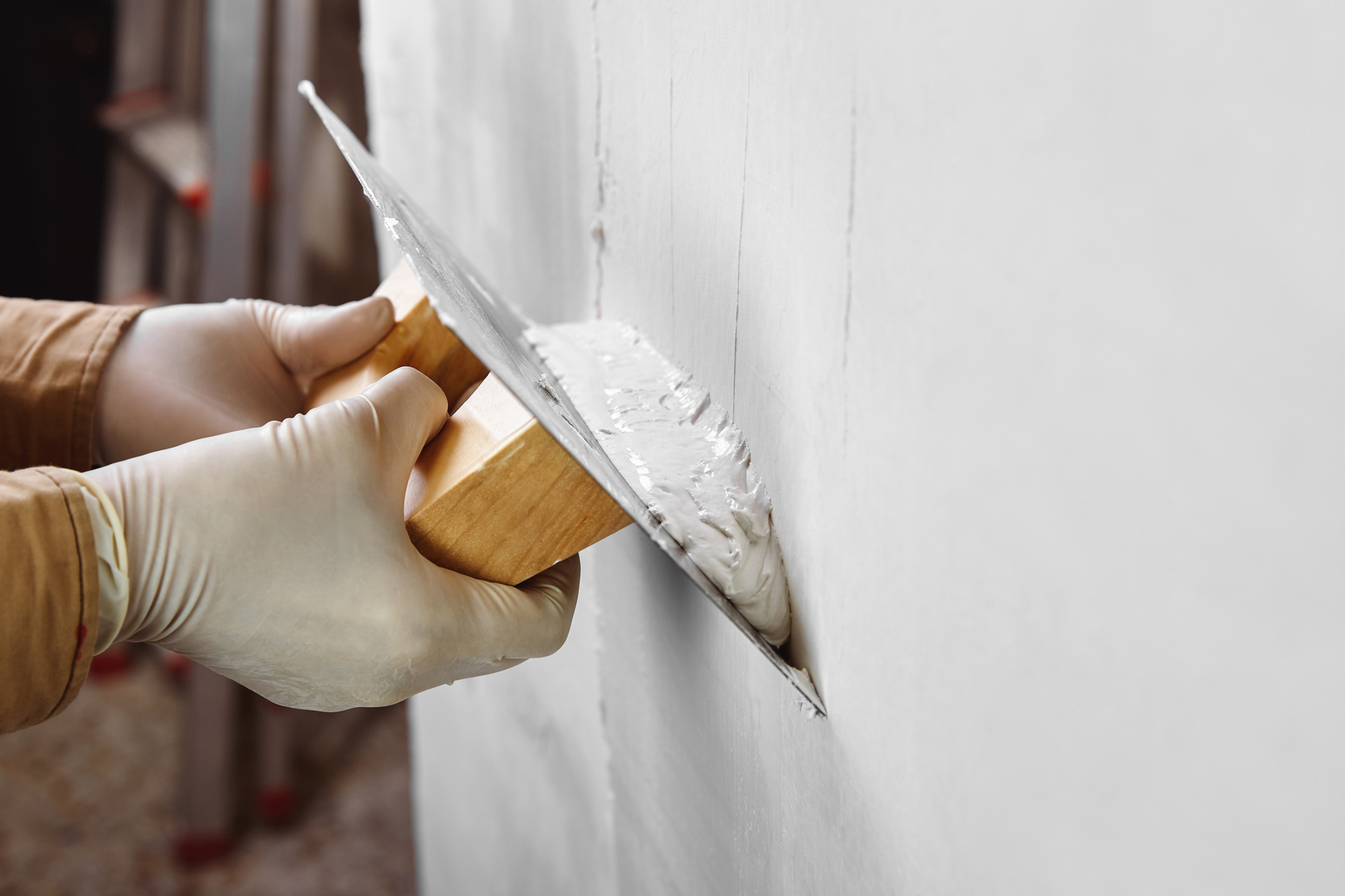
Plastering in Burley
Render, lime work and skimming across Burley and BH24, priced after we have looked at both sides of the wall.
The site visit is free and so is the written itemised quote. Thomas Hannen prices every job himself.
Render in Burley fails at the edges before it fails in the middle. The wall takes rain driven at it off the open forest, so the corners of windows, the verges and the bottom of the wall go first. Repair those properly and the rest of the elevation usually has years left in it.
Most calls from Burley are one of three things. The render outside has hairlined, gone green and started coming off in patches. A wall inside has gone soft and salty at skirting height and the paint is lifting. Or a cottage, a let or a shop needs its walls and ceilings put right before it goes back into use.
We look at both sides of the same wall, because inside and outside are usually the same story here. Sound the plaster by hand, check the render for hollow areas and cracking at the openings, and work out where water is getting in before anything is quoted. Then you get an itemised written price. Where a repair will do we quote a repair, and we would rather tell you a wall needs a season to dry than put a finish over a wet one.
The work
A dead flat wall looks wrong next to old joinery
Render repairs, and full elevations. Cutting out hollow and cracked areas, making good in a matching mix, and rebuilding a whole wall where the old coat has let go. A full elevation goes on as a primer, a mesh-reinforced basecoat and a silicone thin coat, K render or monocouche topcoat, with the mesh doubled around the corners of openings and a bell cast at the bottom so water is thrown clear of the brickwork instead of running down it. The exposed side faces south west and takes the weather off open forest, so it is the edges and the openings that fail first rather than the middle of a wall.
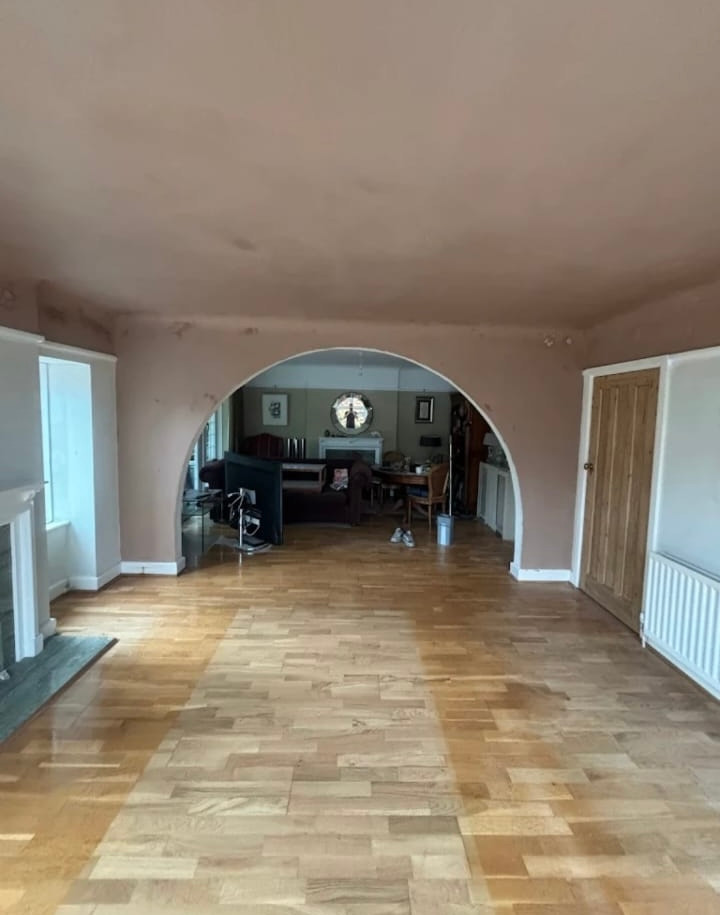
Old cottage walls. The older buildings here are solid walled with no cavity, so they have always dried out through their own surface. Those get a haired lime backing coat and a lime finish inside, and lime render in a scratch coat and topcoat outside, not sand and cement and not board on dot and dab. We keep the gentle unevenness rather than flattening it, because a dead flat modern finish in an old room looks wrong next to the joinery.
Ceilings: cracked board joints, textured coatings nobody wants, and lath ceilings that have begun to sag. Overboarding and skimming where the existing ceiling is sound and firmly fixed, taking it down where it is not, and repairing a lath ceiling from above where enough key survives.
Tea rooms, shops and let cottages have to look right and cannot close for long, so that work is planned around the season and around bookings. A kitchen or a servery wants a flat, sound background for tiling or a wipeable paint, and we finish to what is going on top rather than to what looks good bare.
Outbuildings, stables and garages: rendering blockwork outside in a scratch coat and a render coat, boarding out on stud inside and finishing in tape and joint or a full skim, and making good where a building is changing use. It is worth getting the backing coat right in an unheated building, because that is where condensation shows up first. After a leak, a rewire or new windows, patching well is a skill, and it saves replastering a wall that is otherwise sound.
How it runs
From your call to a written price
Tell us the address and what the wall is doing. The site visit and the written quote are free, and dust sheets go down and the room is prepared before a bag is opened. Burley is inside the National Park and has its own conservation area, so the outside of a wall is not a free choice: like-for-like repair is maintenance, changing the material or the finish is not, and Planning Portal sets out where that line falls. Boundaries follow properties, not the village sign, so check your address on the National Park property map first. On any of the seven listed buildings the inside is protected as well, and stripping historic plaster needs listed building consent. Ordinary replastering needs no permission, though a whole elevation back to the brickwork brings Approved Document L and building control in.
Cost
What decides the price
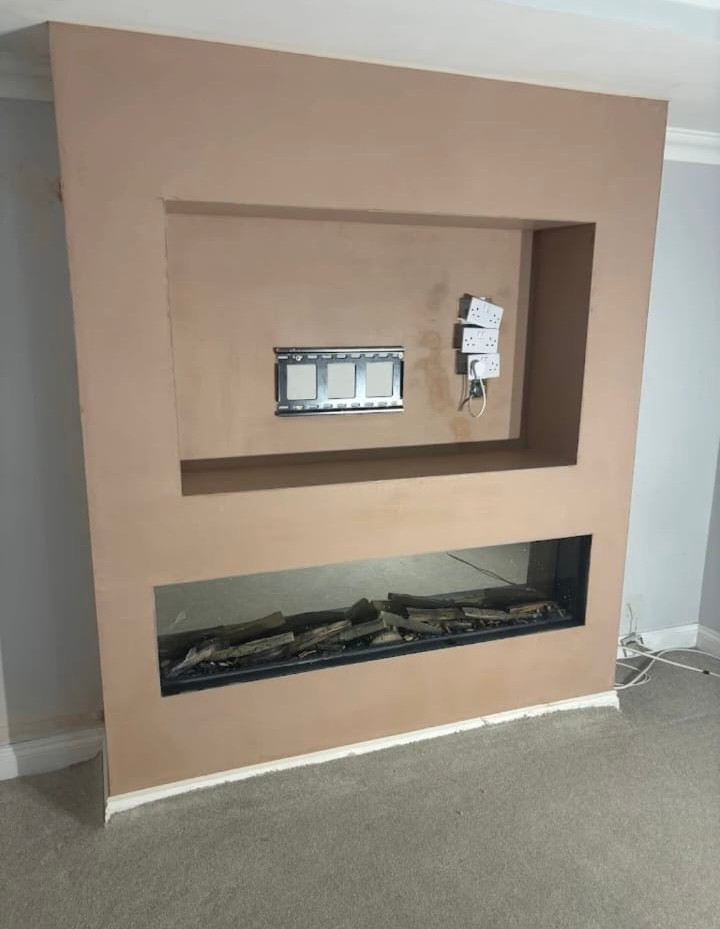
No rate per square metre. What is behind the surface decides it: plaster still stuck takes a skim, plaster that sounds hollow comes off and brings a backing coat of bonding, browning or hardwall, floated and ruled level, and a second visit with it. Most of what we price here is a cottage on one of the lanes, a house in a large plot, or a shop in the village, and outside a render job is priced on the platform as much as the render, a tower where the wall is low and a scaffold on anything two storeys up. Ask whether a backing coat is included or only a skim, whether the beads are new, and who takes the waste.
If it has let go
Plaster coming down today
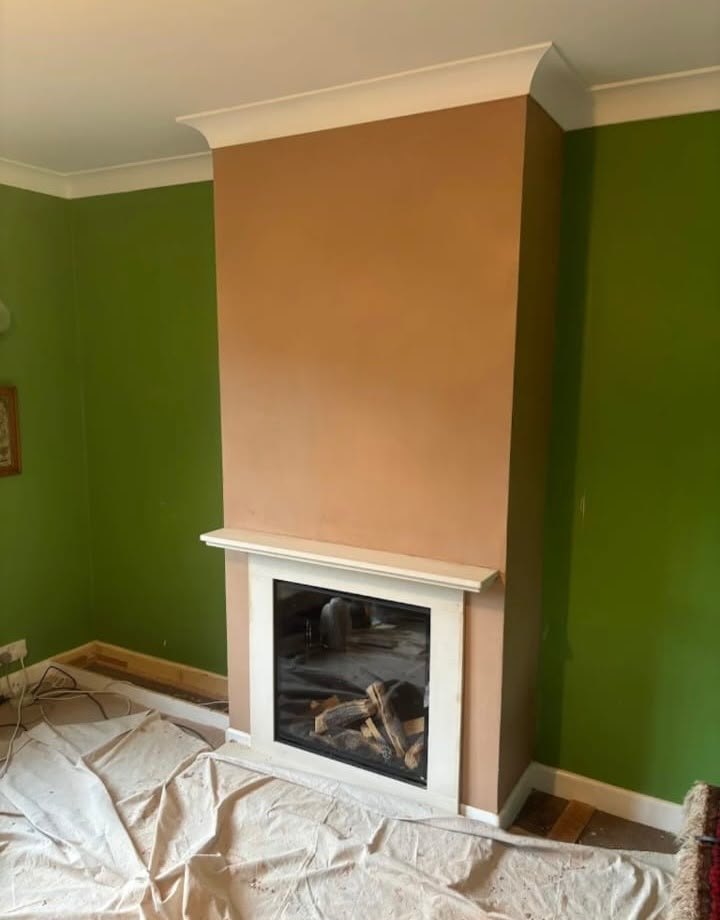
Ring rather than use the form. A ceiling that has dropped at one end, or plaster bulging after a leak, goes to the front of the queue. Keep the room shut. If the wall behind it is wet through, the way in is usually the render outside, so we look at both faces of that wall on the first visit rather than putting a new finish over a wet one.
One local thing
Why render here fails at the openings first
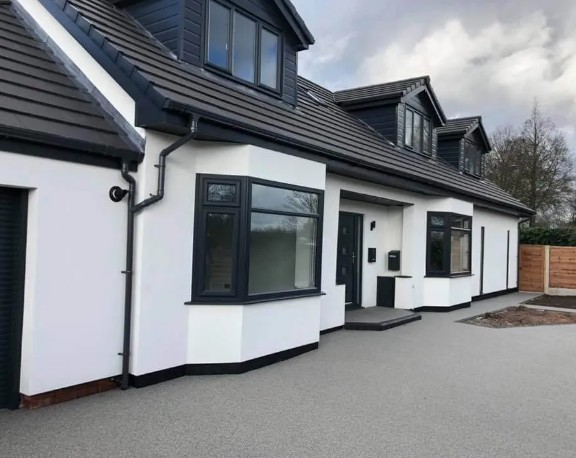
Burley sits high and open with the forest around it and the coast about ten kilometres to the south west, which is the direction the weather comes from. Rain here does not fall onto walls so much as get driven at them, and that decides what belongs on the outside of your house. A traditional sand and cement render is strong but rigid, and rigid coats crack.
Once a hairline opens at the corner of a window, driven rain gets behind the render and cannot get back out, the wall stays wet, and the first hard frost lifts the coat off in plates. Two things to look for: fine map cracking spreading from the corners of openings, and a dull, hollow note when you tap the render near the bottom of the wall.
The answer on a modern wall is a system that moves. A mesh-reinforced basecoat spreads the stress instead of concentrating it at the openings, and a silicone thin coat topcoat sheds driven water while still letting the wall pass vapour, so it stays cleaner longer on the shaded side too.
We double the mesh diagonally at the corners of every opening, where the cracks would otherwise start, and finish with a bell cast at the base and a drip under the cills so water leaves the wall instead of tracking back under it. On an old solid wall neither is right and lime is the answer, and because Burley is a conservation area a change of finish is worth checking before it goes on rather than after.
Who you are dealing with
A local firm you can check
We cover Burley and BH24, out through Bransgore and Thorney Hill, and across to Ringwood, Bisterne and Sopley. Bournemouth Roofing & Building Ltd, registered in England and Wales, company number 15471719, which you can look up in a minute. Thomas Hannen's business, and he is the one who comes out to price the job, not a salesman. A verified customer's 10 out of 10 on Checkatrade. The visit and the written quote are both free.
Questions
Burley questions we get asked
Who decides what our render can look like in Burley?
The New Forest National Park Authority rather than the district council, and Burley has its own conservation area on top of that. Inside a conservation area appearance is controlled: putting back the same render in the same finish is maintenance, but changing the material, the texture or the colour is not, and that conversation happens before anything is ordered. There are seven listed entries in the village, and those are stricter again.
Why does sand and cement render crack on exposed walls here?
Because it is rigid and the wall behind it is not. Burley stands 9.9km inland with its weather face to the south west, so walls get long spells of driven rain and then dry out again. A hard cement coat has nowhere to put that movement, so it cracks at the corners and around the openings and then holds water behind itself. A mesh reinforced silicone system flexes and sheds instead.
Does nutrient neutrality hold up a plastering job here?
Not a plastering or rendering job. The Solent nutrient rules bite only where a scheme adds overnight accommodation, so they catch a loft conversion or an annexe and leave a re-render, a re-skim or a ceiling alone. If the plastering is the tail end of a conversion that adds a bedroom, the National Park raises it at the application stage, long before we turn up. We price the plastering either way.
What should I look at on the render before ringing you?
Knock across the wall with your knuckles and listen for the change from solid to hollow, then work out where the hollow area stops. Look at the bottom edge for a bell cast that has been rendered over, and at the sills and reveals, because on a south west facing wall in Burley that is where water gets in first. Photograph the cracks with something alongside them for scale.
How quickly can somebody come out and look at it?
Burley is a shade over ten miles from the yard, so Thomas Hannen can usually get out within a few days and the visit costs you nothing. He measures the walls, checks what is behind the existing finish and writes the quote itemised, so the render, the beads, the access and the waste sit on separate lines. On a National Park job he will also say whether the Authority needs asking first.
Nearby, and next door
Plastering and rendering near Burley
Plastering and rendering nearby
Our other trades in Burley
Everything we do in Ringwood Plastering and rendering, all areas Every area we cover
Free quote
Render cracking at the corners?
Tell us the address and what you can see. The site visit is free and so is the written itemised quote.