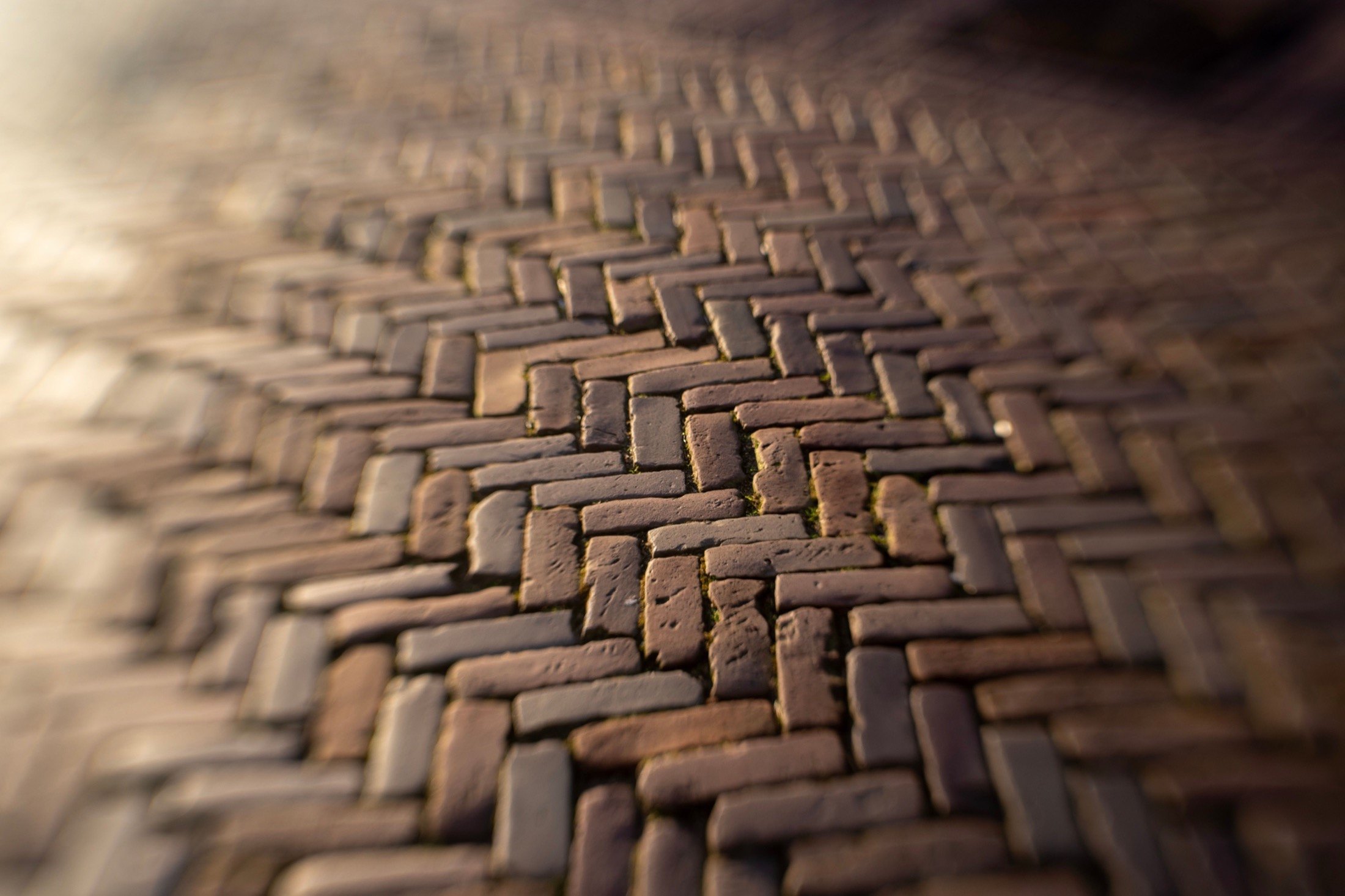
Driveways and patios in Bashley
Relaid block paving, rural entrances put right, new drives and rebuilt patios around Bashley. Free site visit and a written itemised quote.
The site visit is free and so is the written itemised quote. Thomas Hannen prices every job himself.
Most Bashley drives now needing work are the block paved ones that went down with the housing in the nineties. Thirty years on it is the sub-base and the edge restraints that have gone, not the blocks, and that decides whether you relay or rebuild.
Three things bring people to the phone here. The block paving has dropped into two tracks where the cars sit and the edges have started to spread. The gravel at the entrance keeps ending up on the lane, and the lane keeps sending its water back down the drive. Or the patio has settled towards the house and the slabs rock when you cross them.
We come and survey it rather than quote off a photograph. That means levels, a look at where water runs in heavy rain, and a small trial hole so you can see what your drive is actually built on. Then you get a written price with the dig, the base, the edges, the drainage and the surface each on their own line, and a straight answer about whether a relay would do.
The work
Nineties block paving, rural entrances and heavy vehicles
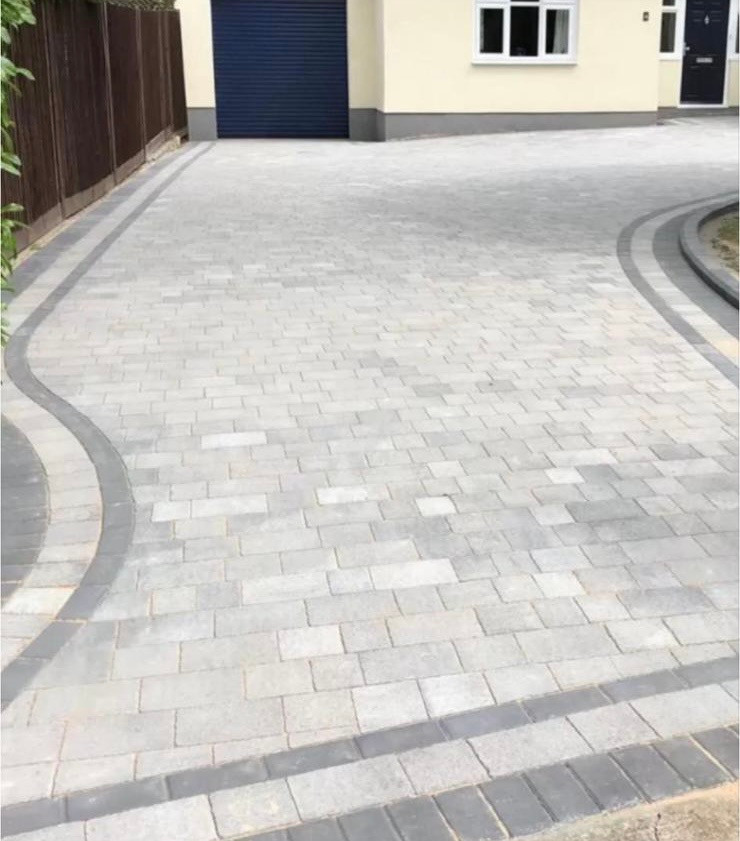
Block paving thirty years on. A lot of Bashley was built or rebuilt through the late eighties and nineties, and block paving was what went on the drive. That first generation is reaching the end of it, and the pattern is always the same: rutting in the two wheel tracks while the rest stays flat, jointing sand gone, weed through the joints, and the concrete edge restraint leaning outward because it was bedded rather than haunched. If the sub-base is still sound we lift, re-screed on sharp sand, reset and properly haunch the edgings and re-sand with kiln dried sand, which is three days rather than a fortnight. If the formation has softened, relaying buys a couple of years and we will say so on the visit.
Rural entrances are their own job. With no kerb to stop it, loose stone walks out onto the lane and the lane's water walks back in, so the top of the drive potholes and the bottom ponds. The fix is a cross fall and a channel drain across the entrance, a gully or silt trap at the low point, and a bound or blocked apron for the first few metres so there is nothing loose left to migrate. Where the ground will not soak, that water needs a positive outfall to a ditch rather than being sent to the highway.
Built for what you actually park. A drive designed for two cars is not a drive designed for a caravan, a horsebox, a works van or a delivery lorry turning on it. Concentrated loads punch through a thin build up, and the damage shows as a dished area or a cracked slab rather than as general wear. If something heavy lives on your drive, say so at the survey, because it changes the excavation depth, the sub-base, and whether we would put block paving, reinforced concrete or tarmac in that spot.
Permeable block, resin bound gravel over a bound base, tarmac and concrete all have their place, and what is under the drive usually decides between them. Loose gravel and hoggin still suit a plot off a lane so long as they go on a membrane and a compacted sub-base with a haunched edge to hold them. Patios from the nineties were bedded on dabs and rock once they settle, so we rebuild on a compacted base with every unit fully bedded, a fall away from the house and the level kept below the damp proof course.
How it runs
From your call to a written price
The New Forest National Park Authority is the planning authority inside the Park boundary, which runs close by here, so the National Park Authority's interactive property map shows which side you are on. Paving the front is still permitted development inside the Park, provided that above five square metres the surface is permeable or drains to a soakaway or a border rather than the road, and the front garden rules are set out on the Planning Portal. A new opening onto the highway is different, because a dropped kerb goes through the highway authority. There is no conservation area over Bashley, and where a property is one of the five listed entries in the area, the Authority's heritage and conservation guidance is the place to start.
Cost
What decides the price of a driveway
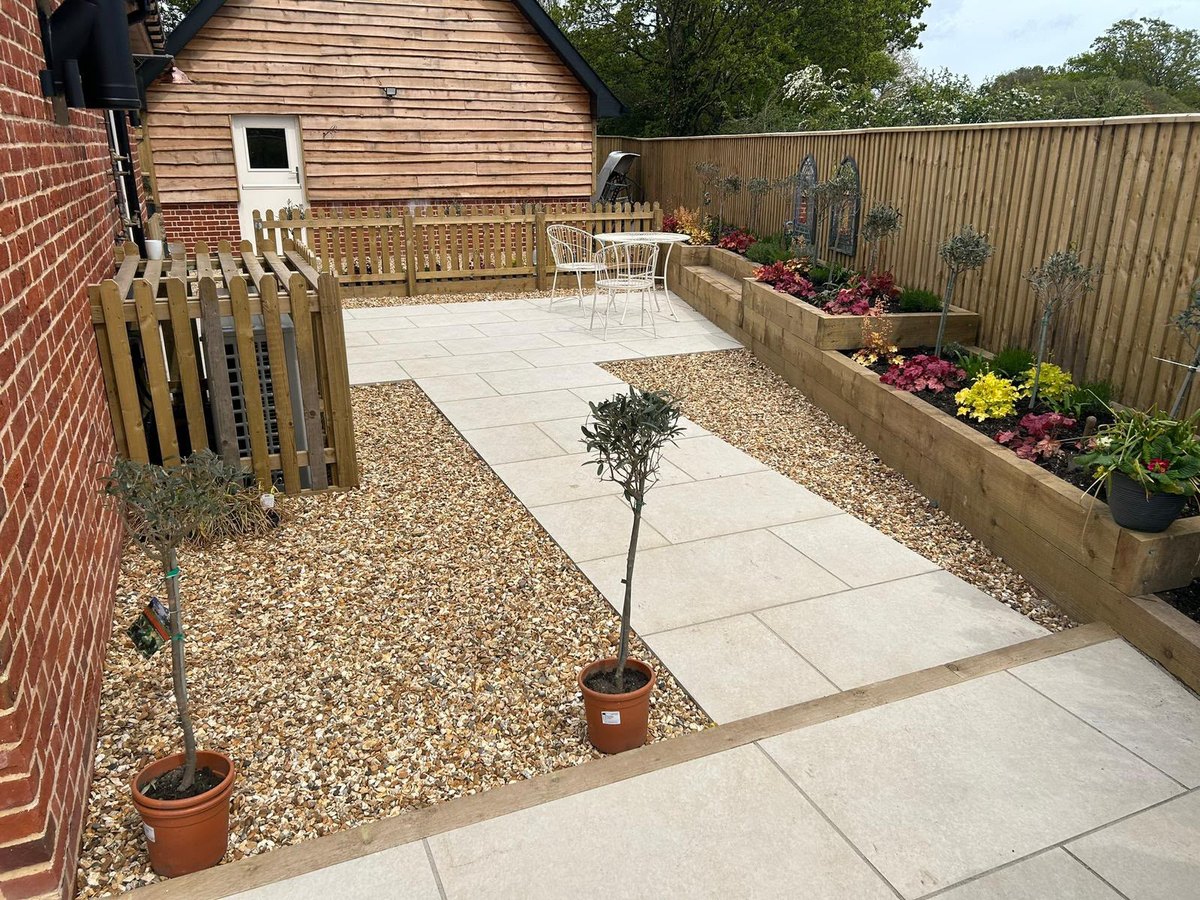
Getting to it. A nineties detached house with a turning area, a bungalow behind a hedge with a narrow opening, and a place halfway down an unmade lane are three different jobs before any stone is ordered. What you park on it is the second question, because a horsebox or a works van wants a deeper build up on the part it stands and turns on. Then the ground: dig depth and how much muck leaves are the real variables. Ask any quote for the depth, the sub base, the drainage, whether the edgings are haunched and who takes the spoil.
If it is urgent
A trip hazard, or a drive that floods
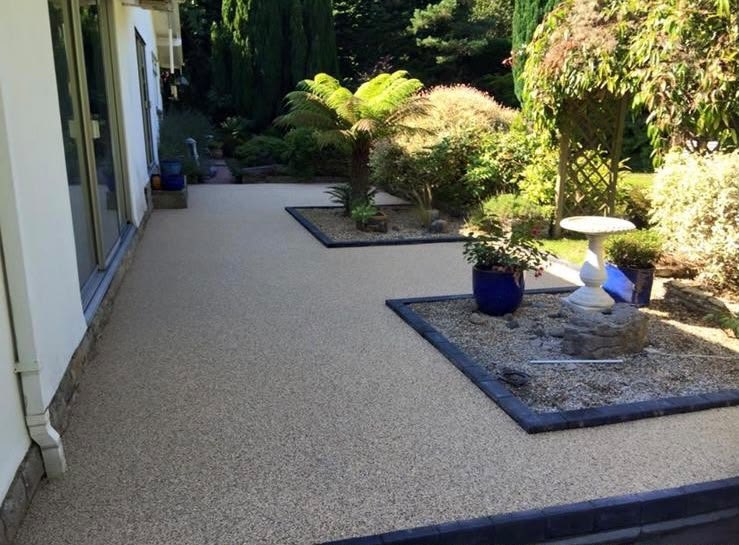
Ring, do not use the form, if a flag has lifted across a path or an entrance has washed out. Same with a gully that has stopped taking water and is now putting it against the house. The first visit makes it safe and gets the water moving, then the permanent work is priced once the ground can be opened. Bashley is about ten and a half miles from us.
Worth knowing
Being in a National Park changes who you are dealing with
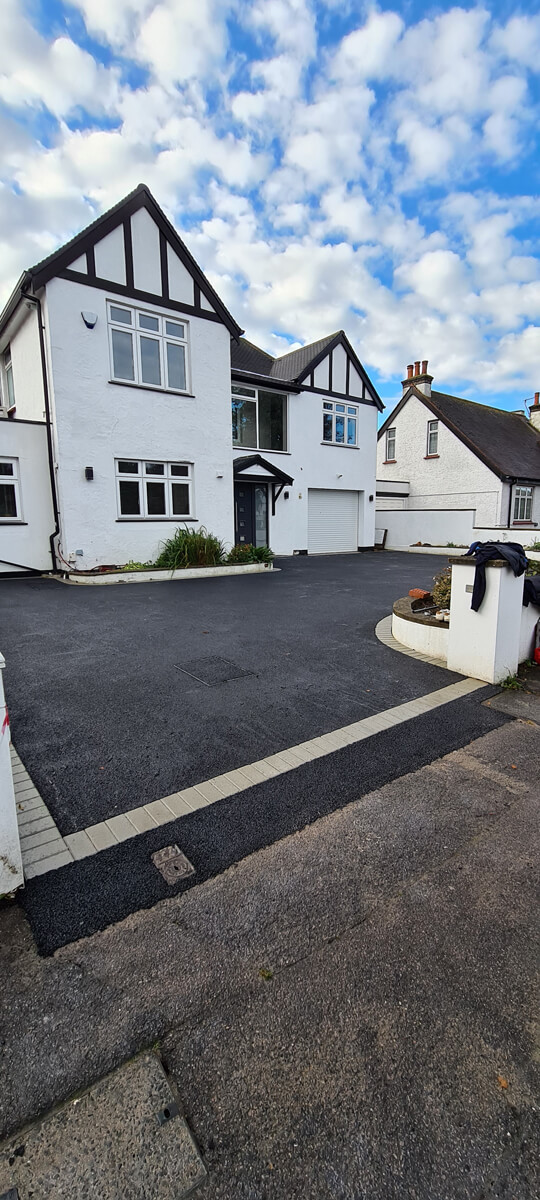
Bashley sits on the edge of the New Forest, and for a good many addresses here the National Park Authority is the planning authority rather than the district council. That does not make a new drive harder to get, because paving in front of the house is permitted development inside the Park on the same terms as anywhere else.
What it changes is where any application goes, who looks at it, and what they are looking for, which is whether the work sits comfortably in a landscape the Authority is there to protect. The boundary does not follow anything obvious on the ground, so it is worth checking your own address on the property map before you assume either way.
In practice, that shapes two decisions. The first is the edge of your plot: a soft verge, a gravel margin or a hedge line reads better than a hard kerb and a bright white edging, and it is also cheaper. The second is the surface where the drive is visible from the lane. A muted resin bound gravel, hoggin or graded stone disappears into the setting in a way that a large black macadam apron does not. None of that is a rule anyone will enforce on a straightforward drive.
It is simply the difference between work that nobody looks twice at and work that invites a conversation. Where the ground will not take a soakaway, Approved Document H sets out the drainage order to follow, and on a plot with room a SuDS approach that lets the water spread and soak on your own land is nearly always easier here than trying to send it anywhere else.
Who you are dealing with
A local firm you can check
We cover Bashley, Ashley, New Milton and the BH25 postcodes along the edge of the forest, working out from Bournemouth. Bournemouth Roofing & Building Ltd, registered in England and Wales, company number 15471719, which you can look up in a minute. Thomas Hannen's business, and he is the one who comes out to price the job, not a salesman. A verified customer's 10 out of 10 on Checkatrade. The visit and the written quote are both free.
Questions
Bashley questions we get asked
Bashley is inside the National Park. Who decides on a drive?
The New Forest National Park Authority is the planning authority for Bashley rather than the district, so an application for paving goes to them. Most front hardstanding stays within permitted development where the surface is permeable or the water is directed to a soft area on your own land, but the Park looks harder at anything visible from a lane or a green. We build the drainage to keep it permitted rather than gambling on an application.
Our drive was laid in the nineties. Worth relaying it?
Usually the blocks are worth keeping and the base is not. Bashley is largely newer stock, 39.3% of it built between 1983 and 2008, and drives of that generation went down on a thin sub base that suited one light car and does not suit what sits on them now. Blocks that lift clean can be washed and relaid. The saving comes from reusing them, not from skimping on what goes underneath.
Does the wet ground here rule out a permeable drive?
No, it rules out assuming one will work unaided. Bashley ground is naturally wet, so permeable block over a full depth of clean stone can still fill faster than it empties. We measure how quickly water actually drains before choosing, and where it is slow the stone layer is built as a tank with a controlled outlet instead of relying on it soaking away. That combination keeps the drive permitted and keeps water off the road.
What does Thomas actually check on the visit here?
The levels first, then the ground. At a Bashley property that means where water currently goes in a downpour, how far the finished surface will sit below the threshold, whether the National Park will have a view on what is visible from the road, and what comes out of a trial hole in wet ground. He measures, photographs and writes it up as an itemised quote. The visit and the quote both cost nothing.
How many days is the drive out of use?
On an ordinary Bashley frontage it runs three to five working days from breaking out to jointing, and the drive is unusable for most of that. Where there is width we phase it, doing one half at a time so a car can still stand on the plot. Wet ground adds a day, because the dig has to be matted or pumped before stone goes in. You get told the split before we start.
Nearby, and next door
Driveways and patios near Bashley
Driveways and patios nearby
Our other trades in Bashley
Everything we do in New Milton Driveways and patios, all areas Every area we cover
Free quote
Get a price for your Bashley drive or patio
Tell us what has sunk, washed out or started rocking, and we will come out, dig a trial hole where it matters and put a written price in front of you.