
Driveways in Milford on Sea
Drives, shared parking courts and terraces on the coast, specified for the weather they actually get.
The site visit is free and so is the written itemised quote. Thomas Hannen prices every job himself.
Last updated
Yes, we work along the coast here, and what changes at Milford on Sea is the detail, not the sales pitch. Salt, wind and blown shingle go at the joints, the edges and the drainage of a drive long before they touch the middle of it, so those are the parts we specify differently.
In Milford on Sea the weather strips joints and greens patios, and shared courts sink where the bin lorry turns. The jointing sand has gone from a block drive on an exposed frontage and weeds are up through it within a season. A shared parking court has sunk where the bin lorry turns, and nobody is sure who is supposed to sort it. Or a patio faces the wrong way, stays damp, goes green and is slippery from October to April.
We come and look at all of it, not just the bit that annoys you. Which way the weather comes at the surface, where the water and the shingle end up, what depth of stone is under the existing drive, and whether the gullies are still doing anything. Then you get a written quote with the excavation, the muck away, the sub-base, the edgings, the surface and the drainage priced on separate lines.
The work
Drives, parking courts and exposed frontages on this stretch of coast
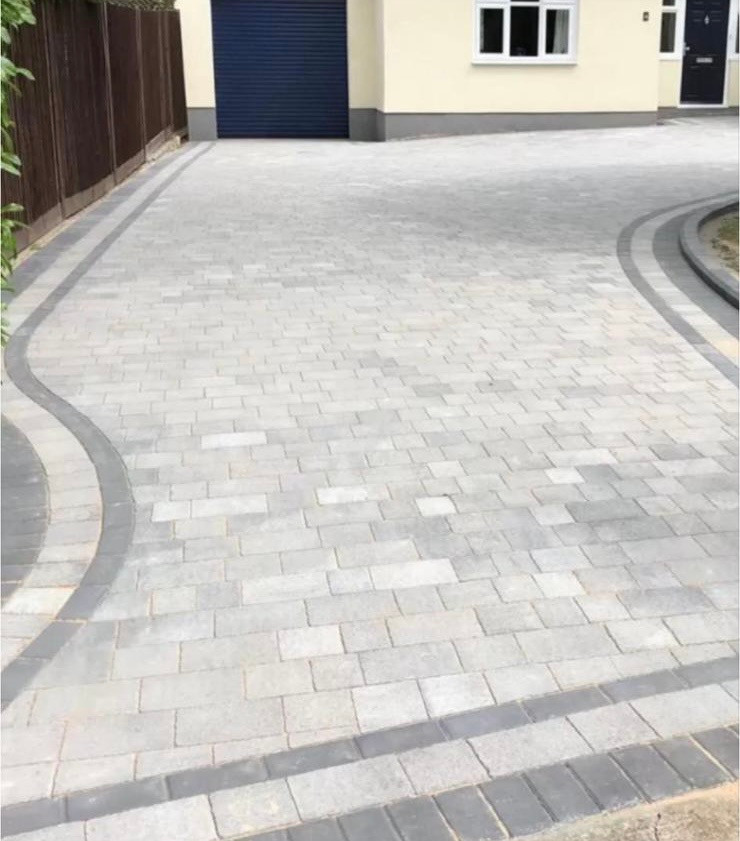
Rebuilding a drive properly follows the same discipline as anywhere. The steps are: excavate to formation, a geotextile membrane over soft ground, a compacted sub-base at a depth that suits what parks on it, edge restraints haunched in concrete, then the surface. What changes at less than a kilometre from the water is the detail at the perimeter, because the wind gets at edges and open joints first and works inwards from them.
A quarter of the housing in Milford on Sea is flats, so a good share of the work is a communal court, not one household's drive: sunken bays where the refuse lorry turns, block paving spread because the edge restraint has gone, tired tarmac and a gully that silted up years ago. Worth knowing before you ring round, the court usually belongs to the freeholder and is managed out of the service charge, so the quickest route is finding out who manages it. We will still come and look and put what it needs in writing, so you have something to send them.
Choosing a surface this close to the sea. Porcelain is dense and takes very little water, so it stays cleaner and shrugs off staining better than a softer natural stone on an exposed terrace. Resin bound over a sound concrete or tarmac base gives a smooth surface with no loose stone to blow about. Block paving still earns its place where vehicles turn. Whatever goes down, we pick something with grip in the wet, never a polished finish that looks superb dry and is unusable in a shower.
Joints matter more in Milford on Sea than they do inland. Kiln dried sand blows and washes out of an exposed drive far quicker, and once the joints are empty the blocks start to move, so on the seaward side we use a stabilising jointing compound, or mortar joints on a patio, and we treat a re-sand as ordinary maintenance, because it will need doing. Gullies and channel drains fill with shingle and grit, so the falls have to be right and the gratings have to be the sort you can lift and clear by hand. We keep water off thresholds, take it to a permeable area or a soakaway inside the boundary, and clear the drainage as part of the job.
Terraces get low walls against the wind, even steps and a finished level clear of the damp proof course; for that work, see patios in Milford on Sea. Where an older house sits low and the ground outside has crept up over the years, we take the level back down and run a gravel margin along the wall instead of paving tight to it. Smaller work as well: lifting a sunken bay, replacing a cracked slab, repointing a patio, re-sanding a drive and clearing blocked gullies.
How it runs
Laying a drive on Milford's clay, stage by stage
Thomas stands at the front with you, watches where the rain runs now, and prices the drive himself. One company handles the dig, the base and the surface. The written quote separates excavation, muck away, sub-base, edgings, the surface, and drainage.
On a detached house with a wide frontage, the lorry tips stone straight in and hauls spoil straight out. A bungalow with a narrow side entry, or the shared court behind a block of flats, means smaller loads, and for a shared court we need the freeholder or managing agent to agree before anything starts. The road is kept clean and all spoil leaves with us. Should the dig hit an old drain or a soft pocket of clay, you get a photo and a figure before we tackle it.
Planning sits with New Forest District Council. At the front, more than five square metres of new hard surface needs permission unless it is permeable or drains to a lawn, border or soakaway inside your boundary, as Planning Portal guidance on paving your front garden sets out. That right belongs to houses. Flats and maisonettes have no permitted development rights for hard surfacing, so new paving on a shared court needs planning permission. A ground level patio at the back is permitted development. Frontages in Milford's central conservation area, or on a listed house, are worth checking with the council first.
Cost
Clay and drainage decide a driveway price here
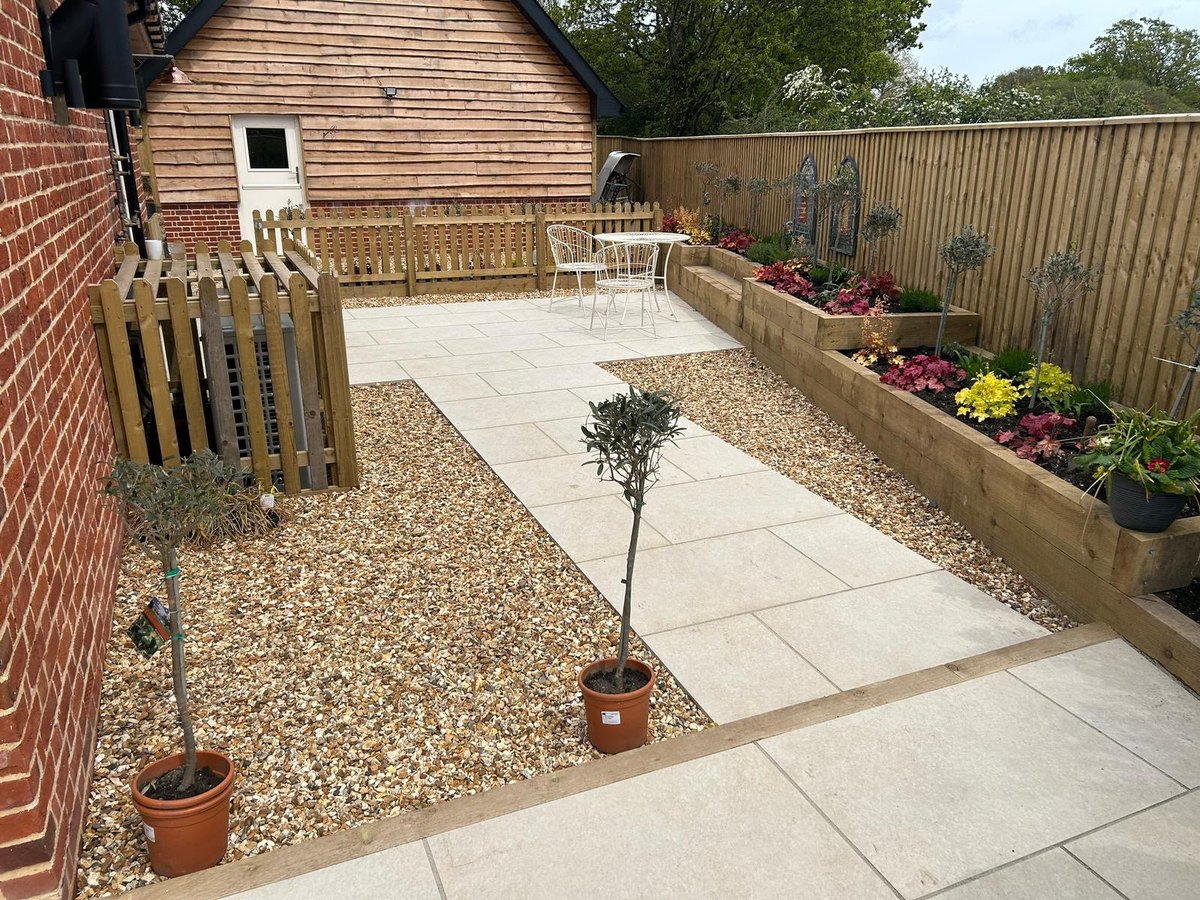
What you walk on is the smaller part of the bill. The layers beneath it, and the water, take the larger share.
Clay. Milford sits on clay that shrinks in summer and swells in winter. The sub-base has to be deep enough to spread the load across that movement, and water has to be steered away from the house footings, so drainage counts for more here than on sandy ground.
Drainage. You may need a permeable surface, a channel drain across the entrance, or a soakaway. Clay soaks water away slowly, so a permeable build designed to the BS 7533 guide, with storage in the stone beneath, is often the better answer.
Salt and shingle. Gullies near the front silt up with sand and grit, and the jointing sand has to be one that will not blow out of the joints in the wind.
Access. A wide front on a detached house is quick. A narrow entry means barrow work. A shared court behind flats comes with a freeholder and a service charge, which adds paperwork before a spade goes in.
Ask anyone else quoting: what depth of sub-base is going in? Where will the surface water go? Who removes the spoil?
If it is urgent
A lifted block or a gully that has stopped working
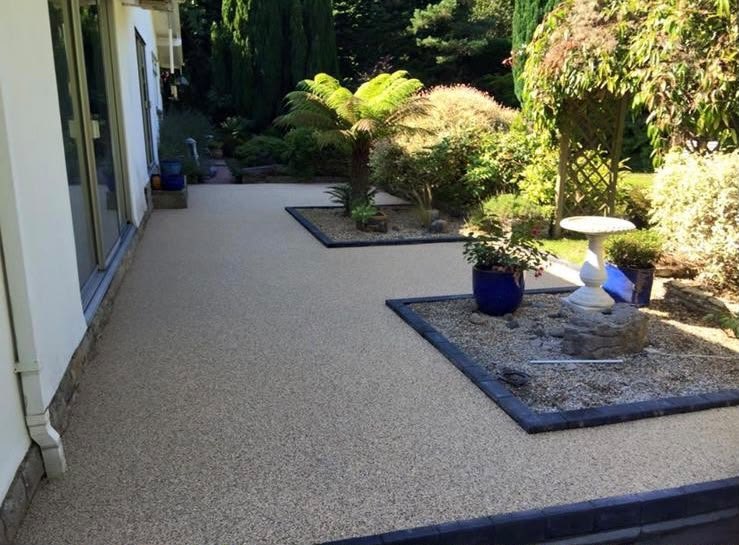
Ring rather than using the form. A lifted slab, a dip by a doorway, or a gully that no longer drains cannot sit for long. If sand and grit have choked the gullies and water is now heading for a door, tell us.
We make it safe on the first visit and get the water moving, then price the rest. Driveway work is scheduled Monday to Friday, 8am to 6pm. If we are on site and cannot answer, expect a call back as soon as we can.
Worth knowing
Salt and wind change the specification, not the sales pitch
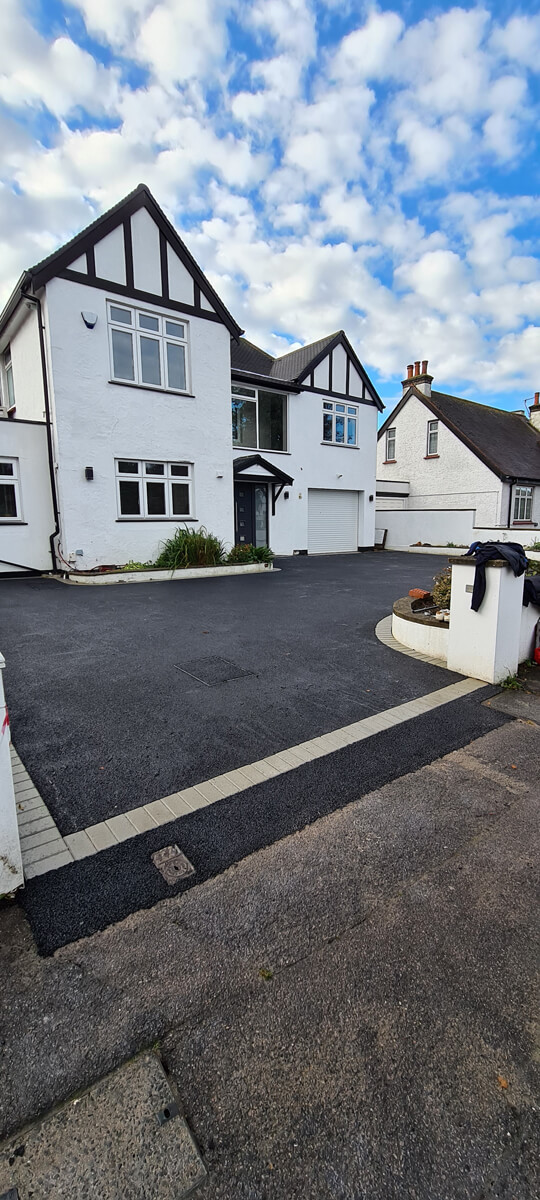
Being a few hundred metres from the water changes how a surface behaves. Salt in the air keeps things damp between showers, so algae and black growth come back faster on a shaded terrace than they would inland, and a surface that is slippery when wet is wet more often in Milford on Sea.
That pushes us towards textured finishes and away from polished ones, and it is the reason we would rather sell you a patio you can walk on all winter than one that photographs well in June. The same damp is why sealing a patio that has not properly dried out is a mistake: you trap the moisture and the growth under the seal.
Wind does the other half. It empties open joints of kiln dried sand on exposed frontages, drives shingle and grit into gullies and channel drains, and it corrodes anything metal from the cut edges inwards, which is why gratings, fixings and metal edgings get chosen for this position, not picked off a shelf. Practical version: stabilised joints or mortar joints on the seaward side, gratings you can lift and clear yourself, falls that shed away from doorways, and a five minute check after a gale, which saves a repair in March.
Who you are dealing with
Who builds your driveway
We are based in Boscombe, 10.3 miles from Milford on Sea, and New Forest District Council is the authority for your drive. We also lay drives in Everton, Hordle, Keyhaven and Lymington. Your contract would be with Bournemouth Roofing & Building Ltd, registered in England and Wales, company number 15471719. Before you book a visit in Milford on Sea, you can read our customers' Google reviews, word for word, on our reviews page.
It is Thomas Hannen's firm, and Thomas paces out the drive and prices it himself. Our Checkatrade profile shows a verified customer's 10 out of 10. We do not charge for the site visit, and the written quote with each item listed is free too.
Planning at a glance
Do you need planning permission in Milford on Sea?
Most repairs in Milford on Sea need no application at all. What decides whether a change to the outside of your house does is who the council is, whether a conservation area or a listing applies, and whether the place sits in a protected landscape.
| Question | In Milford on Sea |
|---|---|
| Who decides | New Forest District Council is the planning authority for Milford on Sea. The National Park boundary runs close by, and the Park's property map shows which side an address falls. |
| Conservation area | Yes: Milford-on-Sea Conservation Area. Check whether your street is inside the boundary before changing anything visible. |
| Listed buildings | Yes, there are listed buildings in and around Milford on Sea. If yours is one, work can need listed building consent. |
| Protected landscape | No National Park or National Landscape covers Milford on Sea. |
Questions
Questions about driveways in Milford on Sea
Which surface copes best at this distance from the water?
At 0.7km from the shore what fails first is metal, not stone. Salt finds the pins in a steel edge, gate ironwork and the trims around a resin surface, and rust bleeds down pale paving and stays there. So we use concrete haunched edges, not pinned steel, non ferrous or galvanised fittings, and a joint that tolerates staying damp. The paving itself is seldom the thing that lets a Milford on Sea drive down.
Our parking court is shared. Who has to instruct you?
The freeholder, or the managing agent acting for them, not a single leaseholder acting alone. Flats make up 25.6% of the homes in Milford on Sea, and shared courts, bin runs and unallocated spaces come with them. The written quote goes to the agent and to you, and nothing starts until the instruction comes from whoever owns the surface. We work a court in halves so nobody is left without anywhere to stand a car.
Why does the seaward side of the paving go green?
Because that face never really dries out. The exposed elevation here looks south west into the weather, and salt laden air holds moisture on a surface long after the rain has stopped, which is exactly what algae wants. It is a drainage and jointing matter, not a failure of the slabs. We pick a joint that can be washed without blowing out and set the falls so water leaves instead of sitting in the low corner.
Are we inside the National Park for planning purposes?
For most houses, no. Milford on Sea falls to New Forest District rather than the National Park Authority. The Milford-on-Sea Conservation Area covers the village centre, and twenty eight entries are listed here including the Church Of All Saints. So for most houses the planning question is surface water: keep it on your own ground, or use a surface that lets it through. A frontage in the conservation area, or a listed one, is the exception and gets checked before we price it.
Can we keep one car on the drive while you work?
Usually one, until the base goes in and needs compacting, after which nothing stands on it. Near the front at Milford on Sea there is often no room on the street either, so the parking is agreed before the first morning rather than argued about on it. If the space is allocated in a court, give the neighbours the dates and we sequence the work so the other spaces stay reachable.
Nearby, and next door
Driveways near Milford on Sea
Nearby places we also cover for driveways, with straight-line distances from Milford on Sea, and the other trades we offer in Milford on Sea itself.
Driveways nearby
Our other trades in Milford on Sea
Driveways and patios guides
Driveway planning permission and where water goes Sunken or ponding driveway: base or drainage Indian sandstone vs porcelain paving: an honest comparisonEverything we do in Lymington Driveways, all areas Every area we cover
Free quote
Free quote for your drive, court or patio in Milford on Sea
Ring or send a photograph and we will come and look at the whole of it. The visit and the written itemised quote are free.