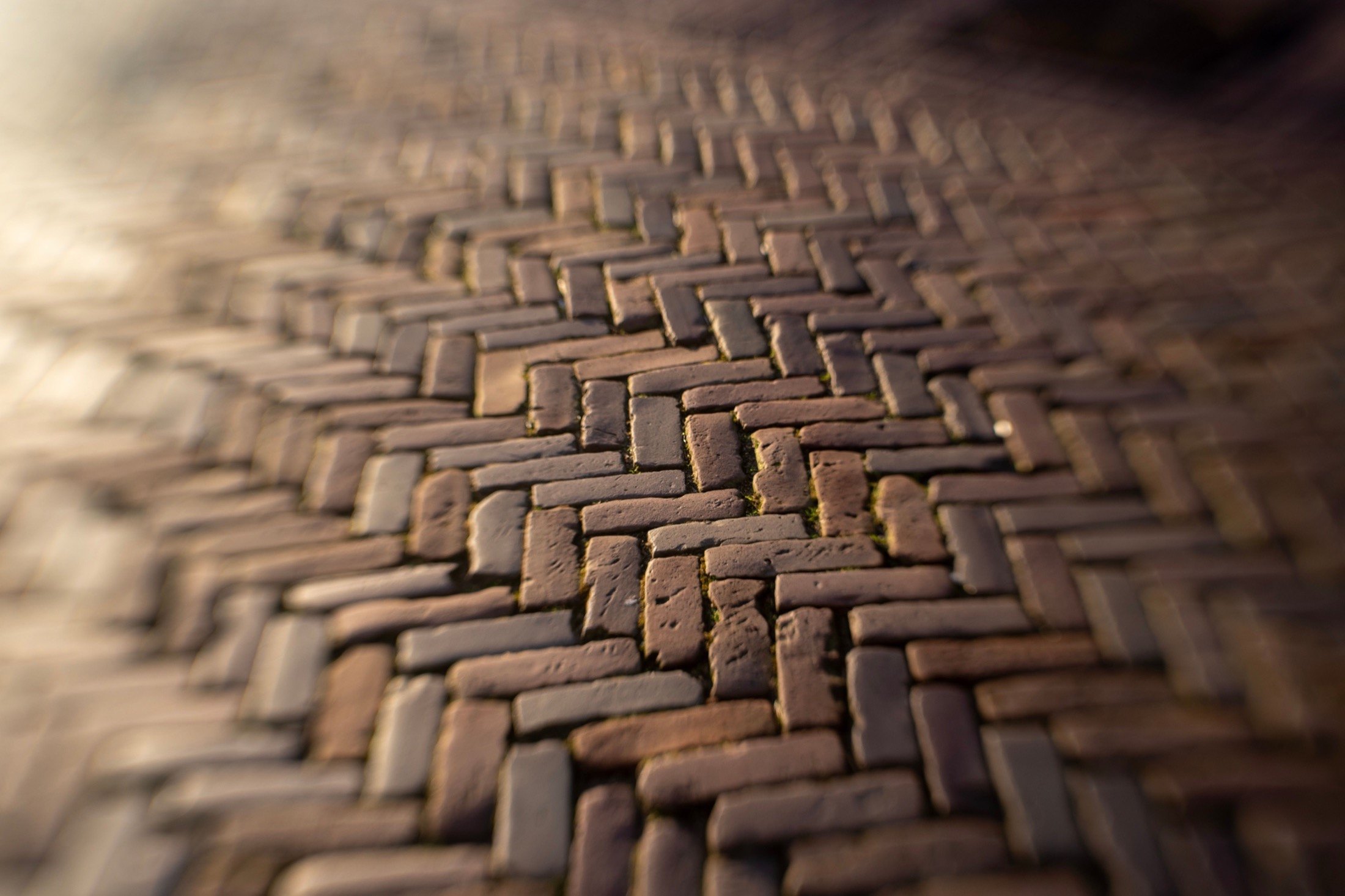
Driveways and patios in Boldre
Drives and patios designed against a wet winter, with the ground tested before anything is promised about where the water goes.
The site visit is free and so is the written itemised quote. Thomas Hannen prices every job himself.
Round Boldre a drive fails in winter or it does not fail at all. Everything we build is designed against a wet February rather than the dry week you are standing in when you ask for the quote.
The three calls we get from this parish barely change. A long drive off the lane that has rutted and potholed, with the gravel all washed to one end. A turning area that has gone soft, so the car leaves ruts in it every time it swings round. Or a patio in a shaded garden that is green, slippery and sitting in water two days after rain.
None of those is a surface problem. They are all the same problem, which is water with nowhere to go and a base too thin to carry a vehicle over wet ground. We come out, walk it, dig a hole and fill it with water, and tell you what the ground is actually going to allow.
The work
Long drives, wet winters and gravel that goes walking
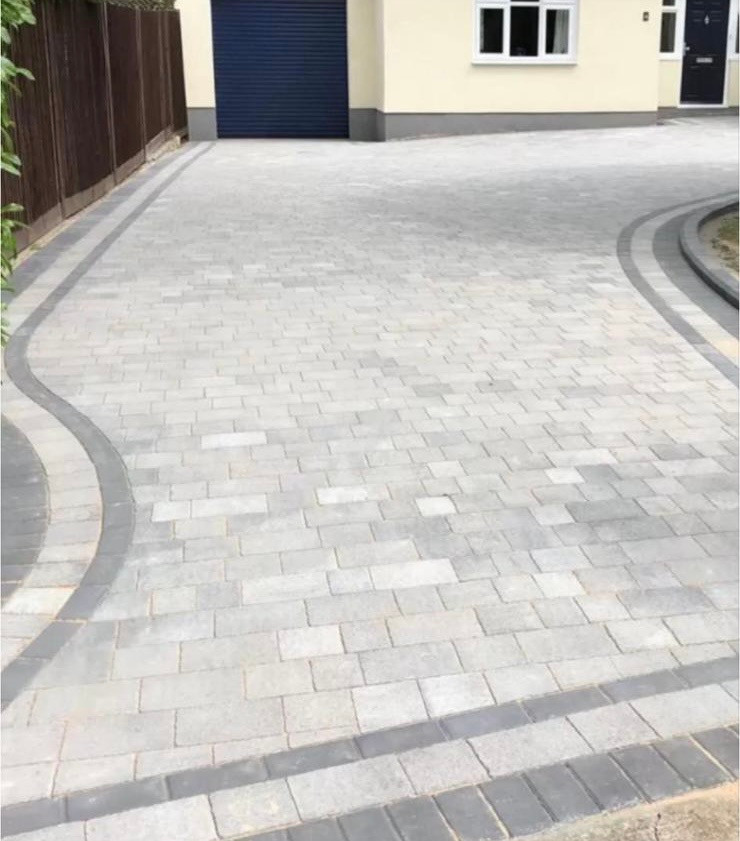
Drives off the lane. Most properties here sit back from a narrow road, so the drive is long, often shared, and takes a delivery lorry two or three times a year as well as your car. Built thin it ruts under the wheels and hollows where you turn. Built properly it is a dig to firm formation, a geotextile membrane so the stone cannot work down into soft ground, and a graded sub-base laid and compacted in layers to a depth set by what we find rather than by a catalogue. On top of that, bound gravel, tarmac or permeable block all work, and loose gravel works too as long as it has a real edge restraint haunched in concrete holding it in.
The strip between your gate and the road is frequently verge you do not own, so re-grading it or laying stone across it is a question for the highway authority rather than a design decision. It matters because that is exactly where water from the lane arrives on your land. A cross drain or a channel drain at the entrance, taken somewhere that can accept it, saves the rest of the drive more often than another hundred millimetres of stone would.
Turning areas and soft ground. A car turning does far more damage than a car driving straight, because it grinds rather than rolls, and on ground this slow to drain a turning head is the first thing to go soft. The honest answer is usually a deeper build up over a cellular grid on that part only, not across the whole drive. We would rather spend your money on the ten square metres that fail than on the eighty that never will, and a soakaway here wants a percolation test rather than an assumption.
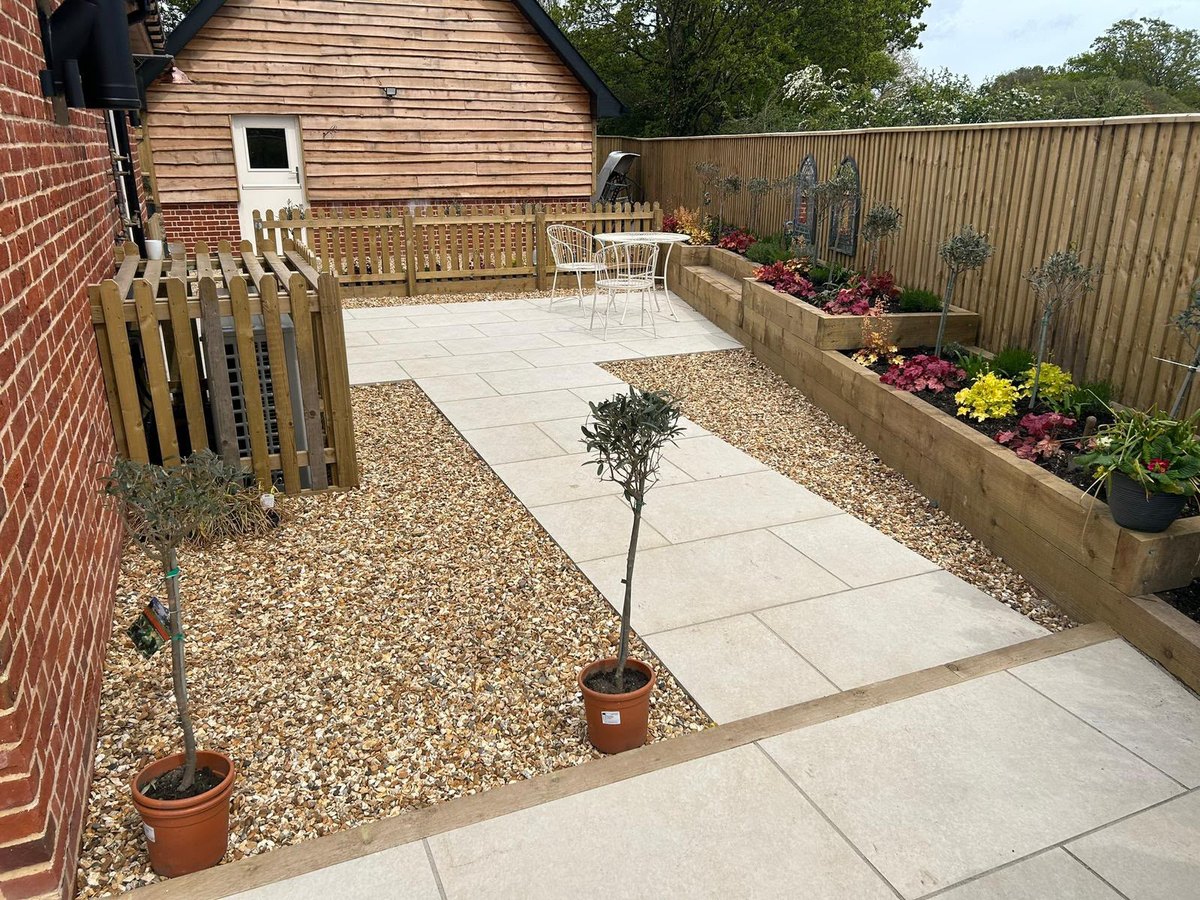
Gardens here are green, sheltered and slow to dry, which is hard on paving. Sawn natural stone and porcelain both cope, porcelain on a full primed mortar bed, stone pointed by hand with a proper mortar rather than a brushed in compound that fails in the wet. Concrete slab and older riven paving can be lifted, the base corrected and the whole thing relaid if the flags are sound. Where a block drive has lost the kiln dried sand out of its jointing, a re-sand and a reset edge stops the wheel tracks going sunken and weed taking the open joints. Algae staining is a clean, not a replacement, and ponding in one spot usually means one thing has failed rather than everything.
How it runs
From your call to a written price
The New Forest National Park Authority is the planning authority here rather than the district council, and the National Park Authority keep an interactive property map that will tell you in a minute what your plot carries. Paving at the front stays permitted development while the rain stays on your land, and more than five square metres of hard surfacing draining out onto the road needs planning permission, which is the front garden rule in short. A new vehicle crossing goes to the highway authority separately, and on a lane with a verge that is worth starting well before the paving. There are eleven listed entries in the parish and no conservation area.
Cost
What decides the price of a driveway
Long drives here mean the material can usually be tipped near the work, which helps, but the lane getting to it does not always take a full lorry, and that changes the delivery before anything is laid, so the last stretch is machine or barrow work and the muck away leaves by grab lorry, with a side gate the only way in on the tighter plots. Ground is the bigger variable: it holds water, so the dig goes deeper in places and the spoil is heavier, and where the water is allowed to go has to be tested rather than assumed. Ask any quote how deep the dig is, what sub base is going in, where the surface water ends up and who takes the spoil away.
If it is urgent
A trip hazard, or a drive that floods
If a rut has filled and stayed full for days, leave it and ring, because where the water sits is the evidence and a dry drive tells us less. A slab lifted at a threshold or a gully that has stopped taking water is the same, a call rather than the form. We make it safe first and price the permanent work once the ground opens. Boldre is fifteen miles out.
The one local thing
The ground is wet, so a soakaway is a test rather than an assumption
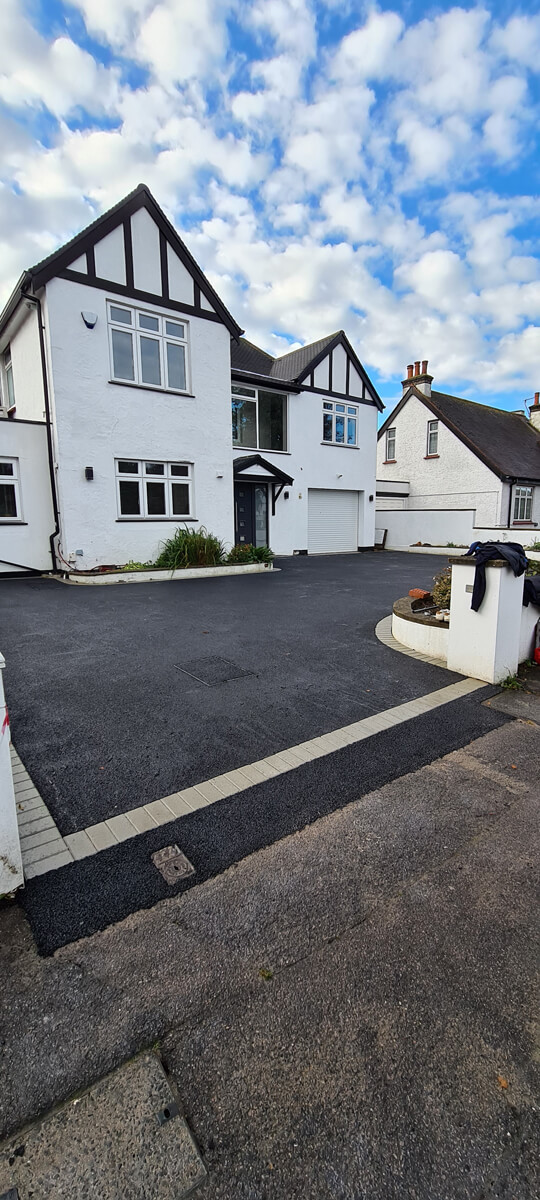
This is naturally wet ground with a water table that comes up close to the surface through the winter. That single fact undoes more driveways here than any amount of traffic. A soakaway dug in August in ground that looks fine will take everything you put into it, and the same hole in January is already full before the first drop of your rainwater arrives.
Then the water backs up, sits under the drive, softens the formation and the surface starts to move within a season or two. Anyone quoting a soakaway on this ground without having tested it is guessing with your money.
So we do the test, at the depth the soakaway would actually sit, and Approved Document H sets out how it is done and expects the thing to sit well clear of the building. If the ground takes water, the design is a permeable surface over an open graded sub-base that holds the rain and lets it go slowly, which is the whole idea behind what the drainage guidance calls SuDS.
If it does not, we stop pretending and give the water a positive outfall instead: a land drain to a ditch or a watercourse, with whoever owns it agreeing first. What it may never do is go into the foul drain or straight out onto the lane. The other thing wet ground changes is the build itself. A separation membrane stops the sub-base pumping down into softened ground, and the stone gets compacted in thinner layers than it would on a dry site, because a plate only densifies what is near the top of it.
Who you are dealing with
A local firm you can check
We cover Boldre and the SO41 lanes around it, through Pilley, Lymington and out to Brockenhurst, about fifteen miles from us. Bournemouth Roofing & Building Ltd, registered in England and Wales, company number 15471719, which you can look up in a minute. Thomas Hannen's business, and he is the one who comes out to price the job, not a salesman. A verified customer's 10 out of 10 on Checkatrade. The visit and the written quote are both free.
Questions
Boldre questions we get asked
Boldre is in the National Park. Does gravel need permission?
Loose gravel spread over a surface that already exists is not usually development at all, so it does not. What changes inside the New Forest National Park is that anything visible from a lane or a green gets considered on design grounds, and a wide area of new hard surface at Boldre is likelier to attract comment than the same thing in a town. Keeping it permeable and no larger than you need is what keeps it simple.
Our gravel keeps washing out onto the lane. What stops it?
Containment and a bound layer. On wet Boldre ground, water moving across the surface carries loose stone with it, so the fix is an edge standing proud enough to hold the gravel, a cross fall sending water into a channel rather than down the slope, and either a resin bound or grid retained top so the stone cannot roll. Loose stone on a slope with no restraint will always finish up in the road.
Can paving be laid on ground that never dries out?
It can, as long as the water is dealt with rather than covered over. The ground at Boldre is naturally wet, so the dig goes deeper, a clean stone layer goes in over a geotextile that stops the subgrade pumping up into it, and that layer is given somewhere to drain to. Bedding straight onto soft wet ground is what produces a patio that rocks underfoot by the second winter.
Our house dates from the eighties. Is the original drive worth keeping?
Often the layout is worth keeping and the construction is not. Boldre is mostly newer housing, 42.9% of it built between 1983 and 2008, and drives from that period commonly went down on a shallow base that has since worked its way into soft ground. Where the levels and the fall are right we keep the setting out and rebuild underneath. Where the drive falls towards the house, the rebuild is the chance to change that.
Is there a month you would avoid starting out here?
Midwinter, on this ground more than most. Boldre lies wet, and an open excavation in January fills faster than it empties, which means pumping, matting and a soft base to build off. Frost stops mortar bedded work as well. Lifting and relaying over existing stone is still fine in winter, but a full dig out on a wet plot is better booked for a drier stretch, and we will say so rather than push it.
Nearby, and next door
Driveways and patios near Boldre
Driveways and patios nearby
Our other trades in Boldre
Everything we do in Lymington Driveways and patios, all areas Every area we cover
Free quote
Get a written price for your drive or patio
A free visit in Boldre, a percolation test where it matters, and an itemised quote with the base and the drainage priced separately.