Roofing in Boldre
Repairs, dry ridge and verge, re-covers, flat roofs, leadwork and rainwater goods across Boldre, Pilley and Portmore.
The site visit is free and so is the written itemised quote. Thomas Hannen prices every job himself.
Last updated
A like for like re-cover on an unlisted Boldre house needs no planning permission, even inside the National Park. The question worth asking here is not what goes on the roof, it is where the water goes once it leaves the downpipe.
Boldre roof trouble tends to begin with wind, loose mortar or an unknown history. A gale has taken a tile off and a damp patch is spreading across a bedroom ceiling. Mortar has started dropping off the ridge onto the path. Or the house has changed hands and nobody can say when the roof was last touched. If that bedroom patch is dripping as you read this, ring 07435 839745 and put a bowl under it before anything else.
Boldre is not a street. It is the church, Pilley and the lanes towards Portmore, so every roof gets judged on what it is, not on what the neighbours have. We come out, get on the roof, put our head into the loft and photograph what is there. The survey ends with you told whether it needs a repair that will hold, edge work that buys you years, or a covering that has finished. Site visit and written quote both free.
The work
The stain on a ceiling is rarely under the hole
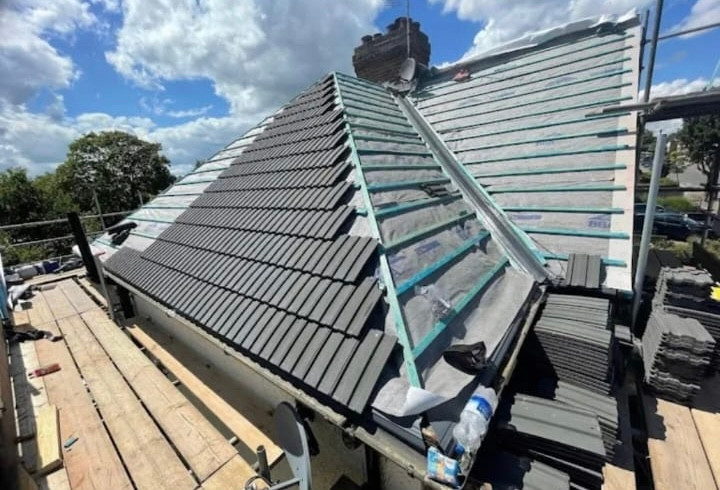
The stain on a ceiling is rarely under the hole. A leak gets chased to its entry point before anything is fixed. If all you have is one slipped slate, a lifted flashing or a single leak to find, that is covered on our page for roof repairs in Boldre. Most of what stands in the parish went up after the war and through the 1980s, so concrete interlocking tile is the covering on most roofs here.
Cottages along the lanes are different animals: plain tile, clay tile or natural slate, battens over felt, nothing like a sarking board underneath. Stone slate is not a Hampshire covering and we will say so if a quote claims otherwise. Thatch belongs to a thatcher, and ours ends at the tiling and the flashing that runs up to it.
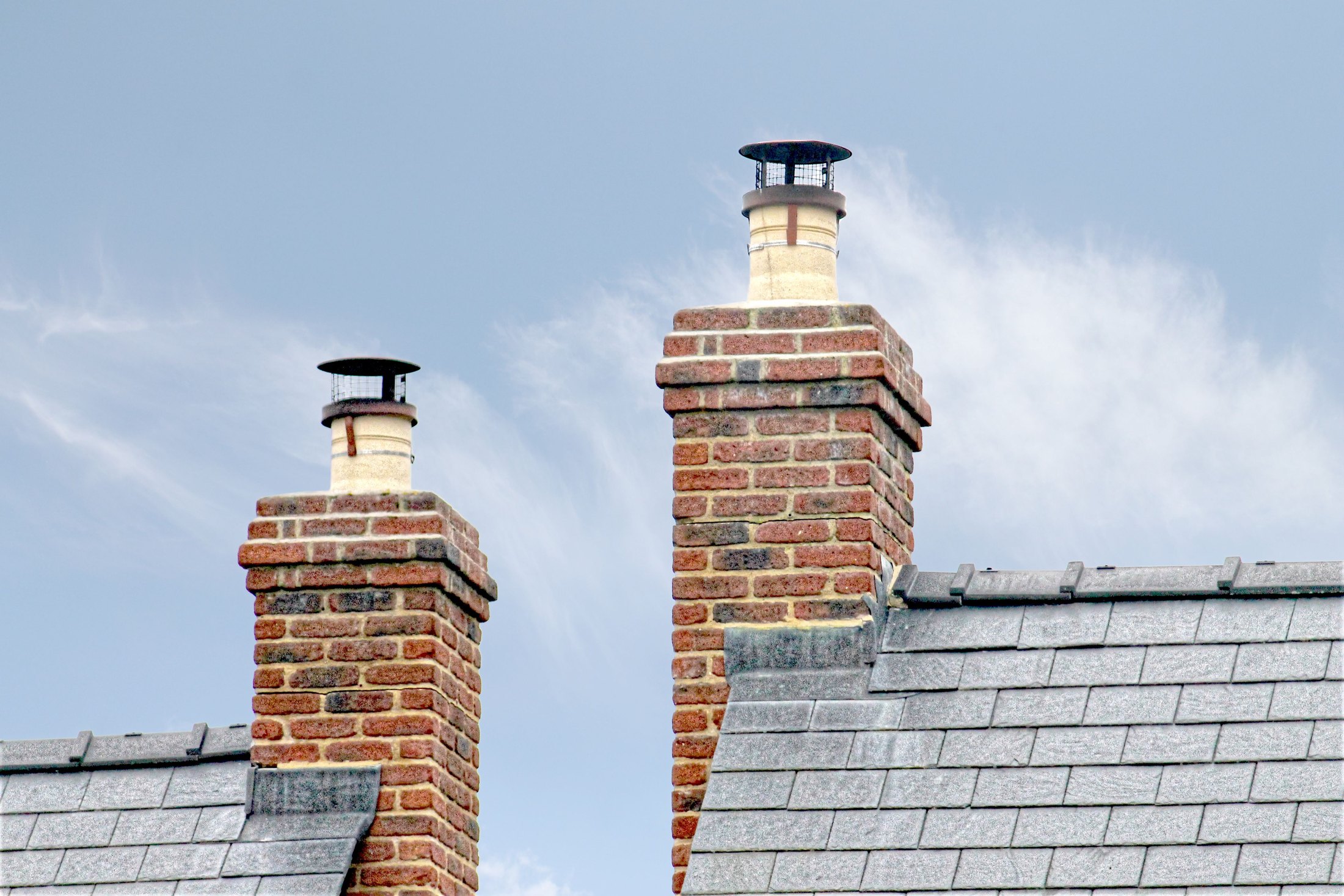
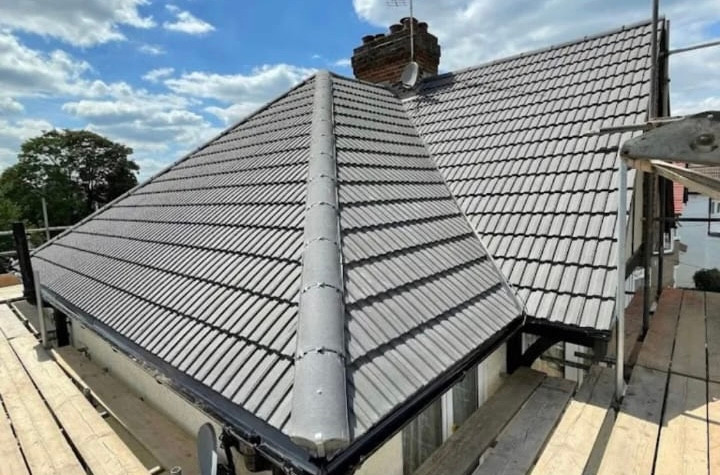
Ridge, hips and verges. On a roof of that vintage the tiles are generally fine and the mortar holding the edges down is not. It cracks, water gets behind it, frost opens it further, and eventually a hip tile is sitting on nothing much. Rather than re-bed a detail that has already failed once, we take it off and put a dry ridge and dry verge back, screwed through into a ventilated roll. That is the mechanically fixed edge BS 5534 calls for, and it ventilates the apex of the loft as a by-product.
Rusted nails, batten ends gone soft and an underlay that tears in your fingers tend to arrive as a set. Everything comes off, rafter feet that have sat wet get cut back to sound timber, then treated battens over a breathable membrane, a matched tile and stainless nails through the perimeter courses. Have it priced beside the repair before you decide.
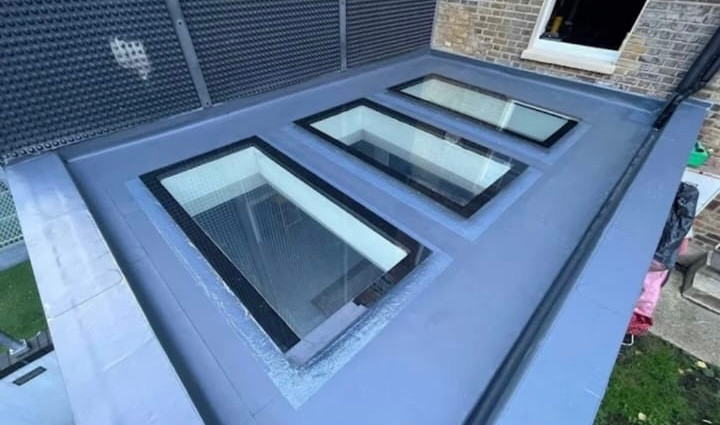
Garages, rear extensions and porches in felt, GRP fibreglass or EPDM rubber, where a soft deck, a fall running the wrong way or an outlet sitting proud of the finished level will finish any of the three early, so the deck gets opened before a covering is discussed. Chimney flashings, soakers, valleys and the abutment where an extension butts into the original slope go in code rated lead, run in short enough lengths to expand without tearing.
Shaded lanes mean moss and algae on the north slopes, and what washes off packs the gutter and the valley beneath it, so clearing debris is maintenance, not repair, and low runs come off a tower instead of a scaffold. With the covering off, insulation, eaves ventilation and a long standing condensation problem can all be dealt with for very little, and Approved Document L is the standard a renovated roof is meant to reach.
How it runs
From the first look at your roof to the last tile down
You ring, and Thomas drives out from Boscombe to look at the roof himself. He checks the ridge, the valleys, the gable verges and the lead round the chimney, then goes into the loft to see the underside of the old underlay. The written quote is itemised: scaffold, strip out, battens, membrane, the new covering, the lead at each junction, and disposal, each on its own line.
The scaffold goes up, the old roof comes off and the new one is laid, all under one written quote. On a lane with a soft verge we agree where the scaffold lorry can stand before the day, and where it cannot get close the tubes and boards are carried in. Each evening the roof is left weathertight and the drive swept, and the old tiles and felt leave with us. If stripping uncovers a rotten rafter or wet boarding, you are shown a photograph and given a price before any more is done.
Planning here belongs to the New Forest National Park Authority. Repairs, a like for like re-cover, new rainwater goods and flush rooflights on an unlisted house normally sit inside the limits in Planning Portal guidance. Enlarging a roof, a dormer included, is not permitted development in a National Park. The Forest South East Conservation Area covers much of Boldre and eleven entries are listed, so Thomas checks the address on the Authority’s property map first. Renewing more than a quarter of a roof brings in building control at New Forest District Council, because the insulation must then meet current standards.
Cost
What moves the price on an eighties roof in the Forest
A Boldre roof has no rate per square metre. The area is the easiest thing to measure and it tells you least about the job.
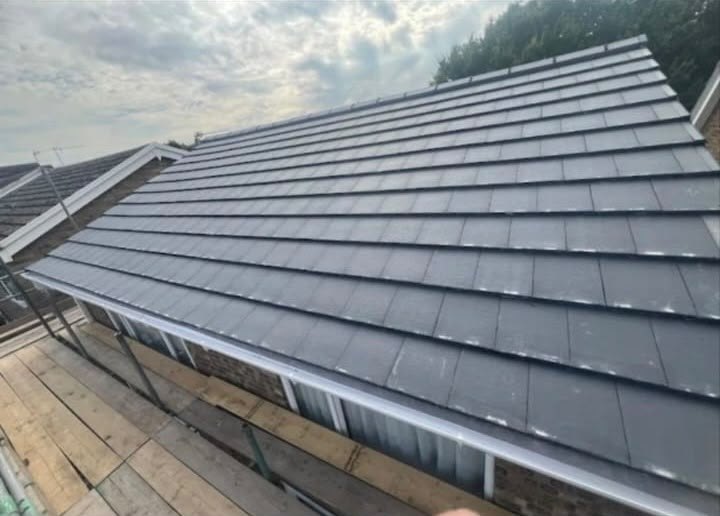
What is on it now. Most houses in Boldre went up between the fifties and the noughties, and the eighties terraces and semis mostly wear concrete interlocking tiles. Those tiles last. What gives out first is the old bitumen felt underneath, which sags and tears, and the battens it hangs from. The older cottages round the parish carry clay tiles or slate, and they are a slower strip because every sound tile is set aside to go back on.
The weather side. The most exposed walls in Boldre face south west, and wind lifts a roof at its edges, not in the middle. Dry verges, ridge fixings and the tile clips that the British Standard for slating and tiling expects on an exposed site are where a careful quote spends its time.
Getting the scaffold in. A terrace fronting a road is straightforward. A house down a gravel track too narrow for the lorry means unloading short and carrying it in, and the platform stands for the whole job, so it is its own line under the work at height rules.
Stacks and valleys. Each chimney is priced separately: the lead flashings and soakers, and whether the pots and flaunching need rebuilding. Valleys are the same.
Hold any other quote in Boldre to the same detail. Are the underlay and battens being renewed or left? What lead is going on the chimney? Does the scaffold hire cover the whole job or just the first week?
If it is leaking now
Rain coming through the ceiling right now
Put a bucket under the drip and move anything electrical away from it. From the garden, look along the ridge and the verges for a slipped tile or a gap, and notice whether the stain sits near the chimney or under a valley.
Then ring rather than filling in the form, and tell us what you saw, because it changes what we bring. The first visit is about stopping the water: a slipped tile refixed, a torn flashing dressed back down, or the slope sheeted and battened until the proper repair is priced. Booked work runs Monday to Friday, 8am to 6pm. For a leak, ring the number below, and if nobody picks up we will ring you back as soon as we can.
Worth knowing
Where the roof water ends up matters here
Where roof water lands matters as much as how it leaves the roof. Soil wetted and dried at the foot of a wall does not stay put, and ground beside a wall that is repeatedly soaked moves more, and at a different time, than ground that is not.
So a gutter that overflows in the same corner every winter, or a downpipe discharging onto a flowerbed at the foot of a wall, is putting a concentrated load of water into the one place you least want movement. That is why we follow rainwater goods to the end here rather than stopping at the gutter.
Where a downpipe runs into nothing in particular the answer is usually a positive outfall rather than a new soakaway, because a soakaway in this ground has to pass a percolation test and often will not. Approved Document H sets out what is expected, and it is cheap to sort while a scaffold is up for something else.
Who you are dealing with
Who comes out to Boldre, and how to check us
Boldre is about thirteen miles from our base in Boscombe, and we cover the village with Pilley, Bull Hill, Portmore, Norleywood and South Baddesley, out towards Lymington and Brockenhurst. Planning here sits with the New Forest National Park Authority; building control is New Forest District Council’s.
The firm is Bournemouth Roofing & Building Ltd, registered in England and Wales under company number 15471719, which you can look up on Companies House. It is Thomas Hannen’s business, and Thomas is the one who climbs the ladder and writes your price. One verified customer has scored us 10 out of 10 on Checkatrade. The site visit costs nothing, and neither does the itemised written quote. Before you book a visit in Boldre, you can read our customers' Google reviews, word for word, on our reviews page.
Planning at a glance
Do you need planning permission in Boldre?
Most repairs in Boldre need no application at all. What decides whether a change to the outside of your house does is who the council is, whether a conservation area or a listing applies, and whether the place sits in a protected landscape.
| Question | In Boldre |
|---|---|
| Who decides | New Forest National Park Authority is the planning authority for Boldre. New Forest National Park Authority's heritage pages set out what it controls. |
| Conservation area | Yes: Forest South East Conservation Area. Check whether your street is inside the boundary before changing anything visible. |
| Listed buildings | Yes, there are listed buildings in and around Boldre. If yours is one, work can need listed building consent. |
| Protected landscape | Inside the New Forest National Park, where design is looked at more closely and permitted development rights are narrower. |
Questions
Questions about roofing in Boldre
Does the park authority care about a like for like re-roof in Boldre?
The park authority is not usually concerned. Boldre sits under the New Forest National Park Authority, and putting the same covering back in the same way is maintenance, not development, so nobody needs to see it. The moment the roof line, the material or the number of openings changes, it becomes something the authority will look at, and in the park a change visible from a public road is judged on how it sits in the landscape.
The house is eighties. Is the ridge mortar the problem?
Almost certainly, yes: plenty of Boldre went up in the 1980s and after, so a common roof around here is interlocking tile with a sand and cement ridge that is now forty odd years old and cracking. You will find mortar on the ground under the gable end. Refixing the ridge dry solves it without touching the tiles.
The same corner of gutter spills over every winter. Why?
Something is holding water where it should be running. On a Boldre roof the usual causes are a fall that has dropped where a bracket has pulled, moss washed down off a north facing slope into the outlet, or a gutter sized for a smaller roof than the one above it. It matters because ground soaked at the same corner every winter is ground that moves under the wall above it.
We are mid terrace. Can you do our section alone?
Yes. Terraced and semi detached homes are common in Boldre, and on those the roof runs on past the party wall into next door. We strip to the party line, build the abutment properly and weather the joint with lead rather than a cement fillet, which is what usually fails where someone has done half a roof before. Your neighbour will need to know about the scaffold.
Is there a wrong time of year to start?
Mortar work is the only part that really cares. Bedding will not cure in a hard frost, so between December and February we either move the ridge and verge to dry fixed systems or wait for a settled spell. Stripping, battening, felting and tiling carry on through winter behind sheeting. The exposed face at Boldre looks south west, so what stops a day here is wind far more often than cold.
Nearby, and next door
Roofing near Boldre
Nearby places we also cover for roofing, with straight-line distances from Boldre, and the other trades we offer in Boldre itself.
Roofing nearby
Our other trades in Boldre
Roofing guides
Concrete vs clay roof tiles: which is right? Planning, building regs or listed building consent Storm damage to a roof: the first 24 hoursEverything we do in Lymington Roofing, all areas Every area we cover
Free quote
Get a price for your Boldre roof
Send the postcode and what you have noticed. We come out, get on the roof, and put an itemised price in writing.