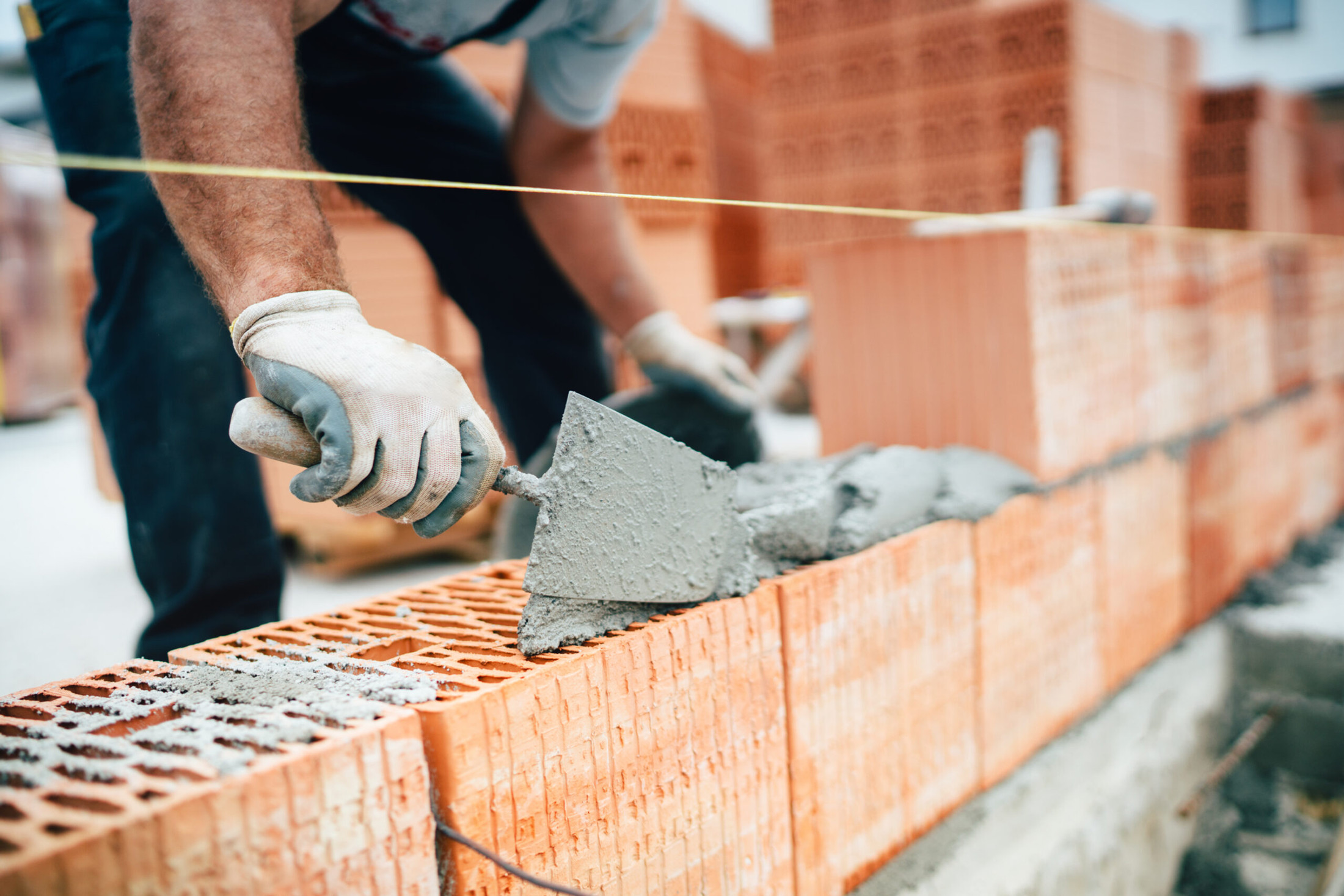
Bricklaying and repointing in Boldre
Repointing, brick repairs, chimney stacks and boundary walls around Boldre, Pilley and Portmore, priced in writing after a free look.
The site visit is free and so is the written itemised quote. Thomas Hannen prices every job himself.
Nine times out of ten around Boldre it is one elevation that has gone, not the house. The wall taking the wind and rain off the Solent wears its joints out long before the sheltered sides do, and repointing that face is a job measured in days.
Out here the weather does most of the damage and it does it unevenly. People ring us when the mortar on one side of the house has worn back so far you can lay a finger in the joint, when a chimney stack has started dropping bits into the gutter, or when a boundary wall along one of the lanes has been clipped by something wide and is now leaning out over it.
The other common call is damp inside a wall that somebody has already tried to cure by sealing the outside of it. We come out and look at the wall itself and at what is keeping it wet, because on an exposed elevation the fix is nearly always to get the joints and the rainwater right rather than to put a coat of something over the brick and hope.
The survey costs you nothing, you get photographs of what we find, and you get a straight answer on whether it needs doing this year or can wait.
The work
The jobs we do that the weather makes for us
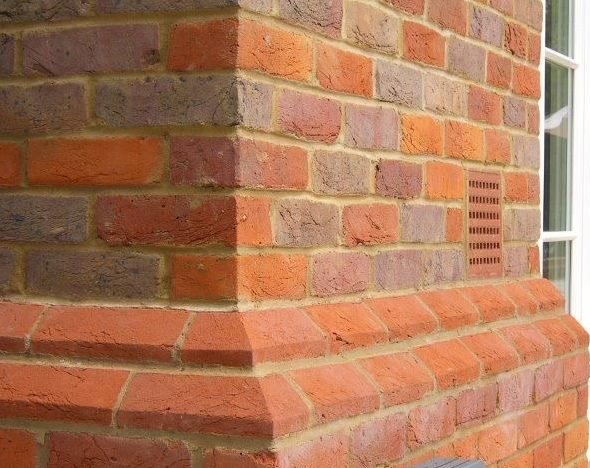
Repointing the exposed face. Boldre sits open to the south west, and driven rain works on the edges and the openings rather than the middle of a wall. On that face the mortar erodes back, the joint loses its arris and water starts standing in it, and once it is deep enough the wall is wet from the outside in. We rake out to about twice the joint width and point back in a mix matched to the wall. On the older solid wall cottages that means a lime mortar such as an NHL, which stays softer than the brick and keeps the wall breathable. On the later houses, and more than four in ten here went up from the mid eighties on, it means a cement mix. The sand is matched first, because the sand is what gives a mortar its colour, and getting lime and cement the wrong way round is what does the harm.
Stacks, and walls that never dry. A stack out here is exposed on every side and often still working, warm on the inside and soaked on the outside through a whole winter. The joints above the roof go first, the flaunching around the pots cracks, and then water tracks down the flue and shows up as staining on a bedroom wall. We repoint the stack, renew the flaunching and reset any pot that has moved, and it is worth doing everything on the stack in one visit rather than paying for the access twice. Under trees and on a north face a wall stays green and damp for months, and where the brick has already lost its face to frost it takes water like a sponge, so the worst are cut out and replaced with reclaimed brick.
Lanes here are narrow and mostly without a pavement, so the walls that edge them take knocks from wide vehicles, push from hedge roots and water sitting on top where a coping has gone. Once a section is bowed the honest answer is to take it down and rebuild it off a proper footing rather than prop it and hope, and where the wall is shared with a neighbour the Party Wall etc. Act 1996 gives them a formal say before it comes down. There are a lot of timber buildings on brick here, and the plinth under them is usually low, splashed by everything coming off the roof, and the first thing to fail. We rebuild plinths, put a damp proof course in where there never was one, and repoint the low brickwork on stables, stores and garages before the timber above it starts going.
How it runs
From your call to a written price
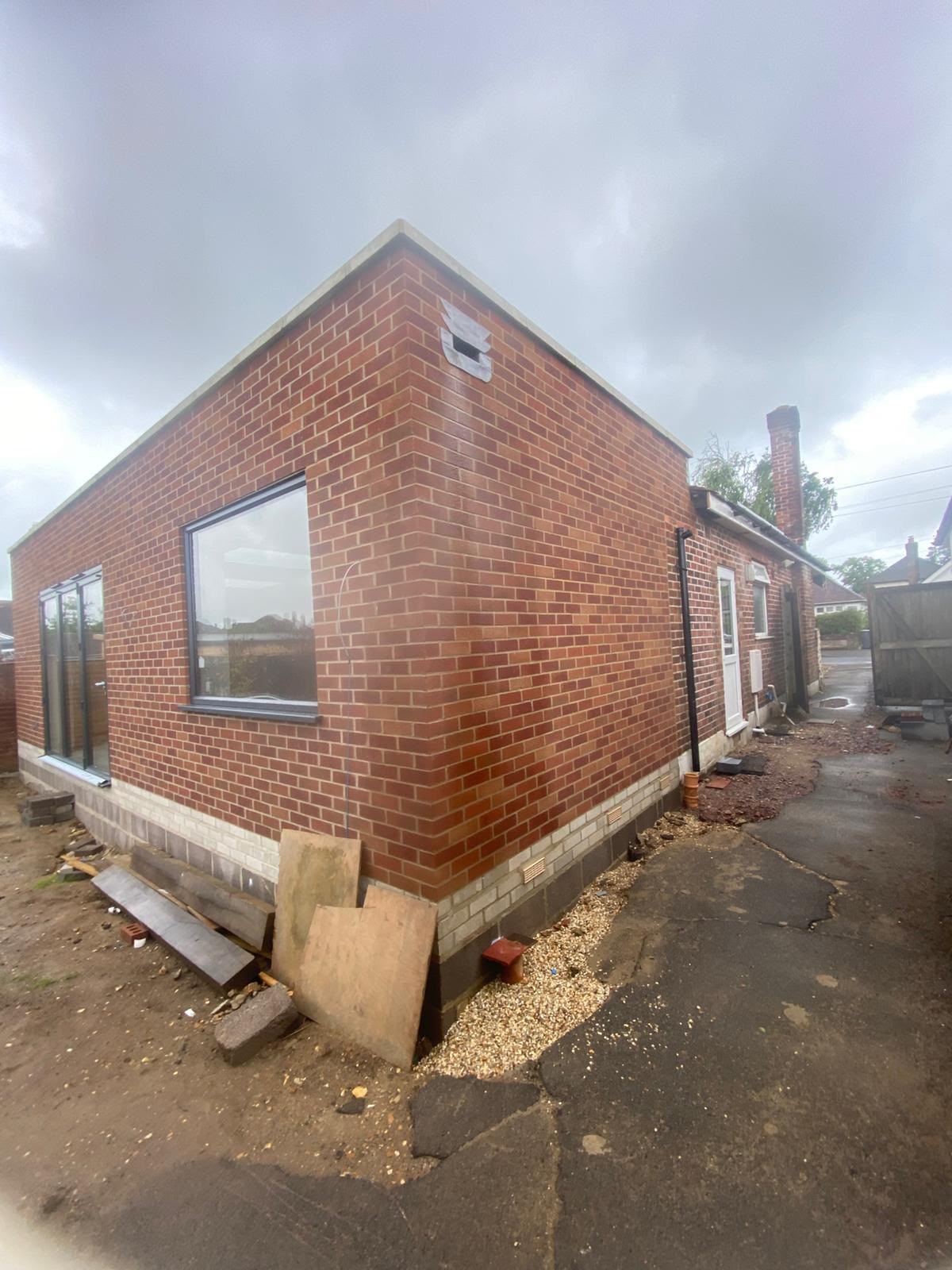
The quote is itemised: access, raking out, the mix, the area of each elevation, brick replacement and disposal on separate lines. On permission, repairing and repointing in the same materials is maintenance, so there is no planning permission to get and no building control to involve. Boldre has no conservation area of its own and eleven listed entries, on which the mortar is part of what is protected. What differs here is who you apply to for anything more, because Boldre is inside the New Forest National Park and the Authority is the planning authority rather than the district council. Not every address in the parish is inside the boundary, and the National Park Authority's interactive property map will tell you which side of it you are on.
Cost
What decides the price of a brickwork job
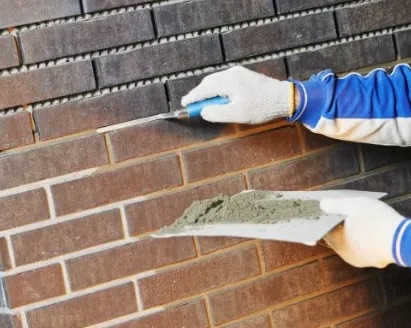
No rate per square metre: what the joints are like decides the job. A cottage on a lane with no verge for a scaffold, a house down a gravel track where everything comes in on a trailer, and a stable block you can park a mixer beside are three different jobs before a brick is laid. A chimney or a gable wants a scaffold, and how long it stands is why work at height rules make access a priced line. Raking by hand is slow, and joint depth and spalled faces decide the hours. Ask how deep, by hand or disc, what mix, and whether scaffold is in.
If something has moved
Loose brickwork, or a wall that has shifted
Ring rather than use the form. Anything overhead or leaning goes to the front of the queue, and the first visit makes it safe. We come out past Lymington to get here, so when you ring, say if the wall is leaning over a lane or a track other people use and we will get to that one first. The phone is answered 24 hours for emergencies; scheduled work runs Monday to Friday, 8am to 6pm.
The one local thing
Inside the National Park, changing the look of a wall is the bit that needs permission
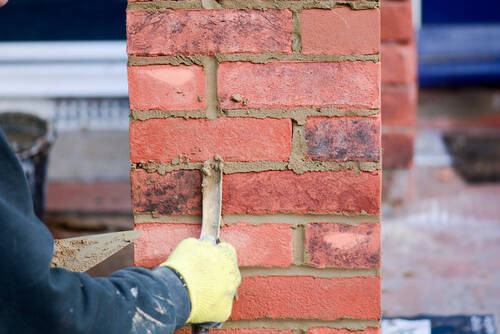
The National Park changes very little about repairing brickwork and quite a lot about altering it. Repointing, replacing spalled brick and rebuilding a wall as it was are repairs, and you can get on with them.
The catch is that permitted development rights are cut back on National Park land, and the one that bites on this trade is the outside face of the house: cladding or rendering an external wall, which would be permitted development almost anywhere else, is not permitted here and needs an application first. The Planning Portal sets out where that line falls, and it catches people who have decided the answer to a wet wall is to cover the brick over.
That is worth knowing before you spend money, because covering an old wall is usually the wrong technical answer as well as the slower planning one. A solid wall that is wet on the exposed face is nearly always wet because the joints have eroded, a gutter is running over it or the ground outside is too high, and sealing the outside of it traps what is already in there.
Sort the pointing, the rainwater and the ground levels first, in a mortar the wall can cope with, and see where you are after a winter. If you still want the appearance changed after that, it is an application to the Authority rather than a job you can simply book in.
Who you are dealing with
A local firm you can check
We cover Boldre, Pilley, Portmore, South Baddesley, Walhampton and the Lymington side of SO41, and the travel is in the quote rather than hidden in the day rate. Bournemouth Roofing & Building Ltd, registered in England and Wales, company number 15471719, which you can look up in a minute. Thomas Hannen's business, and he is the one who comes out to price the job, not a salesman. A verified customer's 10 out of 10 on Checkatrade. The visit and the written quote are both free.
Questions
Boldre questions we get asked
Do the Solent nutrient rules stop me extending in Boldre?
They do not stop brickwork, and it is worth separating the two. Boldre drains into the Solent catchment, where nutrient neutrality applies to schemes creating new overnight accommodation, so a converted outbuilding with a bed in it is caught and a repointed wall, a rebuilt pier or new chimney flaunching is not. Where your brickwork forms part of an annexe scheme, the mitigation question belongs with the National Park before the walls get priced.
Can you point just my half of a semi?
You can, and it is a common request in Boldre where semis and terraces together make up most of the housing, at 24.5% and 29.9%. The problem is the line where your new pointing stops. A fresh joint against a weathered one always shows for a season or two until the new work dulls down. We finish on a natural break, a rainwater pipe or a change of plane, rather than stopping mid wall across a front elevation.
Would rendering over the brick cure the damp on the exposed side?
Usually it moves the problem rather than curing it. On the naturally wet ground and open aspect around Boldre the south west face takes the driven rain, and a render skin laid over failed pointing traps the water already getting in behind it. The render then holds it against the brick and blows off in sheets. Repointing the joints properly and sorting the rainwater goods is the fix. Render is a finish, not a waterproof layer.
A section of wall came down in a gale. How quickly can you come?
Boldre is about fifteen miles out, so a wall that has dropped onto a lane or a footpath gets a visit inside a day or two and a temporary make safe first. We reduce the loose work to a stable line, stack whatever can be reused and leave the site safe rather than propping something that will come down again. The rebuild is priced afterwards, in daylight, once the footing can be seen.
What does Thomas look at on the visit before quoting?
He walks the whole perimeter first, because the elevation you rang about is often not the worst one. Then joint depth, whether the mortar is lime or cement, the state of the cills and copings, the ground level against the wall, and where the rainwater ends up. In Boldre that last one counts, since the ground is naturally wet and a soakaway that has stopped working shows in the brickwork before it shows in the garden.
Nearby, and next door
Bricklaying and repointing near Boldre
Bricklaying and repointing nearby
Our other trades in Boldre
Everything we do in Lymington Bricklaying and repointing, all areas Every area we cover
Free quote
Get the exposed wall looked at
A free site visit, photographs of what is actually failing, and an itemised written quote for the elevations that need doing.