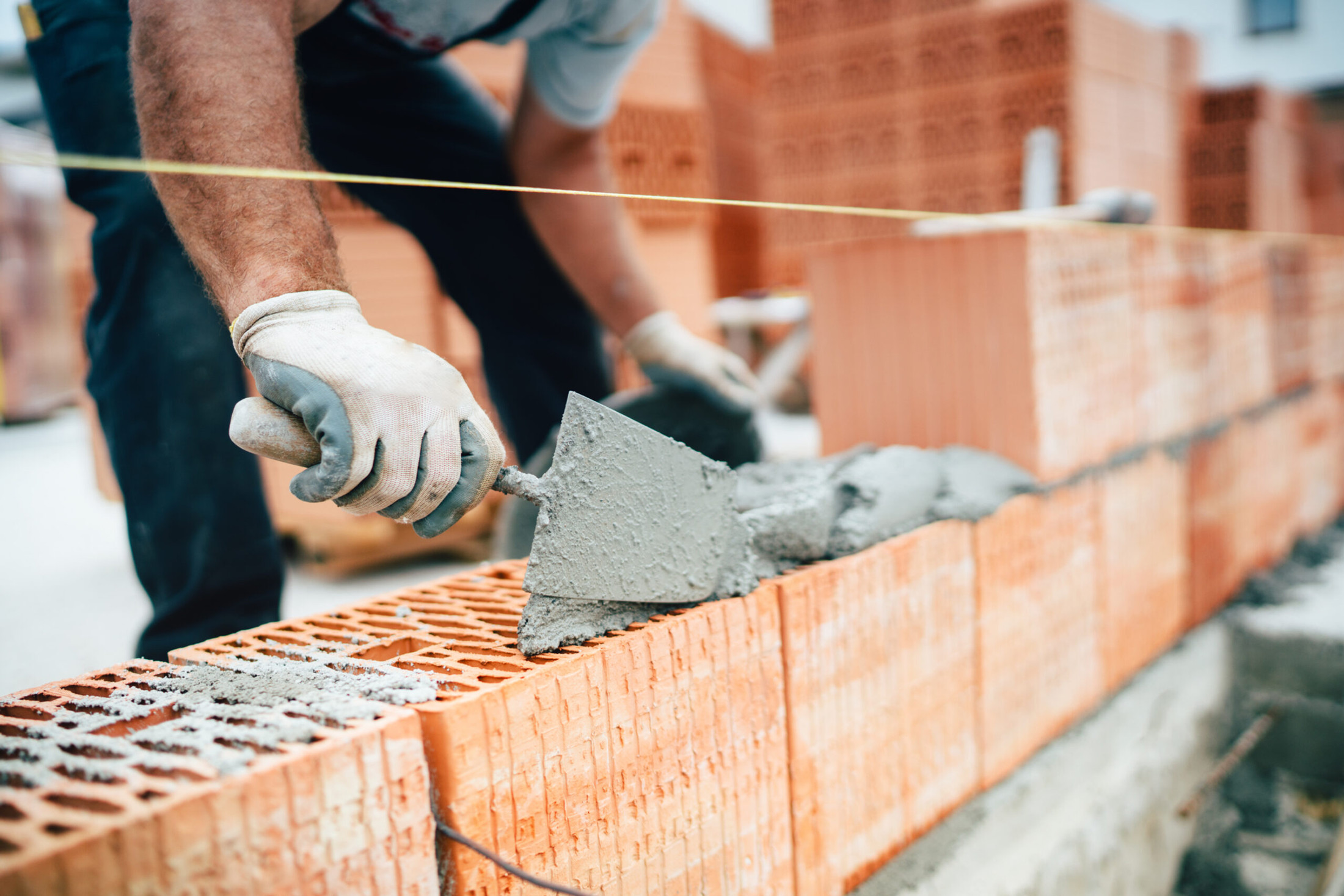
Bricklaying and repointing in Brockenhurst
Lime repointing, brick replacement, arches, chimneys and garden walls on the older brickwork in Brockenhurst.
The site visit is free and so is the written itemised quote. Thomas Hannen prices every job himself.
On the older brickwork in Brockenhurst the question is almost never whether the wall is sound. It is whether the wall is wet, and how it has been made to dry. Get that right and the repointing looks after itself for decades. Get it wrong and you are back in five years.
People here ring about three things. Brickwork at the bottom of a wall that is powdery, streaked white and crumbling at the joints. A tall Victorian stack that has started dropping bits of mortar onto the roof below it. Or a brick arch over a window that has dropped a few millimetres and cracked the wall above it.
All three are ordinary repairs to a bricklayer and all three get misread from the ground. We come out, get close enough to scratch a joint, look at what the wall is standing in as well as what it is made of, and give you the honest version, including where the answer is to dry it out and look again next year. The site visit and the written quote are free.
The work
What we take on in Brockenhurst
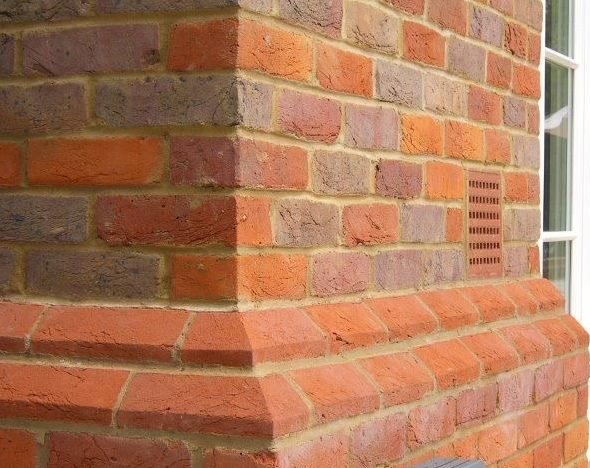
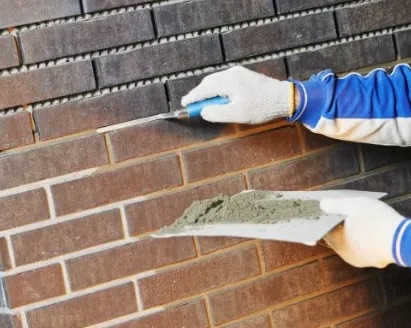
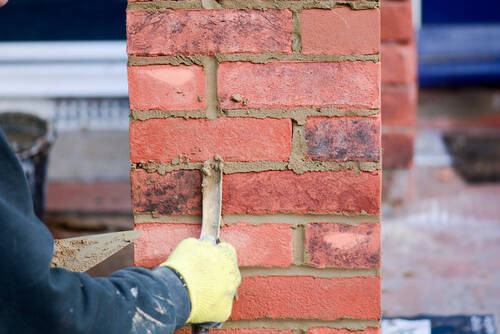
Lime, not cement. Nearly a quarter of Brockenhurst predates 1919 and the biggest single slice of the village is pre-1900: soft brick, laid in lime, built to dry outwards through its joints. Where a wall like that has been repointed in sand and cement the water has nowhere to leave except through the brick, and that is where the spalling and the white salt bloom come from. We rake the hard mortar out by hand, unit by unit, and point back in an NHL lime mix with a matched sand, finished flush or slightly recessed so the brick reads as the face of the wall. On the later cavity work the mix changes and a bucket handle or weather struck joint on the south west elevation is the right answer instead, because the weather here works at the edges and the openings rather than the middle of a wall.
Arches, cills and openings. The villas and the terraces near the station carry gauged and segmental brick arches over the openings, sometimes with a moulded string course above. When the wall settles even slightly the arch is the first thing to crack, and the crack runs straight up from the corner of the opening. Rebuilding one means taking it down with the wall above supported, cleaning and reusing what can be reused, and cutting replacements to fit rather than lifting a lintel in and rendering over the loss.
Stacks on the tall houses here stand well clear of the roof and take weather from all four sides. Repointing a stack, renewing the flaunching around the pots and resetting a coping that has lost its bedding is a day or two of work off a scaffold, and it heads off the ceiling repair that follows if it is left. Lower down, once a face has blown each frost takes another layer, so we cut out the failed units and set in a reclaimed or handmade brick of the right period, keeping the bond honest so the repair does not read as a patch. Around here the worst of it is always in the bottom four or five courses, which is what you would expect with the Lymington River running through the village and the low ground sitting in flood zone 3.
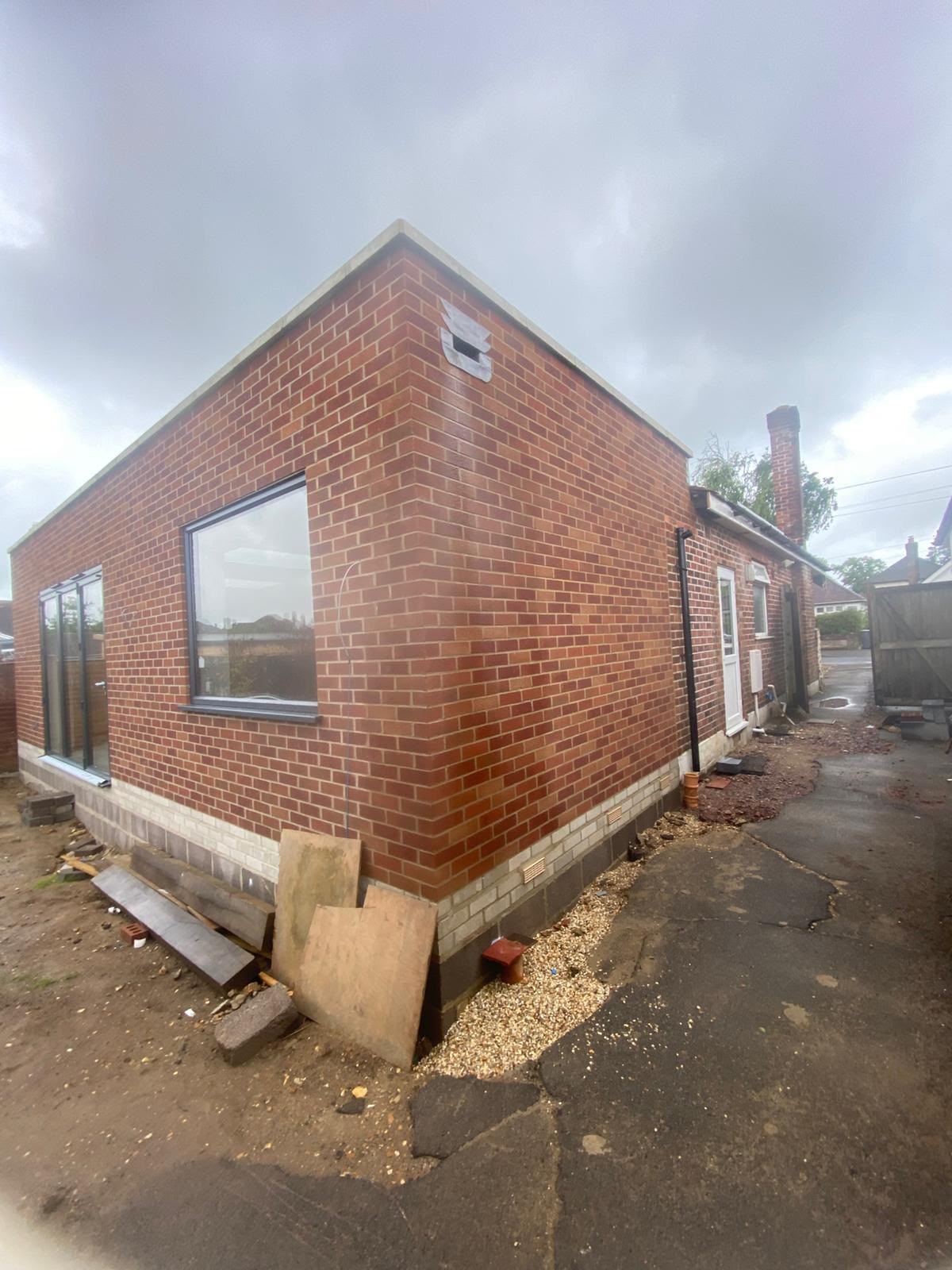
Free-standing walls, gate piers and the low walls that front properties onto the village lawns weather from both faces and stand in ground that stays damp longer than most. They lean, they bow, and their brick-on-edge copings lift. Rebuilding a section on a footing that goes down properly is usually the cheaper end of it. New work is extensions and outbuildings in blockwork with a facing skin, laid in stretcher bond to match, with the cavity, wall ties and a damp proof course detailed properly, and a new lintel cut in where an opening is widened and the foundation below can carry it.
How it runs
From your call to a written price
Thomas prices it himself, and the quote itemises access, raking out, the mix, each elevation and any brick replacement. On permission, Brockenhurst is a conservation area and the National Park Authority is the planning authority, so appearance carries weight here. Repointing like for like is maintenance and needs nothing. Changing the material or the finish is a change of appearance, and the Authority's heritage and conservation pages set out how that is handled. On one of the 23 listed entries, consent covers work most people would call repair, and the Planning Portal guidance on other permissions is the place to start. Where a wall is shared with a neighbour the Party Wall etc. Act 1996 puts a notice period on it.
Cost
What decides the price of a brickwork job
No rate per square metre: the metre of wall tells you nothing until you know what the joints are like. A tall villa stack, a terrace near the station with no rear access and a garden wall you can walk right round are three different jobs. The platform is a priced line rather than a favour, under work at height rules. Depth of rake and the state of the brick faces decide the hours, not the square metres. Comparing quotes, ask the rake depth, hand or disc, the mix, the brick count and the scaffold.
If something has moved
Loose brickwork, or a wall that has shifted
Ring rather than use the form. Anything overhead or leaning jumps the queue: a chimney that has moved, a parapet, a garden wall pushed out by roots or a vehicle. After water has been up a wall here, the one that will not wait is a low section that has lost its bedding. The phone is answered 24 hours for emergencies; scheduled work runs Monday to Friday, 8am to 6pm.
Worth knowing
Water in the ground is what decides your repointing here
The Lymington River runs through the village and a lot of Brockenhurst sits in the higher flood zones, with the surface water rating to go with it. That matters to brickwork in a way people rarely expect. Brick and lime mortar both take up water and both give it back slowly, so a wall that has been wet to knee height stays wet for months after the puddle has gone.
As it dries, salts that were dissolved in the water crystallise at the surface, which is the white bloom and the powdery joint you see at low level. Frost on a saturated brick face is what actually breaks it, not the water itself. You can check what your own address sits in with the government flood risk service.
So the useful advice here is mostly about timing and materials. Do not repoint a wall that is still holding water from a wet winter: seal salts into a joint and they come straight back through the new work. Give the wall a summer if you can.
When it is pointed, point the lower courses in a breathable lime mix rather than cement, so the wall can carry on drying outwards through the joint instead of through the brick face. And look at what is holding water against the wall in the first place: a path laid over the damp proof course, a blocked airbrick, a border built up against the brickwork. Fixing that costs less than any of the brickwork it prevents.
Who you are dealing with
A local firm you can check
We work in Brockenhurst and the villages around it, Lyndhurst, Boldre, East Boldre and down towards Lymington, and the SO42 postcode generally. Bournemouth Roofing & Building Ltd, registered in England and Wales, company number 15471719, which you can look up in a minute. Thomas Hannen's business, and he is the one who comes out to price the job, not a salesman. A verified customer's 10 out of 10 on Checkatrade. The visit and the written quote are both free.
Questions
Brockenhurst questions we get asked
Does sitting in flood zone 3 change how you repoint?
It changes the bottom of the wall rather than the top. Brockenhurst falls in flood zones 2 and 3 with the Lymington River running through it, so the plinth and the first few courses are wetted repeatedly and stay wet for days. A hard cement joint traps that water in the brick and the faces come off in the first real frost. Low courses here go back in a soft lime mix that lets the wall dry.
Who approves brickwork inside the Brockenhurst conservation area?
The New Forest National Park Authority, not a district council, which catches people out. Brockenhurst is a designated conservation area inside the Park, so appearance is controlled: identical mortar, colour and joint profile counts as maintenance, while a different mix or a new profile is a change and can need an application. With 23 listed entries in the village, the Church Of St Nicholas among them, checking your own address first is time well spent.
The gable facing the weather has gone hollow. Why that one?
Because it is the elevation doing the work. The most exposed face here looks south west, and driven rain attacks edges and openings rather than the middle of a surface, so the verge, the reveals and the corners of that gable lose mortar while the sheltered walls stay sound. We price the elevation that has failed. Pointing all four when one is going spends money on brickwork that is not asking for it.
Why does cement pointing wreck a pre-1900 Brockenhurst wall?
An old wall gets rid of water by evaporating it out of the joints. Nearly a quarter of Brockenhurst predates 1919 and the peak of the stock is pre-1900, which means solid walls with no cavity, so a hard cement ribbon seals the only escape route and drives the moisture into the brick instead. The face then blows off in frost. Lime is deliberately softer than the brick, so it wears and can be cut out again.
What do you do with the spoil on a narrow frontage?
It goes into bags as it comes out and into the van the same day. There is nowhere in the village to stand a skip outside most houses, and the New Forest National Park is not the place to leave heaps of rubble on a verge, so we sheet the ground, damp the dust down and work in short runs down the elevation. The frontage is swept before we finish each evening.
Nearby, and next door
Bricklaying and repointing near Brockenhurst
Bricklaying and repointing nearby
Our other trades in Brockenhurst
Everything we do in Lymington Bricklaying and repointing, all areas Every area we cover
Free quote
Get your Brockenhurst brickwork looked at properly
Tell us what the wall is doing. We come out, look at it close up and at ground level, and put the repair in writing.