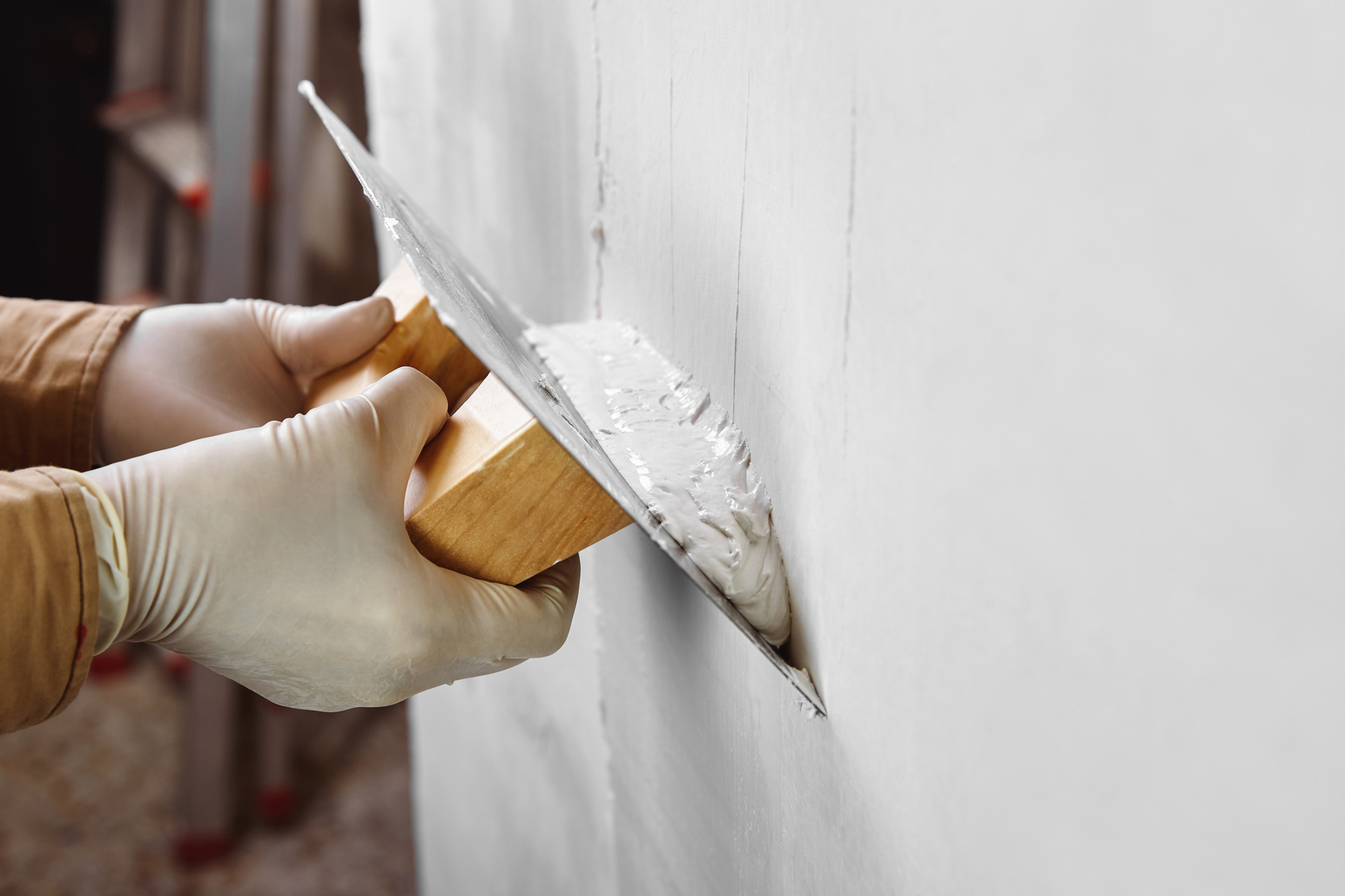
Plastering in Brockenhurst
Lime and gypsum plastering across Brockenhurst and SO42, matched to what the wall is made of and priced in writing.
The site visit is free and so is the written itemised quote. Thomas Hannen prices every job himself.
Before anyone quotes to replaster a room in Brockenhurst, find out what the walls are made of. A solid wall from before the First World War and a modern cavity wall want different materials, and putting the modern one on the old wall is what causes the blown, salty patches people ring us about.
Three jobs come up here again and again. A lath ceiling in one of the older houses has begun to sag and shed dust. A ground floor wall has gone soft and powdery near the skirting after water has been in the room. Or a house is being refitted and every surface needs to be flat and sound first.
We come and look, sound the walls and ceilings by hand, and scrape a corner to see what is actually there, because lime and gypsum look much the same under a hundred years of paint. Then you get an itemised written price that names the materials as well as the rooms. Where the real problem is water reaching the wall we say so rather than sell you a finish over the top of it.
The work
Overboarding buries the top of a good cornice
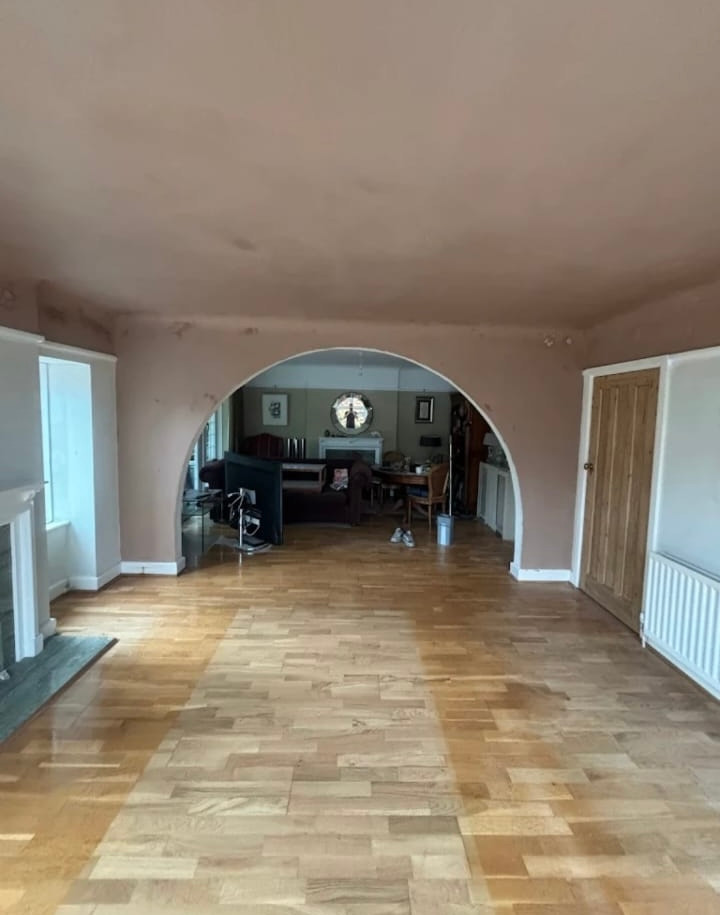
Lath and lime ceilings. Nearly a quarter of Brockenhurst predates 1919, with the largest single cohort built before 1900, and in those houses the ceilings are laths with a haired lime backing coat squeezed through them. When the keys break the ceiling bellies down between the joists. Where enough key is left we repair and consolidate a section from above. Where it has gone, the ceiling comes down and goes back in lime on new lath, or in plasterboard with a breathable finish, depending on how much of the original you want to keep.
Solid walls, and what belongs on them. No cavity means the wall has always got rid of water through its own face, so the backing coat has to be breathable: a haired lime backing and a lime finish, never a cement render and never dry lining stuck on dabs, which leaves a cold void behind the board for moisture to sit in. That is the single most common thing we are called in to undo in the older parts of the village. The Lymington River runs through it and parts of the village sit in flood zone 3, so a ground floor wall here can have been wet from below as well as from the weather, and that decides the specification more than what the room is going to look like.
The Victorian and Edwardian houses still have their cornices, ceiling roses and picture rails, and they are worth keeping. We work a repair into a broken run rather than stripping a room back, and where a ceiling has to be replaced we take the cornice off in sections and put it back. Overboarding is quick and it is the wrong answer in a room with a good cornice, because it buries the top of it.
The later houses and the flats get ordinary work done properly: hardwall, bonding or browning as the backing coat depending on the block, plasterboard ceilings and stud partitions, dot and dab where the wall is true enough, tape and joint or a full skim, and angle bead and stop bead at every corner and reveal.
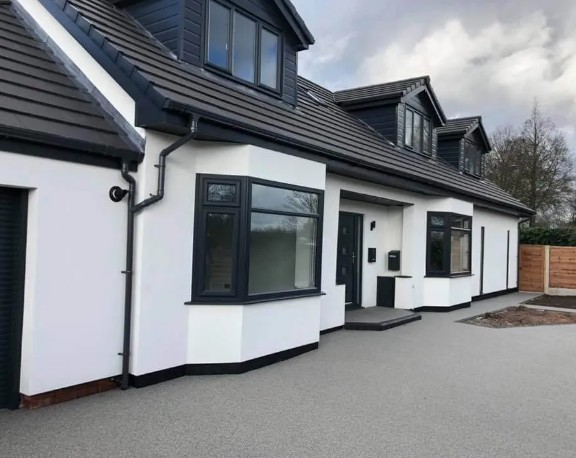
The exposed elevations face south west and take the weather off the open forest, and it is the openings and the edges that go first rather than the middle of a wall. On modern walls we build it up properly: primer, a mesh-reinforced basecoat, then a silicone thin coat, K render or monocouche topcoat that moves instead of cracking, with a bell cast at the bottom. On old solid walls it is lime, in a scratch coat and a topcoat, finished to match the rest of the street. Sound pebbledash we leave alone.
Patching, cracks and making good after a leak, after a rewire, or where an extension meets an old wall and the junction keeps opening. We would rather patch a wall than replaster one that is still doing its job.
How it runs
From your call to a written price
Tell us the address and what the wall is doing. The site visit and the written quote are free, and the quote is itemised. Brockenhurst sits in the National Park and its own conservation area, with 23 listed entries through the village, so the outside of a wall is not a free choice. Like-for-like repair is maintenance; changing the material or the look of a render is not, Planning Portal sets out where that line falls, and the National Park heritage pages explain how the Authority handles it. On a listed building the inside is protected too, so stripping historic plaster needs listed building consent first. Taking a full elevation back to the brickwork brings Approved Document L and building control in.
Cost
What decides the price
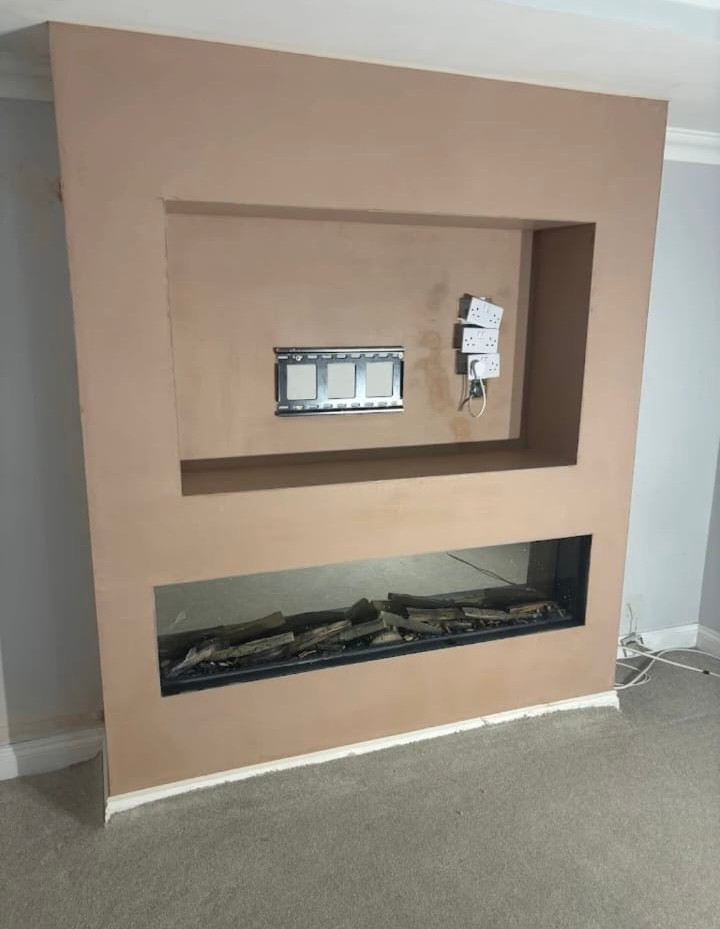
No rate per square metre. What is behind the surface decides it: plaster still stuck takes a skim, plaster that sounds hollow comes off and brings a backing coat and a second visit. Most of what we price here is a cottage in the older part of the village or a flat in one of the later blocks, and lime work on a solid wall is slower than gypsum because each coat has to firm up before the next. Ask any quote whether a backing coat is included or only a skim, whether the beads are new, and who takes the waste.
If it has let go
Plaster coming down today
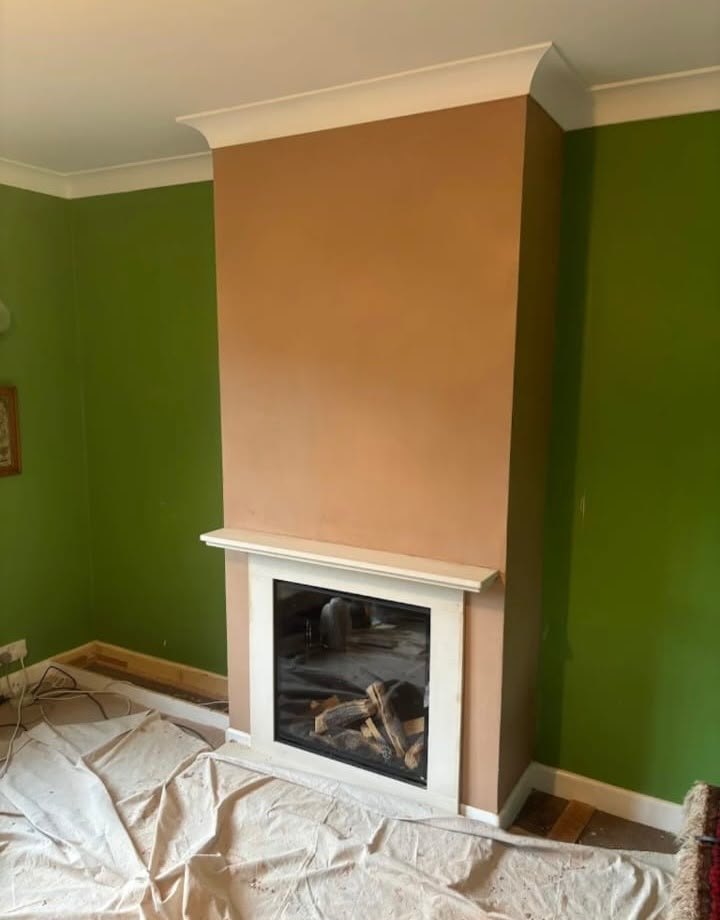
Ring rather than use the form. A ceiling that has dropped at one end, or plaster bulging off a wall after a leak, goes to the front of the queue. Keep the room shut and stay out from under it. A lath ceiling that has taken water often holds for a while and then lets go all at once, so it wants looking at before it decides for itself.
One local thing
Putting a room back after water has been in it
The Lymington River runs through the middle of Brockenhurst and a good deal of the village sits in the higher flood zones, which changes plastering here more than anything else on this page. It is worth ten seconds to check your own address on the government flood map, because it decides how a room should be put back.
If water has been inside, plaster below the mark has to come off and be taken back a clear margin above the highest line the water reached, even where it looks fine once dry. Flood water leaves silt and salts in the plaster, and salts pull moisture out of the air for years, so a wall skimmed over never quite dries and the paint keeps lifting.
The second half is patience, and it is the part that costs people money. A solid wall that has been soaked dries in months rather than weeks, and replastering before it has dried is the commonest reason a flood repair gets done twice.
If your house has taken water more than once there are sensible ways to build that in: a lime backing coat, which tolerates being wet and dried and can be repaired in bands, finishing the bottom of the wall to a stopping height with a bead so next time only the lower band comes off, or boards on a batten that unscrew and renew. None of it costs much extra at the time, and the option you choose goes in the quote.
Who you are dealing with
A local firm you can check
We cover Brockenhurst and SO42, out through Boldre and Sway to Lymington, and up the road through Lyndhurst and the forest villages. Bournemouth Roofing & Building Ltd, registered in England and Wales, company number 15471719, which you can look up in a minute. Thomas Hannen's business, and he is the one who comes out to price the job, not a salesman. A verified customer's 10 out of 10 on Checkatrade. The visit and the written quote are both free.
Questions
Brockenhurst questions we get asked
We are in the conservation area. Does that cover inside the house?
The Brockenhurst conservation area controls what the outside of the building looks like, not what you do indoors, so a ceiling or a room skim needs nothing from anybody. Changing the external render, its texture or its colour is a different matter, and the New Forest National Park Authority is the body to ask rather than the district council. Repair in the same material counts as maintenance. We put which of the two applies in writing.
Why does gypsum keep blowing off our pre 1900 walls?
Because the wall is still passing moisture through itself and gypsum will not let it out. Some 24.1% of Brockenhurst homes predate 1919 and the single biggest group went up before 1900, so these are solid walls with no cavity. A lime backing coat lets the wall dry through the plaster. Put a cement float and a gypsum skim over it and the damp collects behind, then pushes the finish off again.
Our house is in the flood zone. How should we replaster?
Brockenhurst has property in flood zones 2 and 3 with the Lymington River running through the village, so this comes up here more than in most places we work. After water has been in, the wall has to dry before anything goes back on it, and that is months rather than weeks. We strip the wet plaster, leave the wall open to the air, then rebuild in lime or a renovating backing.
Can the lath and plaster ceiling be saved, or must it come down?
It depends on whether the plaster still grips the laths. Push up gently in the middle of a bay: if it flexes and you hear grit dropping, the nibs above have broken and it is finished. Where the ceiling is sound we wash off, key it and re-skim in lime putty, keeping the original run of cornice. In one of the 23 listed properties in Brockenhurst we take a ceiling down only as a last resort.
Which wall should be done first if the budget is tight?
The south west elevation, because that is the exposed face in Brockenhurst and it takes the driven rain. Wind driven water works into the edges, around the openings and at the verge rather than into the middle of a wall, so that is where render cracks and where the wall behind stays wet. Doing that face and its reveals first buys the rest of the house time. Each elevation is itemised separately.
Nearby, and next door
Plastering and rendering near Brockenhurst
Plastering and rendering nearby
Our other trades in Brockenhurst
Everything we do in Lymington Plastering and rendering, all areas Every area we cover
Free quote
Not sure what is on your walls?
We will come and find out. The visit is free and so is the written itemised quote that follows it.