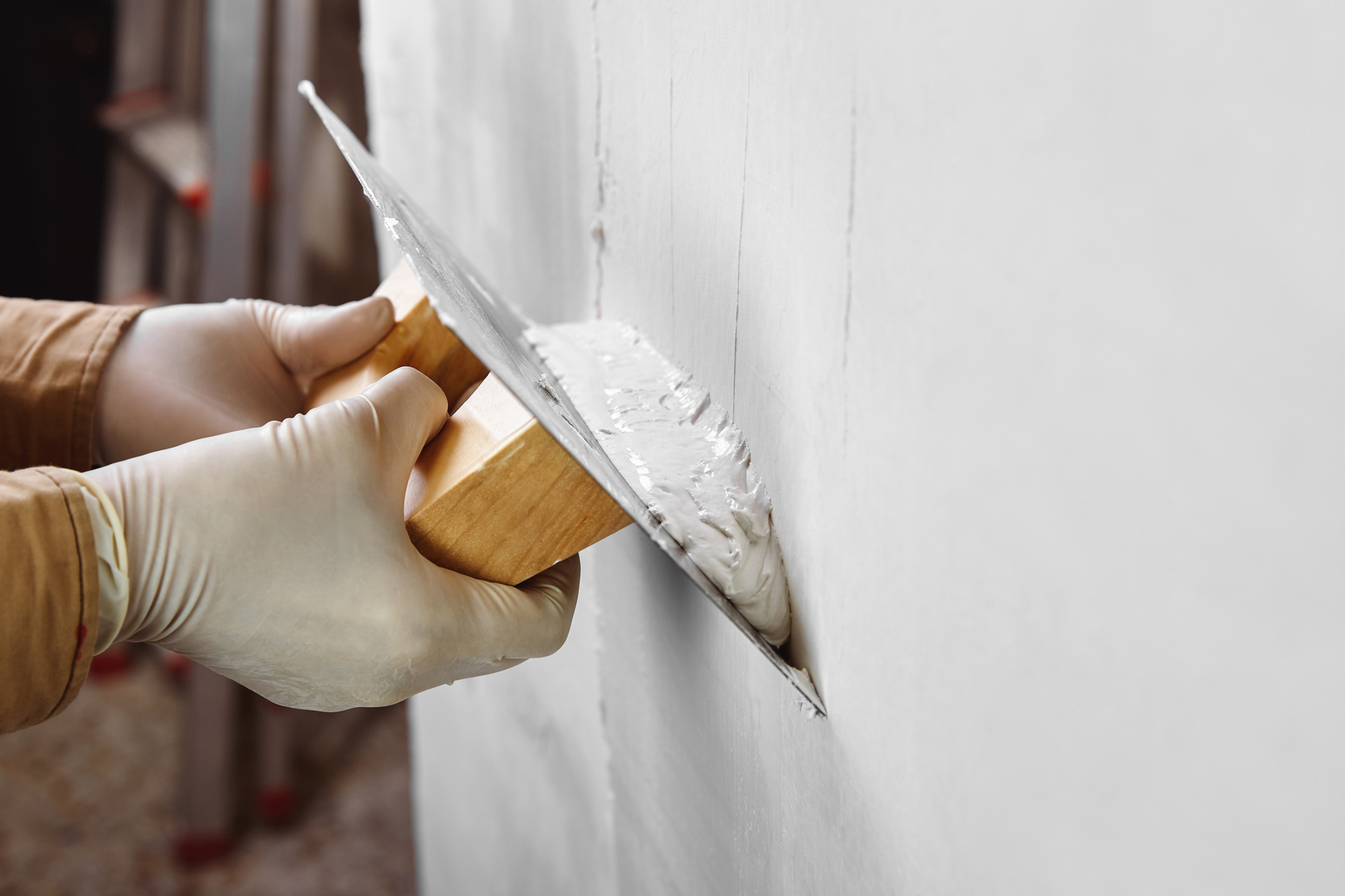
Plastering and rendering in Walhampton and Portmore
Skimming, re-plastering, lath ceilings, dry lining and external render across Walhampton, Portmore and SO41. Free site visit, free written itemised quote.
The site visit is free and so is the written itemised quote. Thomas Hannen prices every job himself.
We skim, re-plaster, board and dry line inside, and repair or renew render outside, on everything from a lath and plaster ceiling in a cottage at Portmore to a dot and dab wall in a flat on the Lymington side. The first job at Walhampton and Portmore is working out whether your wall is sound enough to skim or has to come off, and that is a free visit rather than a guess over the phone.
People here ring for three or four reasons. A ceiling has cracked along the board joints and one corner has started to drop. A bedroom wall sounds hollow behind the wallpaper and the paper is the only thing holding it flat. A room has been left rough after a rewire, a new window or a chimney breast coming out, and the decorator will not start. Or the render on a gable facing the water has crazed, gone green along the bottom and somebody has used the word damp.
The two ends of the housing here fail in completely different ways, which is why we sound the whole room rather than the patch you rang about. Old cottage walls let go at the keys, behind lath and lime that has been there longer than anyone can say. Flats and post-war houses let go at a joint, a dab or a bead. You get told which of the two you have, then an itemised written price with the method on it as well as the number.
The work
Stables and cart sheds turning into living space
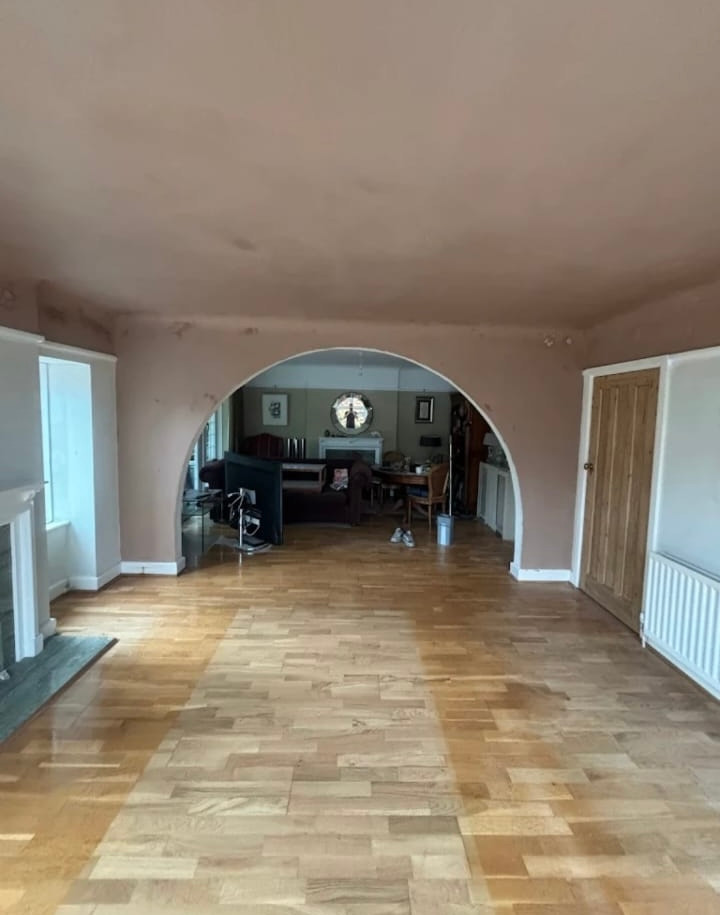
Lath ceilings in the cottages. Along the lanes at Portmore, Pilley and Mount Pleasant you meet ceilings that are lime plaster pushed through riven lath, and the question is never the crack you can see. It is whether the keys curled over the tops of the laths have snapped off. We put a head into the loft or the room above and look at them from behind. Where they have gone the ceiling comes down and goes back on board or on lime. Where they are holding, scrim, a patch and a skim is honest work and far cheaper.
Solid walls, and why they want lime. Better than a quarter of the homes here went up before the First World War, so those are solid wall with no cavity behind them. A wall like that takes a little rain in outside and dries back out again, and everything you put on it has to stay breathable. Where the plaster has parted from the brick, the loose work comes off back to a clean background and a lime backing coat goes on before any finish. There is real water in a floated wall and it has to leave through the room, so this is the job that takes a room out of use rather than a skim. A hard gypsum skim over a wall still carrying water is the commonest reason we get called back to somebody else's work, and if a wall drums under a knuckle we say so rather than take the easier money.
Three in ten homes in this parish are flats or maisonettes. Inside your own rooms the plastering is yours to instruct, but the outside of the building, render included, usually belongs to the freeholder and is managed out of the service charge, so it is worth knowing which of the two you are ringing about before anyone gets quotes. In the post-war houses and the flats the walls are board on stud in the partitions, dabs on the outside walls of the newer ones, taped joints and a fair amount of swirled artex overhead. Where the background holds we prepare it, seal it with thinned PVA or a bonding primer depending on what is already there, then run two passes of finish coat off the trowel.
Brick stables, cart sheds and garden rooms round here are steadily becoming living space. Board on dabs or on a stud, moisture resistant board behind a shower, insulated board where a cold wall is coming inside, then tape and joint or a full skim over the lot, with angle bead on every external corner and stop bead at each reveal.
The coast is under three miles from here and the exposed elevation faces south west, so salt-laden air keeps a seaward wall damp between showers and rusts anything ferrous inside the render, and a rigid sand and cement render on a wall that moves will hairline crack. Outside the backing is a render coat rather than plaster: a scratch coat or basecoat with mesh bedded through it, a primer, then a silicone thin coat, a monocouche or a K render topcoat, with a bell cast bead at the bottom so water drips clear of the wall instead of running down into it.
How it runs
From your call to a written price
The quote is itemised: protection, hacking off, board, the backing coat, beads, the finish coat, making good and disposal each on its own line. Outside work is the different part here, because this address sits in the New Forest National Park and in the Forest South East conservation area, and the National Park Authority sets out what it looks at before an appearance changes. Repairing render like for like is maintenance; swapping it for a different material or colour is not, and there are ninety-odd listed entries in and about the parish, from Walhampton House to the monument on the hill, where consent reaches the inside as well as the front wall. Re-render a whole elevation and building control comes in too, because Approved Document L treats that as renovating a thermal element.
Cost
What decides the price
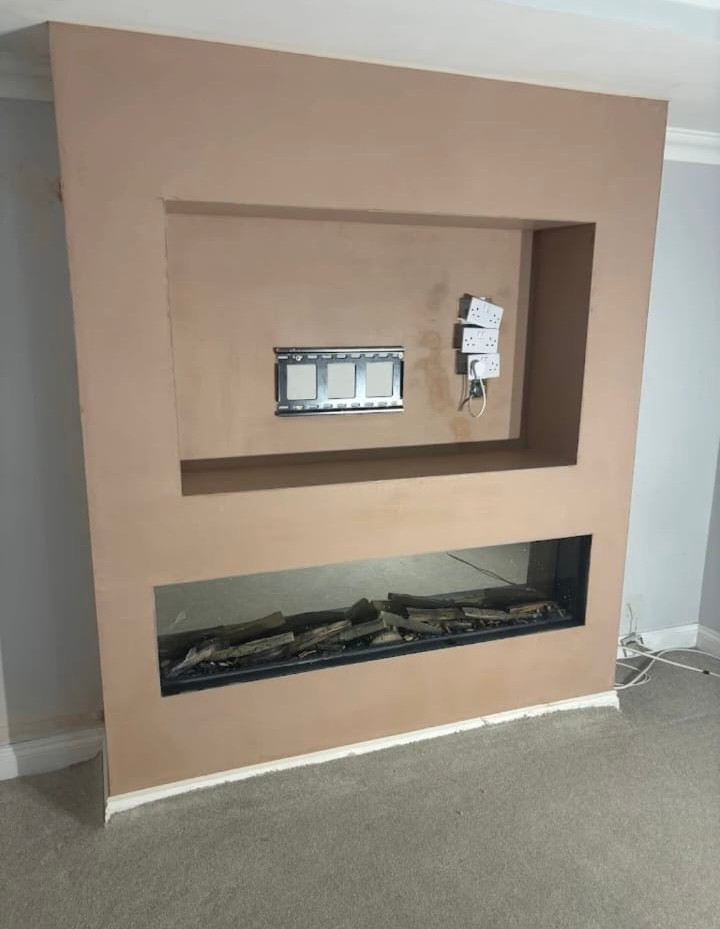
No rate per square metre. Every wall and ceiling is sounded with a knuckle first, because the split between what is skimmed and what comes off back to the brick moves the price further than the size of the room does. A Georgian house on the Lymington side with nowhere to park, a cottage at Portmore where the room cannot be emptied, and a first floor flat with a shared stair that will not take full sheets of board are three different jobs. Anything above a porch wants a scaffold on its own line, because work at height rules decide the platform rather than the budget.
If it has come down
Plaster blown off a wall, or a ceiling on the move
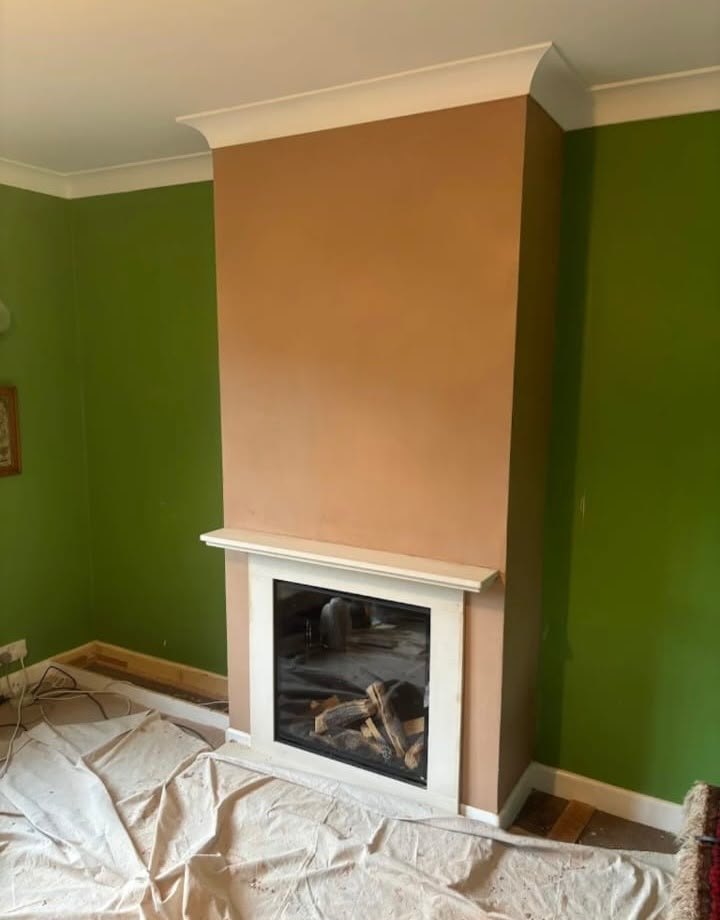
Ring rather than use the form. A ceiling pulling away from the joists, or plaster coming off a wall in sheets, goes to the front of the queue. Do not push a bulging ceiling back up. Walhampton and Portmore are a run out through New Milton and Lymington for us rather than round the corner, so you get a straight answer on the day about when we can be there.
Worth knowing
If you are in a flat, check who owns the wall first
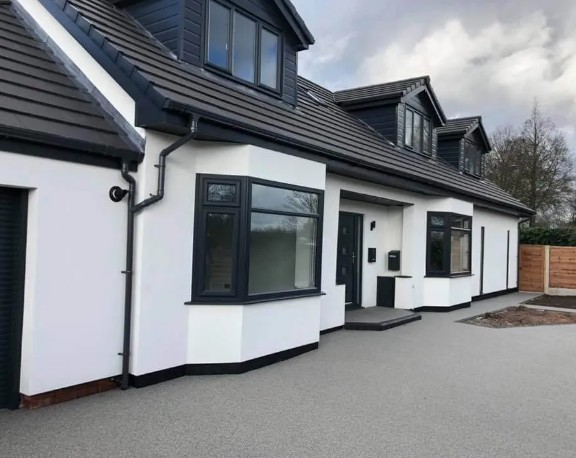
About a third of the homes here are flats or maisonettes, and that changes who you ring before it changes anything about the plaster. Inside your own front door the finishes are usually yours: a ceiling, a partition, a skim in the hall. The outside walls and the render on them almost never are. They belong to the freeholder and they are paid for out of the service charge, so a leaseholder who instructs render work directly can end up paying twice for the same wall.
Ask the managing agent one question before anything else: is this wall demised to me. If the answer is no, the work is theirs to order, and where the bill to each flat would be significant section 20 of the Landlord and Tenant Act 1985 obliges them to consult leaseholders and take estimates first.
That is exactly the point at which a properly itemised quote is worth having, because it is the only way anybody can see what they are being charged for. We are glad to quote to a freeholder, a managing agent or a residents company, and we put external render and internal making good on separate lines so it is clear who is paying for which. If the wall turns out to be yours after all, nothing is lost but a phone call.
Who you are dealing with
A local firm you can check
We cover Walhampton, Portmore and the lanes round Boldre and Pilley, across to Lymington, Sway and Brockenhurst on SO41, and the New Forest National Park Authority is the planning authority for this address. Bournemouth Roofing & Building Ltd, registered in England and Wales, company number 15471719, which you can look up in a minute. Thomas Hannen's business, and he is the one who comes out to price the job, not a salesman. A verified customer's 10 out of 10 on Checkatrade. The site visit and the written itemised quote are both free.
Questions
Walhampton and Portmore questions we get asked
Who signs off render work on a leasehold flat here?
Usually the freeholder or the managing agent, not the leaseholder. Flats and maisonettes make up 31.5% of dwellings around Walhampton and Portmore, and on a leasehold flat the external walls are almost always retained by the freeholder and maintained through the service charge. Where the cost is passed on to leaseholders and passes a set threshold, the landlord has to run a formal consultation first. We will quote, but the instruction has to come from whoever holds the building.
Does the National Park control what render we use?
On appearance, it does. Walhampton and Portmore sit inside the New Forest National Park, which is the planning authority here, and inside the Forest South East conservation area. Like for like maintenance is not a problem. Changing the material or the look, swapping a cement render for a modern system, or a colour that reads differently from the road, is the sort of change the Park will want an application for. We work to whatever gets agreed.
Our cottage has lath ceilings. Can they be skimmed?
They can, once the lath and the keys behind it are sound. Just over a quarter of the housing here predates 1919, 26.9% of it, so lath and lime ceilings are ordinary rather than unusual. Where the plaster has lost its keys the ceiling either comes off or gets overboarded through into the joists. A gypsum set laid straight onto old lime that is still damp will blow again inside the year.
There are a lot of listed buildings here. Does ours count?
Ninety three listed entries fall in this area, from Walhampton House at the school down to the Burrard Neale Monument, so it is worth checking before anyone opens up a wall. Listed building consent covers the inside as well as the elevations, which means a ceiling, a cornice or a lime plastered wall in a listed house cannot simply be stripped out. If yours is listed we work to what the Park's conservation officer will accept.
Which elevation should we do first if we cannot do all?
The one facing south west. That is the exposed face here, and under four kilometres in from the water it takes wind driven rain arriving horizontally rather than falling on the wall. Edges and openings go first, so reveals, sills and the verge break down while the middle of the panel still looks sound. A mesh reinforced silicone system copes with that repeated wetting where a rigid sand and cement render cracks.
Nearby, and next door
Plastering and rendering near Walhampton and Portmore
Plastering and rendering nearby
Our other trades in Walhampton and Portmore
Everything we do in Lymington Plastering and rendering, all areas Every area we cover
Free quote
Get a price for plastering at Walhampton or Portmore
Tell us the address and what the wall or ceiling is doing. We come out, sound it and put an itemised price in writing. No charge for either.