
Driveways in Walhampton and Portmore
Drives built for a Forest lane and a wet winter, with the ground opened up and the drainage settled before a surface is chosen.
The site visit is free and so is the written itemised quote. Thomas Hannen prices every job himself.
Last updated
We build and repair drives, parking areas and patios all through Walhampton and Portmore. Most of the area sits inside the National Park, so check your address on the Park's map; we price the ground and the look of the finished surface together.
Walhampton and Portmore drives rut along the lanes, cottage patios sit too high, and hardstandings sink under trailers. A long drive off one of the lanes between Lymington and Beaulieu that has rutted under the wheels, with the loose stone all washed down to the gate. A patio behind an old cottage that is green, uneven and sitting too high against the wall of the house. And a hardstanding that has quietly sunk where a boat trailer, a horsebox or a caravan has stood on it since last autumn.
None of those is really about the surface on top. They are about what was built underneath it and where the rain was sent. So the visit starts with a spade, not a brochure. We open the ground up, look at what is holding the drive, walk the entrance to see where water arrives from the lane, and then tell you what the plot will actually allow. If a repair will do, we will say so.
The work
Gravel drives, Forest verges and trailer standings
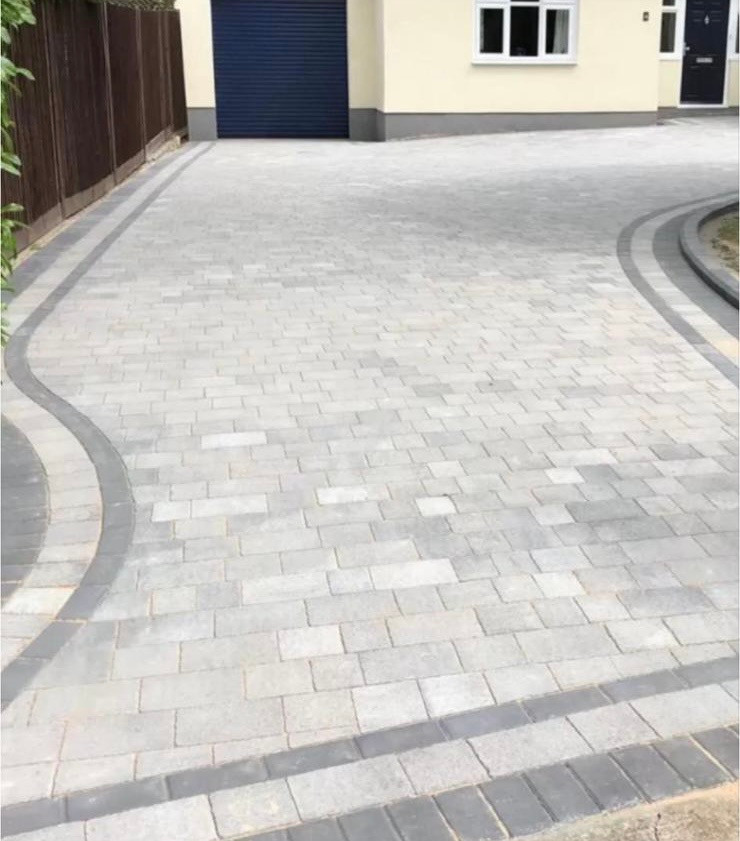
Long drives to houses set back from the lane. Many of the older houses in Walhampton and Portmore sit back from the lanes behind a hedge, so the drive is long, it carries a delivery lorry a few times a year, and it is the first thing anyone sees.
Built thin it ruts under the wheels and hollows where you turn. Built properly it is a dig down to firm formation, a geotextile membrane so the stone cannot work its way into softer ground, then a graded sub-base laid and compacted in layers to a depth set by what we find in the hole. Self-binding hoggin, resin bound over a solid base, tarmac or permeable block paving all sit happily on that. Loose gravel does too, but only with a real edge restraint holding it, or it walks to the bottom of the slope every winter.
The bit between your gate and the road. A lot of entrances in Walhampton and Portmore open straight onto a wide verge that is not yours to dig, so re-grading it or laying stone across it is a highway question, not a design choice. It matters because the verge is exactly where water off the lane arrives on your land. A channel drain or a cross drain at the entrance, taken somewhere that can legally accept it, saves more of the drive than another hundred millimetres of stone ever will. A trailer, a horsebox or a caravan parked in one spot all winter punches through a drive built only for a car, and it is the jockey wheels and corner steadies that do it, not the tyres. The fix is a deeper build-up under that one bay, a concrete pad or a heavier sub-base, without rebuilding the whole thing.
26.9% of the housing here predates 1919, which means solid walls and often no damp proof course to work to, and a patio laid up against that wall sends rain straight into it. Where there is a damp proof course we finish well below it; where there is not, we build in a fall away from the house and a drainage channel along the wall. Sawn natural stone and porcelain both cope with a shaded, slow drying garden, porcelain on a full primed mortar bed, stone pointed by hand with a proper mortar, never a brushed in compound that fails in the wet. For the garden side, see patios in Walhampton and Portmore. The most exposed elevation faces south west, so it is the edges and the openings that take the driven rain rather than the middle of a surface. Steps down into a garden get built level and consistent, because an odd riser is what people trip on. Smaller jobs are worth doing on their own: a re-sand and re-level of block paving that has dropped by the garage, weed through open joints, a cracked flag at the threshold, ponding in one bay, or green staining on north facing paving. Finding which single thing has failed is what the survey is for.
How it runs
Laying a drive off a narrow Forest lane
Thomas comes out, walks the drive with you, checks the levels and where the rain goes, and prices it himself. The written quote separates excavation and muck away, the sub-base, edgings, the surface, drainage and any work to the verge. One point of contact sees it through.
In Walhampton and Portmore access often means a single track lane, overhanging trees and a gravel drive with a soft verge beside it. We plan where the digger and the grab lorry stand so the lane stays open, and we protect the verge and gate posts. Spoil goes the day it comes out, and the lane is brushed before we leave. If we uncover an old soakaway, a buried tank or soft ground beneath the sub-base, work on that patch stops until you have seen pictures and a price for dealing with it.
Planning for Walhampton and Portmore sits with the New Forest National Park Authority, and it explains what that means for anything seen from the lane. Front paving stays permitted development while rain drains onto your own ground; more than five square metres of sealed surface shedding onto the road does not, which is the front garden rule. That rule is for houses. Flats have no permitted development rights for hard surfacing, so new paving on a shared parking area needs planning permission. A new vehicle crossing over the verge is a separate application to the highway authority. Start it early, because laying the drive is quick and the approval is not. We are happy to speak to them before you settle on a material.
Cost
Ground, gravel and verges: what a drive costs
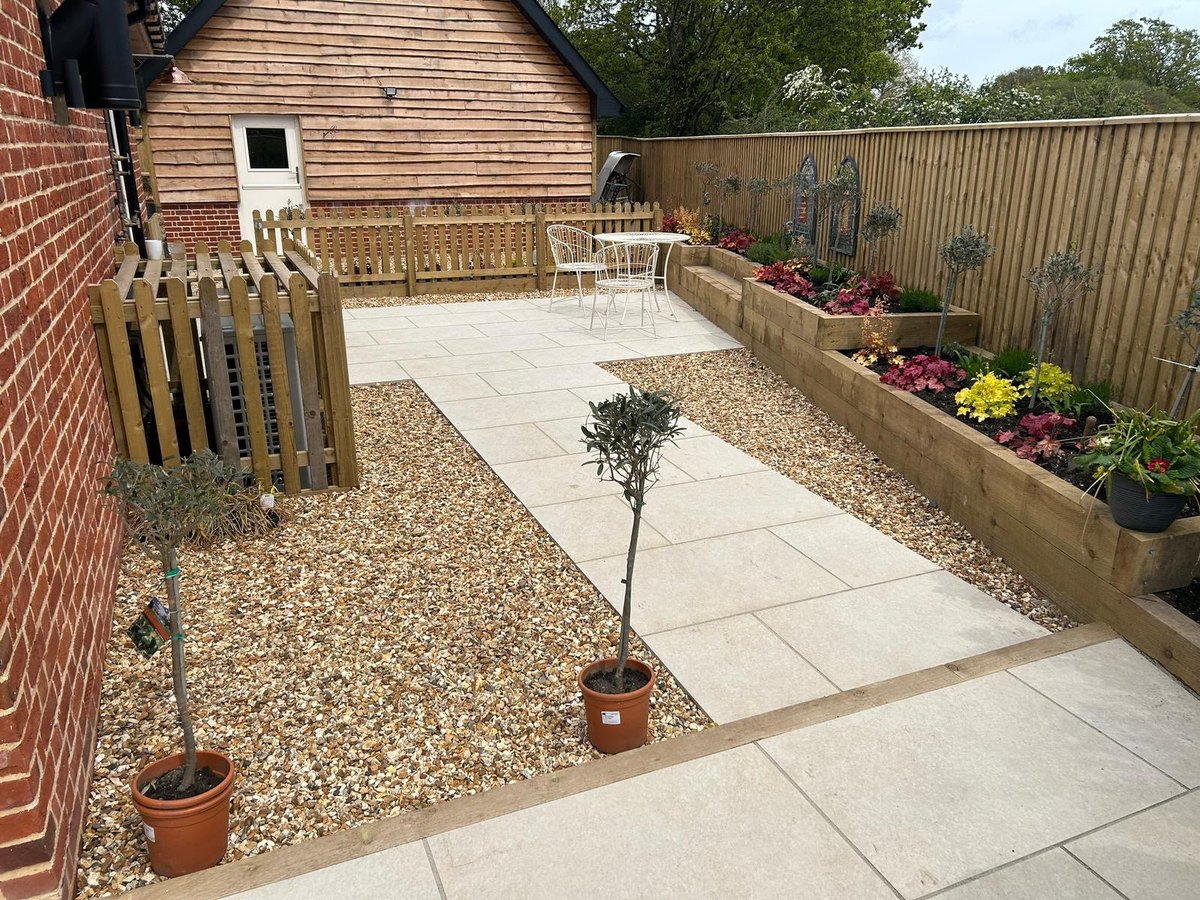
We will not give a rate per square metre, because what lies under a drive settles the price long before the surface does.
Getting machines in. An older cottage on a tight lane, a house set well back behind a long hedge and a newer plot in a close each need a different route for the digger and the lorry, and every load of spoil goes out the same way.
The ground itself. Parts of the area sit on clay that swells when wet and shrinks when dry. That calls for a deeper dig and a thicker sub-base so the surface does not move, which means more spoil to take away.
Where the rain ends up. Permeable block, resin or gravel on a grid lets water soak away on site. A sealed surface needs channels and a soakaway. Either way it has to finish somewhere other than your neighbour's drive or the lane.
Trees. Roots under an old drive have to be worked round, and some trees beside the lanes are protected, so we check before cutting any.
The finish you choose. Gravel, block paving and resin each need a different edge and base.
Ask each quote how deep they intend to dig, what depth of sub-base they allow and where the surface water will go.
If it is urgent
A lifted block, a sunken bay or a flooding gateway
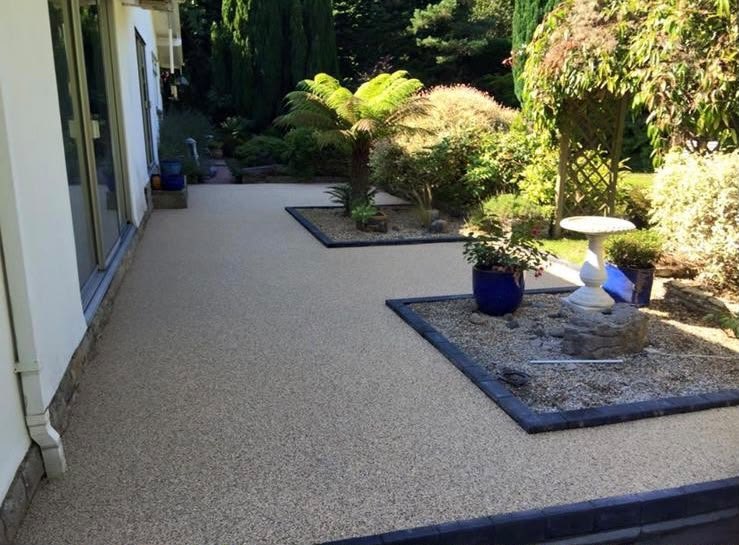
Ring us rather than filling in the form. A lifted block, a bay that has dropped by the front door or a gully that no longer drains only gets worse. Mark it or cover it so nobody trips.
The first visit makes it safe by lifting or packing the worst of it, clearing the gully and getting the water moving, and then we price the permanent repair once the ground can be opened. If gravel is washing down the drive to the gate after rain, call while it is running, because where it goes shows us the fault. Driveway work is booked Monday to Friday, 8am to 6pm. If you get no answer, we will be back in touch as soon as we can.
The one local thing
Inside the National Park, the finish is a planning matter
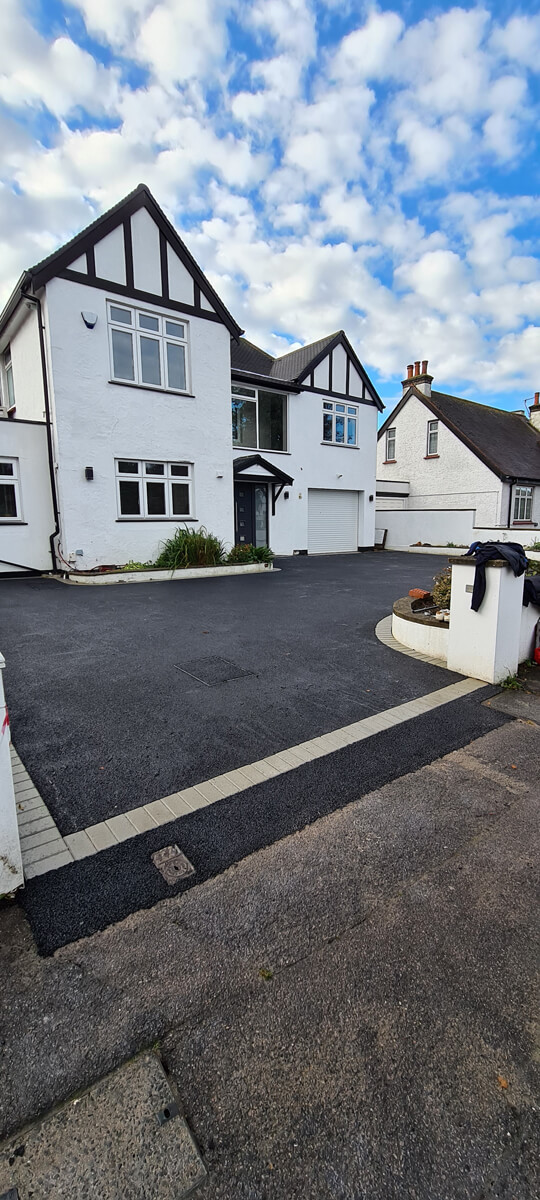
Most of Walhampton and Portmore sits inside the New Forest National Park, and this part of the Forest is covered by its own conservation area. In plain terms, replacing a worn gravel drive with fresh gravel is maintenance and nobody minds.
Changing the material for something that reads differently from the lane, a black tarmac apron across a Forest verge or a bright resin in front of an old cottage, is a different conversation, and it is one worth having before the stone is ordered. The listed entries around Walhampton and Portmore run into the nineties, concentrated on the Walhampton House estate rather than through the ordinary housing, but the appearance controls apply far more widely than the listing does.
What that changes for you is mostly the specification, not the scope. Buff and grey gravels, hoggin, riven stone and clay pavers all sit right here and none of them costs more to lay than the alternative. Permeable finishes help twice over, because they keep you inside permitted development and they keep run off out of the verge.
Take a photograph of what is there now before anything comes up, since like for like is the easiest case to make. And if you are unsure whether your plot carries anything extra, ask the Authority first. It takes a phone call, and it is a great deal cheaper than lifting a finished drive.
Who you are dealing with
Drives and hardstanding around Boldre and Pilley
We lay drives in Walhampton, Portmore and the SO41 lanes around them, through Boldre and Pilley and on into Lymington. It is 13.7 miles out from our base, and the Park Authority handles planning for all of it.
The company you would contract with is Bournemouth Roofing & Building Ltd, registered in England and Wales; its company number is 15471719. Thomas Hannen owns it, walks the drive with you and prices the work himself. On Checkatrade, a verified customer marked us 10 out of 10. The site visit is free, and so is the itemised quote you receive in writing. Before you book a visit in Walhampton and Portmore, you can read our customers' Google reviews, word for word, on our reviews page.
Planning at a glance
Do you need planning permission in Walhampton and Portmore?
Most repairs in Walhampton and Portmore need no application at all. What decides whether a change to the outside of your house does is who the council is, whether a conservation area or a listing applies, and whether the place sits in a protected landscape.
| Question | In Walhampton and Portmore |
|---|---|
| Who decides | New Forest National Park Authority is the planning authority for Walhampton and Portmore. New Forest National Park Authority's heritage pages set out what it controls. |
| Conservation area | Yes: Forest South East Conservation Area. Check whether your street is inside the boundary before changing anything visible. |
| Listed buildings | Yes, there are listed buildings in and around Walhampton and Portmore. If yours is one, work can need listed building consent. |
| Protected landscape | Inside the New Forest National Park, where design is looked at more closely and permitted development rights are narrower. |
Questions
Questions about driveways in Walhampton and Portmore
We are in the Forest South East conservation area. Does paving need consent?
The surface itself usually does not, but permitted development is trimmed back inside the National Park, so checking before ordering materials is the safe route. What the New Forest authority weighs in the Forest South East area is appearance: gravel, hoggin and reclaimed brick sit right against these buildings, while wide bands of bright block paving do not. Walls, gate piers and anything tall at the highway edge are a separate consent altogether.
Does the Solent nutrient rule affect a driveway?
It does not, and that is worth saying plainly because it holds up other work locally. Walhampton and Portmore sit in the Solent catchment, where the requirement bites on schemes creating overnight accommodation, so a new dwelling or an annexe gets caught and a drive, a terrace or a re-roof does not. If you are paving alongside a scheme that adds a bedroom, the bedroom triggers it, not the paving.
Which surface holds up on an exposed south west frontage?
One with a restrained perimeter. The most exposed elevation at Portmore faces south west, and driven rain and wind work at edges and openings rather than the middle of a surface, so it is the boundary of a drive and the joints along a wall that go first. Loose gravel migrates off the windward corner within a winter. Bound gravel, or block paving with a concrete haunch, holds a line that a loose laid kerb will not.
Who authorises work on a shared parking area?
Whoever holds the freehold, not the person whose car stands on it. Flats are 31.5% of the stock at Walhampton and Portmore, so parking and bin standings tend to be common parts run by a management company or a residents association, and one leaseholder cannot instruct the work alone. We will survey and price it in writing so a meeting has something to decide on, but the order has to come from the titleholder.
Can a lorry reach the site down these lanes?
Not always in one load. The lanes through Boldre are narrow with soft verges, and a fully loaded eight wheeler sitting on a wet verge does more damage than it saves. Where the approach is tight, materials come in on smaller loads and get staged on boards, and the dug out material leaves the same way. That adds handling, not difficulty. Thomas Hannen walks the approach first and prices what the access genuinely allows.
Nearby, and next door
Driveways near Walhampton and Portmore
Nearby places we also cover for driveways, with straight-line distances from Walhampton and Portmore, and the other trades we offer in Walhampton and Portmore itself.
Driveways nearby
Our other trades in Walhampton and Portmore
Driveways and patios guides
Driveway planning permission and where water goes Sunken or ponding driveway: base or drainage Indian sandstone vs porcelain paving: an honest comparisonEverything we do in Lymington Driveways, all areas Every area we cover
Free quote
Get a written price for your drive or patio
A free visit in Walhampton or Portmore, and an itemised quote with the dig, the sub-base and the drainage priced on their own lines.