
Bricklaying and repointing in Walhampton and Portmore
Repointing, chimney stacks, garden and estate walls, brick repairs and new brickwork across Walhampton, Portmore and the lanes towards Boldre.
The site visit is free and so is the written itemised quote. Thomas Hannen prices every job himself.
Put a hard cement mix into a Walhampton and Portmore wall and you will be replacing brick faces within a few winters. The brickwork on this side of the Lymington river is soft, old and was bedded in lime. So it wants raking out by hand and pointing back in a lime mortar.
Three calls come in more than any others out here. The joints on one elevation have worn back until you can lay a finger in them. A chimney stack has started dropping grit and lumps of mortar into the gutter. Or a long boundary wall along one of the lanes has been pushed out by roots, clipped by something wide, and is now leaning over the road.
The fourth is somebody who has been told the whole house needs doing when only one wall has actually failed. We come out, look at every elevation rather than the one you rang about, and tell you which of them needs work this year and which will be fine for another five. The site visit and the written quote cost you nothing, you get photographs of what we find, and the price is broken down wall by wall so you can do it in stages if you would rather.
The work
The jobs we do most on brickwork around Walhampton and Portmore
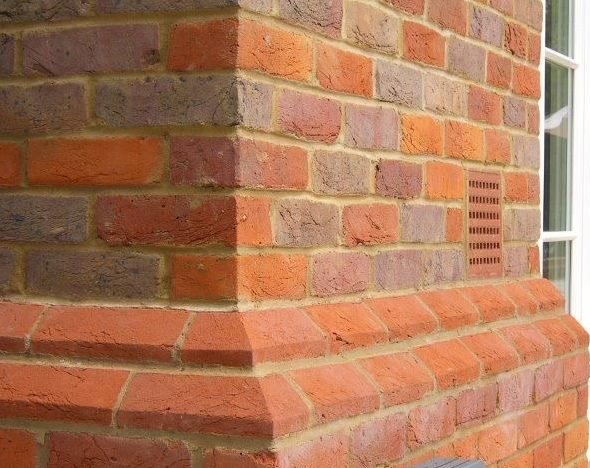
Repointing old, soft brick. 26.9 per cent of the housing here predates 1919 and the peak of it is pre-1900, which means solid walls, handmade brick and a lime mortar that was always meant to be softer than the brick around it. We rake the joints out by hand to roughly twice their width, brush them clean and point back in a matched mix, usually a natural hydraulic lime such as NHL 3.5 on the older walls and a cement based mix on anything post-war with a cavity. The sand comes first, because the sand is what gives a mortar its colour, and the joint goes back to the profile the wall already carries, flush, bucket handle or weather struck. The most exposed elevation faces south west, so that is normally the one that has gone and the one we price. On anything you look at every day we put up a sample panel and let you see it dry before we carry on.
Estate walls, gate piers and copings. Portmore and Walhampton are full of long brick boundary walls, gate piers and outbuilding walls, a lot of it built as one estate and never underpinned by much, with 93 listed entries in the area from the house and school down to the monument and the piers around them. The failures are always the same. The coping has gone or was never right, water gets into the top of the wall, frost breaks the brick faces up and the wall starts bowing. A bowed section is a rebuild off a proper footing rather than something to prop and hope about. Gate piers get taken down and rebuilt with the ironwork tied back in. Where the wall is shared with a neighbour, the Party Wall etc. Act 1996 gives them a formal say before anything comes down, and that is far easier served early than argued about later.
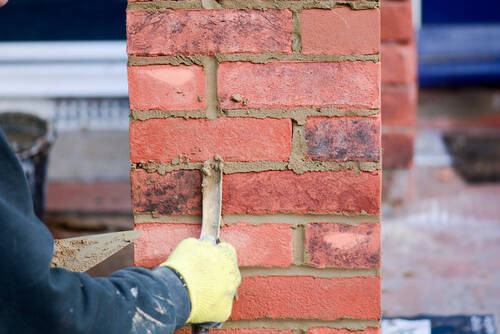
Stacks here are exposed on all four sides and often still working, so they are warm inside and soaked outside all winter. The joints above the roof line go first, then the flaunching around the pots cracks and water tracks down the flue into a bedroom ceiling. We repoint the stack, renew the flaunching and reset any pot that has moved, and it is worth doing everything up there in one visit rather than paying for the access twice. Where a brick face has already blown, the wall takes water like a sponge and repointing on its own will not fix it, so we cut out and replace the worst of them, using reclaimed brick where the original has been out of production for a century. A new brick sits proud of the wall visually for a few seasons until weathering brings it in, which is worth knowing before you decide how many to change. New brickwork is the rest: extensions, porches, garden rooms, new piers and opening a wall up with a lintel over it, on a foundation dug to depth with the ground here shrinking and swelling under it. Matching matters more than in most places, because the National Park will look at anything visible.
How it runs
From your call to a written price
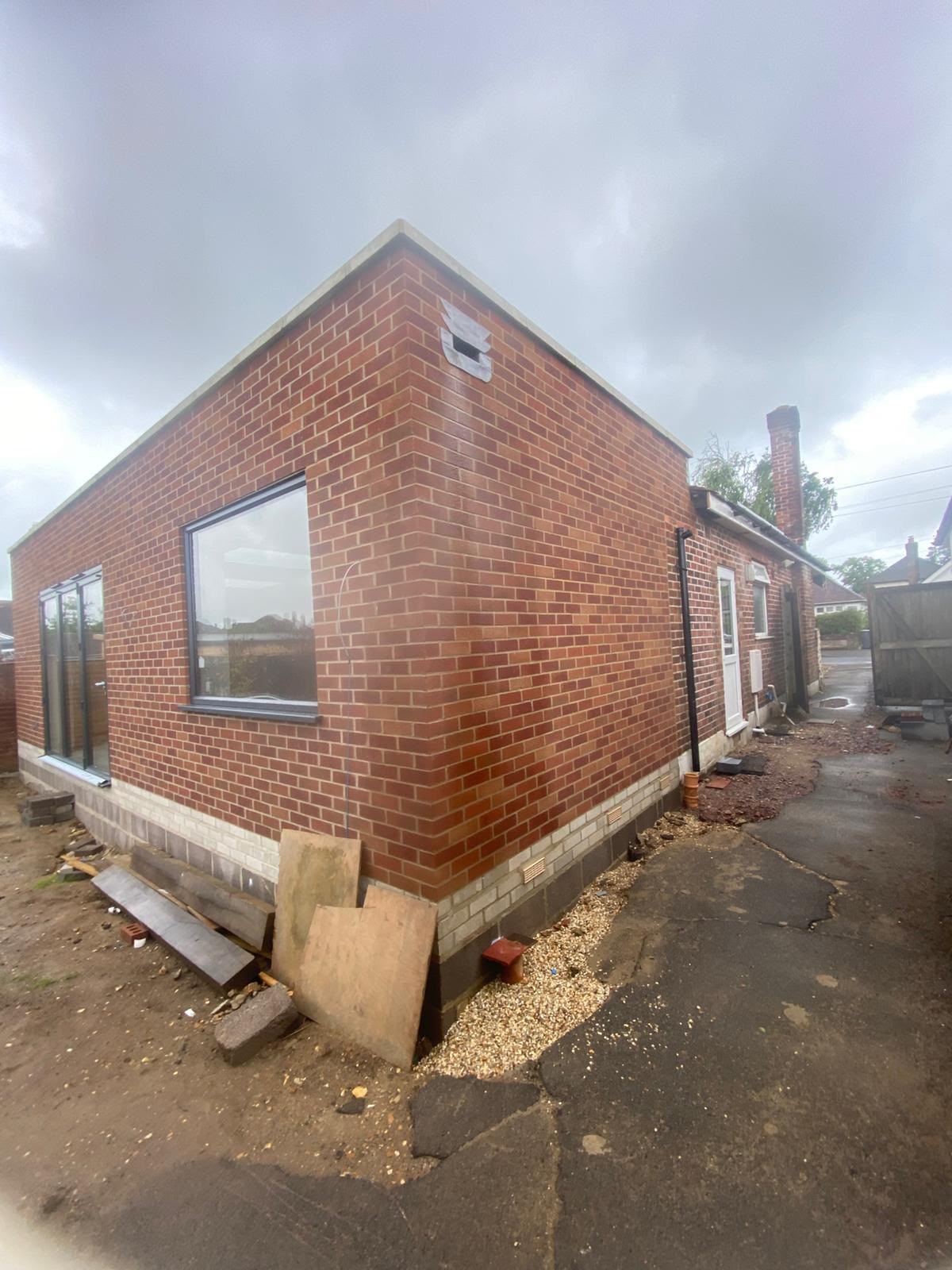
Repairing and repointing what is already there, in the same materials, is maintenance, with nothing to apply for. Two things are different here. Walhampton and Portmore sit inside the New Forest National Park, so the Authority is your planning authority rather than the district council, and the Authority's property map will tell you in a minute whether your address is inside the boundary. The area also sits in the Forest South East conservation area with a great many listed entries close by, and on a listed structure the mortar is part of what is protected, so a change of mix or joint profile needs consent first. The National Park Authority sets out what that covers. We check which of those you are in before we quote.
Cost
What decides the price of a brickwork job
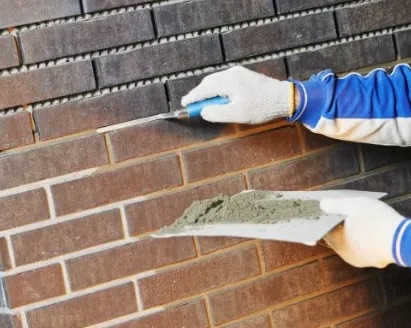
No rate per square metre. Access first: a cottage on a lane with no verge for a scaffold, a converted house where the platform goes up in shared parking and a paddock wall you can park a mixer beside are three different jobs. How long the platform stands matters as much as its size, and work at height rules are why it is a priced line. On lime work the hours go on raking by hand and on matching, and both want trial panels. Ask how deep the joints are raked, by hand or by disc, and what the mix is.
If something has moved
Loose brickwork, or a wall that has shifted
Ring rather than use the form. Anything overhead or leaning jumps the queue, and the first visit is about making it safe. We come out through Lymington, so say on the phone if the wall is leaning over a lane, a footpath or a shared drive. The phone is answered 24 hours for emergencies; scheduled work runs Monday to Friday, 8am to 6pm.
The one local thing
Around here, the first question is who actually owns the wall
Just over three in ten dwellings in this area are flats or maisonettes, most of them in converted houses and older buildings that were never built as flats. That matters more on brickwork than on almost any other trade, because the outside of the building, walls and boundary walls included, almost always belongs to the freeholder and is paid for out of the service charge.
If you are a leaseholder looking at eroded joints or a cracked parapet, you generally cannot instruct the work or pay for it yourself, however keen you are to get on with it.
The practical route is short. Tell the managing agent or the freeholder what you can see, ask them to get it looked at, and ask them to have us quote. We are happy to survey and price to an agent, itemised elevation by elevation, which is what a freeholder needs in order to get moving.
Be aware that once the cost per flat passes a statutory threshold the freeholder has to run a Section 20 consultation before the work starts, which adds weeks rather than days to the timetable. That is the single biggest reason repointing on a converted house gets left another winter, and it is why raising it early in the year is worth doing. If you own a freehold house here, none of this applies to you and we can simply book it in.
Who you are dealing with
A local firm you can check
We cover Walhampton, Portmore, Pilley, South Baddesley, Boldre and the Lymington side of SO41, and the travel is in the quote rather than hidden in a day rate. Bournemouth Roofing & Building Ltd, registered in England and Wales, company number 15471719, which you can look up in a minute. Thomas Hannen's business, and he is the one who comes out to price the job, not a salesman. A verified customer's 10 out of 10 on Checkatrade. The visit and the written quote are both free.
Questions
Walhampton and Portmore questions we get asked
I own a flat here. Who authorises outside repointing?
Whoever holds the freehold, in nearly every case. Flats are 31.5% of the housing in Walhampton and Portmore, and the external walls of a converted house or a small block are normally the freeholder's or the managing agent's responsibility rather than a leaseholder's. I am happy to come out and put the work in writing so you have something concrete to hand them, but the instruction to start has to come from the owner.
Does the National Park control what mortar we use?
On appearance it does, and this village sits inside the Forest South East conservation area with the New Forest National Park Authority as the planning authority. Like for like repair is maintenance and needs no consent. Changing the look of a wall, the colour of the joint or the material is a different matter. I put up a sample panel of the mix so what is agreed can be seen before the elevation is opened.
Our wall predates 1900. Will cement mortar harm it?
It will trap water inside the brick. Around a quarter of the stock in Walhampton and Portmore predates 1919, at 26.9%, and the peak is pre 1900, meaning solid walls built to let moisture pass back out through the joint. A cement mix is harder and tighter than the brick, so the water leaves through the brick face instead and that face spalls off in frost. Lime keeps the wear in the joint.
There are 93 listed entries nearby. How do I check ours?
The public list of listed buildings is searchable by address, and it is worth doing before anything else. Walhampton and Portmore carries 93 entries, from Walhampton House at the school to the Burrard Neale Monument, so a listing here is common rather than exceptional. If yours is on it, consent from the National Park comes before any cutting out, and I will not open a joint until that is in hand.
You are based over in Bournemouth. How soon can you look?
Walhampton and Portmore is 15.8 miles from the yard, so it is a planned run rather than a same day call out. Thomas comes over and prices the job himself, normally inside the week, and neither the visit nor the written itemised quote costs anything. If water is actually getting in, say so on the phone and it moves up the order instead of waiting for the next trip out that way.
Nearby, and next door
Bricklaying and repointing near Walhampton and Portmore
Bricklaying and repointing nearby
Our other trades in Walhampton and Portmore
Everything we do in Lymington Bricklaying and repointing, all areas Every area we cover
Free quote
Get a written price for your brickwork
Tell us which wall is worrying you and we will come out, look at all of it, and put an itemised price in writing.